

The Personal Income Tax Law allows various credits against the taxes imposed by that law. This bill would allow a credit against those taxes for each taxable year beginning on or after January 1, 2020, and before January 1, 2024, in an amount equal to 25% of the amount paid or incurred during the taxable year, not compensated for by insurance or otherwise, by a qualified taxpayer, as defined, for home care services, not to exceed $5,000. The bill would define "home care services" to mean specified nonmedical services and assistance provided by a registered home care aide, as defined, a licensed home health agency, or a licensed hospice to a qualified taxpayer who, because of advanced age or physical or mental disability, cannot perform these services that enable the qualified taxpayer to remain in the qualified taxpayer's residence. This bill would take effect immediately as a tax levy.
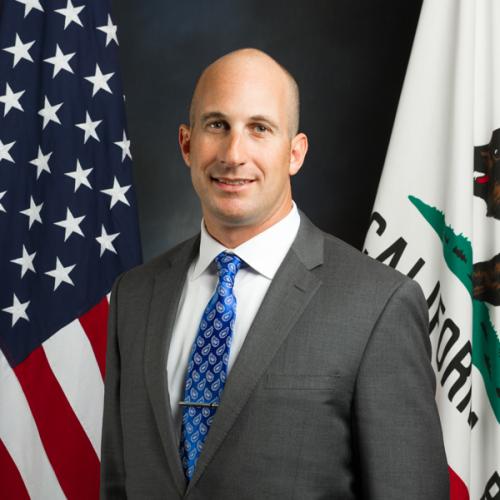
Asm. Heath Flora
Sponsored bills
Existing law establishes the Department of Housing and Community Development in the Business, Consumer Services, and Housing Agency, and requires the department to administer various housing programs throughout the state, including programs that address the needs of homeless individuals and families, and reviewing local ordinances for the design, development, and operation of homeless shelters in cities and counties that have declared a shelter crisis. Existing law also requires a state agency or department that funds, implements, or administers a state program that provides housing or housing-related services to people experiencing homelessness or at risk of homelessness to revise or adopt guidelines and regulations to incorporate the core components of Housing First, an evidence-based model that uses housing as a tool, rather than a reward, for recovery. This bill would declare that it is the policy of the state that every child and family has the right to safe, decent, and affordable housing, and would require the policy to consider homelessness prevention, emergency accommodations, and permanent housing, as specified. The bill would, among other things, require all relevant state agencies and departments, including, but not limited to, the Department of Housing and Community Development, the State Department of Social Services, and the Office of Emergency Services, and local jurisdictions to consider that state policy when revising, adopting, or establishing policies, regulations, and grant criteria when those policies, regulations, and criteria are pertinent to advancing the guidelines listed as core components of Housing First. By imposing new duties on local governments, the bill would impose a state-mandated local program. The California Constitution requires the state to reimburse local agencies and school districts for certain costs mandated by the state. Statutory provisions establish procedures for making that reimbursement. This bill would provide that, if the Commission on State Mandates determines that the bill contains costs mandated by the state, reimbursement for those costs shall be made pursuant to the statutory provisions noted above.
Existing law requires an employer, semimonthly or at the time of payment of wages, to furnish an employee, an accurate, itemized, written statement containing specified information regarding the amounts earned, hours worked, and the employee's identity, among other things, subject to certain variations. Existing law entitles an employee who suffers an injury resulting from a knowing and intentional failure by an employer to comply with these requirements to recover specified damages and an award of costs and reasonable attorney's fees. Existing law establishes the Division of Labor Standards Enforcement within the Labor and Workforce Development Agency and grants to the division general enforcement authority for the Labor Code, except as specified. Existing law establishes the Labor Code Private Attorneys General Act of 2004, which authorizes aggrieved employees, subject to a prescribed process, to recover civil penalties for violations of provisions of the Labor Code that may be collected by Labor and Workforce Development Agency or any of its departments or divisions. This bill would limit attorney's fees in connection with an action for a violation of the wage information requirements described above. In this regard, if the action is brought pursuant to the Labor Code Private Attorneys General Act of 2004, and the gross judgment amount or gross settlement amount in the action is $50,000 or more, the bill would prohibit the attorney's fees from exceeding 25% of the gross judgment amount or gross settlement amount.
The Personal Income Tax Law allows various credits against the taxes imposed by that law. Existing law requires any bill authorizing a new tax credit to contain, among other things, specific goals, purposes, and objectives that the tax credit will achieve, detailed performance indicators, and data collection requirements. This bill would allow a credit against those taxes for each taxable year beginning on or after January 1, 2020, and before January 1, 2025, in an amount equal to the amount paid or incurred by a qualified teacher during the taxable year for instructional materials and classroom supplies, as defined, not to exceed $250. The bill would define qualified teacher as a teacher in a public, charter, or private school offering instruction in kindergarten or any of grades 1 to 12, inclusive, who is within the first 3 years of employment as a teacher. The bill would require the Franchise Tax Board to submit a report to the Legislature on the amount of credits used by qualified teachers, and would provide findings and declarations relating to the goals of this credit. This bill would take effect immediately as a tax levy.
Under existing law, the Public Utilities Commission has regulatory authority over public utilities, including electrical corporations. Existing law requires each electrical corporation to construct, maintain, and operate its electrical lines and equipment in a manner that will minimize the risk of catastrophic wildfire posed by those electrical lines and equipment. Existing law authorizes the commission to prescribe the installation, use, maintenance, and operation of appropriate safety or other devices or appliances. This bill would require each electrical corporation to install monitoring equipment on transmission and distribution lines in high fire threat areas as designated by the commission by December 31, 2020. The bill would require that the monitoring equipment be installed between each set of poles or towers, generate raw data on line temperature, ambient temperature, electrical current, line movement, and barometric pressure, access satellite communication for connectivity, and be noninvasive at point of installation. Under existing law, a violation of the Public Utilities Act or any order, decision, rule, direction, demand, or requirement of the commission is a crime. Because the provisions of this bill are within the act and require action by the commission to implement their requirements, a violation of which would be a crime, these provisions would impose a state-mandated local program by creating a new crime. The California Constitution requires the state to reimburse local agencies and school districts for certain costs mandated by the state. Statutory provisions establish procedures for making that reimbursement. This bill would provide that no reimbursement is required by this act for a specified reason.
Existing law establishes fees for the registration of vehicles to be collected by the Department of Motor Vehicles (DMV) , and requires that a penalty be assessed for delinquent payment of vehicle registration, as specified. This bill would require the department to permit the payment of registration renewal fees in installments, as specified. The bill would subject a registered owner who fails to pay the registration renewal fees in full by the due date to the delinquent payment penalties described above.
Existing law requires an employer, either semimonthly or at the time of each payment of wages, to furnish their employees with an accurate itemized wage statement showing specified information. Existing law authorizes an employee to recover for a knowing and intentional violation of that provision actual damages, or a specified alternative dollar amount, whichever is greater, and to be awarded costs and attorney's fees. Existing law authorizes an employee to also bring an action for injunctive relief to ensure compliance with that provision, and is entitled to an award of costs and reasonable attorney's fees. Existing law authorizes civil penalties of $250 per employee for violation of the above-specified provision for an initial citation and $1,000 per employee for each violation in a subsequent citation. The Labor Code Private Attorneys General Act of 2004 provides, as an alternative to civil penalties being assessed and collected by the Labor and Workforce Development Agency, that civil penalties may be recovered through a civil action brought by an aggrieved employee on behalf of themself and other employees. The act requires the employee to follow prescribed procedures before bringing an action and authorizes an employer to cure specified itemized wage statement violations within 33 days of receiving notice of the violation. This bill would require, for an action under any of the above provisions to recover for any violation of the itemized wage statement requirement, that an employee or representative give prescribed notice of the alleged violation to the employer. The bill would authorize an employer to cure the alleged violation within 65 calendar days of the postmark date of the notice. The bill would allow an action to commence only if the alleged violation is not cured within that period. The bill would exempt certain violations from these notice and cure provisions. With respect to the Labor Code Private Attorneys Generals Act, this bill would authorize an employer to cure any violation brought under the act regarding itemized wage statements by using the cure procedure described above and would extend the curing period to 65 days. This bill would also make various conforming changes in this regard.
The Personal Income Tax Law allows various credits against the taxes imposed by that law. This bill, for each taxable year beginning on or after January 1, 2020, and before January 1, 2025, would allow a credit against those taxes in an amount equal to 50% of the amount paid or incurred by a family caregiver during the taxable year for eligible expenses related to the care of an eligible family member, not to exceed $5,000. The bill would limit the aggregate amount of these credits to be allocated in each calendar year to $150,000,000 as well as any unused credit amount, if any, allocated in the preceding calendar year. The bill would require the Franchise Tax Board to allocate and certify these tax credits to taxpayers on a first-come-first-served basis. The bill would make these provisions operative on the effective date of any budget measure specifically appropriating funds to the Franchise Tax Board for its costs to administer these provisions. The bill would require an eligible family member to be certified by a physician, registered nurse, advanced practice registered nurse, or physician assistant, under penalty of perjury, as being an individual with long-term care needs and would require the family caregiver to retain, and make available to the Franchise Tax Board upon request, that certification. By expanding the scope of the crime of perjury, this bill would impose a state-mandated local program. The bill would make specified findings detailing the goals, purposes, and objectives of the above-described tax credit, performance indicators for determining whether the credit meets those goals, purposes, and objectives, and data collection requirements. The California Constitution requires the state to reimburse local agencies and school districts for certain costs mandated by the state. Statutory provisions establish procedures for making that reimbursement. This bill would provide that no reimbursement is required by this act for a specified reason. This bill would take effect immediately as a tax levy.
Existing law establishes within the Health Professions Education Foundation the California Physician Corps Program, which includes the Steven M. Thompson Medical School Scholarship Program. Existing law provides student loan repayments for a physician and surgeon who agrees, in writing, prior to completing an accredited medical or osteopathic school based in the United States, to serve in an eligible practice setting in a medically underserved area for at least 3 years. This bill would establish within the Office of Statewide Health Planning and Development the Primary Care Student Loan Repayment Program to provide loan repayment awards of up to $50,000 to physicians and surgeons and registered nurses who provide 32 hours a week or more of direct care service for a period of 2 years in either a federally designated health professional shortage area (HPSA) or primary care shortage area (PCSA) in California. The bill would establish in the State Treasury the Primary Care Student Loan Repayment Program Fund, to be used, upon appropriation by the Legislature, by the office to administer the program.
The Z'berg-Nejedly Forest Practice Act of 1973 prohibits a person from conducting timber operations, defined to mean the cutting or removal, or both, of timber or other solid wood forest products from timberlands for commercial purposes, unless a timber harvesting plan prepared by a registered professional forester has been submitted for the operations to the Department of Forestry and Fire Protection. The act provides an exception from its provisions for timber operations that involve the removal of trees less than 16 inches in diameter at breast height from a firebreak or fuelbreak if the removal meets specified requirements, including the requirement that the removed trees will not be processed into logs or lumber. The California Global Warming Solutions Act of 2006 designates the State Air Resources Board as the state agency charged with monitoring and regulating sources of emissions of greenhouse gases. The act authorizes the state board to include the use of market-based compliance mechanisms. Existing law requires all moneys, except for fines and penalties, collected by the state board as part of a market-based compliance mechanism to be deposited in the Greenhouse Gas Reduction Fund and to be available upon appropriation. This bill would require the Natural Resources Agency to develop and implement a fuels transportation program that provides competitive grants or other financial incentives for projects in eligible communities to offset the costs of transporting fuels to an eligible biomass facility, an innovative forest products facility, or a mass timber facility, as specified. The bill would authorize the agency to allocate moneys from the Greenhouse Gas Reduction Fund consistent with the purposes of the fund.