

Passed Feb 10, 2020
1 co-sponsor
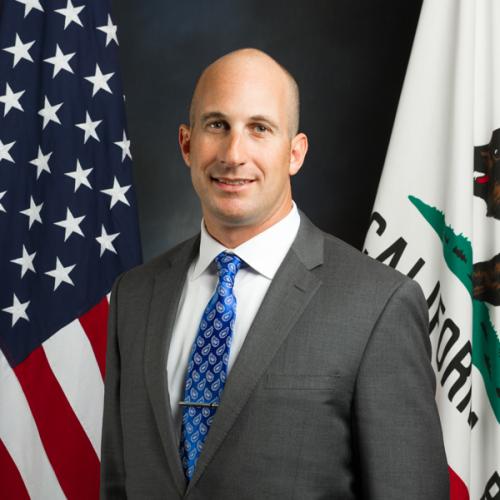
Asm. Heath Flora
Total votes
23,533
all sessions
Attendance
83%
3,189 missed
Lower than 98% of chamber peers
With party
98%
of cast votes
Lower than 77% of chamber peers
Bipartisan score
1%
crosses aisle rarely
Higher than 75% of chamber peers
Sponsored
1,713
bills & resolutions
Lower than 96% of chamber peers
Committees
1
assignment
1,713 bills and resolutions
Sponsored bills
Total
1,713
Primary
192
Co-sponsor
1,521
This page
1,713
matching current filters
Health care coverage.
Existing federal law, the federal Patient Protection and Affordable Care Act (PPACA) , requires each state to establish an American Health Benefit Exchange to facilitate the purchase of qualified health benefit plans by qualified individuals and qualified small employers. Existing state law creates the California Health Benefit Exchange (Exchange) , also known as Covered California, to facilitate the enrollment of qualified individuals and qualified small employers in qualified health plans as required under PPACA. PPACA also enacted various health care coverage market reforms that took effect January 1, 2014. Among other things, PPACA requires group health plans and group health insurance issuers that offer coverage of dependent children to make that coverage available for children until they reach 26 years of age. Existing law, the Knox-Keene Health Care Service Plan Act of 1975, provides for the licensure and regulation of health care service plans by the Department of Managed Health Care, and makes willful violations of the act a crime. Existing law provides for the regulation of health insurers by the Department of Insurance. Existing law defines levels of coverage for the nongrandfathered individual and small group markets consistent with the definitions in PPACA. Existing law requires plans and insurers offering coverage in the individual market to offer coverage for a child, subject to specified requirements. This bill would state the intent of the Legislature to enact legislation requiring health care service plans and health insurance policies that offer coverage for dependents to make that coverage available to any person who is related to and living in the same household as the enrollee or insured.
died Feb 3, 2020
0 co-sponsors
Discrimination: state contracting.
Existing law subjects an employer who is, or wishes to become, a contractor with the state for public works, or for goods or services, to various nondiscrimination requirements. This bill would make a nonsubstantive change to this provision.
died Feb 3, 2020
0 co-sponsors
Student financial aid: Cal Grant B, Cal Grant C, and federal Pell Grant awards: financial aid book advance program.
Existing federal law establishes the federal Pell Grant Program under Title IV of the federal Higher Education Act of 1965 to provide need-based grant awards to low-income students in order to promote access to postsecondary education. Existing law, known as the Ortiz-Pacheco-Poochigian-Vasconcellos Cal Grant Program, establishes, among other programs, the Cal Grant B program and the Cal Grant C program under the administration of the Student Aid Commission and establishes eligibility requirements for awards under those programs. This bill, beginning with the 2020–21 academic year, would require an institution of higher education, as a condition of its participation in the Cal Grant Program, to implement a financial aid book advance program that would provide a line of credit for the purchase of books and educational materials at bookstores owned by or located on the campus of the institution to each student who is owed a credit balance for certain financial aid awards and who has not opted out of the program. The bill would provide for a reduction in the amount of the award moneys disbursed to the student based upon the amount of credit expended by the student at the institution's bookstores and would provide for reimbursement to the institution's bookstores for that amount. The bill would exempt from these requirements an institution that does not have a bookstore and an institution that provides its students with all of their financial aid award moneys that the institution disburses on or before the 7th day of the academic semester or term.
Failed Feb 3, 2020
1 co-sponsor
County reimbursement: Joseph James DeAngelo, Jr. costs.
Existing law authorizes a county that is responsible for the cost of a trial or trials or any hearing of a person for the offense of homicide to apply to the Controller for reimbursement of excessive costs incurred by the county under specified circumstances. Under existing law, if the Controller determines that reimbursement is proper, the Controller is required to request the Director of Finance to include any amounts necessary to fulfill reimbursement in a request for deficiency appropriation. This bill would enact the Justice Act of 2019 for the Reimbursement of County Costs Arising from the Matter of the People v. Joseph DeAngelo, and would authorize the County of Sacramento and other California counties to be reimbursed for the reasonable and necessary costs, as specified, incurred in connection with the prosecution and defense of Joseph DeAngelo. The bill would require a county seeking reimbursement to send a statement of costs to the Controller for approval, and would require the Controller, within 60 days, to either pay approved costs or provide a written statement as to the reason for not making reimbursement at that time. The bill would create the Justice Act of 2019 Fund for these purposes.
Failed Feb 3, 2020
1 co-sponsor
Public resources: greenhouse gases: recycling: California Environmental Quality Act.
(1) The California Global Warming Solutions Act of 2006 designates the State Air Resources Board as the state agency charged with monitoring and regulating sources of emissions of greenhouse gases. The act authorizes the state board to include the use of market-based compliance mechanisms. The act authorizes the state board to adopt a regulation that establishes a system of market-based declining annual aggregate emissions limits for sources or categories of sources that emit greenhouse gases, applicable from January 1, 2021, to December 31, 2030, as specified. This bill, no later than January 1, 2022, would require the state board for a market-based compliance mechanism applicable from January 1, 2021, to December 31, 2030, to investigate the potential for a carbon offset compliance protocol for recycled product manufacturing. (2) Existing law requires all moneys, except for fines and penalties, collected by the state board as part of a market-based compliance mechanism to be deposited in the Greenhouse Gas Reduction Fund and to be available upon appropriation. Existing law continuously appropriates 35% of the annual proceeds of the fund for transit, affordable housing, and sustainable communities programs and 25% of the annual proceeds of the fund for certain components of a specified high-speed rail project. This bill would authorize $200,000,000 from the annual proceeds of the fund to be subsequently appropriated to the Department of Resources Recycling and Recovery for the department's Recycled Fiber, Plastic, and Glass Grant Program. (3) Existing law, the California Environmental Quality Act (CEQA) , requires a lead agency, as defined, to prepare, or cause to be prepared, and certify the completion of an environmental impact report on a project that it proposes to carry out or approve that may have a significant effect on the environment or to adopt a negative declaration if it finds that the project will not have that effect. CEQA also requires a lead agency to prepare a mitigated negative declaration for a project that may have a significant effect on the environment if revisions in the project would avoid or mitigate that effect and there is no substantial evidence that the project, as revised, would have a significant effect on the environment. CEQA exempts certain projects from its requirements. This bill would require the Department of Resources Recycling and Recovery, no later than January 1, 2023, to prepare a program environmental impact report for organic waste composting facilities, as specified. The bill would require the Office of Planning and Research, in consultation with the department, to identify and report to the appropriate fiscal and policy committees of the Legislature on the regulatory barriers and opportunities to streamline local and state approval processes to help facilitate the achievement of the state's recycling and renewable energy generation goals. (4) The California Integrated Waste Management Act of 1989, which is administered by the department, generally regulates the management and recycling of solid waste. This bill would establish the Recycled Materials Innovation Grant Program to be administered by the department, in collaboration with the Office of Planning and Research, to offer competitive grants to create innovative uses for recyclable materials that have not historically been recycled domestically, as specified. The bill would require the department to award no more than 5 grants of $20,000,000 each, with moneys made available from the General Fund upon appropriation. The bill would require the department to develop administrative guidelines and other requirements for the administration of the program.
Failed Feb 3, 2020
1 co-sponsor
Personal income taxes: exclusion: uniformed services: retirement pay.
The Personal Income Tax Law imposes a tax on individual taxpayers measured by the taxpayer's taxable income for the taxable year, but excludes certain items of income from the computation of tax, including an exclusion for combat-related special compensation. This bill, for taxable years beginning on or after January 1, 2020, and before January 1, 2030, would exclude from gross income specified amounts of retirement pay received by a taxpayer from the federal government for service performed in the uniformed services, as defined, during the taxable year. This bill would take effect immediately as a tax levy.
Failed Feb 3, 2020
1 co-sponsor
Whistleblower protection.
(1) The California Whistleblower Protection Act prohibits an employee from interfering with a person's rights to disclose improper activity and authorizes the State Auditor to conduct an investigative audit upon receiving specific information that an employee or state agency has engaged in an improper governmental activity, as defined. The California Whistleblower Protection Act applies to state agencies, as defined, and to the University of California, the California State University, and courts, as specified. Under the California Whistleblower Protection Act, a person who intentionally engages in acts of reprisal, retaliation, threats, coercion, or similar acts against a state employee or an applicant for state employment for having made a protected disclosure is subject to civil liability and criminal penalties. The California Whistleblower Protection Act defines a "protected disclosure" to mean, among other things, a good faith communication that discloses information that may evidence an improper governmental activity. This bill would expand the definition of the term "protected disclosure" to include a complaint made to a Member of the Legislature, the Legislature, or any subdivision thereof. By expanding the definition of a crime, the bill would impose a state-mandated local program. (2) Other existing law, the Whistleblower Protection Act, prohibits a state or local governmental employee from interfering with the right of a person to disclose an improper governmental activity, as defined, to an investigating committee of the Legislature. The Whistleblower Protection Act defines other terms for its purposes, including defining "employee" to mean any individual appointed by the Governor or employed or holding office in a state agency, including the California State University and the University of California, defined public entities, or any agency of local government. This bill would authorize a legislative investigative committee to investigate and report on improper governmental activities or to refer the improper governmental activity to the State Auditor for investigation pursuant to the California Whistleblower Protection Act. The bill would also authorize the committee to prepare and send copies of investigative reports to an employee's appointing power if it finds that the employee may have participated in improper governmental activities. The bill would authorize a committee to request additional information from a person submitting an allegation, as specified. The bill would prescribe various requirements for maintaining the confidentiality of people providing information in confidence and information obtained on investigation. The bill would authorize a legislative investigative committee to request assistance from a state department, agency, or employee in evaluating an allegation or conducting any investigation of an improper governmental activity and would generally require that such assistance be provided, as specified. (3) The California Constitution requires the state to reimburse local agencies and school districts for certain costs mandated by the state. Statutory provisions establish procedures for making that reimbursement. This bill would provide that no reimbursement is required by this act for a specified reason. (4) Existing constitutional provisions require that a statute that limits the right of access to the meetings of public bodies or the writings of public officials and agencies be adopted with findings demonstrating the interest protected by the limitation and the need for protecting that interest. This bill would make legislative findings to that effect.
Failed Feb 3, 2020
1 co-sponsor
Alcohol and drug abuse treatment services.
Existing law requires the State Department of Health Care Services to license and regulate alcoholism or drug abuse recovery or treatment facilities serving adults. Existing law restricts a licensee from operating an alcoholism or drug abuse recovery or treatment facility beyond the conditions and limitations specified on the license and requires all services offered or provided by the licensee to be provided exclusively within either the licensed facility or any facility identified on a single license by street address. Existing law makes a violation of these provisions punishable by a civil penalty of not less than $250 or more than $500 per day for each violation, with additional penalties for repeat violations, as specified. Under existing law, the department is required to implement a program certification procedure for alcohol and other drug treatment recovery services, which includes standards and regulations for the alcohol and other drug treatment recovery services describing the minimal level of service quality required of the service providers to qualify for and obtain state certification. This bill would further authorize licensed services to be provided, upon approval by the department, in an outpatient facility owned and operated by the licensee as a part of an outpatient program certified by the department, if specified conditions are met.
Failed Feb 3, 2020
0 co-sponsors
Gun-free school zone.
Existing law makes it a crime to possess a firearm in a place that the person knows, or reasonably should know, is a school zone. Existing law defines a school zone as an area in, or on the grounds of, a public or private school providing instruction in kindergarten or grades 1 to 12, inclusive, or within a distance of 1,000 feet from the grounds of the public or private school. Existing law, among other exceptions to that crime, exempts a person with a valid concealed carry license who is carrying the firearm described in the license in an area that is not in, or on the grounds of, a public or private school providing instruction in kindergarten or grades 1 to 12, inclusive, but is within a distance of 1,000 feet from the grounds of the public or private school. This bill would exempt from that crime a person who holds a valid concealed carry license who is carrying the firearm described in the license to, from, or in a church, synagogue, or other building used as a place of worship on the grounds of a public or private school providing instruction in kindergarten or grades 1 to 12, inclusive, if the person has the written permission of the school authority and subject to specified conditions.
Failed Feb 3, 2020
0 co-sponsors
Ask Maddy
·
AI policy assistant
Ask Maddy about Heath Flora
Scope: CA
Hi! I can help you understand Heath Flora's legislative record. What would you like to know?
Try one of these
i
Maddy answers using official bill text and legislative records. Always verify before sharing.
Sources cited inline