

(1) Existing law requires the Department of Food and Agriculture to periodically publish and make available a list of reportable conditions that pose or may pose significant threats to public health, animal health, the environment, or the food supply. Existing law, the California Meat and Poultry Inspection Act, requires the Secretary of Food and Agriculture to provide for the inspection and regulation of livestock and poultry products. The act provides that any person that violates these provisions is subject to civil penalties, as specified. Existing law, the California Meat and Poultry Supplemental Inspection Act, also authorizes the secretary to adopt, by regulation, standards and requirements relating to inspection, sanitation, facilities, equipment, reinspection, preparation, processing, buying, selling, and transporting, among other acts, of livestock and poultry. This bill would require the secretary to appoint, and to consult with, a poultry health advisory committee, as described, for purposes of advising the secretary on the control and management of poultry diseases and evaluating the effectiveness of programs established pursuant to these provisions. The bill would authorize the secretary to adopt regulations to control or eradicate poultry diseases by requiring, among other things, permits before entry of, and limitations on the importation of, poultry and other animals or materials that might act as a cause or a vector of a disease or condition that is infectious or contagious to poultry. The bill would provide that a person who willfully and knowingly violates any regulation adopted pursuant to these provisions is guilty of a misdemeanor. The bill would authorize the secretary, at the secretary's discretion, to prosecute civilly or seek civil penalties, as provided. The bill would expressly require that nothing in its provisions shall be construed to limit or restrict the State Veterinarian's quarantine powers. By creating a new crime, the bill would impose a state-mandated local program. (2) The California Constitution requires the state to reimburse local agencies and school districts for certain costs mandated by the state. Statutory provisions establish procedures for making that reimbursement. This bill would provide that no reimbursement is required by this act for a specified reason.
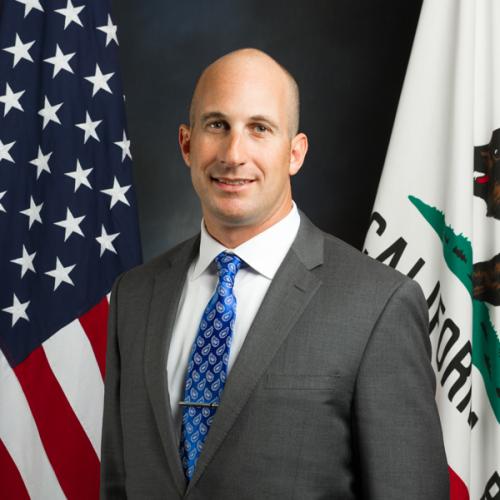
Asm. Heath Flora
Sponsored bills
Existing law establishes the Employment Development Department, administered by the Director of Employment Development, within the Labor and Workforce Development Agency and sets forth its powers and duties related to the administration of the state unemployment and disability compensation programs. This bill would require the department to establish, upon appropriation by the Legislature, an advisory committee to advise the department on matters within the department's jurisdiction, including, but not limited to, unemployment insurance. The bill would require the committee to include members representing a diverse spectrum of private and public employers and employees impacted by programs overseen by the department, as provided. The bill would require the committee to hold open and public meetings in compliance with the Bagley-Keene Open Meeting Act at least once a quarter. The bill would require, commencing on January 1, 2023, the committee to prepare and publicly publish an annual report describing its activities, including, but not limited to, recommendations made by the advisory committee and the department's response to those recommendations. The bill would also make related findings and declarations.
(1) The California Global Warming Solutions Act of 2006 establishes the State Air Resources Board as the state agency responsible for monitoring and regulating sources emitting greenhouse gases. The act requires the state board to approve a statewide greenhouse gas emissions limit equivalent to the statewide greenhouse gas emissions level in 1990 to be achieved by 2020 and to ensure that statewide greenhouse gas emissions are reduced to at least 40% below the 1990 level by 2030. The act authorizes the state board to include the use of market-based compliance mechanisms. The act establishes the Compliance Offsets Protocol Task Force, with a specified membership, to provide guidance to the state board in approving new offset protocols for a market-based compliance mechanism for the purposes of increasing offset projects with direct environmental benefits in the state, as specified. This bill would require the state board to develop a carbon offset credit for whole orchard recycling. (2) Existing law, the Cannella Environmental Farming Act of 1995, requires the Department of Food and Agriculture, in consultation with the Scientific Advisory Panel on Environmental Farming, to establish and oversee a Healthy Soils Program to seek to optimize climate benefits while supporting the economic viability of California agriculture by providing incentives, including, but not limited to, loans, grants, research, and technical assistance, and educational materials and outreach, to farmers whose management practices contribute to healthy soils and result in net long-term on-farm greenhouse gas benefits. This bill would appropriate an unspecified sum from the General Fund to the department for purposes of providing grants to the University of California Agriculture and Natural Resources Division and the California State University for research to assess the cobenefits from healthy soil practices.
Existing law requires the State Department of Public Health to license and regulate each health facility, defined to mean a facility, place, or building that is organized, maintained, and operated for the diagnosis, care, prevention, and treatment of human illness, and includes, among others, a general acute care hospital, an acute psychiatric hospital, and a special hospital. Existing law defines a "special hospital" as a health facility having a duly constituted governing body with overall administrative and professional responsibility and an organized medical or dental staff that provides inpatient or outpatient care in dentistry or maternity. This bill would expand the meaning of "special hospital" to include inpatient or outpatient respiratory care.
Existing law requires the State Fire Marshal to establish minimum standard requirements and adopt rules and regulations to regulate the manufacture, sale, and application of flame-retardant chemicals. Existing law requires electrical corporations and local publicly owned electric utilities to annually prepare wildfire mitigation plans, as specified. This bill would expressly authorize a wildfire mitigation plan to include the use of fire-retardant chemicals approved by the State Fire Marshal on a planned basis for wildfire mitigation and risk management.
Existing law establishes the Employment Development Department within the Labor and Workforce Development Agency and sets forth its powers and duties, including administration of the unemployment and disability insurance programs for California. Existing law requires the department to pay unemployment compensation benefits to unemployed individuals meeting specified requirements, to periodically review policies and practices used to determine eligibility for and the amount of benefits in the unemployment insurance program, and to report to the Legislature, as specified. Under existing law, unemployment compensation benefits are paid from the Unemployment Fund, and the expenses for administering these provisions are paid from the Unemployment Administration Fund, which is continuously appropriated for these purposes. This bill would establish the Unemployment Insurance Reform Project to be administered by the Director of Employment Development. Under the bill, the Employment Development Department would be required to comply with various reporting and review processes. In this regard, the bill would require the department to report specified information regarding overpayments at least once every 6 months on its internet website, to immediately perform a risk assessment of its deferred workloads, and to develop a workload plan that prioritizes its deferred workloads based on that risk assessment. The bill would require the department to develop a recession plan so that it is well prepared to provide services during future economic downturns, as specified. The bill would require the department to, by March 1, 2021, revise its public dashboards with regard to the number of backlogged claims, as specified. This bill would require the department to convene a working group to assess the lessons learned from claim surges and identify the processes that the department can still improve and issue a report by January 1, 2022, as specified. The bill would require the department, by June 1, 2021, to determine the reasons that claimants cannot successfully complete their identity verification, as specified, and to identify the elements of the Benefit System Modernization that can assist the department in making timely payments. This bill would require the department to, by May 1, 2021, implement a formal policy that establishes a process for tracking and periodically analyzing the reasons why unemployment insurance claimants call for assistance and, by October 1, 2021, and every 6 months thereafter, to analyze this data to improve its call center. Because this bill would authorize the expenditure of funds from the Unemployment Administration Fund for new purposes, the bill would make an appropriation.
(1) The California Global Warming Solutions Act of 2006 designates the State Air Resources Board as the state agency responsible for monitoring and regulating sources of emissions of greenhouse gases. Existing law authorizes the state board to include the use of market-based compliance mechanisms. Existing law requires all moneys, except for fines and penalties, collected by the state board from a market-based compliance mechanism to be deposited in the Greenhouse Gas Reduction Fund and to be available upon appropriation by the Legislature. Existing law continuously appropriates 35% of the annual proceeds of the fund for transit, affordable housing, and sustainable communities programs and 25% of the annual proceeds of the fund for certain components of a specified high-speed rail project. This bill would continuously appropriate $480,000,000 and $20,000,000 to the Department of Forestry and Fire Prevention and the California Conservation Corps, respectively, for fire prevention activities, as provided. (2) The Z'berg-Nejedly Forest Practice Act of 1973 prohibits a person from conducting timber operations unless a timber harvesting plan prepared by a registered professional forester has been submitted to, and approved by, the Department of Forestry and Fire Protection. Existing law, until January 1, 2022, authorizes the State Board of Forestry and Fire Protection to exempt from the requirements of that act a person engaged in forest management whose activities are limited to the cutting or removal of trees on the person's property that eliminates the vertical continuity of vegetative fuels and the horizontal continuity of tree crowns for the purpose of reducing flammable materials and maintaining a fuelbreak for a distance of not more than 300 feet on each side from an approved and legally permitted habitable structure, when that cutting or removal is conducted in compliance with certain requirements. This bill would extend the state board's authorization to provide for the above exemption indefinitely. The bill would extend the distance of the fuelbreak to not more than 500 feet. (3) The California Environmental Quality Act (CEQA) requires a lead agency, as defined, to prepare, or cause to be prepared, and certify the completion of an environmental impact report on a project that it proposes to carry out or approve that may have a significant effect on the environment or to adopt a negative declaration if it finds that the project will not have that effect. CEQA also requires a lead agency to prepare a mitigated negative declaration for a project that may have a significant effect on the environment if revisions in the project would avoid or mitigate that effect and there is no substantial evidence that the project, as revised, would have a significant effect on the environment. This bill would exempt from the requirements of CEQA projects or activities related to forest health and fuel reduction that involve thinning overgrown brushes or trees 10 inches or less in diameter by mechanical thinning, pile burning, prescribed fire, and grazing. Because a lead agency would be required to determine the applicability of this exemption, this bill would impose a state-mandated local program. (4) The California Constitution requires the state to reimburse local agencies and school districts for certain costs mandated by the state. Statutory provisions establish procedures for making that reimbursement. This bill would provide that no reimbursement is required by this act for a specified reason.
Existing law establishes the Office of Small Business Advocate within the Governor's Office of Business and Economic Development for the purpose of advocating for the causes of small business and to provide small businesses with the information they need to survive in the marketplace. This bill, the Keep California Working Act, would establish the Keep California Working Grant Program. The act would require the Small Business Advocate to administer the program and award grants, as specified, to small businesses and nonprofit entities that meet specified criteria, including that the entity has experienced economic hardship resulting from the COVID-19 pandemic. The act would specify that grant money awarded pursuant to the program may be used only for specified purposes, including payroll costs, health care benefits, paid sick, medical, or family leave, and insurance premiums. The act would appropriate $2.6 billion dollars to the Office of Small Business Advocate for those purposes. The Personal Income Tax Law and the Corporation Tax Law, in conformity with federal income tax law, generally define "gross income" as income from whatever source derived, except as specifically excluded, and provide various exclusions from gross income. This bill would exclude from gross income, for state income tax purposes, the amount of a grant awarded pursuant to the Keep California Working Grant Program. Existing law requires a bill authorizing a new tax expenditure to contain, among other things, specific goals, purposes, and objectives that the tax expenditure will achieve, detailed performance indicators, and data collection requirements. The bill also would include additional information required for a bill authorizing a new tax expenditure. This bill would declare that it is to take effect immediately as an urgency statute.
The Rechargeable Battery Recycling Act of 2006 requires every retailer, as defined, to have in place a system for the acceptance and collection of used rechargeable batteries, defined to include lithium-ion batteries, for reuse, recycling, or proper disposal. The act requires the system for the acceptance and collection of used rechargeable batteries to include, at a minimum, specified elements, including, among others, the take-back of a used rechargeable battery at no cost to the consumer. The hazardous waste control laws, among other things, authorize the Department of Toxic Substances Control to regulate the generation and disposal of hazardous waste. Existing law prohibits a person from intentionally disposing of or causing the disposal of a hazardous or extremely hazardous waste at a point not authorized by the hazardous waste control laws, as provided. Under existing department-adopted regulations, specified hazardous wastes, including certain batteries, are designated as "universal waste" and are regulated separately pursuant to universal waste management provisions. This bill would prohibit a person from knowingly disposing of a lithium-ion battery in a container or receptacle that is intended for the collection of solid waste or recyclable materials, unless the container or receptacle is designated for the collection of batteries for recycling pursuant to specified laws. The bill would require the Department of Resources Recycling and Recovery, on or before July 1, 2024, and in consultation with the Department of Toxic Substances Control, to develop a guidance document for use by local governments to better inform, educate, and increase public awareness regarding the proper handling and disposal of lithium-ion batteries and products that contain lithium-ion batteries, as provided. The bill would authorize the Department of Resources Recycling and Recovery, in carrying out that requirement, to solicit and use any expertise available in other state agencies and would authorize the department to convene a specified working group to advise on the content, development, and promotion of the guidance document. The bill would require the Department of Forestry and Fire Protection, before January 1, 2023, in consultation with relevant state agencies and stakeholders, to develop a model protocol that identifies best practices for the detection, safe handling, and suppression of fires that originate from discarded lithium-ion batteries or products that contain lithium-ion batteries on or in solid waste or recycling collection vehicles, transfer or processing stations, or disposal facilities, as provided. The bill would require a solid waste enterprise, before July 1, 2023, after consulting with the county fire marshal of every county in which the solid waste enterprise conducts solid waste collection operations, to adopt, or update if necessary, a protocol and arrange any necessary training for relevant employees that identifies procedures to follow under those same circumstances. By imposing new duties on county fire marshals, the bill would impose a state-mandated local program. The California Constitution requires the state to reimburse local agencies and school districts for certain costs mandated by the state. Statutory provisions establish procedures for making that reimbursement. This bill would provide that, if the Commission on State Mandates determines that the bill contains costs mandated by the state, reimbursement for those costs shall be made pursuant to the statutory provisions noted above.
Existing law, the Firefighters Procedural Bill of Rights Act, grants certain employment rights to firefighters, as defined. Under the act, when a firefighter is investigated and interrogated by the firefighter's commanding officer, or another member of the employing agency, on matters that could lead to punitive action, the interrogation must be conducted pursuant to certain requirements. The act defines "punitive action" for these purposes as any action that may lead to dismissal, demotion, suspension, reduction in salary, written reprimand, or transfer for purposes of punishment. Existing law excepts from the act any employee who has not successfully completed the probationary period established by the employee's employer as a condition of employment. The act prohibits taking punitive actions if the investigation of the allegation is not completed within one year of discovery by the employing fire department. Existing law authorizes the State Personnel Board to hold hearings and make investigations concerning all matters relating to the enforcement and effect of the state civil service and various related personnel issues. This bill would include within the definition of "firefighter" a temporary, seasonal firefighter employed by the Department of Forestry and Fire Protection. The bill would apply the Firefighters Procedural Bill of Rights Act to an employee of the Department of Forestry and Fire Protection who holds a temporary firefighter appointment and who has commenced employment in a 2nd consecutive fire season with the department even though the person holding the position does not serve a probationary period. Under the bill, if an investigation involves a Department of Forestry and Fire Protection employee holding a temporary appointment to a firefighter position, the above-described one-year period would be tolled during the period that the employee is not employed by the department until the date the employee is rehired for a subsequent fire season. The bill would prohibit a Department of Forestry and Fire Protection employee holding a temporary appointment to a firefighter position from being terminated for cause without a right to appeal the termination to the State Personnel Board, subject to the board's rules, and the would prescribe a process in this regard. Under the bill, if the board finds that cause for termination was not supported by a preponderance of the evidence or that the termination was made in bad faith, the employee would be entitled to reinstatement, as specified, but would not be entitled to back pay. The bill would prohibit these provisions from being construed to create a property interest in a temporary appointment to a firefighter position or to a permanent position. The bill would authorize the State Personnel Board to held hearings and investigations for these purposes.