

Existing law authorizes any local agency to enact any ordinance that adopts a code by reference if the referenced code is specified in the title of the ordinance. Existing law requires that after the first reading of the title of the adopting ordinance, and of the title of the code to be adopted thereby, and of the title of the secondary codes therein adopted by reference, the legislative body shall make copies of the primary code and also copies of the secondary codes, if any, being considered for adoption, open to public inspection with the clerk of the legislative body. Existing law prohibits, however, the adoption by reference of any penalty clauses that may appear in any code that is adopted by reference; a penalty clause may be enacted only if set forth in full, and published, in the adopting ordinance. This bill would make nonsubstantive changes to the latter provision.
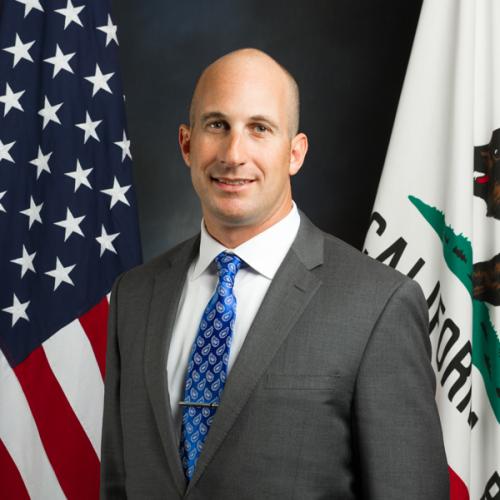
Asm. Heath Flora
Sponsored bills
Existing law makes failure of a licensee of the Medical Board of California, the Podiatric Medical Board of California, the Board of Psychology, the Dental Board of California, the Dental Hygiene Board of California, the Osteopathic Medical Board of California, the State Board of Chiropractic Examiners, the Board of Registered Nursing, the Board of Vocational Nursing and Psychiatric Technicians of the State of California, the State Board of Optometry, the Veterinary Medical Board, the Board of Behavioral Sciences, the Physical Therapy Board of California, the California State Board of Pharmacy, the Speech-Language Pathology and Audiology and Hearing Aid Dispensers Board, the California Board of Occupational Therapy, the Acupuncture Board, or the Physician Assistant Board, a claimant, or their counsel to report a settlement, judgment, or arbitration award over $3,000 of a claim or action for damages for death or personal injury caused by negligence, error or omission in practice, or by the unauthorized rendering of professional services, by a person who holds a license, certificate, or other similar authority from one of those boards, who does not possess professional liability insurance as to the claim, within 30 days to the agency that issued the license, certificate, or similar authority, punishable by a fine of not less than $50 or more than $500, as specified. This bill would increase the minimum fine for a violation of that provision to $100. Existing law makes failure of a marriage and family therapist, clinical social worker, professional clinical counselor, a claimant, or their counsel to report a settlement, judgment, or arbitration award over $10,000 of a claim or action for damages for death or personal injury caused by negligence, error or omission in practice, or by the unauthorized rendering of professional services, by a marriage and family therapist, a clinical social worker, or a professional clinical counselor who does not possess professional liability insurance as to that claim, within 30 days to the agency that issued the license, certificate, or similar authority, punishable by a fine of not less than $50 nor more than $500, as specified. This bill would increase the minimum fine for a violation of that provision to $100.
Existing law provides for the In-Home Supportive Services (IHSS) program, under which qualified aged, blind, and disabled persons receive services enabling them to remain in their own homes. Existing law requires prospective providers of in-home supportive services to complete a provider orientation at the time of enrollment and, at the conclusion of the provider orientation, to sign a specified statement. Existing law requires the county to retain this statement indefinitely in the provider's file. This bill would instead require the county to retain the statement in the provider's file for a period of 7 years.
(1) Existing law generally designates the State Air Resources Board as the state agency with the primary responsibility for the control of vehicular air pollution and air pollution control and air quality management districts with the primary responsibility for the control of air pollution from all sources other than vehicular sources. Existing law makes a violation of a rule or regulation of the state board a misdemeanor. This bill would require the state board to regulate a mobile fueling on-demand tank vehicle, as defined, as a mobile source, and, contingent upon an appropriation by the Legislature for this purpose, to adopt regulations on or before a specified date to control emissions attributable to mobile fueling on-demand tank vehicles and to certify equipment for those vehicles, as provided. The bill would authorize the state board to allow the use of onboard refueling vapor recovery (ORVR) systems to achieve or maintain the standards and procedures adopted in those regulations for the control of gasoline vapors resulting from the motor vehicle fueling operations of a mobile fueling on-demand tank vehicle. As part of those regulations, the bill would require the state board, in consultation with air pollution control and air quality management districts, to adopt regulations to govern the motor vehicle fueling operations of a mobile fueling on-demand tank vehicle to ensure the protection of public health and safety and the environment. The bill would authorize a district to enter into a memorandum of understanding to enforce the regulations applicable to the motor vehicle fueling operations of a mobile fueling on-demand tank vehicle. Because a violation of those regulations would be a crime, the bill would impose a state-mandated local program. The bill would prohibit a person from operating, or allowing the operation of, a mobile fueling on-demand tank vehicle, unless it is equipped with a vapor recovery system that is certified by the state board, or that meets permeation and spillage performance standards determined by the state board, and is installed, operated, and maintained in compliance with the state board's requirements for certification. The bill would require the state board to assess a fee on mobile fueling on-demand tank vehicles to recover the reasonable costs of implementing these provisions, and would require the fee to be deposited in the Air Pollution Control Fund and to be available for expenditure upon appropriation by the Legislature. The bill would require that the fee be adjusted annually based on the California Consumer Price Index as compiled and reported by the Department of Industrial Relations. The bill would require the state board to transfer, upon appropriation by the Legislature, the amount of revenues generated by these fees necessary to reimburse a district for the costs of enforcing any regulation pursuant to a memorandum of understanding described above. (2) Existing law prohibits a person from installing or maintaining a stationary gasoline tank with a capacity of 250 gallons or more that is not equipped for loading through a permanent submerged fill pipe, unless the tank is a pressure tank, as specified, or is equipped with a vapor recovery system, as specified, or with a floating roof, as specified, or unless the tank is equipped with other apparatus of equal efficiency that has been approved by the air pollution control officer in whose district the tank is located. This bill would allow a person to install or maintain a mobile fueling on-demand tank vehicle, or a system on that vehicle, that is certified by the state board and meets certain requirements and that is not equipped for loading through a permanent submerged fill pipe, even if the tank is a pressure tank, as specified, or is not equipped with a vapor recovery system, as specified, or does not have a floating roof, as specified, or if the tank is not equipped with other apparatus of equal efficiency that has been approved by the air pollution control officer in whose district the tank is located. The bill would require that a mobile fueling on-demand tank vehicle be loaded exclusively through bottom loading equipment certified by the state board, unless the vehicle includes a vapor recovery system that is certified by the state board. (3) Existing law requires the state board to adopt performance standards to ensure that systems for the control of gasoline vapors resulting from motor vehicle fueling operations do not cause excessive gasoline liquid spillage when used in a proper manner. Existing law requires the state board to adopt test procedures to determine the compliance with vapor emission standards of vapor recovery systems of cargo tanks on tank vehicles used to transport gasoline, as provided. Existing law prohibits an air district from adopting test procedures for, or requiring certification of, cargo tank vapor recovery systems and from imposing fees on, or requiring a permit of, tank vehicles with vapor recovery systems, but provides that an air district is not prohibited from inspecting and testing cargo tank vapor recovery systems on tank vehicles for specified purposes. This bill would provide that an air district is additionally not prohibited from inspecting and testing emissions control systems on mobile fueling on-demand tank vehicles for those same purposes. (4) The California Constitution requires the state to reimburse local agencies and school districts for certain costs mandated by the state. Statutory provisions establish procedures for making that reimbursement. This bill would provide that no reimbursement is required by this act for a specified reason.
Existing law provides for the Medi-Cal program, which is administered by the State Department of Health Care Services, under which qualified low-income individuals receive health care services, including podiatric services. The Medi-Cal program is, in part, governed and funded by federal Medicaid program provisions. Existing law does not require prior authorization for podiatric services provided on an outpatient or inpatient basis, but podiatric services are subject to the same Medi-Cal billing and services policies as required for a physician and surgeon, including a maximum numerical service limitation in any one calendar month. Existing law requires a health care provider applying for enrollment as a Medi-Cal services provider or a current Medi-Cal services provider applying for continuing enrollment, or a current Medi-Cal services provider applying for enrollment at a new location or a change in location, to submit a complete application package. Under existing law, a licensed physician and surgeon practicing as an individual physician practice or a licensed dentist practicing as an individual dentist practice, who is in good standing and enrolled as a Medi-Cal services provider, and who is changing the location of that individual practice within the same county, is eligible to instead file a change of location form in lieu of submitting a complete application package. This bill would make conforming changes to the provisions that govern applying to be a provider in the Medi-Cal program, or for a change of location by an existing provider, to include a doctor of podiatric medicine licensed by the California Board of Podiatric Medicine.
(1) Existing laws defines persons who are peace officers and the entities authorized to appoint them. Existing law requires certain minimum training requirements for peace officers including the completion of a basic training course, as specified. Existing law prescribes certain minimum standards for a person to be appointed as a peace officer, including moral character and physical and mental condition, and certain disqualifying factors for a person to be employed as a peace officer, including a felony conviction. This bill would disqualify a person from being employed as a peace officer if that person has been convicted of, or has been adjudicated by a military tribunal as having committed an offense that would have been a felony if committed in this state. The bill would also disqualify any person who has been certified as a peace officer by the Commission on Peace Officer Standards and Training and has had that certification revoked by the commission. (2) Existing law establishes the Commission on Peace Officer Standards and Training to set minimum standards for the recruitment and training of peace officers and to develop training courses and curriculum. Existing law authorizes the commission to establish a professional certificate program that awards basic, intermediate, advanced, supervisory, management, and executive certificates on the basis of a combination of training, education, experience, and other prerequisites, for the purpose of fostering the professionalization, education, and experience necessary to adequately accomplish the general police service duties performed by peace officers. Existing law authorizes the commission to cancel a certificate that was awarded in error or obtained through misrepresentation or fraud, but otherwise prohibits the commission from canceling a certificate that has properly been issued. This bill would require the commission to create a certification program for specified peace officers. The bill would make all records related to the revocation of a peace officer's certification public. This bill would require a peace officer's certificate to be suspended, revoked, or canceled when the person is ineligible to be a peace officer or when the person has been subject to a sustained termination for serious misconduct, as defined, on or after January 1, 2022. The bill would make each law enforcement agency responsible for investigation, findings, and actions by the agency on allegations of serious misconduct and would give the commission access to the agency files. The bill would require the commission to be notified of and to review a peace officer's file after 3 allegations of serious misconduct within 5 years. The bill would establish the Peace Officer Standards Accountability Advisory Board, as specified, to make recommendations on the decertification of peace officers to the commission. The bill would require every law enforcement agency to notify the commission when a peace officer employed by that agency separates from employment. When a peace officer resigns or retires with a pending complaint, charge, or investigation of serious misconduct, the bill would require the law enforcement agency to complete the investigation into the serious misconduct within 90 days and report to the commission whether the complaint of serious misconduct was sustained, not sustained, unfounded, frivolous, or exonerated. The bill would require the commission to refer the files of peace officers whose termination for serious misconduct was sustained to the board to make a recommendation regarding the status of the officer's certificate and would require the commission to accept that recommendation or set forth the analysis and reasons for reaching a different result in writing. (3) Existing law requires law enforcement agencies to consider specified best practices when establishing policies and procedures for downloading and storing data from body-worn cameras, including, among other things, prohibiting the unauthorized use, duplication, or distribution of the data, and establishing storage periods for evidentiary and nonevidentiary data, as defined. This bill would make those requirements applicable to data obtained from unmanned aircraft systems. By imposing new requirements on local agencies, this bill would impose a state-mandated local program. The California Constitution requires the state to reimburse local agencies and school districts for certain costs mandated by the state. Statutory provisions establish procedures for making that reimbursement. This bill would provide that, if the Commission on State Mandates determines that the bill contains costs mandated by the state, reimbursement for those costs shall be made pursuant to the statutory provisions noted above.
Existing law requires the Department of Motor Vehicles to issue a driver's license to an applicant when the department determines that the applicant is lawfully entitled to a license. Existing law allows an in-person applicant for a driver's license or identification card to request the word "VETERAN" be printed on the face of the driver's license or identification card, subject to certain requirements, including, among others, verification of veteran status, as specified, and payment of a $5 fee, which the department is authorized to increase by regulation in an amount not to exceed $15, as specified. Existing law prohibits a fee from being charged for that request if made by (1) a person who has been determined to have a current income level that meets the eligibility requirements for specified assistance programs, or (2) a person who can verify their status as a homeless person, in accordance with specified provisions. This bill would direct the department to discontinue the fee for printing the word "VETERAN" on the face of a driver's licence or identification card by July 1, 2022, and would repeal that fee provision on January 1, 2023. The bill would also make technical and conforming changes.
Existing law authorizes the Director of Forestry and Fire Protection to enter into an agreement for prescribed burning or other hazardous fuel reduction for specified purposes, such as vegetation management and forest improvement. Existing law requires an agreement that is entered into pursuant to that authorization to, among other requirements, provide that the Department of Forestry and Fire Protection be fully responsible for prescribed burns initiated at the department's request, with the consent of the landowner, for training or other purposes on lands owned by a nonprofit organization or other public agencies. This bill would delete the qualification that those prescribed burns initiated at the department's request be on lands owned by a nonprofit organization or other public agencies.
Existing law, the Labor Code Private Attorneys General Act of 2004, permits an aggrieved employee, on behalf of themselves and other current or former employees, to bring a civil action pursuant to specified procedures for a violation of a provision of the Labor Code that provides for a civil penalty to be assessed and collected by the Labor and Workforce Development Agency. This bill would prohibit an aggrieved employee from maintaining an action on behalf of themselves or any other aggrieved employee under the act if certain conditions apply, including if the aggrieved employee has brought an action under the act in conjunction with, or in addition to, claims for monetary damages or penalties for violations of the Labor Code arising out of the same period of employment that occurred between March 4, 2020, and the state of emergency termination date, as defined.
Existing law prohibits a person from discharging or otherwise discriminating, retaliating, or taking any adverse action against any employee or applicant for employment because the employee or applicant engaged in specified protected conduct. Under existing law, an aggrieved employee or applicant is entitled to specific remedies, and may file a complaint with the Division of Labor Standards Enforcement. Existing law prohibits an employer from paying any of its employees at wage rates less than the rates paid to employees of the opposite sex for substantially similar work, when viewed as a composite of skill, effort, and responsibility, and performed under similar working conditions, unless the employer demonstrates that one or more specific factors, reasonably applied, account for the entire wage differential. Existing law also similarly prohibits an employer from paying any of its employees at wage rates less than the rates paid to employees of another race or ethnicity for substantially similar work. Existing law authorizes an employee paid lesser wages in violation of these prohibitions to file a complaint with the division, and authorizes the commencement of a civil action. Existing law requires the Labor Commissioner to submit an annual report to the Legislature by February 15 of each year providing specific information with respect to discrimination complaints under the above provisions for the previous calendar year. This bill would change the deadline for that report to March 15 of each year, commencing with March 15, 2022.