

(1) Existing law, the Alcoholic Beverage Control Act, is administered by the Department of Alcoholic Beverage Control and regulates the granting of licenses for the manufacture, distribution, and sale of alcoholic beverages within the state. The act requires the department to make and prescribe rules to carry out the purposes and intent of existing state constitutional provisions on the regulation of alcoholic beverages, and to enable the department to exercise the powers and perform the duties conferred upon it by the state constitution and the act, not inconsistent with any statute of this state. The act makes it unlawful for any person other than a licensee of the department to sell, manufacture, or import alcoholic beverages in this state, with exceptions. The department, pursuant to its powers and in furtherance of emergency declarations and orders of the Governor under the California Emergency Services Act regarding the spread of the COVID-19 virus, has established prescribed temporary relief measures to suspend certain legal restrictions relating to, among other things, the expansion of a licensed footprint, sales of alcoholic beverages to-go, and delivery privileges. This bill would authorize the department, for a period of 365 days following the end of the state of emergency proclaimed by the Governor on March 4, 2020, in response to the COVID-19 pandemic, to permit licensees to exercise license privileges in an expanded license area authorized pursuant to a COVID-19 Temporary Catering Authorization approved in accordance with the Fourth Notice of Regulatory Relief issued by the department, as specified. The bill would also authorize the department to extend the period of time during which the COVID-19 Temporary Catering Authorization is valid beyond 365 days if the licensee has filed a pending application with the department for the permanent expansion of their premises before the 365-day time period expires. The bill would make these provisions effective only until July 1, 2024, and repeal them as of that date. (2) The Planning and Zoning Law authorizes the legislative body of any city or county to adopt ordinances that regulate zoning within its jurisdiction, as specified. Under that law, variances and conditional use permits may be granted if provided for by the zoning ordinance. This bill would, to the extent that an outdoor expansion of a business to mitigate COVID-19 pandemic restrictions on indoor dining interferes with, reduces, eliminates, or impacts required parking for existing uses, require a local jurisdiction that has not adopted an ordinance that provides relief from parking restrictions for expanded outdoor dining areas to reduce the number of required parking spaces for existing uses by the number of spaces that the local jurisdiction determines are needed to accommodate an expanded outdoor dining area. Because the bill would require local officials to perform additional duties, the bill would impose a state-mandated local program. The bill would make these provisions operative on January 1, 2022, and repeal them on July 1, 2024. (3) Existing law, the California Retail Food Code, establishes uniform health and sanitation standards for, and provides for regulation by the State Department of Public Health of, retail food facilities. Existing law restricts satellite food service to limited food preparation in a fully enclosed permanent food facility that meets specified requirements. Existing law requires a permanent food facility, prior to conducting satellite food service, to submit to the enforcement agency written operating standards. This bill would, for a period of one year after the end of the state of emergency proclaimed by the Governor on March 4, 2020, related to the COVID-19 pandemic, or until January 1, 2024, whichever occurs first, authorize a permitted food facility within any local jurisdiction that is subject to retail food operation restrictions related to a COVID-19 public health response to prepare and serve food as a temporary satellite food service without obtaining a separate satellite food service permit or submitting written operating procedures. This bill would require the written operating procedures to be maintained onsite for review, upon request, by the local jurisdiction. (4) The California Constitution requires the state to reimburse local agencies and school districts for certain costs mandated by the state. Statutory provisions establish procedures for making that reimbursement. This bill would provide that no reimbursement is required by this act for a specified reason. (5) This bill would declare that it is to take effect immediately as an urgency statute.
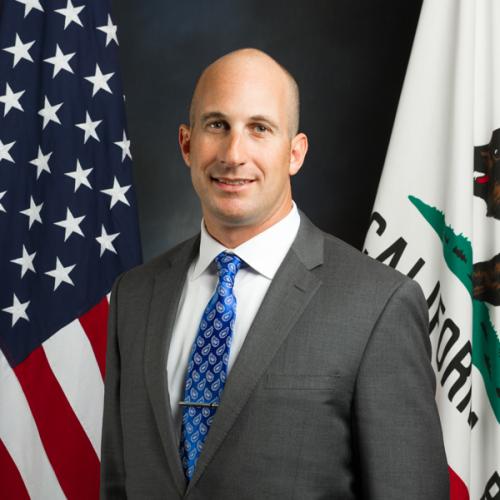
Asm. Heath Flora
Sponsored bills
(1) Existing law generally authorizes the State Registrar, a local registrar, or a county recorder to furnish a certified copy of a birth, death, or marriage certificate to an authorized person, as defined, who submits a written, faxed, or digitized image of a request accompanied by a notarized statement, sworn under penalty of perjury, that the applicant is an authorized person. Existing law, until January 1, 2022, additionally authorizes these officials to accept an electronic request for a certified copy of these records if the request is accompanied by an electronic verification of identity and an electronic statement sworn under penalty of perjury. The bill would delete the January 1, 2022, sunset date for authorizing an official to accept an electronic request, thereby applying those provisions indefinitely. By expanding the crime of perjury applicable to an electronic statement sworn under penalty of perjury, the bill would impose a state-mandated local program. The bill would also specify the guidelines for the electronic verification of identity and require the completion of a privacy risk assessment, as required by those guidelines. (2) The California Constitution requires the state to reimburse local agencies and school districts for certain costs mandated by the state. Statutory provisions establish procedures for making that reimbursement. This bill would provide that no reimbursement is required by this act for a specified reason. (3) Existing constitutional provisions require that a statute that limits the right of access to the meetings of public bodies or the writings of public officials and agencies be adopted with findings demonstrating the interest protected by the limitation and the need for protecting that interest. This bill would make legislative findings to that effect.
Existing law, commencing on January 1, 2023, prohibits a state agency from sending any outgoing United States mail that contains an individual's social security number unless the number is truncated to its last 4 digits or in specified circumstances, including when federal law requires inclusion of the social security number or when documents are mailed to a current or prospective state employee. This bill would instead require state agencies, as soon as is feasible, but no later than January 1, 2023, to stop sending any outgoing United States mail to an individual that contains the individual's social security number unless the number is truncated to its last four digits, except in specified circumstances. This bill would declare that it is to take effect immediately as an urgency statute.
Existing law establishes the Prison Industry Authority and authorizes it to operate industrial, agricultural, and service enterprises which will provide products and services needed by the state, or any political subdivision of the state, or by the federal government, or any department, agency, or corporation of the federal government, or for any other public use. Existing law requires state agencies to purchase these products and services at the prices fixed by the authority. Existing law also requires state agencies to make maximum utilization of these products and consult with the staff of the authority to develop new products and adapt existing products to meet their needs. Under existing law, the Department of Forestry and Fire Protection is required to carry out specified duties with respect to the prevention and control of forest fires. This bill would provide that, notwithstanding requirements imposed on state agencies to purchase Prison Industry Authority products, the Department of Forestry and Fire Protection may purchase personal protective equipment from the authority or private entities, based on the department's needs and assessment of quality and value.
Existing law, the Song-Beverly Consumer Warranty Act, provides consumer warranty protection to buyers of consumer goods, including motor vehicles, home appliances, and home electronic products. The act requires a service contract, as defined, to include certain elements, including a clear description and identification of the covered product. Existing law, the Electronic and Appliance Repair Dealer Registration Law, provides for the registration and regulation of service contractors and, among other things, requires a service contractor to comply with the provisions of the Song-Beverly Consumer Warranty Act described above relating to service contracts. The law makes a violation of its provisions a misdemeanor. This bill would specify that a service contract may be offered on a month-to-month or other periodic basis and continue until canceled by the buyer or the service contractor and would require a service contract that continues until canceled by the buyer or service contractor to, among other things, disclose to the buyer in a clear and conspicuous manner that the service contract shall continue until canceled by the buyer or service contractor and provide a toll-free number, email address, postal address, and, if one exists, internet website the buyer can use to cancel the service contract. The bill would exempt vehicle service contracts from the above-described provisions. The bill would also define the terms "clear and conspicuous" and "clearly and conspicuously" for purposes of the act. By expanding the scope of the crime of violating the Electronic and Appliance Repair Dealer Registration Law, this bill would impose a state-mandated local program. The California Constitution requires the state to reimburse local agencies and school districts for certain costs mandated by the state. Statutory provisions establish procedures for making that reimbursement. This bill would provide that no reimbursement is required by this act for a specified reason.
The Radiologic Technology Act makes it unlawful for any licentiate of the healing arts to administer or use diagnostic, mammographic, or therapeutic x-ray on human beings in this state, unless that person is certified by the State Department of Public Health and acting within the scope of that certification. The act requires the department to prescribe minimum qualifications for granting a fluoroscopy permit and continuing education requirements for the holders of that permit. A person who violates a provision of the Radiologic Technology Act or regulation of the department adopted pursuant to that act is guilty of a misdemeanor. This bill would, notwithstanding those requirements, authorize the department to issue a physician and surgeon or a doctor of podiatric medicine a one-time, nonrenewable, temporary permit to operate, or supervise the operation of, fluoroscopic x-ray equipment if the physician and surgeon or the doctor of podiatric medicine meets specified criteria, including attesting under penalty of perjury of having at least 40 hours of experience using that equipment while not subject to the act. By expanding the scope of the crime of perjury, the bill would impose a state-mandated local program. The bill would require the temporary permit to convey the same rights as a fluoroscopy permit for the period for which it is issued, in the classification for which the physician and surgeon or the doctor of podiatric medicine is eligible. The temporary permit would be valid for up to 12 months from the date of issue. Under the bill, the fee for the temporary permit would be $58, which the department would be authorized to revise under specified conditions. The California Constitution requires the state to reimburse local agencies and school districts for certain costs mandated by the state. Statutory provisions establish procedures for making that reimbursement. This bill would provide that no reimbursement is required by this act for a specified reason.
(1) Under existing law, the Department of Consumer Affairs is comprised of various boards, bureaus, commissions, committees, and similarly constituted agencies that license and regulate the practice of various professions and vocations. Existing law requires the Director of the Department of Consumer Affairs to administer and enforce those provisions. This bill would require the director to notify the appropriate policy committees of the Legislature within 60 days after the position of chief or executive officer of any bureau or board within the department becomes vacant, as specified. (2) Existing law, the Architects Practice Act, establishes the California Architects Board in the Department of Consumer Affairs for the licensure and regulation of persons engaged in the practice of architecture. Existing law authorizes an architect to form a business entity, as described, with persons who are not architects under certain circumstances. This bill would authorize a business entity organized as a general corporation to include in its name any or all of the following, as specified: a fictitious name, the name of one or more licensed architects, or the term "architect, the term "architecture," or other variations of the term "architect" or "architecture." (3) Existing law provides for the licensure and regulation of locksmiths by the Bureau of Security and Investigative Services within the Department of Consumer Affairs. Existing law requires a licensee to pay certain fees, such as a license application and a renewal fee. This bill would make the failure of any licensee who is also licensed to do business as a corporation in this state to be registered and in good standing with the Secretary of State and the Franchise Tax Board after notice from the bureau result in the automatic suspension of the licensee by operation of law. The bill would require that the fee for reinstatement of a suspended license be 25% of the fee imposed for renewal of a license. (4) Existing law, the Contractors' State License Law, establishes the Contractors' State License Board in the Department of Consumer Affairs for the licensure and regulation of contractors. Existing law requires the board to require an applicant to show the degree of knowledge and experience in the classification applied for, and the general knowledge of the building, safety, health, and lien laws of the state and of the administrative principles of the contracting business that the board deems necessary for the safety and protection of the public. Existing law authorizes an applicant for a license to qualify the applicant's knowledge and experience by the appearance of, among other qualifying individuals, a responsible managing employee who is qualified for the same license classification as the classification being applied for. Existing law defines "responsible managing employee" for purposes of the Contractors' State License Law to mean an individual who is a bona fide employee of the applicant and is actively engaged in the classification of work for which that responsible managing employee is the qualifying person on behalf of the applicant. This bill would, for purposes of the above-described definition of "responsible managing employee," define "a bona fide employee of the applicant" to mean an employee who is permanently employed by the applicant, and "actively engaged" to mean working 32 hours per week, or 80% of the total hours per week that the applicant's business is in operation, whichever is less. Under existing law, the person qualifying on behalf of an individual or firm is responsible for exercising direct supervision and control of their employer's or principal's construction operations as necessary to secure full compliance with the Contractors' State License Law and the rules and regulations of the Contractors' State License Board. Existing law requires the board to require every applicant or licensee qualifying by the appearance of a qualifying individual to submit detailed information on the qualifying individual's duties and responsibilities for supervision and control of the applicant's construction operations. Existing law makes a violation of these provisions a cause for disciplinary action and punishable as a misdemeanor, as specified. This bill would instead make the person qualifying on behalf of an individual or firm responsible for exercising supervision and control of their employer's or principal's construction operations as necessary to secure full compliance with the Contractors' State License Law and the rules and regulations of the Contractors' State License Board. The bill would include an employment duty statement prepared by the qualifier's employer or principal in the detailed information on the qualifying individual's duties and responsibilities for supervision and control of the applicant's construction operations that the applicant or licensee is required to submit. The bill would make the failure to provide the information on the qualifying individual's duties and responsibilities for supervision and control of the applicant's construction operations a cause for disciplinary action and punishable as a misdemeanor, as specified. By expanding the scope of a crime, this bill would create a state-mandated local program. The bill would, for these purposes, define "supervision or control" for these purposes to mean direct supervision or control or monitoring and being available to assist others to whom direct supervision and control has been delegated, and "direct supervision or control" to mean supervising construction, managing construction activities by making technical and administrative decisions, checking jobs for proper workmanship, or supervision on construction job sites. (5) Existing law, the Collateral Recovery Act, provides for the licensure and regulation of repossession agencies by the Bureau of Security and Investigative Services, within the Department of Consumer Affairs. Existing law requires a licensee to pay certain fees, such as a license application and a renewal fee. This bill would make the failure of any licensee who is also licensed to do business as a corporation or limited liability company in this state to be registered and in good standing with the Secretary of State and the Franchise Tax Board after notice from the bureau result in the automatic suspension of the licensee by operation of law. The bill would require that the fee for reinstatement of a suspended license be 25% of the fee imposed for renewal of a license. (6) Existing law, the Private Investigator Act, provides for the licensure and regulation of private investigators by the Bureau of Security and Investigative Services, within the Department of Consumer Affairs. Existing law requires a licensee to pay certain fees, such as a license application and a renewal fee. Existing law requires the bureau to issue a firearms permit when all of certain conditions are satisfied, including that a certified firearms training instructor has certified that the applicant has successfully completed the bureau's written examination and a bureau-approved training course on the carrying and use of firearms, and, if the applicant is a registered security guard, that the applicant has been found capable of exercising appropriate judgment, restraint, and self-control for the purposes of carrying and using a firearm. Existing law prohibits the bureau from renewing a firearms qualification card unless certain conditions are met, including that the applicant has requalified on the shooting range and successfully passed a written examination. This bill would prohibit an applicant who is a bureau-certified firearms training instructor from self-certifying their own completion of these requirements or from self-certifying the requalification requirements for a firearms qualification card. The bill would require an applicant who is a registered security guard to complete the requirement of being found capable of exercising appropriate judgment, restraint, and self-control to be completed within 6 months of submitting an application to the bureau. This bill would make the failure of any licensee who is also licensed to do business as a corporation or limited liability company in this state to be registered and in good standing with the Secretary of State and the Franchise Tax Board after notice from the bureau result in the automatic suspension of the licensee by operation of law. The bill would require that the fee for reinstatement of a suspended license be 25% of the fee imposed for renewal of a license. (7) Existing law, the Proprietary Security Services Act, provides for the licensure and regulation of persons providing proprietary private security services by the Bureau of Security and Investigative Services, within Department of Consumer Affairs. This bill would make the failure of any licensee who is also licensed to do business as a corporation or limited liability company in this state to be registered and in good standing with the Secretary of State and the Franchise Tax Board after notice from the bureau result in the automatic suspension of the licensee by operation of law. The bill would require that the fee for reinstatement of a suspended license be 25% of the fee imposed for renewal of a registration. (8) Existing law, the Private Security Services Act, provides for the licensure and regulation of persons providing private security services by the Bureau of Security and Investigative Services, within the Department of Consumer Affairs. Existing law requires a licensee to pay certain fees, such as a license application and a renewal fee. Existing law requires the bureau to issue a firearms permit when all of certain conditions are satisfied, including that a certified firearms training instructor has certified that the applicant has successfully completed the bureau's written examination and a bureau-approved training course on the carrying and use of firearms. Existing law prohibits the bureau from renewing a firearms qualification card unless certain conditions are satisfied, including that the applicant has requalified on the shooting range and successfully passed a written examination. This bill would prohibit an applicant who is a bureau-certified firearms training instructor from self-certifying their own completion of these requirements or from self-certifying the requalification requirements for a firearms qualification card. This bill would make the failure of any licensee who is also licensed to do business as a corporation in this state to be registered and in good standing with the Secretary of State and the Franchise Tax Board after notice from the bureau result in the automatic suspension of the licensee by operation of law. The bill would require that the fee for reinstatement of a suspended license be 25% of the fee imposed for renewal of a license. (9) Existing law, the Alarm Company Act, establishes the Bureau of Security and Investigative Services headed by the Chief of the Bureau of Security and Investigative Services, within the Department of Consumer Affairs and sets forth its powers and duties over the licensure, registration, and regulation of alarm company operators. Existing law prohibits a person from engaging in the activities of an alarm company operator unless the person holds a valid alarm company operator's license. Existing law makes a violation of these provisions a crime. Existing law authorizes the bureau to establish fees and penalties for licensure and registration. (A) Existing law defines terms for purposes of the act, including the terms "alarm agent" and "alarm system." This bill would change the definition of "alarm agent" to specify that the person is employed to physically conduct activities within the state. The bill would exclude from the definition of "alarm system" a fire protection system, as specified, and make other conforming changes. (B) Existing law requires an application for an alarm company operator license to be made in writing to, and filed with, the chief in the form that may be required by the director and accompanied by the original license fee. Existing law authorizes the Department of Consumer Affairs to enter into a contract with a vendor for the licensing and enforcement of the BreEZe system, which is a specified integrated, enterprisewide enforcement case management and licensing system, as specified. This bill, on and after July 1, 2022, would require all applications under the act to be submitted electronically through the online licensing and enforcement platform. (C) Existing law requires each individual applicant, partner of a partnership, designated officer of a corporation, or manager, as specified, to submit with the application a personal identification form with a photograph taken within one year immediately preceding the date of the filing of the application. This bill would remove the requirement that these individuals submit photographs on the personal identification form. (D) Existing law requires an alarm agent, while on duty, to carry either a valid and current registration card or a temporary application for a registration. This bill would require, if an alarm agent carries a temporary application for registration, that it include the application number and that they also carry a valid photo identification. Because a violation of these provisions would be a crime, the bill would impose a state-mandated local program. The bill would authorize the registration card or temporary application carried by the alarm agent to be in a digital format, as described. (E) Existing law requires every person licensed, registered, or designated under the act, who in the course of their employment carries a firearm, to complete a course of training in the carrying and use of firearms, receive a firearms qualification card prior to carrying a firearm, and complete a course in the exercise of the powers to arrest. This bill would also require, before a firearms permit is issued by the director, that it be certified by a bureau-certified firearms instructor that the applicant successfully completed a written examination prepared by the bureau. The bill would prohibit an applicant who is a bureau-certified firearms training instructor from self-certifying their own completion of these requirements or from self-certifying the requalification requirements for a firearms qualification card. The bill would make the failure of any licensee who is also licensed to do business as a corporation or limited liability company in this state to be registered and in good standing with the Secretary of State and the Franchise Tax Board after notice from the bureau result in the automatic suspension of the licensee by operation of law. The bill would require that the fee for reinstatement of a suspended license be 25 percent of the fee imposed for renewal of a license. (10) Existing law, the Real Estate Law, provides for the licensure and regulation of real estate brokers and salespersons by the Real Estate Commissioner, who is the chief officer of the Department of Real Estate within the Business, Consumer Services, and Housing Agency. Existing law prohibits a real estate licensee from publishing, circulating, distributing, or causing to be published, circulated, or distributed in newspapers or periodicals or mail, a matter pertaining to any activity for which a real estate license is required that does not contain a designation disclosing that the licensee is performing acts for which a real estate license is required. Existing law also requires a real estate licensee to disclose their name, license identification number, and other specified information, on all solicitation materials intended to be the first point of contact with consumers and on real property purchase agreements, as specified. Existing law authorizes the commissioner to adopt regulations identifying the materials in which a licensee must disclose this information. This bill would authorize a real estate licensee who is a natural person and who legally changes the surname in which their license was originally issued to continue to utilize their former surname for business associated with their license so long as both names are filed with the department. The bill would provide that use of a former surname does not constitute a fictitious name for purposes of certain filing requirements. (11) Existing law requires process servers and professional photocopiers to be registered with the county clerk of the county in which they reside or have a principal place of business, as specified. Existing law requires the certificate of registration to contain, among other things, specified contact information for the registrant. This bill would include the email address for the registrant, as specified, among the specified contact information that the certificate of registration is required to contain. (12) Existing law, the Cemetery and Funeral Act, provides for the licensure and regulation of private cemeteries by the Cemetery and Funeral Bureau, within the Department of Consumer Affairs. Existing law authorizes, on or after January 1, 2021, a cemetery authority of a private cemetery to apply to the bureau to convert its endowment care fund from a net income distribution method to a unitrust distribution method. Existing law requires the bureau to approve an application only if certain conditions are met, including that the cemetery authority, its board of trustees, or its corporate trustee demonstrates sufficient knowledge and expertise in investing and managing the endowment care fund under the unitrust distribution method. This bill would instead require that the cemetery authority, its board of trustees, or its corporate trustee demonstrates sufficient knowledge and expertise in investing and managing an endowment care fund. (13) This bill would make other nonsubstantive and conforming changes. (14) This bill would incorporate additional changes to Section 7596.3 of the Business and Professions Code proposed by AB 229 to be operative only if this bill and AB 229 are enacted and this bill is enacted last. (15) The California Constitution requires the state to reimburse local agencies and school districts for certain costs mandated by the state. Statutory provisions establish procedures for making that reimbursement. This bill would provide that no reimbursement is required by this act for a specified reason.
(1) Existing law, the Automotive Repair Act (act) , provides for the registration and regulation of automotive repair dealers by the Bureau of Automotive Repair (bureau) in the Department of Consumer Affairs. A violation of these provisions is a misdemeanor unless otherwise specified, and may subject a licensee to disciplinary action, including license suspension or revocation. Existing law authorizes the Director of Consumer Affairs (director) to adopt and enforce those rules and regulations that the director determines are reasonably necessary to carry out the purposes of the act and declare the policy of the bureau, including a system for the issuance of citations for violations of the act. Existing law also subjects the bureau to review by the appropriate policy committees of the Legislature, as specified, and requires that review to be performed as if the act were scheduled to be repealed on January 1, 2023. This bill would extend the above-described date to January 1, 2024. The bill also would, on or after July 1, 2023, authorize the director to include in the citation system a process for informal review of and recommendation on citations, including the establishment of an informal citation conference, as specified. (2) Existing law requires the bureau and other state licensing entities to disclose on the internet certain information related to enforcement actions the state licensing entity has taken against its licensees, including auto repair dealers. This bill would, until July 1, 2026, authorize the director to establish a process for an automotive repair dealer, upon successful completion of a specified remedial training, to prevent disclosure of the citation on the internet but would preclude the use of remedial training if the violation constitutes fraud, as defined. The bill would require the director to establish through regulation a program to certify providers of that training. (3) Existing law prohibits a person who is required to have a valid registration under the act from having the benefit of any lien for labor or materials or the right to sue on a contract for motor vehicle repairs unless the person has a valid registration. This bill would specify that the benefit of any lien for labor or materials includes the ability to charge storage fees. (4) Existing law requires an automotive repair dealer to register with the director upon forms prescribed by the director that contain sufficient information to identify the automotive repair dealer, including, among other things, the address of each location and the dealer's retail seller's permit number if a permit is required by law. Under existing law, the forms are required to include a statement signed by the dealer under penalty of perjury that the information provided is true. This bill would recast and revise those provisions to additionally require the forms to include, among other things, the automotive repair dealer's telephone number, email address, and motor vehicle license plate number if engaged in mobile automotive repairs. By requiring an automotive repair dealer to provide additional items of information to the director under penalty of perjury, this bill would expand the crime of perjury, thereby imposing a state-mandated local program. (5) Existing law requires the director to adopt regulations that prescribe the equipment and other qualifications as a condition to licensing a station as an official station for adjusting lamps or brakes and to prescribe the qualifications of adjusters employed in those stations. Existing law requires a licensed adjuster in a licensed station to issue a certificate of adjustment when requested by the owner or driver of the vehicle if the adjuster determines that the lamps or the brakes of the vehicle conform with the applicable requirements of law. Under existing law, a violation of the provisions regulating lamp and brake adjusting stations is an infraction. This bill would require the director to issue vehicle safety systems inspection licenses to stations and technicians to conduct inspections of, and repairs to, safety systems of vehicles. The bill would require the director to develop inspection criteria and standards for specific safety systems and components of the vehicle in order to promote the safe and uniform installation, maintenance, and servicing of vehicle safety systems and components. The bill would require the director to adopt regulations by January 1, 2024, including, but not limited to, the application fee and process for applicants and the certification process for vehicles, as specified. This bill would provide that the vehicle safety systems inspection license replaces licenses issued pursuant to the existing provisions governing the licensure of lamp and brake adjusting stations and adjusters and would repeal those provisions on the effective date of the new regulations. The bill would also provide that licenses and certificates issued pursuant to those repealed provisions would remain valid for 6 months thereafter. Because a violation of these provisions would be an infraction, the bill would create a state-mandated local program. (6) Existing constitutional provisions require that a statute that limits the right of access to the meetings of public bodies or the writings of public officials and agencies be adopted with findings demonstrating the interest protected by the limitation and the need for protecting that interest. This bill would make legislative findings to that effect. (7) The California Constitution requires the state to reimburse local agencies and school districts for certain costs mandated by the state. Statutory provisions establish procedures for making that reimbursement. This bill would provide that no reimbursement is required by this act for a specified reason.
Existing law defines "public works," for the purposes of regulating public works contracts, as, among other things, construction, alteration, demolition, installation, or repair work done under contract and paid for, in whole or in part, out of public funds. Existing law generally requires a contractor or subcontractor to be registered with the Department of Industrial Relations to be qualified to bid on, be listed in a bid proposal, or engage in the performance of any public works contract. Existing law requires a contractor or subcontractor to meet specific conditions to qualify for this registration. Existing law establishes various requirements applicable to all public works projects including, among other things, that the call for bids and contract documents specify that the project is subject to compliance monitoring and enforcement by the Department of Industrial Relations, and that each contractor or subcontractor furnish certain payroll records directly to the Labor Commissioner, as specified. Existing law requires that the contractor or subcontractor furnish these records at least monthly and in a format prescribed by the Labor Commissioner. This bill would revise the requirement to furnish records monthly to require that the contractor or subcontractor furnish those records at least once every 30 days while work is being performed on the project and within 30 days after the final day of work performed on the project. The bill would also instead require that the contractor or subcontractor furnish these records in an electronic format, in the manner prescribed by the Labor Commissioner, on the department's internet website. The bill would make a contractor or subcontractor who fails to furnish those records relating to its employees in the manner specified liable for a penalty of $100 per day, as specified, not to exceed $5,000 per project, to be deposited into the State Public Works Enforcement Fund. The bill would prohibit the Labor Commissioner from levying penalties under these provisions until 14 days after the deadline for furnishing records and require that these penalties accrue to the actual contractor or subcontractor that failed to furnish those records.
(1) Existing law, the Alcoholic Beverage Control Act, which is administered by the Department of Alcoholic Beverage Control, regulates the application, issuance, and suspension of alcoholic beverage licenses. Existing law defines a licensed branch office with reference to certain winegrower and brandy manufacturer facilities for which a duplicate license has been issued. Existing law prohibits a winegrower or brandy manufacturer from selling wine or brandy to consumers, or engaging in winetasting activities, at more than one licensed branch premise. Existing law limits the effect of this prohibition in connection with other premises, as specified. Existing law generally provides that a violation of the Alcoholic Beverage Control Act is a misdemeanor. This bill would revise the prohibition described above to allow a winegrower or brandy manufacturer to sell wine or brandy to consumers, or to engage in winetasting activities, at up to 2 licensed branch premises. By broadening the definition of a crime, this bill would impose a state-mandated local program. The bill would also make technical, clarifying changes. The Alcoholic Beverage Control Act also provides for application fees for a new license, not including a duplicate license, and for various annual renewal fees, depending on the type of license, including an annual fee for the renewal of a duplicate winegrower's license. The bill would provide for an application fee of $440 for a duplicate winegrower's license application. (2) The California Constitution requires the state to reimburse local agencies and school districts for certain costs mandated by the state. Statutory provisions establish procedures for making that reimbursement. This bill would provide that no reimbursement is required by this act for a specified reason.