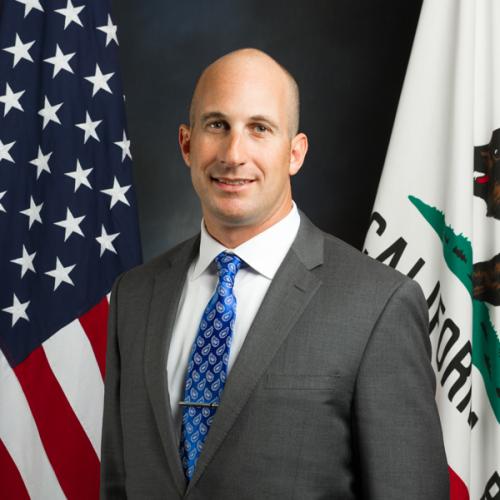
Photo of Heath Flora
R California House · District 9 On the 2026 ballot

Rep. Heath Flora

Compare
Total votes
23,533
all sessions
Attendance
83%
3,189 missed
Lower than 84% of chamber peers
With party
98%
of cast votes
Near the chamber average
Bipartisan score
1%
crosses aisle rarely
Near the chamber average
Sponsored
1,713
bills & resolutions
Higher than 88% of chamber peers
Committees
1
assignment
1,713 bills and resolutions

Sponsored bills

Total
1,713
Primary
192
Co-sponsor
1,521
This page
1,713
matching current filters
Co-sponsor ACR 145
Signed into law · California House · Co-sponsor
Relative to Women in Construction Week.

Maddy summaryThis bill designates the week of March 1, 2026, through March 7, 2026, as Women in Construction Week. It serves as a commemorative resolution intended to recognize the contributions of women working in the construction industry. The measure does not alter laws, allocate funding, or change government operations, but rather establishes an official observance period.

Signed into law Apr 21, 2026 1 co-sponsor
Co-sponsor ACR 120
Signed into law · California House · Co-sponsor
Relative to Positive Parenting Awareness Month.

Maddy summaryACR 120 designates January 2026 as Positive Parenting Awareness Month in California. This ceremonial resolution encourages statewide recognition and educational efforts focused on positive parenting practices. It does not create new laws or provide funding, but aims to raise public awareness about supportive parenting approaches. The measure affects all California residents by promoting community engagement during this designated month.

Signed into law Apr 21, 2026 1 co-sponsor
Co-sponsor HR 97
Passed · California House · Co-sponsor
Relative to the Armenian Genocide.

Maddy summaryThis House Resolution formally recognizes the events of 1915 to 1923 as the Armenian Genocide, stating that the Ottoman Empire and the Republic of Turkey systematically persecuted and killed over 1.5 million Armenians. The measure details how these actions included massacres, forced marches to death, and the displacement of survivors, while also noting the subsequent ethnic cleansing of other Christian groups in the region. It further highlights the historical role of Near East Relief in providing humanitarian aid to Armenians following the atrocities. As a commemorative resolution, this bill does not alter laws or budgets but serves to acknowledge the historical facts and honor the victims within the California Legislature.

Passed Apr 20, 2026 1 co-sponsor
Co-sponsor HR 98
Passed · California House · Co-sponsor
Relative to California Holocaust Memorial Day.

Maddy summaryThis bill designates April 14, 2026, as California Holocaust Memorial Day to honor the victims of the Holocaust and promote awareness of the tragedy. It urges all Californians to observe this day with appropriate remembrance activities, such as educational events or moments of reflection. The resolution also highlights the importance of combating antisemitism and other forms of hatred by remembering the historical events and the heroism shown during that time.

Passed Apr 13, 2026 1 co-sponsor
Primary AB 2702
In committee · California House · Lead sponsor
Residential Care Facilities for the Elderly on Faith-Based Lands Act of 2026.

The Planning and Zoning Law requires each city, county, or city and county to adopt a comprehensive, long-term general plan for its physical development, and the development of certain lands outside its boundaries, that includes, among other mandatory elements, a housing element. That law allows a development proponent to submit an application for a development that is subject to a specified streamlined, ministerial approval process not subject to a conditional use permit, if the development satisfies certain objective planning standards. Existing law, the Affordable Housing on Faith and Higher Education Lands Act of 2023, until January 1, 2036, requires that a housing development project be a use by right, as defined, and does not require a conditional use permit, planned unit development permit, or other discretionary local government review, notwithstanding any inconsistent provision of a local government's general plan, specific plan, zoning ordinance, or regulation, upon the request of an applicant who submits an application for streamlined approval, if, among other criteria, the development is located on land owned on or before January 1, 2024, by an independent institution of higher education or a religious institution, as specified. This bill would enact the Residential Care Facilities for the Elderly on Faith-Based Lands Act of 2026. The bill would require, notwithstanding any inconsistent provision of a local government's general plan, specific plan, zoning ordinance, or regulation, that a residential care facility development project located on land owned by a religious institution be an allowable use at certain densities, if the development project satisfies all of the prescribed criteria, as provided. The bill would define "residential care facility" to mean a facility licensed under a specified provision of law that provides 24-hour nonmedical care for persons who are elderly, adults, or children, including, but not limited to, a residential care facility for the elderly, as defined. This bill would specify that a development for a residential care facility that is eligible for approval as an allowable use under the bill is also eligible for a density bonus, incentives, or concessions, or waivers or reductions of development and parking standards, except as specified. The bill would require a development subject to these provisions to provide off-street parking of up to one space per unit, unless a state law or local ordinance provides for a lower standard of parking, in which case the law or ordinance applies. The bill would prohibit a local government from imposing any parking requirement on a development subject to these provisions if the development is located within one-half mile walking distance of public transit, either a high-quality transit corridor or a major transit stop, as those terms are defined, or it is within one block of a car share vehicle. This bill would repeal its provisions as of January 1, 2037. The bill would include findings that changes proposed by this bill address a matter of statewide concern rather than a municipal affair and, therefore, apply to all cities, including charter cities. The California Constitution requires the state to reimburse local agencies and school districts for certain costs mandated by the state. Statutory provisions establish procedures for making that reimbursement. This bill would provide that no reimbursement is required by this act for a specified reason.


In committee Apr 10, 2026 0 co-sponsors
Co-sponsor HR 87
Passed · California House · Co-sponsor
Relative to school accountability.

Maddy summaryThis bill urges state and local education leaders to formally evaluate new reporting requirements by asking six specific questions about their purpose, audience, value, feasibility, duplication, and duration. It aims to reduce administrative burdens on school districts by ensuring that any new data collection efforts directly support student learning rather than diverting resources. The resolution calls on the Legislature, Governor, and various state agencies to adopt this structured analysis process before implementing additional planning or accountability mandates. By promoting a more coherent system, the bill seeks to help schools use public funds more effectively for classrooms and pupil well-being.

Passed Apr 6, 2026 1 co-sponsor
Co-sponsor AB 2156
Signed into law · California House · Co-sponsor
Holidays: Farmworkers Day.

Existing law designates specific days as holidays in this state, including Cesar Chavez Day on March 31, and requires the Governor to annually proclaim March 31 as Cesar Chavez Day. This bill would instead designate March 31 as Farmworkers Day and would require the Governor to annually proclaim March 31 as Farmworkers Day. This bill would declare that it is to take effect immediately as an urgency statute.

Signed into law Mar 26, 2026 1 co-sponsor
Primary AB 1870
In committee · California House · Lead sponsor
Private Attorneys General Act: penalties: reduction.

The Labor Code Private Attorneys General Act of 2004 authorizes an aggrieved employee, as defined, to bring a civil action on behalf of that employee, and other current or former employees against whom a violation of the same provision of the Labor Code was committed, to enforce a violation of any provision of the Labor Code that provides for a civil penalty to be assessed and collected by the Labor and Workforce Development Agency, as specified, pursuant to certain notice and cure provisions, as prescribed. In a civil action under the act, existing law caps the civil penalty that may be recovered at 15%, if, prior to receiving the notice of violation, or prior to receiving a certain request for records from the aggrieved employee or the employee's counsel, the employer has taken all reasonable steps to be in compliance with all provisions identified in the notice, as specified. Similarly, existing law caps the civil penalty at 30% if within 60 days of receiving the notice of violation, the employer has taken all reasonable steps to prospectively be in compliance with all provisions identified in the notice. The act requires an evaluation of whether the employer's conduct was reasonable to be based on a totality of the circumstances. This bill would specify certain practices that may support a finding that the employer took all reasonable steps. Notwithstanding the above-described totality of the circumstances evaluation requirement, the bill would create a rebuttable presumption that the employer took all reasonable steps if they comply with specified compliance activities within the 24 months preceding the alleged violation period, provide documentation to the Labor and Workforce Development Agency, and certify under penalty of perjury that the violation has been cured, as specified. By expanding the scope of the existing crime of perjury, this bill would impose a state-mandated local program. The California Constitution requires the state to reimburse local agencies and school districts for certain costs mandated by the state. Statutory provisions establish procedures for making that reimbursement. This bill would provide that no reimbursement is required by this act for a specified reason.
In committee Mar 19, 2026 0 co-sponsors
Co-sponsor ACR 134
Signed into law · California House · Co-sponsor
Relative to Black History Month.

This measure would recognize February 2026 as the centennial anniversary of Black History Month, urge all citizens to join in celebrating the accomplishments of African Americans during Black History Month, and encourage the people of California to recognize the many talents of African Americans and the achievements and contributions they make to their communities to create equity and equality for education, economics, and social justice. The measure would recognize the significance in protecting the fundamental human rights enshrined in the United States Constitution and its Amendments, the United States Bill of Rights, and the California Constitution, as specified. The measure would also affirm the commitment of the Legislature all people are equal and shall be treated with respect and dignity and shall enjoy the equal application of the law for which the Legislature has been entrusted.

Signed into law Mar 19, 2026 1 co-sponsor
Co-sponsor ACR 132
Signed into law · California House · Co-sponsor
Relative to Rare Disease Day.

This measure would designate February 28, 2026, as Rare Disease Day and, with respect to rare diseases and disorders, would recognize the importance of improving awareness, encouraging accurate and early diagnosis, and supporting national and global efforts to develop effective treatments, diagnostics, and cures.

Signed into law Mar 19, 2026 1 co-sponsor
Showing 91 to 100 of 1,713 bills
Previous 1 9 10 11 172 Next