AB 1870 California Assembly · 2025-2026 Regular Session

Private Attorneys General Act: penalties: reduction.

Summary
The Labor Code Private Attorneys General Act of 2004 authorizes an aggrieved employee, as defined, to bring a civil action on behalf of that employee, and other current or former employees against whom a violation of the same provision of the Labor Code was committed, to enforce a violation of any provision of the Labor Code that provides for a civil penalty to be assessed and collected by the Labor and Workforce Development Agency, as specified, pursuant to certain notice and cure provisions, as prescribed. In a civil action under the act, existing law caps the civil penalty that may be recovered at 15%, if, prior to receiving the notice of violation, or prior to receiving a certain request for records from the aggrieved employee or the employee's counsel, the employer has taken all reasonable steps to be in compliance with all provisions identified in the notice, as specified. Similarly, existing law caps the civil penalty at 30% if within 60 days of receiving the notice of violation, the employer has taken all reasonable steps to prospectively be in compliance with all provisions identified in the notice. The act requires an evaluation of whether the employer's conduct was reasonable to be based on a totality of the circumstances. This bill would specify certain practices that may support a finding that the employer took all reasonable steps. Notwithstanding the above-described totality of the circumstances evaluation requirement, the bill would create a rebuttable presumption that the employer took all reasonable steps if they comply with specified compliance activities within the 24 months preceding the alleged violation period, provide documentation to the Labor and Workforce Development Agency, and certify under penalty of perjury that the violation has been cured, as specified. By expanding the scope of the existing crime of perjury, this bill would impose a state-mandated local program. The California Constitution requires the state to reimburse local agencies and school districts for certain costs mandated by the state. Statutory provisions establish procedures for making that reimbursement. This bill would provide that no reimbursement is required by this act for a specified reason.
Bill status in committee 1 of 4 stages cleared
Introduction
Feb 2026
Committee Review
Floor Vote
Governor
Introduced Feb 12, 2026 Last action Mar 19, 2026
Maddy AI version diff · 2 comparisons

What changed between versions

02/12/26 - Introduced 03/16/26 - Amended Assembly · 9 edits · Mar 16, 2026
MAJOR
The amendment dramatically expands AB 1870 from a narrow transit district governance bill into a major overhaul of California's Private Attorneys General Act (PAGA) for labor law enforcement. The new Section 2699 of the Labor Code introduces specific civil penalty amounts, creates a rebuttable presumption that employers took 'all reasonable steps' if they meet five compliance benchmarks within 24 months, allows nonprofit legal aid organizations to file PAGA actions, and eliminates penalties entirely for employers who both cure violations and satisfy the reasonable-steps standard. The original San Joaquin Regional Transit District provision is retained as a secondary section.
SCOPE

Entirely new Section 1 amending Labor Code Section 2699 (PAGA) was added, transforming the bill from a single-topic transit district measure into a comprehensive labor enforcement reform. The original Public Utilities Code amendment is now secondary.

Excludes from PAGA coverage any action based solely on posting, notice, agency reporting, or filing requirements, except where the filing involves mandatory payroll or workplace injury reporting. Also bars a PAGA action if the Labor and Workforce Development Agency has already cited the employer on the same facts and theories.

REQUIREMENT

Creates a rebuttable presumption that an employer took 'all reasonable steps' to comply if, within 24 months before the alleged violation, the employer: conducts quarterly payroll audits, provides annual supervisor training on wage/hour and antiretaliation rules, maintains a written non-retaliation reporting policy with anonymous channels, engages a third-party compliance reviewer every two years with corrective action within 60 days, and maintains accurate payroll records for at least four years. To trigger the presumption, the employer must submit documentation to the Labor and Workforce Development Agency and certify under penalty of perjury that the violation has been cured.

Provides that an employer who satisfies the reasonable-steps standard AND cures a violation shall not be required to pay any civil penalty for that violation. Other employers who cure violations pay no more than $15 per employee per pay period for the statute of limitations period.

FISCAL

Establishes specific civil penalty amounts: $500 if the employer has no employees; $100 per employee per pay period generally; $25 for certain wage statement violations where the employee could determine accurate information; $50 for isolated nonrecurring events (under 30 days or 4 pay periods); and $200 if there was a prior finding of unlawful practice within 5 years or if conduct was malicious, fraudulent, or oppressive. No penalty applies for agency failure to act.

Sets penalty distribution at 65 percent to the Labor and Workforce Development Agency for enforcement and education, and 35 percent to aggrieved employees. Penalties for no-employee violations go entirely to the agency. Penalties are reduced by one-half if the regular pay period is weekly rather than biweekly or semimonthly.

Fiscal committee review changed from 'no' to 'yes' and state-mandated local program changed from 'no' to 'yes' due to the new perjury certification requirement, which constitutes a state-mandated local program. No reimbursement is required because the mandate arises from creating a new crime (perjury).

ELIGIBILITY

Allows nonprofit legal aid organizations with 501(c)(3) status that are qualified legal services projects and have served as counsel of record in PAGA actions for at least five years prior to January 1, 2025, to file civil actions on behalf of aggrieved employees.

TIMELINE

The PAGA amendments apply to civil actions brought on or after June 19, 2024, but do not apply if the required notice of violation was filed before that date.

Floor votes

How they voted

No floor votes recorded yet.
Full legislative history

Actions timeline

Total actions
6
Key actions
1
Committee
4
Amendments
1
Mar 19, 2026
Committee
Re-referred to Coms. on L. & E. and JUD. pursuant to Assembly Rule 96.
lower
Mar 17, 2026
Committee
Re-referred to Com. on L. GOV.
lower
Mar 16, 2026
Introduced
From committee chair, with author's amendments: Amend, and re-refer to Com. on L. GOV. Read second time and amended.
lower
Mar 2, 2026
Committee
Referred to Com. on L. GOV.
lower
Feb 13, 2026
Lower · Passed
From printer. May be heard in committee March 15.
lower
1 primary · 0 co-sponsors

Sponsors

Role
Legislator
Party
State
District
P
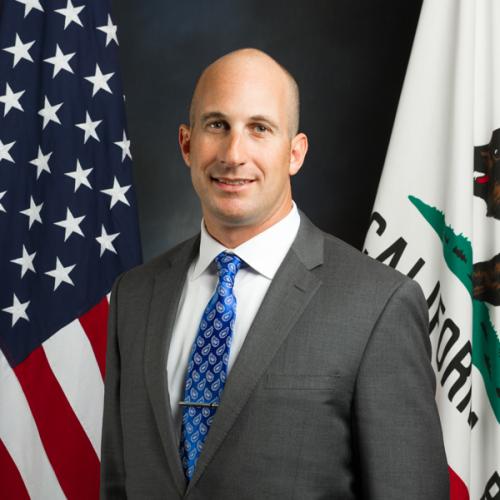
Photo of Heath Flora
Heath Flora
RRepublican
CA
9