Maddy summaryCalifornia House Resolution 138 designates the week of October 4 through October 10, 2026, as National 4-H Week throughout the state. The resolution encourages citizens to recognize the impact of the 4-H program, which is described as the largest youth development organization in the United States. It highlights how the program, delivered by the University of California Cooperative Extension, helps young people develop leadership skills through hands-on projects in health, science, agriculture, and civic engagement.
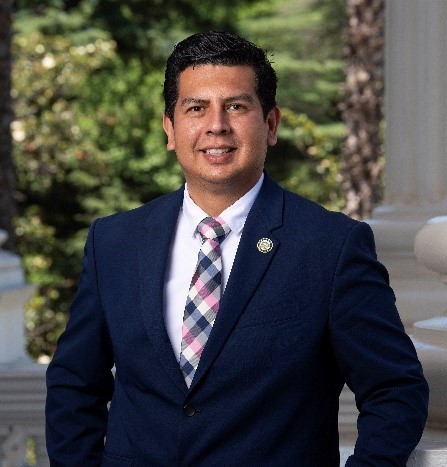
Rep. David Alvarez
Sponsored bills
Maddy summaryCalifornia House Resolution 134 designates the month of November as "California's First-Generation College Celebration Month." The resolution honors students whose parents did not complete a bachelor's degree and recognizes the specific academic and financial challenges they often face. It also highlights the importance of federal and state support programs, such as Pell Grants and the Educational Opportunity Program, in helping these students succeed in higher education.
Maddy summaryThis California House Resolution declares September 2026 as Neonatal Intensive Care Unit (NICU) Awareness Month to highlight the challenges faced by families with newborns requiring extended hospital care. The bill notes that approximately 17,500 to 22,500 infants in the state experience NICU stays longer than two weeks each year, which can strain parental bonding and financial stability. It encourages individuals, businesses, and organizations to support parents in securing adequate time for bonding and home care after discharge. The resolution also directs copies of the text to be sent to the Governor and the Director of Employment Development for distribution.
Maddy summaryCalifornia House Resolution 130 recognizes March 21, 2026, as the United Nations International Day for the Elimination of Racial Discrimination. The resolution cites historical context and current challenges in education, employment, criminal justice, and healthcare to highlight the impact of racial bias. It formally declares racism a public health crisis and commits the Assembly to actively participating in efforts to dismantle it.
Maddy summaryCalifornia Assembly Resolution 86 proclaims the week of September 1 through 7, 2026, as Canine "K-9" Appreciation Week to honor police dogs and their handlers. The resolution cites the historical growth of canine units in California and highlights their contributions to law enforcement, such as apprehending suspects, detecting narcotics, and locating missing persons. It also notes that these teams often reduce the need for lethal force and engage with the public through community demonstrations.
Existing law establishes a motor vehicle inspection and maintenance (smog check) program that is administered by the Department of Consumer Affairs. The smog check program requires inspection of motor vehicles upon initial registration, biennially upon renewal of registration, upon transfer of ownership, and in certain other circumstances. Existing law requires all motor vehicles to biennially obtain a certificate of compliance or noncompliance, as provided. Existing law exempts specified vehicles from obtaining the certificate of compliance or noncompliance, including, among others, all motor vehicles manufactured before the 1976 model year. Existing law also exempts from a specified portion of the smog test, both biennially and at transfer, a collector motor vehicle that is insured as a collector motor vehicle, is at least 35 model years old, complies with the exhaust emissions standards for that motor vehicle's class and model year as prescribed by the department, and passes a functional inspection of the fuel cap and a visual inspection for liquid fuel leaks. Existing law defines collector motor vehicle for this purpose to mean a motor vehicle owned by a collector, as defined, used primarily in shows, parades, charitable functions, and historical exhibitions for display, maintenance, preservation, and not used primarily for transportation. This bill would expand the definition of a collector motor vehicle to include a motor vehicle that is at least 35 model years old and complies with certain regulations that are required to be adopted by the Bureau of Automotive Repair, as specified. The bill would, beginning January 1, 2028, exempt specified collector motor vehicles manufactured before the 1981 model year from the requirement to obtain a certificate of compliance or noncompliance upon initial registration, biennially upon renewal of registration, or upon transfer of ownership. The bill would extend the applicability of this exemption by one model year each year until the final extension takes effect on and after January 1, 2033, that would exempt specified collector motor vehicles manufactured before the 1986 model year from the requirement to obtain the certificate of compliance or noncompliance. The bill would be known, and may be cited, as Jay Leno's Law.

This measure would proclaim April 10, 2026, as Dolores Huerta Day in California and would encourage all public schools and educational institutions to conduct exercises remembering her, recognizing her accomplishments, and familiarizing pupils with her contributions to California.
Maddy summaryCalifornia House Resolution 136 designates the second week of September each year as Home Hardening Week to promote fire safety measures for residents. The resolution cites rising wildfire risks and insurance costs as reasons for encouraging homeowners to use fire-resistant building materials and manage defensible space around their properties. It urges local organizations and county boards of supervisors to distribute information about these protective steps, which studies suggest can significantly increase the likelihood that a home survives a wildfire.
Existing law, the Medical Practice Act, establishes the Medical Board of California to license and regulate the practice of medicine. Former law, repealed as of January 1, 2025, established the Licensed Physicians and Dentists from Mexico Pilot Program, which allowed up to 30 licensed physicians and up to 30 licensed dentists from Mexico to practice medicine or dentistry in California for a period not to exceed 3 years, in accordance with certain requirements. Existing law, operative January 1, 2025, instead, establishes within the act the Licensed Physicians from Mexico Program, which authorizes the board to issue a limited number of nonrenewable 3-year physician's and surgeon's licenses to licensed physicians from Mexico who meet specified criteria. This bill would require the board to issue a full and unrestricted physician's and surgeon's license to a person who has completed 2 3-year terms of the Licensed Physicians from Mexico Program or the former Licensed Physicians and Dentists from Mexico Pilot Program in good standing upon satisfaction of specified requirements, including having an offer of continued employment from a health care facility or practice in California. This bill would establish the California Physician Expansion Act, which would require the board to issue a provisional license to an applicant who holds a full and unrestricted license to practice medicine in another country who meets specified requirements, including that the applicant has not committed any acts or crimes constituting grounds for denial of a certificate, as specified. In this regard, the bill would require the board to submit to the Department of Justice fingerprint images and related information required by the department of all applicants for a provisional license to determine whether the applicant has a criminal conviction record, as specified, and would require the department to provide a state- and federal-level response pursuant to specified provisions for the board to determine whether the applicant is subject to denial of licensure, as specified. The bill would make the provisional license valid for 3 years and would authorize the board to grant a one-time renewal for an additional period of up to 3 years, as specified. The bill would require a provisional licensee to, among other things, be employed by, and practice medicine only within, a sponsoring entity, as specified. The bill would authorize the board to revoke a provisional license or take any other disciplinary action deemed appropriate by the board, as specified. The bill would deem a provisional licensee applicant who meets specified requirements, including having completed at least 36 months of practice under the provisional license without any disciplinary actions, to meet the professional instruction, preliminary education, and postgraduate training requirements for a certificate under the Medical Practice Act. The bill would require the board to establish application, initial licensure, renewal, and conversion fees for the provisional license, as specified. The bill would make findings and declarations relating to its provisions.
Existing law establishes a system of public elementary and secondary schools in this state and authorizes local educational agencies throughout the state to operate schools and provide instruction to pupils in kindergarten and grades 1 to 12, inclusive. Existing law establishes various programs for the recruitment of teachers. Existing law establishes the Bilingual Teacher Professional Development Program, administered by the State Department of Education in consultation with the Commission on Teacher Credentialing, for teachers seeking to provide instruction in bilingual and multilingual settings. This bill, which would be operative upon appropriation by the Legislature, would establish the Pathways to Bilingual Teaching Program and would require the commission to develop and implement a program to award, on a competitive basis, grants of up to $600,000 to local educational agencies to form consortia with 4-year institutions of higher education, or 4-year institutions of higher education and community colleges, to establish or expand pathways to bilingual teaching to enable bilingual pupils to earn a multiple subject, single subject, PK-3 early childhood education specialist, or education specialist teaching credential, with a bilingual authorization, as provided. The bill would require the commission to annually report to the appropriate fiscal and policy committees of the Legislature on any grants funded until funds are fully expended, as specified.