

Existing law defines "sexual orientation change efforts" as practices by mental health providers that seek to change an individual's sexual orientation, as specified. Existing law prohibits a mental health provider, as defined, from engaging in sexual orientation change efforts with a patient under 18 years of age, and provides that such efforts attempted by a mental health provider are considered unprofessional conduct and must subject the mental health provider to discipline by that provider's licensing entity. This bill would define "sexual orientation or gender identity change efforts" as any practices of a licensed mental health provider that seek, during the provision of mental health services, to direct a patient toward a predetermined sexual orientation or gender identity, as specified, and would apply the prohibitions described above to such efforts. The bill would exclude specified practices, including age-appropriate interventions to address unlawful conduct or unsafe practices that do not seek to direct the patient toward a particular sexual orientation or gender identity, from this definition.
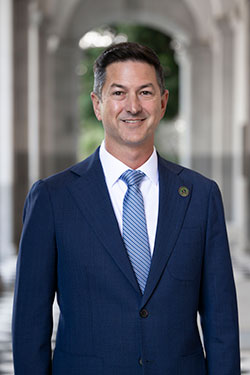
Rep. Chris Ward
Sponsored bills
(1) Existing law requires a school district, county office of education, and charter school to annually inform parents and guardians of pupils at the beginning of the first semester or quarter of the regular school term of California's child access prevention laws and laws relating to the safe storage of firearms, as specified. Existing law requires the State Department of Education, on or before July 1, 2023, to develop, and subsequently update as provided, in consultation with the Department of Justice, and provide to school districts, county offices of education, and charter schools, and, upon request, to provide to private schools, model language for the notice regarding those child access prevention and safe storage of firearms laws. This bill would revise and recast those requirements by, among other things, (A) instead requiring those local educational agencies to inform parents or guardians of each enrolled pupil of the importance of practicing secure firearm storage for all homes in which firearms are present through a notice entitled "Secure Firearm Storage Notification" that contains, among other things, a description of the risks of children accessing unsecured firearms in the home and California's child access prevention laws and laws relating to the safe storage of firearms, (B) requiring the State Department of Education, commencing July 1, 2027, to post the model language for notice on its internet website, as specified, (C) requiring the department, on or before July 1, 2027, to provide formatting and content options for local educational agencies to post the notice on their respective internet websites and for posting other relevant information and resources about secure firearm storage using other internet-based communication options, and (D) requiring the department to encourage each local educational agency to adopt a policy and practice of providing the notice to parents, guardians, and caregivers when otherwise providing notice to parents, guardians, or caregivers of disciplinary actions or supports given related to threats against other pupils or threats of self-harm. The bill would make conforming changes. By imposing additional duties on local educational agencies, the bill would impose a state-mandated local program. (2) Existing law requires the department, on or before June 15, 2025, to curate and post on its internet website best practices pertaining to school shooter or other armed assailant drills for use by school districts, county offices of education, and charter schools, as provided. Existing law encourages a school district, county office of education, or charter school to comply with those best practices. This bill would require those best practices to also include distributing the Secure Firearm Storage Notification published by the department when providing a specified drill-related notice to parents and guardians of pupils and a recommendation to post the notice on the local educational agency's internet website. (3) Existing law requires the Superintendent of Public Instruction to send a notice to each middle school, junior high school, and high school that encourages each school to provide suicide prevention training to each school counselor at least one time while employed as a counselor, provides information on the availability of the suicide prevention training curriculum developed by the department, and informs schools about the suicide prevention training provided by the department and describes how a school might retain those services. This bill would require that notice to also include the Secure Firearm Storage Notification model content published by the department as an example of information about reducing access to lethal means that can be given by a school counselor to a pupil's family, as provided. (4) This bill would incorporate additional changes to Section 48986 of the Education Code proposed by SB 685 to be operative only if this bill and SB 685 are enacted and this bill is enacted last. (5) The California Constitution requires the state to reimburse local agencies and school districts for certain costs mandated by the state. Statutory provisions establish procedures for making that reimbursement. This bill would provide that, if the Commission on State Mandates determines that the bill contains costs mandated by the state, reimbursement for those costs shall be made pursuant to the statutory provisions noted above.
Except as provided, the California Constitution requires that all property be taxed in proportion to its full value and assessed at the same percentage of fair market value. The tax imposed pursuant to these provisions is commonly referred to as an ad valorem property tax. Existing property tax law, in accordance with the California Constitution, provides for a "welfare exemption" for property used exclusively for religious, hospital, scientific, or charitable purposes and that is owned or operated by certain types of nonprofit entities, if any of certain qualifying criteria are met, including that the owner of the property receives low-income housing tax credits pursuant to specified provisions of the Internal Revenue Code. Under existing property tax law, property that meets these requirements that is used exclusively for rental housing and related facilities is entitled to a partial exemption, equal to that percentage of the value of the property that is equal to the percentage that the number of units serving lower income households represents of the total number of residential units, in any year that any of certain criteria apply. Existing property tax law, for the 2018–19 fiscal year through the 2027–28 fiscal year, in the case of an owner of property who is eligible for the federal low-income housing tax credit, requires that a unit continue to be treated as occupied by a lower income household if the occupants were lower income households on the lien date in the fiscal year in which occupancy of the unit commenced and the unit continues to be rent restricted, notwithstanding an increase in the income of the occupants of the unit to 140% of area median income. This bill would extend the above-described provision through the 2028–29 fiscal year. Existing property tax law establishes procedures for claiming the welfare exemption, including requiring the annual filing of a claim for the exemption with the county assessor, as provided. This bill would authorize the county assessor to accept electronic signatures for materials necessary to claim, maintain, or otherwise receive the welfare exemption. The bill would require the county board of supervisors to, if necessary and in collaboration with the county assessor, adopt any ordinances or resolutions to implement the electronic portal and submission authorization. The bill would require, as provided, every county to release all forms related to the annual recertification of tenant income necessary to receive the welfare exemption by November 15 of each calendar year prior to the due date for the forms. By imposing additional duties on counties, the bill would impose a state-mandated local program. This bill would incorporate additional changes to Section 214 of the Revenue and Taxation Code proposed by Assembly Bill 1294 to be operative only if this bill and Assembly Bill 1294 are enacted and this bill is enacted last. The California Constitution requires the state to reimburse local agencies and school districts for certain costs mandated by the state. Statutory provisions establish procedures for making that reimbursement. This bill would provide that, if the Commission on State Mandates determines that the bill contains costs mandated by the state, reimbursement for those costs shall be made pursuant to the statutory provisions noted above.
Existing law includes various provisions limiting how state and local entities may use their resources for immigration enforcement purposes. This bill would prohibit the use of state-owned property for purposes of immigration enforcement, as specified. In this regard, the bill would prohibit, among other uses, staging, assembling, mobilizing, or deploying vehicles, equipment, or personnel for immigration enforcement purposes. The bill would require the Department of General Services and state agencies to work together to identify state-owned property previously or likely to be used for immigration enforcement purposes. The bill would require state agencies to post signage at those properties regarding the prohibition and to use physical barriers limiting access, as provided. The bill would require state agencies to develop procedures to ensure that an attempted or actual use of state-owned property for immigration enforcement purposes is documented in writing, that the documentation includes any photographic or video evidence, and that the Attorney General's office or the Attorney General's designee is notified. The bill would direct state agencies to make educational materials available regarding the rights of employees, tenants, and security staff if federal agents enter state-owned property. The bill would further require the Attorney General's office to design standardized signage and to make the signage available to download free of charge on the Attorney General's internet website.
The California Fair Employment and Housing Act makes specified employment practices unlawful, including the harassment of an employee directly by the employer or indirectly by agents of the employer with the employer's knowledge. Under existing law, the Civil Rights Department administers these provisions. Existing law requires a specified employer with 5 or more employees to, by January 1, 2021, provide at least 2 hours of classroom or other effective interactive training and education regarding sexual harassment to all supervisory employees and at least one hour of classroom or other effective interactive training and education regarding sexual harassment to all nonsupervisory employees in California and, after that date, once every 2 years. Existing law requires an employer to include prevention of abusive conduct as a component of that training and education. This bill would additionally require that, beginning January 1, 2028, the above-described training and education include, as a component of the training and education, anti-hate speech training, as specified.
Existing law vests the Public Utilities Commission with regulatory authority over public utilities, including electrical corporations. Existing law authorizes the commission to fix the rates and charges for every public utility and requires that those rates and charges be just and reasonable. This bill would require the commission to ensure that all data serving as a basis for any decision or ruling issued by the commission, or in any proposal or analysis provided by commission staff, for the determination or application of a calculation methodology for any nonbypassable charge imposed on customers of a load-serving entity to recover costs associated with contracts, electrical corporation-owned generation, or any other resource or value included in that charge and any other charge derived from those costs, is made available to load-serving entities and ratepayer advocates on behalf of customers. The bill would require the commission to require an electrical corporation, member association, load-serving entity, or other party, in submitting a proposal or analysis for the determination or application of a calculation methodology for any nonbypasssable charge imposed on customers of a load-serving entity to recover costs associated with contracts, electrical corporation-owned generation, or any other resource or value included in that charge and any other charge derived from those costs, to make all data serving as a basis for that proposal or analysis available to load-serving entities and ratepayer advocates on behalf of customers. The bill would require that the data exclude any information that can reasonably be used to identify an individual, family, household, residence, or nonresidential customer. The bill would require that the data meet specified requirements, including that it is made available through a public disclosure, except for market-sensitive data, as provided. Under existing law, a violation of the Public Utilities Act or any order, decision, rule, direction, demand, or requirement of the commission is a crime. Because the above provisions would be a part of the act, and because a violation of a commission action implementing the above provisions would be a crime, the bill would impose a state-mandated local program. The California Constitution requires the state to reimburse local agencies and school districts for certain costs mandated by the state. Statutory provisions establish procedures for making that reimbursement. This bill would provide that no reimbursement is required by this act for a specified reason.
Existing law generally provides various benefits, including grant programs and tax credits. Existing law, the California Values Act, generally prohibits California law enforcement agencies from using their moneys or personnel for immigration enforcement purposes, except as specified. This bill would prohibit a business entity that is directly invested in, owns, operates, or manages a private detention facility, or that contracts with the federal government for immigration enforcement purposes, as specified, from receiving any state-provided grant or loan, as specified. The bill would also prohibit a disqualified taxpayer, as defined, from receiving any tax credits, except as provided. The bill would define "disqualified taxpayer" to mean a taxpayer that is directly invested in, owns, operates, or manages a private detention facility, or a taxpayer that contracts with a private detention facility or agency engaging in immigration enforcement, as specified. The bill would not apply these provisions to a provider of health care, as defined, that contracts with a private detention facility or agency engaging in immigration enforcement, as specified. The bill would establish the Due Process for All Fund and would require the Controller to transfer each year from the General Fund to the Due Process for All Fund the amount of tax collected that is attributable to business entities being made ineligible for tax credits by this bill. The bill would make moneys in the fund available upon appropriation by the Legislature for immigration-related services and programs. This bill would include a change in state statute that would result in a taxpayer paying a higher tax within the meaning of Section 3 of Article XIIIA of the California Constitution, and thus would require for passage the approval of 23 of the membership of each house of the Legislature.
Existing law states the policy of the State of California is to afford all persons in public schools, regardless of their disability, gender, gender identity, gender expression, nationality, race or ethnicity, religion, sexual orientation, or any other specified characteristic, equal rights and opportunities in the educational institutions of the state. Existing law establishes the Office of Civil Rights, under the administration of the Government Operations Agency. Existing law requires the Office of Civil Rights to employ a Religious Discrimination Prevention Coordinator, a Race and Ethnicity Discrimination Prevention Coordinator, a Gender Discrimination Prevention Coordinator, and an LGBTQ Discrimination Prevention Coordinator. Existing law requires each of the coordinators be appointed by the Governor and confirmed by the Senate. This bill would require the Office of Civil Rights to employ a Disability Discrimination Prevention Coordinator to be appointed by the Governor and confirmed by the Senate. The bill would change the title of the LGBTQ Discrimination Prevention Coordinator to instead be the LGBTQ+ Discrimination Prevention Coordinator. The bill would require each of the coordinators, in consultation with the State Department of Education, and under the supervision of the Government Operations Agency, to, among other things, (1) develop, consult on, and provide discrimination education to teachers, staff, governing board and body members, administrators, and other local educational agency personnel to identify and proactively prevent discrimination, as provided, (2) provide technical assistance, upon specified request, to local educational agencies to access restorative justice resources, training, and practitioners, and (3) engage with local educational agencies to ensure administrators are equipped to address conflicts at an early stage with the goal of proactively resolving incidents of discrimination, as specified. This bill would require the Office of Civil Rights to employ a Deputy Coordinator on Anti-Black Racism, a Deputy Coordinator on Anti-Asian American, Native Hawaiian, and Pacific Islander (Anti-AANHPI) Discrimination, a Deputy Coordinator on Anti-Latino Discrimination, and a Deputy Coordinator on Anti-Native American Discrimination, and would require these deputy coordinators to report directly to the Race and Ethnicity Discrimination Prevention Coordinator. The bill would require the Office of Civil Rights to provide resources and training on how to properly assist in cases of discrimination that involve the intersectionality of protected characteristics, as provided.
Existing law vests the Public Utilities Commission with regulatory authority over public utilities, including electrical corporations, while local publicly owned electric utilities are under the direction of their governing boards. This bill would, until January 1, 2030, exempt a portable solar generation device, as defined, from all interconnection requirements imposed by state law, the commission, electrical corporation rules, or local publicly owned electric utility rules, as specified. The bill would, until January 1, 2030, prohibit an electrical corporation or a local publicly owned electric utility from requiring a customer using a portable solar generation device to take specified actions, including, among other things, paying any fee or charge related to the device or the electricity the device feeds into a building's electrical system. The bill would, until January 1, 2030, authorize an electrical corporation or a local publicly owned electric utility to require a customer using a portable solar generation device to notify the electrical corporation or local publicly owned electric utility, using a simple online registration form, of the address, make, model, and size of the portable solar generation device, as provided. Beginning January 1, 2030, the bill would prohibit the sale of a portable photovoltaic energy generation device that is designed to be connected to and disconnected from a building's electrical system through a receptacle and does not meet the definition of a portable solar generation device, as specified. Under existing law, a violation of any order, decision, rule, direction, demand, or requirement of the commission is a crime. Because a violation of a commission action implementing the bill's requirements would be a crime, the bill would impose a state-mandated local program. Additionally, by imposing new duties on local publicly owned electric utilities, the bill would impose a state-mandated local program. The California Constitution requires the state to reimburse local agencies and school districts for certain costs mandated by the state. Statutory provisions establish procedures for making that reimbursement. This bill would provide that no reimbursement is required by this act for specified reasons.
Existing law requires the Department of Toxic Substances Control to adopt regulations for the identification and management of hazardous wastes. Existing law authorizes the department to adopt regulations designating end-of-life photovoltaic modules that are identified as hazardous waste as a universal waste and subject to regulations applicable to universal waste management. Federal regulations identify solid wastes which are subject to regulation as hazardous wastes. Federal regulations exclude from the definition of solid waste for that purpose hazardous secondary material that is generated and then transferred to another person for the purpose of reclamation under specified circumstances. This bill would require the department, on or before July 1, 2028, to convene one or more public workshops for interested parties to comment on the applicability of the above-described federal regulations to hazardous waste streams, including, but not limited to, solar photovoltaic modules, generated in California. The bill would require the department, on or before July 1, 2029, to consider the feedback received and evaluate the applicability of those federal regulations to end-of-life solar photovoltaic modules as an alternative to one or more of the state standards governing hazardous waste and universal waste management. The bill would authorize the department, based on findings of the evaluation, to adopt, by regulation, the federal regulations, subject to revision as necessary, and apply them to end-of-life solar photovoltaic modules that are identified as hazardous waste under existing state law.