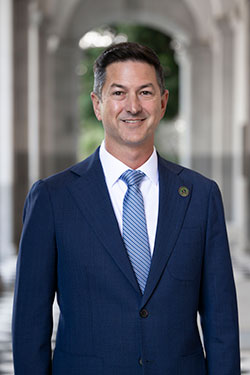
Photo of Chris Ward
D California House · District 78 On the 2026 ballot

Rep. Chris Ward

Compare
Total votes
14,561
all sessions
Attendance
97%
343 missed
Near the chamber average
With party
99%
of cast votes
Near the chamber average
Bipartisan score
0%
crosses aisle rarely
Near the chamber average
Sponsored
1,323
bills & resolutions
Near the chamber average
Committees
12
assignments
1,323 bills and resolutions

Sponsored bills

Total
1,323
Primary
118
Co-sponsor
1,205
This page
1,323
matching current filters
Co-sponsor ACR 213
Signed into law · California House · Co-sponsor
Relative to Childhood Cancer Awareness Month.

Maddy summaryThis bill designates September 2026 as Childhood Cancer Awareness Month. It directly affects state agencies and organizations by encouraging them to recognize this specific month for awareness activities. The measure does not change laws or allocate funding but serves as a formal commemorative resolution.

Signed into law Aug 27, 2026 1 co-sponsor
Co-sponsor AB 2484
Passed · California House · Co-sponsor
San Diego Metropolitan Transit System: transactions and use tax: voter initiatives.

The Mills-Deddeh Transit Development Act establishes the San Diego Metropolitan Transit Development Board, also known as the San Diego Metropolitan Transit System (MTS) , governed by a 15-member board with specified powers and duties related to the operation of public transit services in the southern portion of the County of San Diego. The act authorizes MTS to impose a transactions and use tax of up to 0.5% for public transit purposes within its jurisdiction, or a portion of its jurisdiction, pursuant to the Transactions and Use Tax Law and subject to voter approval and various other requirements. This bill would also authorize those taxes to be imposed by a qualified voter initiative. To the extent that the bill would impose additional duties on a county elections official, the bill would impose a state-mandated local program. The Transactions and Use Tax Law limits the combined rate of all taxes that may be imposed in accordance with that law in any county to 2%. This bill would prohibit the tax rate of 0.5% described above that may be imposed by MTS or a qualified voter initiative from being considered for purposes of the combined rate limit under the Transactions and Use Tax Law. The California Constitution requires the state to reimburse local agencies and school districts for certain costs mandated by the state. Statutory provisions establish procedures for making that reimbursement. This bill would provide that, if the Commission on State Mandates determines that the bill contains costs mandated by the state, reimbursement for those costs shall be made pursuant to the statutory provisions noted above.

Passed Aug 27, 2026 1 co-sponsor
Co-sponsor ACR 204
Signed into law · California House · Co-sponsor
Relative to behavioral health.

This measure would recognize and affirm the important role of artists, arts organizations, creative arts therapists, and arts for health initiatives in supporting behavioral health, promoting recovery, strengthening community resilience, and contributing to public safety. The measure would encourage and recognize exploration, support, and integration of arts and behavioral health within California's health care, behavioral health, and community-based systems.

Signed into law Aug 27, 2026 1 co-sponsor
Primary AB 1684
Passed · California House · Lead sponsor
Common interest developments: cooling systems.

Existing law, the Davis-Stirling Common Interest Development Act, governs the formation and operation of common interest developments, and requires a common interest development to be managed by an association, as specified. Existing law includes provisions that limit the authority of an association or the governing documents, as defined, to regulate the use of a member's separate interest, as defined. Existing law, the Mobilehome Residency Law, governs tenancies in mobilehome parks and includes provisions that are applicable to those who have an ownership interest in a subdivision, cooperative, or condominium for mobilehomes, or a resident-owned mobilehome park, as specified. Existing law makes any covenant, restriction, or condition contained in any rental agreement or other instrument affecting the tenancy of a homeowner or resident that effectively prohibits or restricts the installation, upgrade, replacement, or use of a cooling system in a mobilehome void and unenforceable. Existing law provides that a "cooling system" includes a portable air-conditioning unit, a window air-conditioning unit, a swamp cooler or any evaporative cooler, a cooling fan system, a heat pump, or any other technology that reasonably creates an internal temperature cooling benefit, and meets applicable health and safety standards and requirements imposed by law. This bill would, under the Davis-Stirling Common Interest Development Act, make any provision of the governing documents or architectural guidelines void and unenforceable if the provision prohibits or restricts the installation, upgrade, replacement, or use of a cooling system that complies with all applicable state and local building codes. The bill would also make any covenant, restriction, or condition contained in any, among other specified agreements, deed that effectively prohibits or restricts the installation, upgrade, replacement, or use of a cooling system, void and unenforceable. The bill would make it unlawful for an association to prohibit or restrict a member from installing, upgrading, replacing, or using a cooling system in the member's separate interest, or to take other specified actions in connection with the installation, upgrade, replacement, or use of a cooling system, subject to specified exceptions. This bill would make an association that willfully violates these provisions liable to the member for actual damages occasioned thereby, for a civil penalty paid to the member in an amount not to exceed $2,000, and reasonable attorney's fees and court costs, as provided.

Passed Aug 27, 2026 0 co-sponsors
Co-sponsor AB 1729
Passed · California House · Co-sponsor
State employment: telework programs.

Existing law requires every state agency to develop and implement a telecommuting plan as part of its telecommuting program in work areas where telecommuting is identified as being both practical and beneficial to the organization. Existing law requires the Department of General Services to establish a unit for purposes of overseeing telecommuting programs that is required to, among other things, develop and update policy, procedures, and guidelines to assist agencies in the planning and implementation of telecommuting programs. Existing law requires the department to establish criteria for evaluating the state's telecommuting program. Existing law defines "telecommuting" for purposes of those provisions. This bill would revise and recast those provisions. The bill would replace the term "telecommuting" with "telework," as defined. The bill would also require the Department of General Services to establish a telework dashboard that displays the cost-effectiveness and efficiency benefits of state telework programs, including documenting annual savings to the state of reduced office space and operating costs. The bill would additionally require each state agency, every 10 years, to evaluate its telework program to ensure that it aligns with the state agency's unique operational needs to carry out its programmatic missions and to help recruit and retain a qualified workforce. This bill would declare that it is to take effect immediately as an urgency statute.

Passed Aug 27, 2026 1 co-sponsor
Co-sponsor SB 1105
Passed · California Senate · Co-sponsor
Law enforcement.

Existing law defines those persons who are peace officers in the state, grants certain authority to those individuals and their employing entities, and places certain requirements on those individuals and their employing entities. Under existing law, federal criminal investigators and law enforcement officers are not California peace officers but are granted specified limited arrest authority in limited circumstances including when violations of state and local laws occur in their presence, when there is an immediate danger to persons or property, when detaining a person for evaluation or treatment who, due to a mental illness, is a danger to themselves or others, and when requested by a California law enforcement agency to be involved in a joint task force or criminal investigation. Existing law additionally grants peace officer status to federal employees who comply with certain training requirements, while they are engaged in enforcing state or local law on and adjacent to property owned or possessed by the United States Government, with the written consent of local law enforcement officials, as specified. This bill would remove certain arrest authority or peace officer status for federal criminal investigators, law enforcement officers, and federal employees, including for the purposes of executing a warrant for the arrest of a person. The bill would authorize deputized tribal law enforcement officers of the federal Bureau of Indian Affairs to exercise the powers of arrest, as specified, if, among other things, they are engaged in the enforcement of federal criminal law and they are exercising arrest powers that are incidental to the performance of those federal duties. The bill would also authorize certain federal employees of, among other agencies, the National Park Service and the Bureau of Land Management, if they are enforcing specified provisions of state law on property owned by the United States government, to exercise peace officer status with the written consent of the sheriff or the chief of police from the respective jurisdiction. The bill would also prohibit a California law enforcement agency, as defined, from entering into an interagency agreement, unless, among other things, the agreement is in writing and expressly provides that the agency shall not engage in racial or identity profiling, as specified. The bill would deem any interagency agreement in existence on January 1, 2027, valid, and would authorize that agreement to remain in effect until July 1, 2027. The bill would require, by no later than July 1, 2027, that the agreement be amended to include the provisions described above, including a prohibition on engaging in certain conduct, including racial or identity profiling. By increasing the duties on local law enforcement, this bill would impose a state-mandated local program. This bill would make these provisions severable. The California Constitution requires the state to reimburse local agencies and school districts for certain costs mandated by the state. Statutory provisions establish procedures for making that reimbursement. This bill would provide that, if the Commission on State Mandates determines that the bill contains costs mandated by the state, reimbursement for those costs shall be made pursuant to the statutory provisions noted above. This bill would make related findings and declarations.

Passed Aug 27, 2026 1 co-sponsor
Co-sponsor AB 1755
Passed · California House · Co-sponsor
CalWORKS.

Existing federal law, the Personal Responsibility and Work Opportunity Reconciliation Act of 1996, replaced the federal Aid to Families with Dependent Children (AFDC) program with the federal Temporary Assistance to Needy Families (TANF) block grant program. Existing federal law provides for allocation of federal funds through the federal TANF block grant program to eligible states. Existing law establishes the California Work Opportunity and Responsibility to Kids (CalWORKs) program, under which, through a combination of state and county funds and federal funds received through the TANF program, each county provides cash assistance and other benefits to qualified low-income families. Existing law requires aid to be granted to a family with a related child under 18 years of age who has been deprived of parental support or care due to the unemployment, continued absence, death, incapacity, or incarceration of a parent. Existing law considers a child to be deprived of parental support or care due to unemployment of the child's parent or parents when the child's parent or parents have worked less than 100 hours in the preceding 4 weeks and meets specified requirements related to the federal AFDC program. This bill would, for purposes of determining a child's deprivation of parental support or care, delete the requirements that the parent or parents work less than 100 hours in the preceding 4 weeks and meet the federal AFDC program requirements. The bill would instead disregard the number of hours that the child's parent or parents work, provided the family does not exceed the applicable gross or net income limits. The bill would make these provisions operative on July 1, 2027, or when the State Department of Social Services notifies the Legislature that the Statewide Automated Welfare System can perform the necessary automation to implement the provisions, whichever is later. To the extent that the bill would expand eligibility for the CalWORKs program, thereby imposing a higher level of service on counties, the bill would impose a state-mandated local program. Existing law continuously appropriates moneys from the General Fund to defray a portion of county costs under the CalWORKs program. This bill would instead provide that the continuous appropriation would not be made for purposes of implementing these provisions. The California Constitution requires the state to reimburse local agencies and school districts for certain costs mandated by the state. Statutory provisions establish procedures for making that reimbursement. This bill would provide that, if the Commission on State Mandates determines that the bill contains costs mandated by the state, reimbursement for those costs shall be made pursuant to the statutory provisions noted above.

Passed Aug 27, 2026 1 co-sponsor
Co-sponsor AB 1592
Passed · California House · Co-sponsor
California Indian Heritage Center support organization.

Existing law authorizes the Department of Parks and Recreation to enter into a statewide agreement with a park support organization to facilitate the implementation of reforms recommended by the Parks Forward Commission and to develop and secure expertise, services, resources, and projects that are not readily available to the state park system for specified purposes. Existing law provides for the department's development of a California Indian Heritage Center for cultural preservation, learning and exchange, land stewardship, and a place to engage all visitors in celebrating the living cultures of California Native American tribes. This bill would authorize the department to enter into an agreement with a California Indian Heritage Center support organization, as defined, for the purpose of creating a collaborative partnership between California Native American tribes and the department to achieve specified purposes in support of the California Indian Heritage Center. The bill would require the California Indian Heritage Center support organization to be overseen by a board of directors, with designated membership, and led by a chief executive officer, as provided.

Passed Aug 27, 2026 1 co-sponsor
Co-sponsor SB 895
Passed · California Senate · Co-sponsor
California Science and Health Research Bond Act.

(1) Existing law establishes various grant and loan programs for research, including, among others, the California Institute for Regenerative Medicine, California Firefighter Cancer Prevention and Research Program, and the Public Interest Research, Development, and Demonstration Program. This bill would establish the California Foundation for Science and Health Research within the Government Operations Agency. The bill would require the Secretary of Government Operations to oversee the process of appointing the director of the foundation, and would authorize the Secretary of Government Operations to delegate the task of hiring and determining the salaries, bonuses, and benefits of additional personnel to the director, as specified. The bill would require the director and personnel of the foundation to be responsible for implementing the strategic objectives of the California Foundation for Science and Health Research Council, as described below, administering grants, loans, and contracts awarded by the council, and all other duties as deemed necessary for the operation of the foundation. This bill would create the California Foundation for Science and Health Research and Innovation Acceleration Fund and require the moneys in the fund to be used by the foundation to award grants and make loans to, and enter into contracts with, public or private research companies, universities, academic medical centers, institutes, and organizations for scientific research and development and for certain economic sectors, as specified, in specific areas of research, including, but not limited to, biomedical, behavioral health, and climate research. The bill would also create the California Foundation for Science and Health Research and Innovation Acceleration Benefit Fund, to consist solely of private donations. The bill would make the moneys in the benefit fund available for the same purposes as the California Foundation for Science and Health Research and Innovation Acceleration Fund. This bill would require that, prior to the first grant from the foundation and no later than one year from the date the bill takes effect, the council develop various provisions and requirements to facilitate the foundation's goals of affordability and equitable access. The foundation shall impose various requirements on the grantees, loan recipients, and contractors, as specified, including, among other things, developing strategies to promote equitable access to the subject invention in various specified communities and making the data resulting from the bond-funded research available to the broader scientific community, except in cases involving national security interests. The council shall also establish standards requiring that all grants, awards, and contracts be subject to intellectual property agreements that balance the opportunity for the State of California to benefit from the inventions, technologies, patents, royalties, and licenses that result from research funded by certain public and private grants, as specified. This bill would create the California Foundation for Science and Health Research Council, as specified, which shall be vested with full power, authority, and jurisdiction over the foundation. The bill would require the council to, among other things, develop the strategic objectives and priorities of the foundation and provide the opportunity for public comment on the foundation's priorities, as specified, determine the research projects that will be funded by the California Foundation for Science and Health Research and Innovation Acceleration Fund, develop objectives and opportunities that offer support to early career researchers, and adopt certain regulations and standards, as specified. The bill would also require the council to consider how the foundation's research priorities relate to or support various economic and industry considerations, as specified. The bill would provide that a majority of the members of the council constitutes a quorum for the transaction of any business, for the performance of any duty, or for the exercise of any power of the council, except as otherwise provided. The bill would authorize the council to establish one or more scientific peer review panels consisting of experts in specified fields of research for the purposes of reviewing and prioritizing proposals on the basis of the scientific merit of the proposal, the potential benefit to the health and well-being of the population, natural resources, and environment of the state, and the demonstrated background, training, and expertise of the researchers and investigators to conduct the proposed work. This bill would require all research and development funded by the California Foundation for Science and Health Research and Innovation Acceleration Fund to be conducted under established standards of open scientific exchange, peer review, and public oversight. The bill would require the funds and contracts to be awarded on the basis of the research priorities established for the foundation by the council and the scientific merit of the proposed research, as determined by an open, competitive, scientific peer review process that ensures objectivity, consistency, and high quality. This bill would enact the California Science and Health Research Bond Act, which, if approved by the voters, would authorize the issuance of bonds in the amount of $7,500,000,000, pursuant to the State General Obligation Bond Law, to finance grants and loans to fund research and operate and maintain facilities for research. The bill would provide for the submission of the bond act to the voters at the March 7, 2028, statewide primary election. (2) Existing law establishes prohibitions and penalties with respect to ethical obligations and conflicts of interest for public officials, including a prohibition on engaging in activities that are incompatible with their official duties and a prohibition on being financially interested in a contract made by them in their official capacity or the board of which they are a part. This bill would authorize a council member to participate in a decision to approve or award a grant, loan, or contract for the purpose of research into a disease in which the member or their immediate family member has a personal interest, as specified. The bill would provide that service with specified educational institutions and organizations is not incompatible with a council member's duties. The bill would provide that the prohibition on being financially interested in a contract, as specified, does not apply if the council member recuses themself from a decision to award or approve a grant, loan, or contract that would otherwise be subject to the prohibition. The bill would provide that council members are subject to certain disclosure requirements relating to personal investments and potential conflicts of interest, as specified. (3) Existing law, the Bagley-Keene Open Meeting Act, requires that all meetings of a state body be open and public and all persons be permitted to attend any meeting of a state body, with specified exceptions for authorized closed sessions. This bill would require the Bagley-Keene Open Meeting Act to apply to all meetings of the council and scientific peer review panels, except as specified for when the council or scientific peer review panels meet to consider or discuss specified matters in closed sessions, including matters involving information relating to patients or medical or scientific research subjects, the disclosure of which would constitute an unwarranted invasion of personal privacy. Existing constitutional provisions require that a statute that limits the right of access to the meetings of public bodies or the writings of public officials and agencies be adopted with findings demonstrating the interest protected by the limitation and the need for protecting that interest. This bill would make legislative findings to that effect. (4) This bill would declare that it is to take effect immediately as an urgency statute.


Passed Aug 27, 2026 1 co-sponsor
Showing 21 to 30 of 1,323 bills
Previous 1 2 3 4 133 Next