

Existing federal law, the National Suicide Hotline Designation Act of 2020, designates the 3-digit telephone number "988" as the universal number within the United States for the purpose of the national suicide prevention and mental health crisis hotline system operating through the 988 Suicide and Crisis Lifeline. Existing law, the Miles Hall Lifeline and Suicide Prevention Act, requires, among other things, the Office of Emergency Services (OES) to verify that technology that allows for transfers between 988 centers, as well as between 988 centers and 911 public safety answering points, is available to 988 centers and 911 public safety answering points throughout the state, to appoint a 988 system director, and to verify interoperability between and across 911 and 988. Existing law establishes the 988 State Suicide and Behavioral Health Crisis Services Fund and provides that 988 surcharge revenue in the fund is available, upon appropriation by the Legislature, for purposes of the act. This bill would require the California Health and Human Services Agency (agency) to annually determine whether an adequate specialized LGBTQ+ suicide prevention hotline is activated by the federal government under 988. When making this determination, the bill would require the agency to consider specified factors, including, among other things, any factor the agency considers relevant to evaluating the adequacy of press 3 operations. The bill would authorize the agency to, no later than 6 months after its determination, request the federal Substance Abuse and Mental Health Services Administration (SAMHSA) to allow the state to implement the press 3 function at the state level for calls originating in the State of California, which would allow callers to dial "988" and press "3" to be automatically routed to a specialized 988 center. The bill would require OES and the agency to, no later than 12 months following the approval by SAMHSA, ensure that press 3 function technologies are available. This bill would require, no later than 12 months following approval by SAMHSA, the agency to identify and contract with a qualified entity or entities that specialize in LGBTQ+ suicide prevention services. The bill would require the agency to determine the eligibility criteria, establish an application process, and administer funds to the qualified entity, as specified. The bill would require a qualified entity to comply with various requirements, including having a primary objective of reducing suicide rates or addressing mental health crises. The bill would make its implementation subject to an appropriation by the Legislature, as specified. This bill would declare that it is to take effect immediately as an urgency statute.
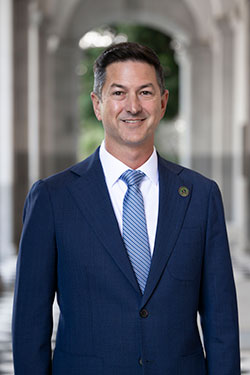
Rep. Chris Ward
Sponsored bills
Existing law provides comprehensive regulation of ticket sellers, defined as a person who, for compensation, commission, or otherwise, sells admission tickets to a sporting, musical, theater, or any other entertainment event. In this regard, existing law, among other things, prohibits specified ticket selling practices and imposes certain recordkeeping and disclosure requirements. If an event is canceled, existing law requires that the ticket price be fully refunded to the consumer whether by an original seller, event presenter, ticket reseller, or ticket resale marketplace, as specified. If an event is postponed, rescheduled, or replaced with another event at the same date and time, existing law requires the ticket seller to fully refund the purchaser upon request, as provided. Existing law makes a violation of those provisions a misdemeanor, and imposes civil penalties for certain violations. Existing unfair competition laws make various unfair competition practices unlawful, including any unlawful, unfair, or fraudulent business act or practice and unfair, deceptive, untrue, or misleading advertising. Existing law makes it unlawful for any person doing business in California and advertising to consumers in California to make any false or misleading advertising claim. Existing law makes a person who violates specified false advertising provisions liable for a civil penalty, as specified, and provides that a person who violates those false advertising provisions is guilty of a misdemeanor. This bill would generally revise and recast the provisions regulating the sale of event tickets to impose similar requirements, as applicable, to original sellers, event presenters, ticket resellers, and ticket resale marketplaces, as defined. This bill would prohibit a ticket seller from engaging in a speculative ticket sale, as defined. The bill would require that a ticket resale marketplace implement reasonable measures designed to prevent speculative ticket sales on its platform. The bill would make an original seller, ticket reseller, or ticket retail marketplace that violates particular law and fails to supply a ticket, as specified, civilly liable to the ticket purchaser for 2 times the contracted price of the ticket, in addition to any sum expended by the purchaser in nonrefundable expenses for attending or attempting to attend the event, and other fees and costs. This bill would make certain acts unlawful, including purchasing tickets in excess of posted limits for an online event ticket sale and circumventing or evading a ticket distribution control, as specified. The bill would also prohibit a person from using an internet website or address that is substantially similar to the internet website of an event presenter, venue operator, rights holder, original seller, or an authorized agent with intent to confuse or deceive consumers, as specified. The bill would make a violation of these provisions false or misleading advertising. By expanding the scope of a crime, this bill would impose a state-mandated local program. By expanding the scope of certain requirements related to selling those tickets, the violation of which is a crime, this bill would impose a state-mandated local program. The California Constitution requires the state to reimburse local agencies and school districts for certain costs mandated by the state. Statutory provisions establish procedures for making that reimbursement. This bill would provide that no reimbursement is required by this act for a specified reason.
The California Environmental Quality Act (CEQA) requires a lead agency, as defined, to prepare, or cause to be prepared, and certify the completion of an environmental impact report on a project that it proposes to carry out or approve that may have a significant effect on the environment or to adopt a negative declaration if it finds that the project will not have that effect. CEQA also requires a lead agency to prepare a mitigated negative declaration for a project that may have a significant effect on the environment if revisions in the project would avoid or mitigate that effect and there is no substantial evidence that the project, as revised, would have a significant effect on the environment. This bill would provide that a specified City of San Diego environmental impact report for a mixed-use development project, known as the Midway Rising project, is deemed sufficient, adequate, and complete for full compliance with CEQA and that any approval of the project may rely conclusively on that report for compliance with CEQA. The bill would require that all mitigation measures adopted by the City of San Diego as the lead agency be conditions of approval of the project. The bill would require the lead agency to monitor and enforce those conditions for the life of each applicable obligation. To the extent this requirement would impose new duties on a local agency, the bill would impose a state-mandated local program. The bill would require the project applicant to submit to the lead agency an annual status report on the implementation of those conditions. The bill would make its provisions operative upon the effective date of the bill or on the date the City Council of the City of San Diego certifies the report, whichever occurs later. This bill would make legislative findings and declarations as to the necessity of a special statute for the City of San Diego. The California Constitution requires the state to reimburse local agencies and school districts for certain costs mandated by the state. Statutory provisions establish procedures for making that reimbursement. This bill would provide that no reimbursement is required by this act for a specified reason. This bill would declare that it is to take effect immediately as an urgency statute.
(1) Existing law requires that specified actions for recovery of damages suffered as a result of childhood sexual assault that occurred before January 1, 2024, be commenced within 22 years of the date the plaintiff attains the age of majority or within 5 years of the date the plaintiff discovers or reasonably should have discovered that psychological injury or illness occurring after the age of majority was caused by the sexual assault, whichever period expires later. Existing law prohibits a plaintiff from commencing specified actions against a person or entity who did not commit the act of childhood sexual assault on or after the plaintiff's 40th birthday unless the offending person or entity knew or had reason to know of any misconduct that created a risk of childhood sexual assault by an employee, volunteer, representative, or agent, or the person or entity failed to take reasonable steps or to implement reasonable safeguards to avoid acts of childhood sexual assault. Existing law provides that there is no time limit for commencement of actions for recovery of damages suffered as a result of childhood sexual assault which occurred on or after January 1, 2024. Actions subject to these time limits include actions for liability against any person or entity who owed a duty of care to the plaintiff and an action for liability against any person or entity for an intentional act that was the legal cause of the childhood sexual assault. Existing law provides that in actions against entities for violation of a duty of care, the plaintiff must establish that the entity acted wrongfully or negligently. This bill would shorten the amount of time a victim of childhood sexual assault that occurred before January 1, 2024, would have to file a specified action to 22 years from the date the plaintiff attains the age of majority or within 3 years of the date the plaintiff discovers or reasonably should have discovered that psychological injury or illness occurring after the age of majority was caused by the sexual assault, whichever period expires later. The bill would, for actions seeking damages for childhood sexual assault that occurred before January 1, 2024, and filed on or after January 1, 2026, against a public entity, or one of its employees or agents, by a plaintiff who is 40 years of age or older, require the plaintiff to prove by clear and convincing evidence that the public entity knew of misconduct that resulted in childhood sexual assault and failed to take reasonable steps or implement safeguards to avoid it, as specified, and that the public entity negligently discharged a mandatory duty. For these cases, the bill would also require the court to review specified factors when adjudicating motions for remittitur and would authorize a court to structure judgments against public entities so that they could be paid over time. (2) For actions for recovery of damages suffered as a result of childhood sexual assault, existing law requires a plaintiff 40 years of age or older at the time the action is filed to file certificates of merit executed by the plaintiff's attorney and a mental health practitioner setting forth specified information. Existing law provides that the failure to file certificates in accordance with these provisions is grounds for a demurrer. This bill would instead require the certificates to be filed concurrently with the complaint and would prohibit a court clerk from accepting the filing of a complaint that lacks the certificates, except as specified. Additionally, the bill would require the certificates of merit to declare that the plaintiff's attorney is licensed to practice law in California and is in good standing with the State Bar. (3) Existing law authorizes a victim of childhood sexual assault who proves it was as the result of a cover up, as defined, to recover up to treble damages against the defendant who is found to have covered up the sexual assault, unless prohibited by another law. This bill would prohibit such treble damages from being imposed against a defendant that is a public entity. (4) Existing law prescribes the powers and duties of local legislative bodies. Under existing law, if a statute requires a local agency to take legislative action by resolution, and the local agency's charter requires it to take legislative action by ordinance, action by ordinance is compliant with the statute for all purposes. On or before December 1, 2027, this bill would require a local governmental body and a local educational agency, as those terms are defined, to each adopt codes of conduct and a sexual assault prevention plan that promote a safe environment for minors, as specified. The bill would require a local governmental body and a local educational agency to each adopt written policies, plans, or specifications regarding how grooming and sexual abuse concerns and risks will be reported. The bill would require a local governmental body to submit a copy of its adopted codes of conduct to the Attorney General on or before January 1, 2028, and would require the Attorney General to issue a report to the relevant policy committees of the Legislature on or before January 1, 2029, that lists, among other things, each local governmental body or local educational agency that has or has not complied with the requirements prescribed by this bill. The bill would provide that if a local governmental body or local educational agency is licensed or certified by a state agency to provide care or services to minors, the codes of conduct the agency must draft may not supersede the state laws or regulations enforced by the licensing or certifying agency. By imposing new duties on local governments, this bill would impose a state-mandated local program. (5) The State Bar Act provides for the licensure and regulation of attorneys by the State Bar of California (State Bar) , a public corporation governed by a board of trustees. Existing law subjects an attorney to discipline by the State Bar for violating the rules of professional conduct, among other acts, and it also subjects an attorney to civil penalties or criminal sanctions, including for unlawful solicitation, as specified. This bill would subject an attorney who brings a civil claim alleging childhood sexual assault in bad faith, as defined, to a civil penalty of $25,000 per violation. The bill would additionally authorize the Attorney General, a city attorney, or a county counsel to enforce those provisions. The bill would entitle a prevailing plaintiff in an action seeking this civil penalty to an award of reasonable attorney's fees and costs. (6) Existing law makes the personnel records of peace officers and custodial officers confidential and not disclosable in any criminal or civil proceeding except through discovery, as specified. This limitation does not apply to investigations or proceedings concerning the conduct of such officers that are conducted by specified entities, such as a grand jury, a district attorney, or the Commission on Peace Officer Standards and Training. Beginning January 1, 2028, this bill would also exclude an investigation or proceeding conducted by the Division of the Ombudsperson of the Office of Youth and Community Restoration from this limitation. (7) In a civil action for personal injury, property damage, or wrongful death, existing law prohibits the joint liability of each defendant for noneconomic damages, as defined. Existing law requires each defendant in such an action to be liable only for the amount of noneconomic damages allocated to that defendant in direct proportion to that defendant's percentage of fault. In a civil action filed on or after January 1, 2027, alleging personal injury, property damage, or wrongful death against a public entity, this bill would also prohibit the joint liability of each public entity defendant for economic damages, as defined, unless the public entity is found to be more than 15% at fault. (8) Under existing law, bonds, warrants, contracts, obligations, and evidences of indebtedness, for the purpose of validating proceedings, are deemed to be in existence upon their authorization, as specified. This bill would provide that, for purposes of determining the validity of refunding bonds to refund a tort action judgment entered against a public agency, as specified, indebtedness is deemed to be in existence on the date of adoption by the governing body of the public agency of a resolution or ordinance, as specified. (9) Existing law permits a defendant or a cross-defendant in a civil proceeding under the Government Claims Act, or in any civil action for indemnity or contribution, to seek from the court, at the time of the granting of a motion for summary judgment, directed verdict, motion for judgment in a nonjury trial, or nonsuit dismissing the moving party other than the plaintiff, petitioner, cross-complainant, or intervenor, a determination of whether the plaintiff, petitioner, cross-complainant, or intervenor brought their proceeding in good faith and with reasonable cause. If the court determines that the proceeding was not brought in good faith or with reasonable cause, existing law requires the court to decide the reasonable and necessary defense costs incurred by the party opposing the proceeding and to render judgment in favor of that party. Existing law applies these provisions only if the defendant or cross-defendant has made a motion for summary judgment, a motion for directed verdict, a motion for judgment in a nonjury trial, or nonsuit. This bill would expand the above provision to apply to a motion for judgment on the pleadings or a demurrer brought by a defendant or cross-defendant. The bill would require a motion brought by a defendant or cross-defendant to identify the specific plaintiffs for which the court's determination, as described above, is sought. The bill would also prohibit an award of defense costs under these provisions against an attorney from being passed on to a client as a litigation cost. (10) Existing law, the California School Finance Authority Act, authorizes a participating party, as defined, in connection with securing financing or refinancing of a project, or working capital, as defined, to elect to provide for funding payments of bonds issued by the California School Finance Authority and related obligations by electing to participate in a state or local intercept, or both, by an action of its governing board. Existing law requires the Controller, the county treasurer, or other appropriate county fiscal officer, as applicable, upon receipt of written notice provided by the participating party, to make an apportionment or revenue transfer from specified moneys designated for apportionment to the participating party. This bill would provide a similar authorization to a participating party, as defined, in connection with securing financing, refinancing, or refunding of a public debt obligation, as defined, to elect to provide for funding payments of the public debt obligation by electing to participate in a state or local intercept, or both, by an action of its governing board. The bill would require the Controller, the county treasurer, or other appropriate county fiscal officer, as applicable, upon receipt of written notice provided by the participating party, to make an apportionment or revenue transfer from specified moneys designated for apportionment to the participating party, as provided. The bill would authorize, and not require, a county to participate in local intercepts under these provisions. The bill would require a participating party to certify the payment schedule, as specified. By expanding the crime of perjury, this bill would impose a state-mandated local program. (11) Existing law authorizes the governing board of a school district that determines during a fiscal year that its revenues are less than the amount necessary to meet its current year expenditure obligations to request an emergency apportionment through the Superintendent of Public Instruction, subject to specified requirements. Existing law prescribes the financing conditions on emergency apportionments, including a requirement for a school district to develop a schedule to repay the emergency loan, which the county superintendent of schools is required to review, comment on, and submit to the Superintendent for approval. Existing law authorizes emergency apportionments to be provided through an interim loan from the General Fund and lease financing to be made available by the California Infrastructure and Economic Development Bank, which is authorized to issue bonds for purposes of the emergency apportionments and related costs. Existing law prohibits the term of the lease from exceeding 20 years, except as specified. Existing law authorizes, as an alternative to lease financing, emergency apportionments to be provided from the General Fund. Existing law requires the emergency apportionment to be repaid within 20 years. This bill would require the school district to consult the county superintendent of schools and the County Office Fiscal Crisis and Management Assistance Team in developing the repayment schedule and would require the county superintendent of schools to submit the repayment schedule to the Department of Finance, instead of the Superintendent, for approval. The bill would extend the maximum term of a lease or for repayment of an emergency apportionment to 30 years. The bill would require the determination of the term to be made by the Department of Finance, in consultation with the school district, the county superintendent of schools, the Superintendent, and the County Office Fiscal Crisis and Management Assistance Team and would require the determination to take into consideration specified factors. To the extent the bill imposes new duties on county superintendents of schools, the bill would impose a state-mandated local program. (12) Existing law allows the Attorney General to assign an investigator upon request of a district attorney, sheriff, or chief of police, in any crime of statewide importance. This bill would require the Attorney General to investigate claims of systemic and longstanding sexual abuse of minors in specified juvenile detention centers operated by the County of Los Angeles and reports of fraudulent claims of sexual abuse of minors in, among others, the County of Los Angeles and the City of Santa Monica. The bill would require the Attorney General, by June 30, 2029, to prepare and submit a report to the Legislature summarizing their investigative findings pursuant to these provisions. The bill would make these reporting provisions inoperative on January 1, 2031. (13) Existing law, the Child Abuse and Neglect Reporting Act, establishes procedures for the reporting and investigation of suspected child abuse or neglect. The act requires certain professionals, including specified health practitioners and social workers, known as "mandated reporters," to report known or reasonably suspected child abuse or neglect to a local law enforcement agency or a county welfare or probation department, as specified. Failure by a mandated reporter to report an incident of known or reasonably suspected child abuse or neglect is a misdemeanor. Existing law strongly encourages an employer of specific types of mandated reporters, and requires an employer of other types of mandated reporters, including an adult person whose duties require direct contact with and supervision of minors in performance of the minors' duties in the workplace, as specified, to provide their employees who are mandated reporters with training about their duties as a mandated reporter. Existing law requires that training to include training in child abuse and neglect identification. This bill would expand the list of employers that are required to provide this training to include those who employ, among others, peace officers, probation officers, and social workers, and would require that training to also include grooming behavior and sexual abuse risks. The bill would define "grooming behavior" for these purposes to mean a behavior that seeks to prepare, induce, or persuade a minor to engage in sexual activity or another form of exploitation. The bill would require an employer who is required to provide their employees with this training to ensure the employees take the training at least once every 2 years. By imposing new training requirements on local employees, this bill would impose a state-mandated local program. (14) Existing law establishes the California Child Welfare Council to serve as an advisory body responsible for improving the collaboration and processes of the multiple agencies and the courts that serve the children and youth in the child welfare and foster care systems. Existing law requires the council to monitor and report the extent to which child welfare and foster care programs and the courts are responsive to the needs of children in their joint care and issue advisory reports, no less frequently than annually, to the Governor, the Legislature, the Judicial Council, and the public. This bill would require the council, on or before July 1, 2028, to issue an advisory report that includes recommendations for policy changes that could aid in the prevention of sexual assault of minors in the custody or temporary care of public agencies or their contracted caregivers. The bill would require the council to transmit that report to the Governor and the Legislature, and make the report publicly available on a public-facing internet website. This bill would make these provisions inoperative on December 1, 2028, and would repeal those provisions as of January 1, 2029. (15) Existing law establishes the Office of the State Foster Care Ombudsperson within the State Department of Social Services, and prescribes certain powers for the office relating to the management of foster children, including receiving complaints made by or on the behalf of children in foster care and the dissemination of information on the rights of children and youth in foster care. Existing law requires the office to compile and make available to the Legislature all specified data collected over the course of the year, including the number, type, and source of complaints made. This bill would require the office, on or before July 1, 2028, to develop a specified plan to strengthen independent oversight, monitoring, safety, and rights protections for children and nonminor dependents in foster care who are at risk of sexual abuse, grooming, exploitation, trafficking, or retaliation. The bill would require the office to submit a report, as specified, to the Legislature, by February 1, 2029, and publish the report on its internet website. This bill would require the department, on or before March 1, 2028, to issue guidance to children's residential facilities that identifies best practices for preventing sexual abuse in such facilities. The bill would require all such facilities, on or before July 1, 2029, to have program statements that address responses to reports of sexual abuse, grooming, sexual exploitation, trafficking, retaliation, or interference when sexual abuse is alleged or suspected. (16) Existing law authorizes the State Department of Social Services to establish regulations for periodic inspections for various facilities, including foster family homes or certified family homes. Existing law specifies that every licensed community care facility, except for foster family homes, is subject to unannounced inspections by the department. This bill would require the department to place a children's residential facility, as defined, on enhanced monitoring, as specified, for not less than 12 months if 2 or more credible allegations within a 12-month period or 1 substantiated allegation are made involving certain conduct, including sexual abuse, grooming, sexual exploitation, or retaliation. The bill would require the department to, by January 10, 2028, and each year thereafter, update the Legislature regarding sexual safety in children's residential facilities. The bill would require the department to make these annual reports available on its public internet website. (17) Existing law establishes the Office of Youth and Community Restoration within the California Health and Human Services Agency. The office's mission is to promote trauma responsive, culturally informed services for youth involved in the juvenile justice system that support the youths' successful transition into adulthood and help them become responsible, thriving, and engaged members of their communities. Existing law establishes the Board of State and Community Corrections to provide statewide leadership, coordination, and technical assistance to promote effective state and local efforts and partnerships in California's adult and juvenile criminal justice system. This bill would require the office and the board to develop a plan to establish an oversight structure that ensures protections for youth in juvenile halls, camps, secure youth treatment facilities and other juvenile justice settings that are comparable to youth placed in licensed children's residential facilities. The bill would require the office and board to submit the plan to the Legislature on or before July 1, 2028, and to implement the plan on or before July 1, 2030. This bill would make legislative findings and declarations as to the necessity of a special statute for the County of Los Angeles. This bill would incorporate additional changes to Section 11165.7 of the Penal Code proposed by AB 2478 to be operative only if this bill and AB 2478 are enacted and this bill is enacted last. The California Constitution requires the state to reimburse local agencies and school districts for certain costs mandated by the state. Statutory provisions establish procedures for making that reimbursement. This bill would provide that, if the Commission on State Mandates determines that the bill contains costs mandated by the state, reimbursement for those costs shall be made pursuant to the statutory provisions noted above.
Existing law establishes the Division of Labor Standards Enforcement within the Department of Industrial Relations. Existing law authorizes the division, which is headed by the Labor Commissioner, to enforce the Labor Code and all labor laws of the state the enforcement of which is not specifically vested in any other officer, board, or commission. This bill would limit the use of workplace surveillance tools, as defined, by employers, including by prohibiting an employer from monitoring or surveilling employees in a bathroom located in the workplace, except as specified. The bill would provide an employee with the right to leave behind workplace surveillance tools that are on their person or in their possession when entering a bathroom, except as specified. This bill would authorize the commissioner to enforce the bill's provisions, as prescribed, and would authorize a public prosecutor to bring specified enforcement actions. The bill would subject an employer who violates the bill to a civil penalty of up to $500 for each violation. The bill would include findings that changes proposed by this bill address a matter of statewide concern rather than a municipal affair and, therefore, apply to all cities, including charter cities.
The California Fair Employment and Housing Act establishes the Civil Rights Department within the Business, Consumer Services, and Housing Agency and requires the department to, among other things, bring civil actions to enforce the act. Existing law requires, on or before September 1, 2024, the Department of Technology to conduct, in coordination with other interagency bodies as it deems appropriate, a comprehensive inventory of all high-risk automated decision systems that have been proposed for use, development, or procurement by, or are being used, developed, or procured by, any state agency. This bill would generally regulate the development and deployment of an automated decision system (ADS) used to make consequential decisions, as defined. The bill would define "automated decision system" to mean a computational process derived from machine learning, statistical modeling, data analytics, or artificial intelligence that issues simplified output, including a score, classification, or recommendation, that is designed or used to assist or replace human discretionary decisionmaking and materially impacts natural persons. This bill would require a developer of a covered ADS, as defined, to take certain actions, including providing a potential deployer instructions explaining how the covered ADS should be used by the deployer to make or facilitate a consequential decision. This bill would require a deployer of a covered ADS to take certain actions, including provide certain disclosures to a subject of a consequential decision made or facilitated by the covered ADS that results in an adverse outcome, as defined, and provide the subject with an opportunity to appeal the outcome of the consequential decision, as prescribed. This bill would authorize the Attorney General to bring a specified civil action for noncompliance.
Federal law establishes United States coins and currency as legal tender for all debts, public charges, taxes, and dues, and authorizes the Secretary of the Treasury to mint and issue a one-cent coin. Existing state law generally regulates the use of credit cards, debit cards, gift certificates, and other forms of payment for goods and services in this state. Existing law prohibits a person from overcharging for a commodity. A violation of this provision is a crime. This bill would enact the California Common Cents Act to require a merchant, for the portion of the total transaction price paid with legal tender, to determine the total transaction price of goods or services by rounding to the nearest amount of cents divisible by 5, as specified. The bill would define terms for its purposes, including defining "legal tender" as all metal coins and paper currencies of the United States. The bill would require any rounding adjustment to be disregarded for the purposes of the computation of any applicable tax, fee, or surcharge, tax, fee, or surcharge reimbursement, or the measure thereof, and authorize the California Department of Tax and Fee Administration to promulgate regulations to implement this requirement. The bill would prohibit a person from collecting from a purchaser an amount greater than the amount permitted under these provisions and would subject a violation of this prohibition to the same remedies as the prohibition against overcharging for a commodity, as provided. By expanding a crime, this bill would impose a state-mandated local program. The bill would make its provisions operative on July 1, 2027. The bill would make its provisions severable. The California Constitution requires the state to reimburse local agencies and school districts for certain costs mandated by the state. Statutory provisions establish procedures for making that reimbursement. This bill would provide that no reimbursement is required by this act for a specified reason.
The California Environmental Quality Act (CEQA) requires a lead agency, as defined, to prepare, or cause to be prepared, and certify the completion of, an environmental impact report on a project that it proposes to carry out or approve that may have a significant effect on the environment or to adopt a negative declaration if it finds that the project will not have that effect. CEQA also requires a lead agency to prepare a mitigated negative declaration for a project that may have a significant effect on the environment if revisions in the project would avoid or mitigate that effect and there is no substantial evidence that the project, as revised, would have a significant effect on the environment. CEQA defines various terms, including "natural and protected lands" for its purposes. This bill would revise the definition of that term to include habitats for protected species identified as candidate, sensitive, or species of special status by state or federal agencies. CEQA exempts from its requirement projects that consist exclusively of a day care center that is not located in a residential area and projects that consist exclusively of an advanced manufacturing facility located on a site zoned exclusively for industrial uses. This bill would additionally exempt projects consisting exclusively of a family day care home, as defined. The bill would, for the exemption for the day care center and family day care home, instead require the projects for those facilities not be located in an area zoned for industrial use or within 3,200 feet of a facility that actively extracts or refines oil or natural gas in order for the exemption to apply. The bill would revise the exemption for advanced manufacturing facility projects to require those projects to be used exclusively for final tier manufacturing, as defined. The bill would require an applicant of an advanced manufacturing project that is exempted from CEQA under the bill's requirement to enter into a bona fide community benefits agreement, as provided, and to comply with certain labor requirements, as provided. The bill would require the lead agency, before determining that an advanced manufacturing project is exempt from CEQA, to hold at least one public hearing on the project and to ensure that the applicant complies with the requirement to enter into a bona fide community benefits agreement and the labor requirements. CEQA exempts from its requirements a rezoning that implements the schedule of actions contained in an approved housing element. CEQA specifies that this exemption does not apply to a rezoning that would allow for the construction of certain facilities, including oil and gas infrastructure. CEQA also specifies that this exemption does not apply rezoning that would allow for construction to occur within the boundaries of any natural and protected lands, except as provided. This bill would repeal the exception from the CEQA exemption for rezoning that would allow for oil and gas infrastructure. The bill would specify that the definition of "natural and protected land" does not include habitats for protected species that would be added to that definition by this bill for purposes the exception for rezoning that would allow for construction to occur within the boundaries of any natural and protected lands to the CEQA exemption. CEQA specifies, for a proposed housing development project that would otherwise be exempt from its requirements but for a single condition required for the exemption to apply, that the application of CEQA is limited to the effects upon the environment that are caused by that single condition. CEQA provides that this limited application of CEQA does not apply if the proposed housing project is located on natural and protected land, but does not include "natural and protected land" that is a site within a very high fire hazard severity zone or within the state responsibility area, except as provided. This bill would additionally specify that "natural and protected land" does not include habitats for protected species that would be added to that definition by this bill. Because the bill would imposes additional duties on a lead agency, this bill would impose a state-mandated local program. The California Constitution requires the state to reimburse local agencies and school districts for certain costs mandated by the state. Statutory provisions establish procedures for making that reimbursement. This bill would provide that no reimbursement is required by this act for a specified reason.
Existing law generally designates the State Air Resources Board as the state agency with the primary responsibility for the control of vehicular air pollution, and designates air pollution control districts and air quality management districts with the primary responsibility for the control of air pollution from all sources other than vehicular sources. Existing law requires the state board to inventory sources of air pollution within the air basins of the state, determine the kinds and quantity of air pollutants, and monitor air pollutants in cooperation with districts and other agencies. Existing law requires the state board to adopt standards of ambient air quality for each air basin in consideration of the public health, safety, and welfare, including, but not limited to, health, illness, irritation to the senses, aesthetic value, interference with visibility, and effects on the economy. Existing law authorizes these standards to vary from one air basin to another. This bill would require the state board, in consultation with specified entities, to develop, as provided, a response framework that establishes best practices and guidance for addressing fugitive and natural sources of hydrogen sulfide gas and for community preparation and response to hydrogen sulfide exposure events originating from these sources. The bill would require the state board, in developing the response framework, to conduct at least 3 public workshops, including at least one located in the Tijuana River Valley region, at least one located in the Salton Sea region, and at least one selected in consultation with a community that has experienced significant hydrogen sulfide exposure. The bill would require the Office of Environmental Health Hazard Assessment to update the acute and chronic reference exposure levels for hydrogen sulfide and to develop additional health guidance values for hydrogen sulfide, if the need is identified by the state board, in consultation with the office, during development of the response framework.
Existing law establishes the California State Nonprofit Security Grant Program under the administration of the Director of Emergency Services to improve the physical security of nonprofit organizations that are at high risk of violent attacks or hate crimes due to ideology, beliefs, or mission. Existing law authorizes applicants to use grant funds for prescribed security enhancements, including security training. Existing law makes the operation of the program contingent upon appropriation in the annual Budget Act. This bill would instead establish the California State Nonprofit Security Grant Program to improve the physical security of nonprofit organizations and events hosted by nonprofit organizations that are at a high risk of violent attacks or hate crimes, as described above. The bill would also authorize the grant money to be used by applicants for security enhancements for security for onsite or offsite events hosted by a nonprofit organization, as defined and specified. The bill would prohibit these provisions from limiting a nonprofit organization without a physical site from being eligible for funding for offsite events, as specified. The bill would limit security for offsite events to $25,000 of the grant funds awarded. The bill would prohibit the Office of Emergency Services from imposing monetary and percentile limits on any individual eligible security enhancement, except as specified.