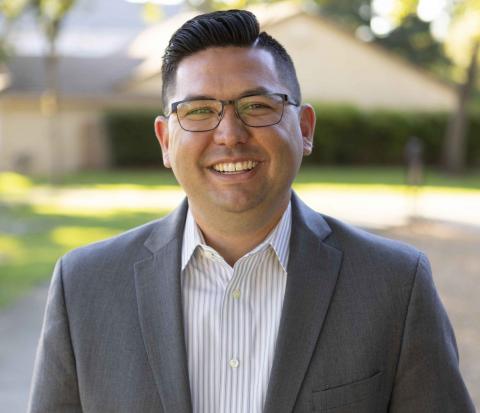
Photo of Joshua Hoover
R California Assembly · District 7 On the 2026 ballot

Asm. Joshua Hoover

Compare
Total votes
11,020
all sessions
Attendance
88%
954 missed
Lower than 85% of chamber peers
With party
98%
of cast votes
Near the chamber average
Bipartisan score
2%
crosses aisle rarely
Near the chamber average
Sponsored
849
bills & resolutions
Higher than 82% of chamber peers
Committees
11
assignments
849 bills and resolutions

Sponsored bills

Total
849
Primary
93
Co-sponsor
756
This page
849
matching current filters
Co-sponsor ACR 204
Signed into law · California Assembly · Co-sponsor
Relative to behavioral health.

This measure would recognize and affirm the important role of artists, arts organizations, creative arts therapists, and arts for health initiatives in supporting behavioral health, promoting recovery, strengthening community resilience, and contributing to public safety. The measure would encourage and recognize exploration, support, and integration of arts and behavioral health within California's health care, behavioral health, and community-based systems.

Signed into law Aug 27, 2026 1 co-sponsor
Co-sponsor AB 2124
Passed · California Assembly · Co-sponsor
Electricity and natural gas: legislation imposing mandated programs and requirements: third-party review.

Existing law vests the Public Utilities Commission with regulatory authority over public utilities, including electrical corporations and gas corporations. Existing law finds and declares that the California Council on Science and Technology (CCST) was organized as a nonprofit corporation at the request of the Legislature for the specific purpose of offering expert advice to the state government on public policy issues significantly related to science and technology. Existing law requests the CCST, every 3 years, to assess the infrastructure project types, scale, and pace necessary to achieve the state's energy, climate change, and air quality goals, as specified. This bill would require the CCST to establish, on or before March 1, 2027, upon appropriation by the Legislature, a program to, upon request of the Legislature, analyze legislation that would establish a mandated requirement or program, as defined, or otherwise affect electrical corporation or gas corporation ratepayers, as specified. The bill would require the analysis to include, among other things, whether the legislation will increase electricity or natural gas utility rates, and if so, would require an assessment of specified financial impacts. The bill would require the CCST to develop and implement conflict-of-interest provisions to prohibit a person from participating in an analysis for which the person knows or has reasons to know that the person has a material financial interest. The bill would repeal these provisions on January 1, 2032.

Passed Aug 27, 2026 1 co-sponsor
Co-sponsor AB 2555
Passed · California Assembly · Co-sponsor
English learners: reclassification.

Existing law requires each school district that has one or more pupils who are English learners, and, to the extent required by federal law, each county office of education and each charter school, to assess the English language development of each pupil in order to determine the pupil's level of proficiency, as specified. Existing law requires the assessment for initial identification to be conducted upon the initial enrollment of a pupil, as provided. Existing law requires the State Department of Education, with the approval of the State Board of Education, to establish procedures for conducting the assessment and for the reclassification of a pupil from English learner to English proficient. Existing law requires those reclassification procedures to use multiple criteria in determining whether to reclassify a pupil as proficient in English, including, (1) an assessment of language proficiency using an objective assessment instrument, including the English language development test that is developed or acquired by the Superintendent of Public Instruction, (2) teacher evaluation, (3) parental opinion and consultation, and (4) a comparison of the performance of the pupil in basic skills against an empirically established range of performance in basic skills based upon the performance of English proficient pupils of the same age that demonstrates whether the pupil is sufficiently proficient in English to participate effectively in a curriculum designed for pupils of the same age whose native language is English. Existing law provides that parents and guardians of children enrolled in public schools have the right and should have the opportunity, as mutually supportive and respectful partners in the education of their children within the public schools, to be informed by the school, and to participate in the education of their children, as specified, including by, among other things, meeting with their child's teacher or teachers and the principal of the school in which their child is enrolled within a reasonable time of their request. This bill would make the provisions related to reclassification procedures inoperative on July 1, 2027, and would repeal them as of January 1, 2028. Commencing July 1, 2027, this bill would require a school district, county office of education, or charter school to communicate to the parent or guardian of a pupil who is determined to be an English learner in a clear, concise, and comprehensible manner specified information regarding the pupil, including, among other things, that the pupil has been classified as an English learner, that the parent or guardian is encouraged to engage as a partner with the school, as provided, and that the pupil will take an assessment each year to measure the pupil's progress toward becoming proficient in English. The bill would instead require that an English learner pupil who, in the 2025–26 school year or any school year thereafter, meets the score established by the state board for purposes of reclassification on an assessment of English language proficiency identified or developed pursuant to specified provisions, or, if applicable, the pupil meets the score established by the state board for purposes of reclassification on the statewide alternate assessment for English language proficiency, as provided, be reclassified as English proficient, as specified. Commencing July 1, 2027, the bill would require the department, as those pupil scores become available, to record the pupils who meet the scores established by the state board as reclassified in the appropriate data system. After a pupil is reclassified, the bill would require a local educational agency to ensure that the pupil's instructional program and placement reflects that the pupil is a reclassified pupil and communicate to the pupil's parent or guardian that their child has been reclassified, as provided. Commencing July 1, 2028, and subject to the availability of rubrics and sample alternate pupil work and performance tasks described below, the bill would require a pupil who (1) is an English learner, (2) has an individualized education program (IEP) , (3) received English language development instruction but has not achieved the proficiency level required for purposes of reclassification, (4) has used all designated supports and accommodations and any domain exemptions required by the pupil's IEP, and (5) either scored an overall performance level that is one level below the level established by the state board for purposes of reclassification, or, as applicable, received any score on the statewide alternate assessment for English language proficiency, and whose local educational agency determines that the pupil has demonstrated, through the use of specified alternate coursework and performance tasks, that the pupil has reached a level of proficiency that is comparable to the threshold for reclassification on the assessment of English language proficiency or the statewide alternate assessment for English language proficiency, to be reported to the department by the local educational agency as reclassified as English proficient. The bill would require a local educational agency, for a pupil who has been reclassified as English proficient, to monitor the pupil's progress to ensure, among other things, that English proficiency is not a barrier to the pupil's academic success, as provided. By imposing additional duties on local educational agencies, the bill would impose a state-mandated local program. This bill would provide that, commencing January 1, 2027, parents or guardians of children enrolled in public schools also have the right to, among other things, meet with their child's teacher or teachers to discuss their child's progress toward reaching proficiency in English, as provided. By imposing new duties on public schools, the bill would impose a state-mandated local program. This bill would require the state board, on or before January 1, 2028, to identify (1) means of monitoring reclassified pupils for 4 years after reclassification and (2) an appropriate instrument to be used for purposes of monitoring the progress of reclassified English learners, as provided. The bill would require the department, on or before January 1, 2028, to identify appropriate interventions for pupils who have been determined as needing additional support for their English language, as provided. Commencing with the 2027–28 school year, and subject to state and federal law regarding the privacy of pupil information, the bill would require the department to annually post on its internet website the reclassification rates of each local educational agency and charter school, statewide reclassification rates, and outcomes of reclassified pupils, as provided. Existing law requires the Sacramento County Office of Education to utilize specified funding appropriated in the Budget Act of 2026 to develop resources and provide technical assistance to support the implementation of alternative pathways and means to a diploma, as provided. This bill would require the Sacramento County Office of Education to utilize the same funding described above to (1) develop rubrics and sample alternate pupil work and performance tasks to enable pupils who are English learners and have IEPs to demonstrate proficiency for purposes of reclassification, and (2) submit the completed rubrics and sample alternate pupil work and performance tasks to the department on or before January 1, 2028. By expanding the purposes for which previously appropriated funds may be used, this bill would make an appropriation. The bill would require the department to (1) post the completed rubrics and sample alternate pupil work and performance tasks submitted by the Sacramento County Office of Education on its internet website on or before June 30, 2028, and (2) , subject to an appropriation for these purposes, contract for an evaluation of the effects of the changes to the reclassification criteria and process required by the bill to be completed and sent to the appropriate policy and fiscal committees of the Legislature on or before January 1, 2032, as provided. This bill would delete obsolete provisions. This bill would incorporate additional changes to Section 51101 of the Education Code proposed by SB 1412 to be operative only if this bill and SB 1412 are enacted and this bill is enacted last. The California Constitution requires the state to reimburse local agencies and school districts for certain costs mandated by the state. Statutory provisions establish procedures for making that reimbursement. This bill would provide that, if the Commission on State Mandates determines that the bill contains costs mandated by the state, reimbursement for those costs shall be made pursuant to the statutory provisions noted above. This bill would declare that it is to take effect immediately as an urgency statute.


Passed Aug 27, 2026 1 co-sponsor
Co-sponsor AB 1837
Passed · California Assembly · Co-sponsor
Video imaging of parking violations.

Existing law authorizes a public transit operator in the state, until January 1, 2027, and authorizes the City and County of San Francisco indefinitely, to enforce parking violations in specified transit-only traffic lanes and at transit stops through the use of video imaging, and to install automated forward facing parking control devices on city-owned public transit vehicles for the purpose of video imaging parking violations occurring in transit-only traffic lanes, as specified. Existing law requires a public transit operator, prior to issuing notices of parking violations, to issue warning notices for the first 60 days and to make a public announcement of the program. Existing law requires a designated employee, or a contracted law enforcement agency, to review video image recordings for the purpose of determining whether a parking violation occurred in a transit-only traffic lane or at a transit stop and to issue a notice of violation to the registered owner of a vehicle within 15 calendar days, as specified. Existing law makes these video image records confidential and provides that these records are available only to public agencies to enforce parking violations. Existing law requires a public transit operator that implements an automated enforcement system to enforce parking violations in transit-only traffic lanes and at transit stops to submit a report to specified committees of the Legislature by no later than January 1, 2025. This bill would extend the authorization for the use of video imaging to enforce parking and stopping violations until January 1, 2034. The bill would require that a public transit operator issue warnings for 60 days prior to issuing notices of violations when it uses video imaging for enforcement of a violation that it has not previously used video imaging to enforce. The bill would require a public transit operator that uses video imaging to enforce parking violations to report to the Legislature, as specified. The bill would exempt the City and County of San Francisco from this requirement. The bill would allow only local agencies to use video image records to enforce parking violations and would prohibit the use or access of these records for general law enforcement purposes or by federal authorities, as specified. Existing constitutional provisions require that a statute that limits the right of access to the meetings of public bodies or the writings of public officials and agencies be adopted with findings demonstrating the interest protected by the limitation and the need for protecting that interest. This bill would make legislative findings to that effect. This bill would make legislative findings and declarations as to the necessity of a special statute for the City and County of San Francisco.

Passed Aug 27, 2026 1 co-sponsor
Co-sponsor AB 1729
Passed · California Assembly · Co-sponsor
State employment: telework programs.

Existing law requires every state agency to develop and implement a telecommuting plan as part of its telecommuting program in work areas where telecommuting is identified as being both practical and beneficial to the organization. Existing law requires the Department of General Services to establish a unit for purposes of overseeing telecommuting programs that is required to, among other things, develop and update policy, procedures, and guidelines to assist agencies in the planning and implementation of telecommuting programs. Existing law requires the department to establish criteria for evaluating the state's telecommuting program. Existing law defines "telecommuting" for purposes of those provisions. This bill would revise and recast those provisions. The bill would replace the term "telecommuting" with "telework," as defined. The bill would also require the Department of General Services to establish a telework dashboard that displays the cost-effectiveness and efficiency benefits of state telework programs, including documenting annual savings to the state of reduced office space and operating costs. The bill would additionally require each state agency, every 10 years, to evaluate its telework program to ensure that it aligns with the state agency's unique operational needs to carry out its programmatic missions and to help recruit and retain a qualified workforce. This bill would declare that it is to take effect immediately as an urgency statute.
Passed Aug 27, 2026 1 co-sponsor
Co-sponsor SB 1067
Passed · California Senate · Co-sponsor
Pupil instruction: math assessments.

Existing law requires the State Board of Education, on or before January 31, 2024, to appoint an independent panel of experts for the purpose of creating an approved list of evidence-based, culturally, linguistically, and developmentally appropriate screening instruments for pupils in kindergarten and grades 1 and 2 to assess pupils for risk of reading difficulties, including possible neurological disorders such as dyslexia, as specified. Existing law requires the governing board or body of a school district, county office of education, or charter school serving pupils in kindergarten or grades 1 or 2 to adopt, on or before June 30, 2025, one or more screening instruments from the approved list to assess pupils for risk of reading difficulties, as specified, and commencing no later than the 2025–26 school year, requires those local educational agencies to assess each pupil in kindergarten and grades 1 and 2 for risk of reading difficulties using the screening instrument or instruments adopted by the governing board or body of the local educational agency, as specified. This bill would, on or before July 31, 2027, require the state board to approve and the State Department of Education to post on its internet website criteria and guidance for selecting evidence-based, culturally, linguistically, and developmentally appropriate mathematics diagnostic assessments for pupils in kindergarten and grades 1 and 2 to assess pupils' mathematics knowledge and learning needs and identify pupils in need of additional support. The bill would require the department, on or before January 31, 2028, to (1) publish on its internet website a list of approved diagnostic assessments that meet the criteria, and (2) post on its internet website additional guidance to assist local educational agencies in selecting diagnostic assessments from the approved list, as provided. The bill would require the list to include diagnostic assessments that are developed for both English learners and non-English learners, as provided. The bill would require the state board and the department to solicit stakeholder input when developing the criteria, guidance, and list of diagnostic assessments pursuant to these provisions and to allow for public comment. The bill would authorize the department to periodically update the list of approved assessments. The bill would require the governing board or body of a school district, county office of education, or charter school serving pupils in kindergarten or grades 1 or 2 to adopt, on or before June 30, 2028, one or more diagnostic assessments from the published list of approved diagnostic assessments to assess pupils' mathematics knowledge and learning needs. The bill would authorize a local educational agency to satisfy this requirement by using a diagnostic assessment that is not on the published list if the governing board or body self-certifies that the assessment tool meets the above-described criteria. The bill, commencing no later than the 2028–29 school year, would require those local educational agencies to assess each pupil in kindergarten and grades 1 and 2 for mathematics knowledge using the diagnostic assessment or assessments adopted by the governing board or body of the local educational agency. The bill would require a local educational agency to provide parents or guardians of pupils eligible for assessment with information about the assessment and to make pupil results available to parents or guardians, as required by the state board, as provided. By imposing additional duties on local educational agencies, the bill would impose a state-mandated local program. The bill would require the department, by April 30, 2028, to curate and maintain on its internet website guidance and resources on evidence-based support, intervention, and instructional strategies aligned with the Mathematics Framework for California Public Schools: Kindergarten Through Grade Twelve. The California Constitution requires the state to reimburse local agencies and school districts for certain costs mandated by the state. Statutory provisions establish procedures for making that reimbursement. This bill would provide that, if the Commission on State Mandates determines that the bill contains costs mandated by the state, reimbursement for those costs shall be made pursuant to the statutory provisions noted above.

Passed Aug 27, 2026 1 co-sponsor
Co-sponsor SB 1047
Passed · California Senate · Co-sponsor
Neurodegenerative disease registry program.

Existing law, until January 1, 2028, and to the extent funds are made available for these purposes, requires the State Department of Public Health to establish a system for the collection of information determining the incidence and prevalence of neurodegenerative diseases, including, but not limited to, amyotrophic lateral sclerosis (ALS) , also known as Lou Gehrig's disease. Existing law requires a hospital, facility, physician and surgeon, or other health care provider diagnosing or providing treatment to a patient for a neurodegenerative disease to report each case of a neurodegenerative disease to the department, as prescribed. Existing law requires the department to designate the specified neurodegenerative diseases required to be reported in the state or any part of the state. Existing law specifies that for this purpose, "neurodegenerative disease" may include, but need not be limited to, Alzheimer's disease, multiple sclerosis, and Huntington's disease. This bill would require the department to establish a system for the collection of information determining the incidence and prevalence of frontotemporal degeneration (FTD) . This bill would specify that "neurodegenerative disease" may also include other dementias. The bill would extend the requirements of these provisions until January 1, 2032.

Passed Aug 27, 2026 1 co-sponsor
Co-sponsor SB 895
Passed · California Senate · Co-sponsor
California Science and Health Research Bond Act.

(1) Existing law establishes various grant and loan programs for research, including, among others, the California Institute for Regenerative Medicine, California Firefighter Cancer Prevention and Research Program, and the Public Interest Research, Development, and Demonstration Program. This bill would establish the California Foundation for Science and Health Research within the Government Operations Agency. The bill would require the Secretary of Government Operations to oversee the process of appointing the director of the foundation, and would authorize the Secretary of Government Operations to delegate the task of hiring and determining the salaries, bonuses, and benefits of additional personnel to the director, as specified. The bill would require the director and personnel of the foundation to be responsible for implementing the strategic objectives of the California Foundation for Science and Health Research Council, as described below, administering grants, loans, and contracts awarded by the council, and all other duties as deemed necessary for the operation of the foundation. This bill would create the California Foundation for Science and Health Research and Innovation Acceleration Fund and require the moneys in the fund to be used by the foundation to award grants and make loans to, and enter into contracts with, public or private research companies, universities, academic medical centers, institutes, and organizations for scientific research and development and for certain economic sectors, as specified, in specific areas of research, including, but not limited to, biomedical, behavioral health, and climate research. The bill would also create the California Foundation for Science and Health Research and Innovation Acceleration Benefit Fund, to consist solely of private donations. The bill would make the moneys in the benefit fund available for the same purposes as the California Foundation for Science and Health Research and Innovation Acceleration Fund. This bill would require that, prior to the first grant from the foundation and no later than one year from the date the bill takes effect, the council develop various provisions and requirements to facilitate the foundation's goals of affordability and equitable access. The foundation shall impose various requirements on the grantees, loan recipients, and contractors, as specified, including, among other things, developing strategies to promote equitable access to the subject invention in various specified communities and making the data resulting from the bond-funded research available to the broader scientific community, except in cases involving national security interests. The council shall also establish standards requiring that all grants, awards, and contracts be subject to intellectual property agreements that balance the opportunity for the State of California to benefit from the inventions, technologies, patents, royalties, and licenses that result from research funded by certain public and private grants, as specified. This bill would create the California Foundation for Science and Health Research Council, as specified, which shall be vested with full power, authority, and jurisdiction over the foundation. The bill would require the council to, among other things, develop the strategic objectives and priorities of the foundation and provide the opportunity for public comment on the foundation's priorities, as specified, determine the research projects that will be funded by the California Foundation for Science and Health Research and Innovation Acceleration Fund, develop objectives and opportunities that offer support to early career researchers, and adopt certain regulations and standards, as specified. The bill would also require the council to consider how the foundation's research priorities relate to or support various economic and industry considerations, as specified. The bill would provide that a majority of the members of the council constitutes a quorum for the transaction of any business, for the performance of any duty, or for the exercise of any power of the council, except as otherwise provided. The bill would authorize the council to establish one or more scientific peer review panels consisting of experts in specified fields of research for the purposes of reviewing and prioritizing proposals on the basis of the scientific merit of the proposal, the potential benefit to the health and well-being of the population, natural resources, and environment of the state, and the demonstrated background, training, and expertise of the researchers and investigators to conduct the proposed work. This bill would require all research and development funded by the California Foundation for Science and Health Research and Innovation Acceleration Fund to be conducted under established standards of open scientific exchange, peer review, and public oversight. The bill would require the funds and contracts to be awarded on the basis of the research priorities established for the foundation by the council and the scientific merit of the proposed research, as determined by an open, competitive, scientific peer review process that ensures objectivity, consistency, and high quality. This bill would enact the California Science and Health Research Bond Act, which, if approved by the voters, would authorize the issuance of bonds in the amount of $7,500,000,000, pursuant to the State General Obligation Bond Law, to finance grants and loans to fund research and operate and maintain facilities for research. The bill would provide for the submission of the bond act to the voters at the March 7, 2028, statewide primary election. (2) Existing law establishes prohibitions and penalties with respect to ethical obligations and conflicts of interest for public officials, including a prohibition on engaging in activities that are incompatible with their official duties and a prohibition on being financially interested in a contract made by them in their official capacity or the board of which they are a part. This bill would authorize a council member to participate in a decision to approve or award a grant, loan, or contract for the purpose of research into a disease in which the member or their immediate family member has a personal interest, as specified. The bill would provide that service with specified educational institutions and organizations is not incompatible with a council member's duties. The bill would provide that the prohibition on being financially interested in a contract, as specified, does not apply if the council member recuses themself from a decision to award or approve a grant, loan, or contract that would otherwise be subject to the prohibition. The bill would provide that council members are subject to certain disclosure requirements relating to personal investments and potential conflicts of interest, as specified. (3) Existing law, the Bagley-Keene Open Meeting Act, requires that all meetings of a state body be open and public and all persons be permitted to attend any meeting of a state body, with specified exceptions for authorized closed sessions. This bill would require the Bagley-Keene Open Meeting Act to apply to all meetings of the council and scientific peer review panels, except as specified for when the council or scientific peer review panels meet to consider or discuss specified matters in closed sessions, including matters involving information relating to patients or medical or scientific research subjects, the disclosure of which would constitute an unwarranted invasion of personal privacy. Existing constitutional provisions require that a statute that limits the right of access to the meetings of public bodies or the writings of public officials and agencies be adopted with findings demonstrating the interest protected by the limitation and the need for protecting that interest. This bill would make legislative findings to that effect. (4) This bill would declare that it is to take effect immediately as an urgency statute.

Passed Aug 27, 2026 1 co-sponsor
Co-sponsor AB 1652
Signed into law · California Assembly · Co-sponsor
State agencies: regulations and legislation: nondisclosure agreements.

Existing law prohibits Members of the Legislature from entering into, or requesting that another party enter into, a nondisclosure agreement relating to the drafting, negotiation, or discussion of proposed legislation, and makes any nondisclosure agreement relating to the drafting, negotiation, or discussion of proposed legislation void and unenforceable. Existing law provides an exception for nondisclosure agreements, or portions thereof, that prevent only the disclosure of trade secrets, financial information, or proprietary information, as specified. This bill would prohibit an elective or appointive officer of a state agency acting in their official capacity from entering into, or requesting that another party enter into, a nondisclosure agreement relating to the drafting, negotiation, or discussion of a proposed regulation or legislation. The bill would also make any nondisclosure agreement relating to the drafting, negotiation, or discussion of a proposed regulation or legislation entered into by an elective or appointive officer of a state agency acting in their official capacity after the effective date of this bill void and unenforceable. The bill would provide an exception for nondisclosure agreements, or portions thereof, that prevent only the disclosure of trade secrets, private financial information, or proprietary information, as specified.

Signed into law Aug 27, 2026 1 co-sponsor
Showing 11 to 20 of 849 bills