

(1) The Outdoor Advertising Act, a violation of which is a crime, provides for the regulation by the Department of Transportation of advertising displays, as defined, within view of public highways. Existing law exempts from certain provisions of the act advertising displays located in specific geographic areas in the City of Los Angeles if those displays meet prescribed conditions and requirements, including the condition that the advertising display is authorized by, or in accordance with, an ordinance adopted by the City of Los Angeles that regulates advertising displays by identifying the specific displays or establishing regulations that include, at a minimum, specified restrictions, as provided. This bill would authorize the ordinance adopted by the City of Los Angeles to authorize a framework of allowable signage that preserves flexibility in the ultimate placement, sizing, and scope of advertising displays, and define a range or maximum signage capacity, as specified. The bill would also authorize the City of Los Angeles to adopt implementing ordinances that sequence or phase the authorization of advertising displays over time. (2) This bill would declare that it is to take effect immediately as an urgency statute.
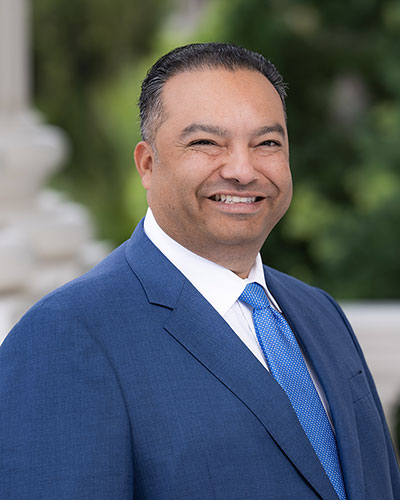
Asm. José Solache
Sponsored bills
Existing law requires the court, prior to the acceptance of a plea of guilty or nolo contendere, to advise the defendant that if they are not a citizen, conviction of the crime charged may result in deportation, exclusion from admission to the United States, or denial of naturalization. After January 1, 1978, if the court fails to advise the defendant, as required, and the defendant shows that conviction of the offense to which the defendant pleaded guilty or nolo contendere may have the consequences for the defendant of deportation, exclusion from admission to the United States, or denial of naturalization pursuant to the laws of the United States, the court, on the defendant's motion, is required to vacate the judgment and permit the defendant to withdraw the plea of guilty or nolo contendere, and enter a plea of not guilty. This bill would require the court to give the above-described advisement verbatim and would clarify the advisement to state that if the defendant is not a citizen of the United States, conviction may result in the specified immigration consequences. The bill would state that for a plea accepted prior to January 1, 2026, it is not the intent of the Legislature that a court's failure to provide the advisement verbatim requires vacation of judgment and withdrawal of the plea or constitutes grounds for finding a prior conviction invalid, as specified.
Existing law, subject to available funding, requires the State Department of Social Services to contract with qualified nonprofit legal services organizations to provide legal services to unaccompanied undocumented minors who are transferred to the care and custody of the federal Office of Refugee Resettlement and who are present in this state or are residing with a family member or other sponsor. Existing law requires contracts awarded pursuant to the above-described provision to be executed with qualified nonprofit legal services organizations that meet certain requirements, including having experience representing individuals in removal proceedings and asylum applications. This bill would, subject to available funding, provide legal counsel to immigrant youth in the State of California. The bill would define immigrant youth. The bill would require the department to allocate funding for these purposes, and would require the department to consider whether federal funding has been made available and dispersed to organizations or relevant projects in the state in determining the amount and allocation of contracts awarded. The bill would require the department to contract with qualified nonprofit legal services organizations that meet the above-described requirements or an office of the public defender that meets certain requirements. The bill would also authorize the department to fund social work services contracted by qualified nonprofit legal services organizations to assist immigrant youth.
(1) Existing law prescribes the duties of the State Registrar of Vital Statistics (State Registrar) and local registrars of births and deaths with respect to the registration of certificates of live birth, fetal death, or death, and marriage licenses. Existing law requires the State Registrar to prescribe and furnish all record forms for use in carrying out the provisions governing vital records and prohibits the use of any record form or format other than those prescribed by the State Registrar. Existing law requires every live birth, fetal death, death, and marriage that occurs in the state to be registered with the local registrar. Existing law requires certificates of live birth, fetal death, or death, and a marriage license to include specified information, such as the full name of the child on a certificate of live birth and the full names of the parties to be married on a marriage license. Existing law also requires the county clerk to issue a confidential marriage license, as specified, on a form prescribed by the State Registrar. This bill would require, commencing no earlier than 2 years after an appropriation of funds by the Legislature, the State Registrar to require the use of a diacritical mark on an English letter within a name field to be properly recorded, when applicable, on a certificate of live birth, fetal death, death, marriage license and certificate, or confidential marriage license and certificate, and would require the use of a diacritical mark to be deemed an acceptable entry by the State Registrar. The bill would provide that the absence or presence of a diacritical mark on a certificate of live birth, fetal death, or death, or a marriage license and certificate or confidential marriage license and certificate does not render the document invalid nor affect any constructive notice imparted by proper recordation of the document. The bill would authorize the State Registrar to develop a list of acceptable diacritical marks for use on a certificate of live birth, fetal death, or death, or a marriage license and certificate or confidential marriage license and certificate through all-county letters or similar instructions from the State Registrar without taking further regulatory actions. The bill would authorize the State Registrar to remove any diacritical marks on the birth, fetal death, death, and marriage license and certificate data before furnishing the vital statistics to a federal, state, or local government agency. The bill would authorize, beginning July 1, 2026, if a name is not accurately recorded because of the absence of a diacritical mark on an English letter in any certificate of live birth, fetal death, death, or marriage already registered, the person asserting the omission, or the person's conservator, or if a minor, the person's parent or guardian, to make an affidavit under oath, as specified, stating the changes necessary to make the record correct. The bill would require the affidavit to be supported by the affidavit of one other person having knowledge of the facts and be filed with the State Registrar. The bill would require the State Registrar to, review the request and, if the request is accompanied with the payment of a specified fee, to issue an amendment to any certificate of live birth, fetal death, death, or marriage with the accurate name identified in the request. The bill would also authorize, if a name field of either of the parties married or their parents is not accurately recorded because of the absence of a diacritical mark on an English letter on any confidential license and certificate of marriage already registered, the party asserting the omission to make an affidavit, under oath, stating the changes necessary to make the record correct and file it with the county clerk. The bill would authorize the county clerk to charge a fee, not to exceed the amount of the fee for any other amended confidential marriage license and certificate issued by the county clerk and not to exceed the reasonable cost to provide the amended marriage license and certificate. The bill would require the county clerk to review the amendment for acceptance for filing, and if accepted, file the amendment and note the fact of the amendment, with its date, on the otherwise unaltered original confidential license and certificate of marriage. By requiring the affidavit to be under oath, the bill would expand the crime of perjury, thereby imposing a state-mandated local program. By increasing duties on county clerks, the bill would impose a state-mandated local program. (2) Existing law requires the collection of specified fees for certified copies of a fetal death record, death record, a birth certificate, marriage record, or marriage dissolution record. Existing law requires all applicants for certified copies of the above-described records to pay an additional fee of $3 to be collected by the State Registrar, the local registrar, county recorder, or county clerk, as appropriate. This bill would increase the additional fee charged for certified copies of the above-described records to $5. (3) The California Constitution requires the state to reimburse local agencies and school districts for certain costs mandated by the state. Statutory provisions establish procedures for making that reimbursement. This bill would provide that with regard to certain mandates no reimbursement is required by this act for a specified reason. With regard to any other mandates, this bill would provide that, if the Commission on State Mandates determines that the bill contains costs so mandated by the state, reimbursement for those costs shall be made pursuant to the statutory provisions noted above.
Existing law provides for the California Table Grape Commission, which comprises 21 grape producers, nominated in district elections by the procedures for appointment by the Secretary of Food and Agriculture, and one public member appointed by the secretary. Existing law specifies the powers, duties, and responsibilities of the commission. Existing law levies an annual assessment on all fresh grapes during each marketing assessment, at an amount fixed by the commission not to exceed $0.006522 per pound. Existing law authorizes the commission to expend revenues from those assessments and all other moneys received by the commission, including from penalties for failing to pay the assessment and civil penalties for a violation of those provisions. This bill would revise these provisions by, among other things, changing the district borders and revising the nomination election and appointment processes for producer members of the commission. The bill would require the commission to annually compile and maintain a list of eligible producers who are qualified to vote in an election, and certify the list to the secretary at least 30 days before the date set for any meeting to nominate commissioners to office. The bill would expand the activities, powers, and duties of the commission to also include accepting and matching contributions of funds and making contributions of commission funds to other persons or agencies, and administering any program related to the table grape industry. The bill would increase the maximum amount of the above-described assessment to $0.02 per pound, thereby making an appropriation. The bill would authorize a person aggrieved by an action of the commission to file a grievance with the commission or a duly authorized committee of the commission designated for that purpose, and to appeal from decisions of the commission to the secretary. The bill would require an action by the commission for any violation of these provisions to be commenced within 2 years from the date of discovery of the alleged violation and would require an action against the commission by any person to be commenced within 2 years from the date of the act of which the person complains.
Existing law establishes county boards of education and school districts throughout the state to administer the public elementary and secondary schools within their respective jurisdictions. Existing law requires county boards of education and the governing board of each school district to prescribe and enforce rules not inconsistent with state law for their own government. Existing law authorizes the members of city or county boards of education or the governing boards of school districts to receive compensation not to exceed a specified amount between $60 and $1,500 per month, based on the average daily attendance for the prior school year in the jurisdiction of the governing board, as provided. This bill would revise and recast provisions related to the compensation of members of city or county boards of education and the governing boards of school districts by increasing the authorized compensation to instead not exceed a specified amount between $600 and $4,500 per month, based on the average daily attendance for the prior school year in the jurisdiction of the governing board for the prior school year, as provided.
The Political Reform Act of 1974 provides for the comprehensive regulation of campaign financing, including imposing reporting requirements on elected officials and campaign committees. Under the act, a behested payment is a payment that is made at the behest of a committee, an elected officer, or a member of the Public Utilities Commission, under specified circumstances, that is made principally for personal, charitable, legislative, or governmental purposes. The act requires officers and members of the Public Utilities Commission to report behested payments within 30 days of the payment or payments exceeding $5,000 in the aggregate from the same source in the same calendar year in which they are made. This bill would exempt a behesting officer or member of the Public Utilities Commission from these reporting obligations if they make a public appeal for payment unless the officer or member of the Public Utilities Commission, or a member of their immediate family, campaign staff, or officeholder staff, holds a position with the payee organization, other than a governmental organization, as specified. This bill would incorporate additional changes to Section 84224 of the Government Code proposed by AB 808, to be operative only if this bill and AB 808 are enacted and this bill is enacted last. The Political Reform Act of 1974, an initiative measure, provides that the Legislature may amend the act to further the act's purposes upon a 23 vote of each house of the Legislature and compliance with specified procedural requirements. This bill would declare that it furthers the purposes of the act.
(1) The Planning and Zoning Law requires each county and city to adopt a comprehensive, long-term general plan for its physical development, and the development of certain lands outside its boundaries, that includes, among other mandatory elements, a housing element. That law, until January 1, 2033, deems a housing development project an allowable use on any real property owned by a local educational agency if the housing development satisfies specified conditions, including, among others, consisting of at least 10 housing units, 100% of the units being rented by local educational agency employees, local public employees, and general members of the public pursuant to a specified priority, and a majority of the units being deed restricted for lower income or moderate-income households, as specified. Existing law, the Housing Accountability Act, among other things, prohibits a local agency from disapproving a housing development project for very low, low-, or moderate-income households unless the local agency makes written findings as to one of certain sets of conditions, as specified, and describes various requirements applicable to housing development projects. This bill would revise and recast the provisions deeming a housing development project an allowable use on any real property owned by a local educational agency. The bill would require the housing development to satisfy specified conditions, and would apply the requirements of the Housing Accountability Act to review of housing development projects subject to these provisions. The bill would provide that a proposed housing development project is eligible for a density bonus, as specified, and would define various terms for these purposes. The bill would extend the operation of these provisions until January 1, 2036. (2) Existing law, prior to the sale, lease, or rental of any excess real property, requires the governing board of each school district to appoint a school district advisory committee to advise the governing board of the school district in the development of districtwide policies and procedures governing the use or disposition of school buildings or space in school buildings that is not needed for school purposes. Notwithstanding that law, existing law authorizes the governing board of a school district to elect not to appoint a school district advisory committee in the sale, lease, or rental of excess real property to be used for teacher or school district employee housing. This bill would specify that the governing board of a school district is authorized to elect not to appoint a school district advisory committee in the sale, lease, or rental of excess real property to be used for teacher or school district employee housing and that is subject to the provisions governing real property owned by a local educational agency described above. (3) The California Environmental Quality Act (CEQA) requires a lead agency, as defined, to prepare, or cause to be prepared, and certify the completion of an environmental impact report on a project that it proposes to carry out or approve that may have a significant effect on the environment or to adopt a negative declaration if it finds that the project will not have that effect. Existing law, until January 1, 2033, exempts from CEQA certain actions taken by a public agency related to affordable housing projects, as defined, if certain requirements are met. This bill would provide that an affordable housing project for purposes of the CEQA exemption includes real property owned by a local educational agency, as described above, and would exempt these projects from certain of the requirements for other affordable housing projects. (4) The bill would include findings that changes proposed by this bill address a matter of statewide concern rather than a municipal affair and, therefore, apply to all cities, including charter cities. (5) By adding to the duties of local planning officials with respect to approving certain development projects, this bill would impose a state-mandated local program. The California Constitution requires the state to reimburse local agencies and school districts for certain costs mandated by the state. Statutory provisions establish procedures for making that reimbursement. This bill would provide that no reimbursement is required by this act for a specified reason.
Existing law, the California Workforce Innovation and Opportunity Act, establishes the California Workforce Development Board as the body responsible for assisting the Governor in the development, oversight, and continuous improvement of California's workforce investment system and the alignment of education and workforce investment systems to the needs of the 21st century economy and workforce. The Budget Act of 2025 appropriated $5,000,000 to the board to support workforce development in areas of the Counties of Los Angeles and Ventura impacted by wildfires. This bill would require the board to allocate the funds from that appropriation to the Los Angeles County Department of Economic Opportunity for, among other things, workforce development strategies, such as education or supportive services, including stipends for underemployed and unemployed low- to moderate-income individuals to ensure a skilled and sufficient workforce for the scale of rebuilding and recovery of areas in the Counties of Los Angeles and Ventura impacted by the 2025 wildfires and to support underemployed and unemployed low- to moderate-income workers affected by the fires. The bill would require the Los Angeles County Department of Economic Opportunity to reallocate $600,000 to the Economic Development Collaborative for those purposes. The bill would require the board to allow the Los Angeles County Department of Economic Opportunity to subcontract with other entities to fulfill the provisions and intent of the bill and would require the board to require quality standards and practices, as specified. The bill would require the Los Angeles County Department of Economic Opportunity to focus on employment in jobs in certain professions and industries, including construction, firefighting, and health care, or other areas essential to emergency response, disaster relief, recovery, rebuilding, and regional economic development and resilience. The bill would require individuals participating in programs funded by the bill to have access to expedited licensing and certification, if feasible. This bill would declare that it is to take effect immediately as an urgency statute. This bill would make legislative findings and declarations as to the necessity of a special statute for the Counties of Los Angeles and Ventura.
Existing law, commencing July 1, 2025, requires a public or private school that serves pupils in any of grades 7 to 12, inclusive, and that issues pupil identification cards to have printed on the identification cards the number for the 988 Suicide and Crisis Lifeline. Existing law requires a public or private institution of higher education that issues student identification cards to have printed on either side of the student identification cards the telephone number for the National Suicide Prevention Lifeline. This bill, commencing July 1, 2026, would require public schools that serve pupils in any of grades 7 to 12, inclusive, and public institutions of higher education that issue pupil identification cards to additionally have printed on the identification cards the telephone number and text line for a specified LGBTQ+ suicide hotline, as provided.