

(1) Existing law, the Alcoholic Beverage Control Act, is administered by the Department of Alcoholic Beverage Control and regulates the granting of licenses for the manufacture, distribution, and sale of alcoholic beverages within the state. The act requires the department to make and prescribe rules to carry out the purposes and intent of existing state constitutional provisions on the regulation of alcoholic beverages, and to enable the department to exercise the powers and perform the duties conferred upon it by the state constitution and the act, not inconsistent with any statute of this state. The act makes it unlawful for any person other than a licensee of the department to sell, manufacture, or import alcoholic beverages in this state, with exceptions. The department, pursuant to its powers and in furtherance of emergency declarations and orders of the Governor under the California Emergency Services Act regarding the spread of the COVID-19 virus, established prescribed temporary relief measures to suspend certain legal restrictions relating to, among other things, the expansion of a licensed footprint, sales of alcoholic beverages to-go, and delivery privileges. Existing law authorizes the department, for a period of 365 days following the end of the state of emergency proclaimed by the Governor on March 4, 2020, in response to the COVID-19 pandemic, to permit licensees to exercise license privileges in an expanded license area authorized pursuant to a COVID-19 Temporary Catering Authorization approved in accordance with the Fourth Notice of Regulatory Relief issued by the department, as specified. Existing law makes these provisions effective only until July 1, 2026, and repeals them as of that date. This bill, instead, would make those provisions operative until January 1, 2029, repeal those provisions on that date, and make conforming changes. The bill would also prohibit the department from issuing any new COVID-19 Temporary Catering Authorizations on or after January 1, 2027. (2) The Planning and Zoning Law authorizes the legislative body of any city or county to adopt ordinances that regulate zoning within its jurisdiction, as specified. Under that law, variances and conditional use permits may be granted if provided for by the zoning ordinance. Existing law, to the extent that an outdoor expansion of a business to mitigate COVID-19 pandemic restrictions on indoor dining interferes with, reduces, eliminates, or impacts required parking for existing uses, requires a local jurisdiction that has not adopted an ordinance that provides relief from parking restrictions for expanded outdoor dining areas to reduce the number of required parking spaces for existing uses by the number of spaces that the local jurisdiction determines are needed to accommodate an expanded outdoor dining area. Existing law makes these provisions operative only until July 1, 2026, and repeals them on that date. This bill, instead, would make those provisions operative indefinitely. Because the bill would require local officials to perform additional duties for an extended period, the bill would impose a state-mandated local program. (3) Existing law, the California Retail Food Code, establishes uniform health and sanitation standards for, and provides for regulation by the State Department of Public Health of, retail food facilities. Existing law provides that these standards are primarily enforced by local enforcement agencies. Existing law restricts satellite food service to limited food preparation in a fully enclosed permanent food facility that meets specified requirements. Existing law requires a permanent food facility, before conducting satellite food service, to submit to the enforcement agency written operating standards. Existing law, until July 1, 2026, authorizes a permitted food facility within any local jurisdiction that is subject to retail food operation restrictions related to a COVID-19 public health response to prepare and serve food as a temporary satellite food service without obtaining a separate satellite food service permit or submitting written operating procedures. With regard to those provisions that authorize a permitted food facility to prepare and serve food as a temporary satellite food service, this bill, instead, would make those provisions operative indefinitely. (4) Existing law requires permanent food facilities to be fully enclosed in a building consisting of permanent floors, walls, and an overhead structure that meet prescribed minimum standards. This bill would, notwithstanding the requirements described above, authorize a restaurant to operate using open windows, folding doors, or nonfixed store fronts during hours of operation if the restaurant develops, and submits to the enforcement agency for approval, an integrated pest management and food safety risk mitigation plan and meets certain requirements, as specified. The bill would require the plan to be documented in writing, made available upon request to local environmental health enforcement officers, and updated annually or whenever there is a change to the facility or operation. The bill would require the restaurant to self-close upon observation of vermin activity inside the facility and remain closed until all vermin are eliminated. The bill would prohibit a local enforcement agency from unreasonably withholding approval of a proposed pest management and food safety risk mitigation plan and would require approval to be granted unless unique circumstances exist such that no reasonable conditions or measures can sufficiently mitigate a significant risk to public health or safety. (5) The California Constitution requires the state to reimburse local agencies and school districts for certain costs mandated by the state. Statutory provisions establish procedures for making that reimbursement. This bill would provide that no reimbursement is required by this act for a specified reason.
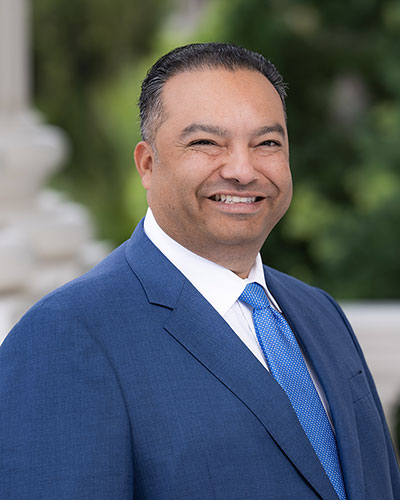
Asm. José Solache
Sponsored bills
Existing law requires a county social worker to investigate the circumstances of each child taken into temporary custody by a peace officer under specified circumstances. Existing law requires the social worker to conduct an investigation, within 30 days of the child's removal, to identify and locate adult relatives of the child, as specified, and to provide them with a notification that the child has been removed from the custody of the child's parents, guardians, or Indian custodian, and an explanation of the various options to participate in the care and placement of the child. This bill, the Justice through Placing Foster Children with Families Act, would require, beginning January 1, 2027, each county to review publicly available data comparing the statewide national average rate of placing children with relatives in the prior year for comparison with the county's placement rate during the same period, and, in the case of Indian children, the statewide average rate according to the federal Indian Child Welfare Act of 1978 placement preferences, as specified. The bill would require that, if the county's placement rate is less than the statewide average, the county welfare director, or their designee, to consult with the Center for Excellence in Family Finding, Engagement, and Support to identify best practices that may be adopted by the county to improve its placement rate, as specified. By increasing the duties of county welfare departments, the bill would impose a state-mandated local program. The bill would make related findings and declarations. The California Constitution requires the state to reimburse local agencies and school districts for certain costs mandated by the state. Statutory provisions establish procedures for making that reimbursement. This bill would provide that no reimbursement is required by this act for a specified reason.
Existing law establishes various boards and commissions in state government with specified duties and responsibilities. Existing law generally provides for legislative oversight of state board formation, which includes, among other things, any administrative or regulatory board, commission, and committee, whose members are appointed by the Governor, the Legislature, or both. Existing law requires the Governor to appoint every officer whose mode of appointment is not prescribed by law. This bill would require the office of the Governor, commencing January 1, 2027, to maintain on its internet website a list of each state board and commission and the membership list, stated purpose, duties, meeting frequency, internet website, and vacancies in the membership for each board or commission. The bill would require the office of the Governor, on or before January 31, 2028, and annually on January 31 thereafter, to create and publish on its internet website a report containing aggregate demographic information, as defined, of appointments made by the office during the prior calendar year, as specified. The bill would require the Secretary of the Senate and the Chief Clerk of the Assembly, commencing January 1, 2027, to maintain on their respective internet websites, or to include a link on their respective internet websites to any available resources that contain, a list of each state board or commission that each house has appointment authority over and the membership list, stated purpose, duties, meeting frequency, internet website, and any vacancies in the membership for that board or commission. The bill would also require the Secretary of the Senate and the Chief Clerk of the Assembly, on or before January 31, 2028, and annually on January 31 thereafter, to publish on their respective internet websites, to the extent available, aggregate demographic information, as defined, on their respective legislative appointments, made during the prior calendar year, as specified. The bill would require the aggregate demographic information to only include legislative appointments created by statute, and prohibit the information from including ex officio appointments of members of the Senate and the Assembly. The bill would require the above-described published aggregate demographic information on gubernatorial or legislative appointments to, among other things, be published on the respective entity's internet websites in a prescribed manner for purposes of ensuring the anonymity of the appointed individuals.
Existing law, for policy years beginning on or after January 1, 2024, requires student health insurance coverage, as defined, to be considered individual health insurance coverage. Existing law, except as specified, requires a blanket disability insurance policy that meets the definition of student health insurance coverage to comply with insurance provisions that are applicable to nongrandfathered individual health insurance, including, among others, essential health benefits requirements and annual limits on out-of-pocket expenses. Existing law exempts student health insurance coverage from certain requirements otherwise applicable to health insurers and health benefit plans, including the establishment of specified enrollment periods, guaranteed availability and renewability, specified coverage level requirements, and single risk pool rating requirements. Existing law requires a notice to be provided in the student health insurance enrollment materials stating that California requires residents and their dependents to obtain and maintain health coverage, either through student health insurance, or through a different method, including Medi-Cal, Covered California, or, if under 26 years of age, their parent's coverage. This bill would, commencing July 1, 2026, authorize a student certificate holder to request to terminate their student health insurance coverage during the policy year if the student graduates, takes a leave of absence, or is no longer enrolled at the institution of higher education. The bill would require the request to be provided to the institution of higher education at least 30 days before the effective date of termination and would, upon receipt of the request to terminate coverage, require the institution to terminate coverage effective within the same calendar month if feasible, but no later than the last day of the calendar month in which the 30-day period ends. The bill would authorize the student to pay only the premium through the date of the termination, as specified. The bill would require a student or dependent of a student to be notified of premium liability to them, if any, if they choose not to terminate coverage pursuant to these provisions. The bill would, commencing July 1, 2026, if a student requests a waiver from student health insurance coverage, require the waiver to be granted if the student obtains or maintains health coverage that is minimum essential coverage, as specified. The bill would prohibit charging the student a fee or premium if the waiver is granted. Existing law requires a health insurer to file with the Department of Insurance all required rate information for grandfathered individual and specified group health insurance policies at least 120 days before implementing any rate change. This bill would authorize the department to prohibit a requested rate change if the insurer fails to comply with the above-described timelines. This bill would also authorize the Insurance Commissioner to exercise their existing authority to enforce the above-described provisions and prohibits an administrative penalty, if assessed, from exceeding $5,000 for each violation, or $10,000 for a willful violation. The bill would also state the intent of the Legislature to encourage self-funded student health coverage offered by the University of California Student Health Insurance Plan and the University of California Voluntary Dependent Plan to maintain or exceed coverage standards of the federal Patient Protection and Affordable Care Act and to comply with the above described provisions.
Existing law requires notice of, and the opportunity for an incarcerated parent to be physically present in, proceedings terminating their parental rights or seeking to adjudicate the child of a prisoner a dependent child of the court. Existing law prohibits these proceedings from being adjudicated without the physical presence of the parent unless the court receives a knowing waiver from the parent of their right to be physically present at the proceedings, or an affidavit signed by a person in charge of the incarcerating institution that the prisoner does not intend to appear at the proceeding. Existing law authorizes, in the court's discretion, an incarcerated parent who has waived the right to be physically present at those proceedings to be given the opportunity to participate in the proceeding by videoconference, if that technology is available. Existing law authorizes, if videoconferencing technology is not available, the use of teleconferencing. This bill would also require notice of, and the opportunity for an incarcerated parent to be physically present in, specified additional dependency hearings relating to their child. The bill would additionally require an incarcerated parent who has waived the right to be physically present to be given the opportunity to participate in those proceedings by videoconference, and, if videoconferencing technology is not available, require the use of teleconferencing. By increasing the duties of local county jail officials, this bill would impose a state-mandated local program. Existing law entitles a minor who is the subject of a juvenile court hearing to be present at that hearing and specifies that the minor has the right to be represented at the hearing by counsel of their choice. Existing law requires the court to inform the minor, if the minor is present at the hearing, of their right to address the court and participate in the hearing. Existing law requires the court, if the minor is 10 years of age or older and not present at the hearing, to determine whether the minor was properly notified of their right to attend the hearing and inquire whether they were given an opportunity to attend. Existing law generally requires the court to continue the hearing to allow the minor to be present, if they were not properly notified or if they wished to present, but were not given the opportunity. Existing law requires the court to continue the hearing only for the period of time necessary to provide the child notice and secure their presence. This bill would expand the above provisions to include nonminor dependents. The California Constitution requires the state to reimburse local agencies and school districts for certain costs mandated by the state. Statutory provisions establish procedures for making that reimbursement. This bill would provide that, if the Commission on State Mandates determines that the bill contains costs mandated by the state, reimbursement for those costs shall be made pursuant to the statutory provisions noted above.
Existing law, the Political Reform Act of 1974, prohibits a public officer from expending, and a candidate from accepting, public moneys for the purpose of seeking elective office. This bill would remove prohibitions imposed on a public officer or candidate to expend or accept public funds, as defined, for the purpose of seeking elective office unless the funds are earmarked by a state or local entity for education, transportation, or public safety. The bill would require candidates to abide by specified expenditure limits and meet strict criteria, as defined, to qualify for public funds. The bill would prohibit public funds from being used to pay legal defense fees or fines or to repay personal loans to their campaign. The bill would permit a statute, ordinance, or charter to establish standards to increase the expenditure limits for each qualified, voluntarily participating candidate pursuant to a specified formula. The bill would provide that the Fair Political Practices Commission is not responsible for administering or enforcing a system of public funding of candidates established by a local governmental agency. Existing law prohibits a foreign government or foreign principal, as defined, from making a contribution, expenditure, or independent expenditure in connection with the qualification or support of, or opposition to, any state or local ballot measure or in connection with the election of a candidate to state or local office. Under existing law, a person who violates this prohibition is guilty of a misdemeanor and subject to a fine equal to the amount contributed or expended. This bill would instead require that a person guilty of that misdemeanor, in addition to other penalties, be fined an amount at least equal to the amount contributed or expended, but not exceeding a maximum amount of 3 times the amount contributed or expended. The Political Reform Act of 1974, an initiative measure, provides that the act may be amended by a statute that becomes effective upon approval of the voters. This bill would require the Secretary of State to submit the provisions of the bill, as specified, to the voters for approval at the November 3, 2026, statewide general election. This bill would incorporate additional changes to Section 85320 of the Government Code proposed by AB 953 to be operative pursuant to specified conditions.
Existing law requires the State Air Resources Board to adopt and implement motor vehicle fuel specifications for the control of air contaminants and sources of air pollution. Existing law prohibits the state board from adopting any regulation that establishes a specification for motor vehicle fuel unless that regulation, and a multimedia evaluation conducted by affected agencies and coordinated by the state board, are reviewed by the California Environmental Policy Council. This bill would, notwithstanding that prohibition, authorize blends of gasoline containing 10.5% to 15% ethanol by volume to be sold in the state for use as a transportation fuel until (1) the California Environmental Policy Council completes its review of those blends and (2) the state board either adopts a regulation establishing a specification for those blends or posts an assessment on its internet website demonstrating that it is not possible for a regulation establishing a specification for those blends to meet specified requirements. This bill would declare that it is to take effect immediately as an urgency statute.
Existing law establishes the Tribal Nation Grant Fund, administered by the California Gambling Control Commission, for the receipt and deposit of moneys received by the state from Indian tribes pursuant to the terms of tribal-state gaming compacts. Under existing law, moneys in the Tribal Nation Grant Fund are available, upon appropriation by the Legislature, for the discretionary distribution of funds to nongaming and limited-gaming tribes, as specified. Existing law establishes the Tribal Nation Grant Fund Program and authorizes Tribal Nation Grant Fund Panel to award grants from available moneys within the fund and make other distributions from the fund to eligible tribes, as specified. Existing law requires an eligible tribe requesting a grant to submit an application on a form approved by the panel and provided by the commission. Existing law authorizes the panel to distribute of the available moneys in the fund to all eligible tribes that submitted a completed grant application, as specified. Existing law authorizes the panel, in its discretion and based upon the purpose or project set forth in the application, to require an eligible tribe to encumber or expend any or all of a grant within a specified period of time, as described. Existing law requires each eligible tribe and each individual applying on behalf of each eligible tribe to agree to return to the fund any amount of a grant not encumbered or expended, as specified. This bill would additionally establish the fund for the receipt and deposit of moneys received by the state from Indian tribes pursuant to the terms of class III gaming secretarial procedures. The bill would revise the grant distribution provisions described above to authorize the panel to award grants as specific distribution grants to fund a specifically described purpose or project, or as equal shares grants for distribution to eligible tribes in equal amounts, as specified. The bill would require the panel to develop application forms for the specific distribution grants and the equal shares grants, as described, and would require the equal shares grants application form to include, among other things, a certification from the eligible tribe that the funds will be used for specified purposes. The bill would require the panel to distribute as equal shares grants $600,000 per eligible tribe, or at least 85% of the available moneys in the fund, whichever is greater, as specified. The bill would authorize the panel to distribute as specific distribution grants the remaining available moneys in the fund, as specified. The bill would no longer authorize the panel to require an eligible tribe to encumber or expend any or all of a grant within a specified period of time and would make a related conforming change. The bill would no longer require each eligible tribe and each individual applying on behalf of each eligible tribe to return to the fund any amount of a grant not encumbered or expended, as specified. The bill would make a related statement of legislative intent.
This measure would designate November 1, 2025, as Fernando Valenzuela Day, to highlight the positive impact his legacy created in the Latino and Hispanic community.
This measure would recognize the importance of California Native American Day, celebrated this year on September 26, 2025, and the annual California Indian Cultural Awareness Conference, to the enhancement of awareness of California Indian culture.