

The Personal Income Tax Law allows various credits against the taxes imposed by that law, including a young child tax credit to a qualified taxpayer in a specified amount multiplied by the earned income tax credit adjustment factor, as provided. That law also allows a payment from the continuously appropriated Tax Relief and Refund Account for an amount in excess of tax liability. Existing law defines "qualified taxpayer" for this purpose to include an eligible individual, as defined, who has a qualifying child, defined to be a child younger than 6 years of age as of the last day of the taxable year, and who meets other specified criteria. This bill, for taxable years beginning on or after January 1, 2025, would instead define a "qualifying child" to mean a child younger than a specified age as of the last day of the taxable year, as described. By increasing the payments from the Tax Relief and Refund Account, a continuously appropriated fund, the bill would make an appropriation. Existing law requires any bill authorizing a new tax expenditure to contain, among other things, specific goals that the tax expenditure will achieve, detailed performance indicators, and data collection requirements. This bill would include additional information required for any bill authorizing a new tax expenditure.
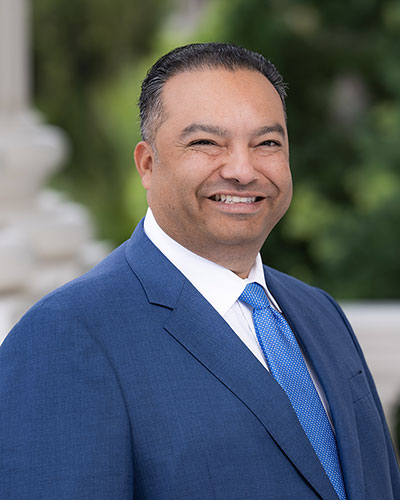
Asm. José Solache
Sponsored bills
Maddy summarySCR 103 designates the week of July 20-26, 2025, as "Probation Services Week" in California. This concurrent resolution recognizes the work of probation services professionals across the state. It is a symbolic observance with no new laws, regulations, or direct impact on individuals or policies. The bill does not alter existing statutes or create obligations for any entity.
Existing law establishes the California Community Colleges, under the administration of the Board of Governors of the California Community Colleges as one of the 3 segments of public postsecondary education in the state. Existing law establishes uniform residency requirements for purposes of ascertaining the amount of tuition and fees to be paid by students of public postsecondary educational institutions. Existing law requires a student classified as a nonresident to pay nonresident tuition, in addition to other fees required by the institution, except as provided. This bill, the California Community Colleges Access and Continuity for Deported Students Act, would, until January 1, 2030, exempt a community college student from paying nonresident tuition if the student departs the United States on or after January 1, 2025, for specified reasons, was not paying nonresident tuition at the time of departure, provides an attestation of specified information related to the departure, and reenrolls in a community college online education program no later than 3 years from the date the student departed the United States. The bill, until January 1, 2030, would require a deported student, as defined, who resumes in-person education at a community college to be eligible to retain residency status for the purpose of determining tuition and fees, provided the student was previously classified as a resident and eligible for the nonresident tuition exemption at the time of departure, and would require the student to be eligible to apply for financial aid upon reenrollment. To the extent that the bill would impose new duties on community college districts, the bill would impose a state-mandated local program. The California Constitution requires the state to reimburse local agencies and school districts for certain costs mandated by the state. Statutory provisions establish procedures for making that reimbursement. This bill would provide that, if the Commission on State Mandates determines that the bill contains costs mandated by the state, reimbursement for those costs shall be made pursuant to the statutory provisions noted above. This bill would declare that it is to take effect immediately as an urgency statute.
Existing law establishes the Office of Small Business Advocate (OSBA) within the Governor's Office of Business and Economic Development, also known as GO-Biz, to advocate for causes of small business and to provide small businesses with the information they need to survive in the marketplace. This bill, upon appropriation by the Legislature, would require OSBA to allocate 90% of the moneys appropriated to the Small Business Recovery Fund, which would be created within the State Treasury, for purposes of a small business recovery grant program to provide competitive grants to small businesses, as defined, that are directly impacted by a state of emergency proclaimed by the Governor or other specified emergencies. The bill would require the funds to be used for, among other things, to support recovery and rebuilding efforts, and would require a grantee to match the amount of the grant awarded. The bill would require OSBA to award grants in amounts that range from $2,500 to $100,000, inclusive. This bill would require OSBA to allocate 5% of the moneys appropriated to the fund to the Small Business Technical Assistance Program administered by GO-Biz, for grants to small business technical assistance centers that provide direct service to disaster-affected areas, and 5% to the Capital Infusion Program administered by GO-Biz, to support increased demand for capital-related technical assistance in disaster areas. This bill would require the Director of the Office of Small Business Advocate to prepare and submit a report to the Legislature on the results of grant funds awarded for each state of emergency proclaimed by the Governor, as provided. This bill would repeal the Small Business Recovery Fund Act on January 1, 2032.
Maddy summaryThis bill establishes January as National Human Trafficking Awareness Month in California to raise public awareness about human trafficking. The resolution recognizes the severity of human trafficking as a felony crime and highlights statistics showing its prevalence across the country and specific challenges with identifying male victims and labor trafficking cases. It aims to educate the public and encourage reporting and support for victims during this designated month.
Existing law authorizes a person to file a petition with the superior court seeking a judgment recognizing their change of gender to female, male, or nonbinary, including a person who is under 18 years of age. Existing law authorizes a person to file a single petition to simultaneously change the petitioner's name and recognize the change to the petitioner's gender and sex identifier, as specified. Existing law requires that either of those petitions, if filed by a person under 18 years of age, and any papers associated with the proceeding, be kept confidential by the court. Existing law requires the court to limit access to these records to specified individuals, including, among others, the minor, the minor's parents, and their attorney. This bill would expand the above-described confidentiality protections to other petitioners regardless of age. The bill would also expand these protections to court records associated with a proceeding under separate provisions of existing law for a change of name to conform a petitioner's name to their gender identity. The bill would require the court to limit access to the court records in these proceedings to certain individuals, as specified. The bill would apply these confidentiality provisions in the case of (1) a petition filed on or after July 1, 2026; (2) a petition filed before July 1, 2026, if the petitioner files a request to keep the records confidential, as specified; or (3) records that were previously made confidential by statute or otherwise. The bill would prohibit a person or private entity, other than the petitioner, from publicly posting one of the above-described confidential records on the internet or otherwise. The bill would make a violation of these confidentiality requirements an injury and, commencing 6 months after the effective date of this bill, would authorize a person or entity to institute proceedings for injunctive relief, declaratory relief, or a writ of mandate to enforce them. The bill would require a court to award reasonable attorney's fees and costs to a plaintiff who prevails on a cause of action against a private party pursuant to this authority. The bill would also authorize a petitioner who has been harmed by a disclosure or continuing disclosure of records, as specified, to, commencing 6 months after the effective date of this bill, bring a civil action against a person or private entity that caused the harm. The bill would require a person or private entity found liable to pay actual damages or statutory damages, punitive damages, and reasonable attorney's fees and costs, as specified. The bill would, on or before July 1, 2026, require the Judicial Council, as necessary, to develop forms and rules to implement the bill's provisions. Under the bill, nothing in these provisions would preclude a court from granting a motion to seal all court records of a person's change of name or gender and sex identifier, or both, pursuant to a specified California Rule of Court. The bill would state that whether a transgender person's gender identity conforms with their assigned sex at birth is intimate personal information entitled to protection under the right to privacy, and that a transgender person has a privacy interest in concealing their transgender identity. The bill would make legislative findings and declarations in support of its provisions. The bill would declare that its provisions are severable. Existing constitutional provisions require that a statute that limits the right of access to the meetings of public bodies or the writings of public officials and agencies be adopted with findings demonstrating the interest protected by the limitation and the need for protecting that interest. This bill would make legislative findings to that effect. This bill would declare that it is to take effect immediately as an urgency statute.
Existing law requires all health care providers and laboratories to report cases of human immunodeficiency virus (HIV) infection to the local health officer and requires the local health officer to report unduplicated HIV cases to the State Department of Public Health. Existing law requires public health records related to HIV or acquired immunodeficiency syndrome (AIDS) , containing personally identifying information, that were developed or acquired by a state or local public health agency, or an agent of that agency, to be confidential and not disclosed, except as otherwise provided by law for public health purposes or pursuant to a written authorization by the person who is the subject of the record or by their guardian or conservator. Existing law authorizes certain state or local public health officials to disclose those records to other local, state, or federal public health agencies or to medical researchers when the confidential information is necessary to carry out specified duties of the agency or researcher, including in the investigation, control, or surveillance of disease. This bill would additionally authorize a health care provider of a patient with an HIV infection that has already been reported to a local health officer as described above to disclose identifying information about the patient to a local health jurisdiction or the department if the disclosure is necessary to complete or supplement an HIV case report or for the local health jurisdiction or the department to carry out its duties in the investigation, control, or surveillance of disease, or the coordination of, linkage to, or reengagement in care for a person, as specified. The bill would make conforming changes to related provisions.
Existing law establishes the Medi-Cal program, which is administered by the State Department of Health Care Services and under which qualified low-income individuals receive health care services. The Medi-Cal program is, in part, governed and funded by federal Medicaid program provisions. Existing law generally imposes penalties on a person who negligently, willfully, or maliciously discloses the results of a human immunodeficiency virus (HIV) test to a third party in a manner that identifies or provides identifying characteristics of the person to whom the test results apply, as specified. Existing law, notwithstanding the above-described restrictions, authorizes the recording of the HIV test results by the physician who ordered the test in the test subject's medical record and authorizes other disclosure of the results without written authorization of the test subject, or the subject's representative, to the test subject's providers of health care, excluding a regulated health care service plan, for purposes of diagnosis, care, or treatment of the patient. This bill would authorize a provider of health care to disclose the results of an HIV test that identifies or provides identifying characteristics of a Medi-Cal beneficiary without written authorization of the test subject, or the subject's representative, to the Medi-Cal managed care plan to which the beneficiary is assigned, if applicable, and to external quality review organizations conducting external quality reviews of Medi-Cal managed care plans, for the purpose of administering quality improvement programs, including, but not limited to, value-based payment programs and healthy behavior incentive programs, designed to improve HIV care for Medi-Cal beneficiaries. Under the bill, HIV test results that do not identify or provide identifying characteristics of the test subjects would be authorized for disclosure without written authorization by the Medi-Cal managed care plan to departmental staff for the above-described purpose. The bill would make certain clarifying or declaratory statements with regard to related provisions.
Existing law establishes the California Pollution Control Financing Authority, which consists of 3 members: the Director of Finance, the Treasurer, and the Controller. Existing law requires the authority to provide the maximum opportunity for the use of the authority's financing by individuals, businesses engaged in agricultural operations, and small businesses or corporations by providing information, assistance, and coordination to facilitate financing for small projects and other financing that benefits the environment and the economy of the state, as specified. This bill would rename the authority as the Capital Programs and Climate Financing Authority. This bill would incorporate additional changes to Section 42652.5 of the Public Resources Code proposed by AB 70 to be operative only if this bill and AB 70 are enacted and this bill is enacted last.
Under existing law, a prisoner can reduce their term of imprisonment by earning credit for, among other things, continuous incarceration, good behavior, and participation in approved rehabilitative programming. Existing law makes an inmate of a county jail or state prison who has completed training for assignment to a conservation camp, state or county facility, or a correctional institution as an inmate firefighter, or who is assigned to a state or county facility or a correctional institution as an inmate firefighter, and who is eligible to earn one day of credit for every one day of incarceration, instead eligible to earn 2 days of credit for every one day served in that assignment or after completing that training. Existing law authorizes a juvenile court to order placement of a ward at the Pine Grove Youth Conservation Camp if specified criteria are met, including if the county has entered into a contract with the Department of Corrections and Rehabilitation and the department has found the ward amenable. Existing law authorizes the department to enter into contracts with counties to operate the Pine Grove Youth Conservation Camp through a state-local partnership, or other management arrangement, to train justice-involved youth, as specified, in wildland firefighting skills. This bill would require an incarcerated individual hand crew member, in addition to receiving credits, and a ward or youth hand crew member placed at the Pine Grove Youth Conservation Camp to be paid an hourly wage equal to $7.25 while assigned to an active fire incident. The bill would require that wage rate to be reviewed annually. The bill would require the Department of Corrections and Rehabilitation and counties to maintain regulations regarding an administrative adjudication and remedy process for any disputes over sums owned pursuant to these provisions. This bill would declare that it is to take effect immediately as an urgency statute.