

Existing law establishes the California Community Colleges, under the administration of the Board of Governors of the California Community Colleges, as one of the segments of public postsecondary education in this state. Existing law creates the Los Angeles County Metropolitan Transportation Authority ("LA Metro") with specified powers and duties relative to transportation planning, programming, and operations in the County of Los Angeles. This bill would (1) require the Los Angeles Community College District to annually enter into a memorandum of understanding with LA Metro for purposes of providing GoPass TAP cards to participating students enrolled at a campus of the community college district, as specified, and (2) establish a student ambassador program within LA Metro where students assist with security, rider assistance, and facility upkeep on LA Metro rail and bus lines serving campuses of the Los Angeles Community College District. The bill would require the Los Angeles Community College District to submit an annual report to the Department of Finance and the budget committees of the Assembly and Senate that includes specified information about the transit pass program and the student ambassador program. By imposing additional duties on the Los Angeles Community College District and LA Metro, the bill would impose a state-mandated local program. This bill would make legislative findings and declarations as to the necessity of a special statute for the Los Angeles Community College District and Los Angeles County Metropolitan Transportation Authority. The California Constitution requires the state to reimburse local agencies and school districts for certain costs mandated by the state. Statutory provisions establish procedures for making that reimbursement. This bill would provide that, if the Commission on State Mandates determines that the bill contains costs mandated by the state, reimbursement for those costs shall be made pursuant to the statutory provisions noted above.
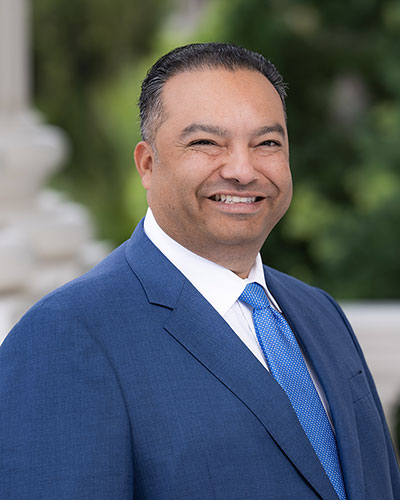
Asm. José Solache
Sponsored bills
The Mobilehome Residency Law governs the terms of conditions of residency in mobilehome parks and authorizes the management of a mobilehome park to terminate a tenancy for, among other reasons, conduct by the homeowner or resident upon the park premises that constitutes a substantial annoyance to other homeowners or residents. This bill would instead authorize the management to terminate a tenancy for conduct by the homeowner or resident upon the park premises that constitutes a substantial annoyance to other homeowners, residents, park staff, park employees, or other individuals who have contracted with, or regularly provide services for, the park.
Existing law requires school districts, county superintendents of schools, and charter schools to adopt and update a local control and accountability plan (LCAP) using a template adopted by the State Board of Education that requires an LCAP to include certain information, including, among other information, (1) a description of the annual goals to be achieved for specified state priorities, including, among others, pupil achievement and pupil outcomes, (2) a description of the specific actions that the local educational agency will take during each year of the LCAP to achieve these goals, and (3) an assessment of the effectiveness of the specific actions described in the existing LCAP toward achieving the goals, as provided. This bill would, among other things, require the State Department of Education, in consultation with the state board and the California Collaborative for Educational Excellence, on or before December 31, 2026, to prepare, and update at least once every 2 years, a compilation of best practices to harness the power of technology to support pupil academic success and accelerate pupil academic achievement for school districts, county offices of education, and charter schools that receive specified federal funding, including a model policy for incorporation of those best practices into their LCAPs. The bill would require the department, in collaboration with the California Collaborative for Educational Excellence, to conduct at least 3 informational webinars in 2027 for those local educational agencies to understand how to incorporate the best practices and model policy into their LCAPs. The bill would require the department to establish a School Technology Empowerment Advisory Committee that includes at least one school board member, administrator, teacher, and representative from the California Collaborative for Educational Excellence, and multiple individuals or organizations that represent the interests of supporting the use of technology in public schools, with experience regarding the effective use of technology in accelerating pupil academic performance, as provided. The bill would require the advisory committee to share with the Superintendent of Public Instruction, and advise the Superintendent on, best practices to harness the power of technology to support pupil academic success and accelerate pupil academic achievement for local educational agencies. The bill would also require the advisory committee, on or before December 31, 2028, and annually thereafter, to prepare an annual report on the progress in harnessing the power of technology to accelerate pupil academic achievement and to submit the report to the department and the state board.
The Donahoe Higher Education Act establishes the California State University, under the administration of the Trustees of the California State University, and the University of California, under the administration of the Regents of the University of California, as 2 of the 3 segments of public postsecondary education in the state. This bill would establish the College Access for All Fund in the State Treasury and would require all moneys in the fund to be available, upon appropriation by the Legislature, to the University of California and the California State University for purposes of lowering the cost of undergraduate attendance, either through tuition reductions or loan repayment programs, or a combination of tuition reductions and loan repayment programs.
Existing law designates 8 agencies in state government and requires the secretary of an agency to be generally responsible for the sound fiscal management of each department, office, or other unit within the agency. Existing law further requires the secretary of an agency to, among other duties, continually seek to improve the organization structure, the operating policies, and the management information systems of each department, office, or other unit. This bill would establish the Immigrant and Refugee Affairs Agency as an agency within state government, to be headed by a secretary who is appointed by the Governor and subject to Senate confirmation. The bill would specify that the purpose of the agency is to enhance, and reduce obstacles to, immigrant and refugee inclusion into the social, cultural, economic, and civic life of the state. The bill would authorize the secretary to, among other things, assist other state agencies in evaluating their programs for accessibility and effectiveness in providing services to immigrants and refugees and recommending policy and budget mechanisms for meeting immigrant and refugee inclusion. This bill would establish the Office of Immigrant and Refugee Affairs within the agency, under the direction of the Statewide Director of Immigrant and Refugee Inclusion. The bill would declare the intent to incorporate existing and future programs created to assist immigrants and refugees into the office. The bill would transfer to the office the property of any other office, agency, or department that relates to functions concerning immigrant and refugee affairs. The bill would require every officer and employee who is performing a function at another office, agency, or department that is transferred to the Office of Immigrant and Refugee Affairs to also be transferred to the office, and would provide that every officer and employee who is serving in the state civil service who is transferred to the office shall retain their status, position, and rights, except as specified. The bill would create the Immigrant and Refugee Inclusion Fund within the State Treasury, and would make the moneys in the fund available to the office upon appropriation by the Legislature. The bill would transfer to the office any unencumbered balance of any appropriation or other funds that were available for use in connection with any function transferred to the office. This bill would limit interagency sharing of information, would prohibit sharing of personal information of immigrants and refugees outside of the agency, and would prohibit use of agency resources to directly or indirectly participate or assist in immigration enforcement activity. Existing law establishes the Statewide Director of Immigrant Integration and requires the director serve as the statewide lead for the planning and coordination of immigrant services and policies in California. Existing law requires, among other things, that the director develop a comprehensive statewide report on programs and services that serve immigrants, develop an online clearinghouse of immigrant services, resources, and programs, and monitor the implementation of statewide laws and regulations that serve immigrants. This bill would recast those provisions to rename the director as the Statewide Director of Immigrant and Refugee Inclusion and would require the director to, among other things, develop a mission statement, strategic plan, and matrix of success for the office, and to report to the Legislature biannually on successes and challenges in meeting immigrant and refugee inclusion goals. The bill would require the director, by January 1, 2027, to report to the Governor and the Legislature on programs and services that serve immigrants and refugees and on a statewide plan for better implementation and coordination of immigrant and refugee assistance policies and programs. The bill would repeal the bill's provisions on January 1, 2036. Existing constitutional provisions require that a statute that limits the right of access to the meetings of public bodies or the writings of public officials and agencies be adopted with findings demonstrating the interest protected by the limitation and the need for protecting that interest. This bill would make legislative findings to that effect.
Existing law, subject to an appropriation in the annual Budget Act, establishes the Enhanced Services for Asylees and Vulnerable Noncitizens program to provide resettlement services for persons granted asylum by the United States Attorney General or the Secretary of Homeland Security or who are vulnerable noncitizens. For purposes of the program, vulnerable noncitizens are persons who are eligible to receive refugee cash assistance and services as victims of crime. Existing law requires the program, under the administration of the State Department of Social Services, to provide specified services for up to 90 days within the first year following a person's grant of asylum or eligibility for services as a victim of a crime, respectively. Existing law requires grants or contracts awarded under the program to be executed only with nonprofit organizations, as specified, with at least 3 years of experience with providing case management services and providing culturally and linguistically appropriate services. Existing law requires the department, in collaboration with service providers, to determine outcome metrics to define program success. This bill would change the eligibility criteria to receive services under the program from asylees or vulnerable noncitizens, as described above, to persons who, among other things, are screened by the United States Department of Homeland Security during January 1, 2024, to January 1, 2026, inclusive. The bill would require the program to provide services to an eligible person for up to 90 days within the first year following that screening. The bill would require grants or contracts awarded under the program to be executed only with nonprofit organizations with at least one year of experience with providing the above-described services. The bill would require the department to collect data from grantees related to the outcome metrics described above and post the findings on its internet website.
Existing law requires state agencies, boards, or commissions that directly or by contract collect demographic data on the ethnic origin, ethnicity, or race of Californians to use specified collection categories for Asian, Native Hawaiian, Pacific Islander, Black, and African American groups. Existing law establishes the Demographic Research Unit within the Department of Finance, which, among other things, acts as the primary state government liaison with the United States Census Bureau in the acquisition and distribution of census data and related documentation to state agencies. This bill, subject to a specified exception, would require any state agency, board, or commission that directly or by contract collects demographic data on the ethnic origin, ethnicity, or race of Californians to collect data on at least the minimum categories on race and ethnicity, as defined, as well as at least the top 9 largest detailed categories, and prescribed write-in options, as provided. The bill would require compliance with these provisions by January 1, 2029. The bill would establish, within the Demographic Research Unit, the position of the Chief Statistician of California, who would be required to, among other things, standardize collection of demographic data across state agencies, as provided. The bill would require the Chief Statistician of California and the Demographic Research Unit to oversee implementation of these provisions and provide technical assistance. The bill would also require, on or before January 1, 2027, and annually thereafter, each state agency, board, or commission required to comply with the bill's provisions to submit a report to the Legislature and the Assembly Committee on Governmental Organization on compliance with these provisions, as provided. The bill would require data collected pursuant to this section to be made available to the public in accordance with state and federal law, except for personal identifying information, as specified. The bill would prohibit an agency from disclosing personal identifying information to any federal agency unless the disclosure is expressly required by federal law.
Existing law appropriates $10,000,000 from the General Fund for the 2021–22 fiscal year to the Superintendent of Public Instruction to administer the Dual Language Immersion Grant Program for the purpose of expanding access to quality dual language learning and fostering languages that English learners bring to California's education system. Under that program, the State Department of Education is required to award a minimum of 25 one-time Dual Language Immersion Grants over a period of 3 fiscal years of up to $380,000 per grant to an eligible entity to expand or establish dual language immersion programs. This bill would establish the Dual Language Immersion Education Instructional Materials Grant Program, to be administered by the Superintendent, for purposes of providing one-time grants of $100,000 to school districts, county offices of education, and charter schools to increase available instructional materials in partner languages for dual language immersion programs at one or more schoolsites, as provided. The bill would require a grant recipient to report to the department, on or before June 29, 2029, on how grant funds were expended, including a list of any materials obtained or developed. The bill would require the department to submit a report to the appropriate policy and fiscal committees of the Legislature, on or before December 31, 2029, that includes the data received from the grant recipients. The bill would make implementation of these provisions contingent upon an appropriation by the Legislature for these purposes in the annual Budget Act or another statute.
Existing law, the Administrative Procedure Act, governs the procedure for the adoption, amendment, or repeal of regulations by state agencies and for the review of those regulatory actions by the Office of Administrative Law. The act requires a state agency proposing to adopt, amend, or repeal any administrative regulation to assess the potential for adverse economic impact on California business enterprises and individuals and requires the state agency to adhere to specified requirements in making that assessment. This bill would include among those requirements for assessing the potential for adverse economic impact the consideration of the proposal's cost of living impacts on residents of the state, as defined. Existing law requires a state agency proposing to adopt, amend, or repeal a regulation that is not a major regulation to prepare an economic impact assessment that includes to what extent the regulation will affects specified factors, including the creation or elimination of jobs within the state. Existing law requires a state agency proposing to adopt, amend, or repeal a major regulation to prepare a standardized regulatory impact analysis that addresses specified factors, including the creation or elimination of jobs within the state. This bill would also require the assessment for nonmajor regulations to include to what extent it will affect the cost of living impacts on residents of the state, and would require the standardized regulatory impact analysis for major regulations to address the cost of living impacts on residents of the state. The bill would require an agency to notify the office when the agency determines it needs to contract for outside services to perform the analyses and would require the office to select the contractor and oversee its work. The bill would require the office to adopt a standardized cost of living methodology for use by all agencies. Existing law requires the office to review regulations and make determinations using specified standards, including, necessity, authority, and clarity. This bill would add to those standards the cost of living impacts on residents of the state. The bill would require the office, in reviewing proposed regulations for that criteria, to conduct an independent analysis into the adequacy of an agency's economic analyses, to conduct its own analysis into the cost of living impacts on residents in the state, and, if the office finds those costs of living impacts are significant, to identify means by which the costs of the proposed regulation could be reduced. Existing law requires the office to return any regulation to the adopting agency upon the occurrence of specified events. This bill would require the office to return a regulation to the adopting agency if the office has independently evaluated the cost of living impacts on residents of the state and found that the impacts are significant, and would require the office to establish a methodology and threshold to determine when a cost of living impact becomes significant. Existing law requires the office to either approve a regulation or disapprove it within 30 working days after a regulation has been submitted to the office for review. Existing law requires the office, if it disapproves a regulation, to provide the adopting agency with a written notice detailing the reasons for disapproval. This bill would, for major regulations, increase the period of time for approval or disapproval to 60 working days. If one of the reasons for disapproval includes a significant cost of living impact, the bill would require the written decision to specify the means by which the costs of the proposed regulation could be reduced and would require the agency to pursue a less costly alternative or explain why a less costly alternative is infeasible.
Existing law requires a person engaged in the production of human whole blood or human whole blood derivatives to be licensed by the state, and requires licensed blood banks and blood transfusion services to meet specified standards. Existing law authorizes the State Department of Public Health to establish and require compliance with additional requirements, as specified. This bill, the California Source Plasma Donation Centers Act, would authorize a person to operate a source plasma donation center for the purpose of collecting source plasma, as defined. The bill would, among other things, authorize a source plasma donation center to offer payment to a donor of money or other valuable consideration. The bill would require the operator of a source plasma donation center to obtain a license from the State Department of Public Health, as specified. The bill would authorize the department to regulate source plasma donation centers, including to inspect the property or records of the center and to suspend or revoke a license for violation of specified law or regulation. The bill would authorize the department to promulgate any regulations it deems necessary to implement the bill's provisions. The bill would make a violation of the bill's provisions a misdemeanor, and would authorize a district or city attorney to prosecute a violation of the bill's provisions. By creating a new crime, the bill would impose a state-mandated local program. This bill would require a local health officer, if they obtained records from a source plasma donation center of a plasma donor who had a reactive result to HIV antibody testing, upon completion of the officer's efforts to locate and notify the plasma donor, to expunge all of the individual's records. By imposing additional duties on local health officials, this bill would impose a state-mandated local program. Existing law establishes the Clinical Laboratory Improvement Fund and requires specified fees collected from the licensing and regulation of blood banks and blood transfusion services to be deposited in the fund, available upon appropriation, for the purpose of regulating blood banks and blood transfusion services. This bill would additionally require fees collected from the licensing and regulation of source plasma donation centers to be deposited in the fund for the purpose of regulating source plasma donation centers, upon appropriation by the Legislature. Existing law requires specified establishments that receive specified human whole blood and derivatives to be considered blood bank depositories and require specified procedures on blood for transfusion to be the sole responsibility of the blood bank depository. This bill would exempt source plasma donation centers from these provisions. The California Constitution requires the state to reimburse local agencies and school districts for certain costs mandated by the state. Statutory provisions establish procedures for making that reimbursement. This bill would provide that with regard to certain mandates no reimbursement is required by this act for a specified reason. With regard to any other mandates, this bill would provide that, if the Commission on State Mandates determines that the bill contains costs so mandated by the state, reimbursement for those costs shall be made pursuant to the statutory provisions noted above.