

Existing law prohibits the tenant of a property to remain on a property after the lawful termination of a lease agreement, as specified. Existing law prescribes a procedure for obtaining a judgment against such a tenant and for effecting the eviction of that tenant. Existing law prohibits entering or occupying real property or structures without the consent of the owner. This bill would define a squatter as somebody who unlawfully enters and remains in a residential property and, upon request, refuses to leave or falsely claims a legal right of possession. This bill would prescribe a procedure for the notice and removal of a squatter by a local law enforcement agency. The bill would authorize a property owner or their agent to serve a demand to vacate, as specified, upon a squatter. The bill would authorize the owner or agent, after service of the demand, to submit a request, signed under penalty of perjury, to the local law enforcement agency with primary jurisdiction where the property is located, as specified. By expanding the crime of perjury, this bill would impose a state-mandate local program. This bill would require the law enforcement agency, upon receipt of the request, to verify the request and, upon verification, to remove the unlawful occupants from the property without unreasonable delay, as specified. The bill would describe the duties of local law enforcement personnel during a removal. By imposing new duties on local law enforcement agencies, this bill would impose a state-mandated local program. This bill would authorize a local law enforcement agency to assess a fee for processing a request and conducting a removal. This bill would prohibit a person from fraudulently causing or attempting to cause the removal of another person pursuant to these provisions. A violation of this prohibition would be punishable as a misdemeanor or felony. By creating new crimes, this bill would impose a state-mandated local program. The bill would also create a civil cause of action for damages and restoration of possession against a person who fraudulently causes the removal of a person pursuant to the provisions, by the person who was removed. This bill would state that, notwithstanding any other state or local law, it is intended to provide the remedy for unlawful occupation of a residential property by a squatter and would specify that it applies only to situations involving a squatter and not situations involving a tenant or other person with a bona fide claim to tenancy or title. The California Constitution requires the state to reimburse local agencies and school districts for certain costs mandated by the state. Statutory provisions establish procedures for making that reimbursement. This bill would provide that, with regard to certain mandates, no reimbursement is required by this act for a specified reason. With regard to any other mandates, this bill would provide that, if the Commission on State Mandates determines that the bill contains costs so mandated by the state, reimbursement for those costs shall be made pursuant to the statutory provisions noted above.
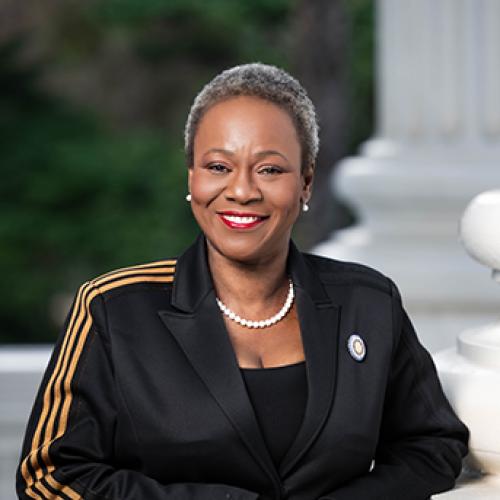
Asm. Tina McKinnor
Sponsored bills
Existing law, added by Proposition 184, approved at the November 8, 1994, statewide general election, and amended by the Three Strikes Reform Act of 2012, approved as Proposition 36 at the November 6, 2012, statewide general election, commonly known as the Three Strikes Law, imposes additional years of imprisonment in state prison on a person who commits a serious or violent felony and has been convicted of, or who has a prior conviction for, a serious or violent felony. A prior juvenile adjudication constitutes a prior serious or violent felony conviction for purposes of this sentence enhancement if the juvenile was 16 years of age at the time and other requirements are met. The Legislature may directly amend these initiatives by a statute passed in each house by a 23 vote, or by a statute that becomes effective only when approved by the voters. This bill would amend those initiative statutes by prohibiting a prior juvenile adjudication from being considered a prior serious or violent felony conviction for purposes of sentence enhancement. The bill would provide a means of vacating a prior juvenile adjudication and resentencing a defendant on any remaining counts, as specified. By requiring the participation of district attorneys and public defenders in the resentencing process, this bill would impose a state-mandated local program. The California Constitution requires the state to reimburse local agencies and school districts for certain costs mandated by the state. Statutory provisions establish procedures for making that reimbursement. This bill would provide that, if the Commission on State Mandates determines that the bill contains costs mandated by the state, reimbursement for those costs shall be made pursuant to the statutory provisions noted above.
Existing law establishes, until January 1, 2030, the Racial Equity Commission within the Office of Planning and Research and requires the commission to develop resources, best practices, and tools for advancing racial equity by, among other things, developing a statewide Racial Equity Framework that includes methodologies and tools that can be employed to advance racial equity and address structural racism in California. Existing law, the California Fair Employment and Housing Act, establishes the Civil Rights Department and sets forth its powers and duties, including, among others, receiving, investigating, and prosecuting complaints alleging violations of civil rights, as specified. This bill would require the Civil Rights Department (department) , to, upon appropriation by the Legislature, review, investigate, and make certain determinations regarding applications from persons who claim they are the dispossessed owner, as defined, of property taken as a result of racially motivated eminent domain. The bill would define "racially motivated eminent domain" to mean when the state, county, city, city and county, district, or other political subdivision of the state acquires private property for public use and does not distribute just compensation to the owner at the time of the taking, and the taking, or the failure to provide just compensation, was due, in whole or in part, to the owner's ethnicity or race. Upon a determination that providing property or just compensation is warranted, as provided, the bill would require the department to certify that the dispossessed owner is entitled to the return of the taken property, as specified, or other publicly held property, as defined, of equal value, or financial compensation, as specified. Upon a determination that the dispossessed owner is entitled to other publicly held property of equal value, the bill would require the department to solicit and select, as specified, a list of recommendations of publicly held properties that are suitable as compensation, as provided. Upon a rejection of the determination of the department by the state or local agency that took property by racially motivated eminent domain, the bill would authorize the dispossessed owner, as specified, to bring an action to challenge the taking or the amount of compensation, as provided. Upon a determination that an applicant is not a dispossessed owner or issuing property or just compensation is not warranted, the bill would require the department to notify the applicant of its finding and provide an appeal process, as specified. The bill would require the department to prioritize processing applications for claims made by the individual or individuals who held legal title to the affected property at the time of its taking, as specified. The bill would make every finding, decision, determination, or other official act of the department subject to judicial review. Existing law generally prohibits state agencies from employing in-house counsel to act on behalf of the agency or its employees in specified judicial or administrative adjudicative proceedings, but exempts specified agencies from this provision. This bill would exempt the Civil Rights Department from that provision, as specified. This bill would make related findings and declarations, including those related to a gift of public funds.
Existing law establishes the California Housing Finance Agency in the Department of Housing and Community Development, and authorizes the agency to, among other things, make loans to finance affordable housing, including residential structures, housing developments, multifamily rental housing, special needs housing, and other forms of housing, as specified. Existing law establishes the California Dream for All Program to provide shared appreciation loans to qualified first-time homebuyers, as specified. Existing law establishes in the State Treasury the California Dream for All Fund, which is continuously appropriated for expenditure pursuant to the program, as specified. This bill would require, upon establishment of the certification process for the descendants of American slavery established by the Bureau for Descendants of American Slavery, at least 10% of the moneys in the fund to be reserved for applicants who meet the requirements for a loan under the program and have been certified as descendants of formerly enslaved people, as specified. This bill would become operative only if SB 518 of the 2025–26 Regular Session is enacted and takes effect on or before January 1, 2027, and establishes the Bureau for Descendants for American Slavery.
The California Constitution prohibits the state from discriminating against, or granting preferential treatment to, any individual or group on the basis of race, sex, color, ethnicity, or national origin in the operation of public employment, public education, or public contracting. The Donahoe Higher Education Act sets forth, among other things, the missions and functions of California's public and independent segments of higher education and their respective institutions of higher education. A provision of the act applies to the University of California only to the extent that the Regents of the University of California, by appropriate resolution, act to make the provision applicable. This bill would state that the California State University, the University of California, independent institutions of higher education, and private postsecondary educational institutions may consider providing a preference in admissions to an applicant who is a descendant of slavery, as defined, to the extent it does not conflict with federal law.
Existing law establishes the Department of Consumer Affairs, which is composed of specified boards that license and regulate various professions. Existing law requires those boards to expedite the licensure process for an applicant who holds a current license in another jurisdiction in the same profession or vocation and supplies evidence that they are married to or in a domestic partnership or other legal union with an active duty member of the Armed Forces of the United States who is assigned to a duty station in this state under official active duty military orders. This bill would require those boards to expedite applications for applicants seeking licensure who are descendants of American slaves once a process to certify descendants of American slaves is implemented, as specified. This bill would make these provisions operative only if SB 518 of the 2025–26 Regular Session is enacted establishing the Bureau for Descendants of American Slavery, and would make these provisions operative when the certification process is implemented pursuant to that measure. The bill would repeal these provisions 4 years from the date on which they become operative or on January 1, 2032, whichever is earlier.
The State Government Strategic Planning and Performance and Review Act requires each agency, department, office, or commission for which strategic planning efforts are recommended, as specified, to develop a strategic plan and to report to the Governor and the Joint Legislative Budget Committee by April 1 each year on the steps being taken to develop and adopt a strategic plan. The act requires the report to include a description of the elements to be included in the strategic plan, the process for developing and adopting the strategic plan, and the timetable for the plan's completion. This bill would instead require each agency, department, office, or commission subject to the Governor's authority to develop and report on the above-described strategic plan. The bill would also require each agency, department, office, or commission subject to the Governor's authority to, for any strategic plans applicable and if feasible, develop or update the strategic plan to reflect the use of data analysis and inclusive practices to more effectively advance racial equity and to respond to identified disparities with changes to the organization's policies, programs, and operations, among other things.
Maddy summaryThis bill establishes January as National Human Trafficking Awareness Month in California to raise public awareness about human trafficking. The resolution recognizes the severity of human trafficking as a felony crime and highlights statistics showing its prevalence across the country and specific challenges with identifying male victims and labor trafficking cases. It aims to educate the public and encourage reporting and support for victims during this designated month.
Existing law, the Contractors State License Law, establishes the Contractors State License Board within the Department of Consumer Affairs and sets forth its powers and duties relating to the licensure and regulation of contractors. Existing law makes it a misdemeanor for a person to engage in the business, or act in the capacity, of a contractor without a license, unless exempted. Existing law exempts from the Contractors State License Law, among other things, a nonprofit corporation providing assistance to an owner, as specified. This bill would exempt from that law an artist who draws, paints, applies, executes, restores, or conserves a mural, as defined, pursuant to an agreement with a person who could legally authorize the work.
Existing law establishes the California State University, under the administration of the Trustees of the California State University, as one of the segments of public postsecondary education in the state. Existing law requires the trustees to control and expend all money appropriated for the support and maintenance of the university. Former law, until July 1, 2023, established the Task Force to Study and Develop Reparation Proposals for African Americans, with a Special Consideration for African Americans Who are Descendants of Persons Enslaved in the United States (Task Force) . Former law required the Task Force, among other things, to identify, compile, and synthesize the relevant corpus of evidentiary documentation of the institution of slavery that existed within the United States and the colonies, as specified, and to recommend the form of compensation that should be awarded, the instrumentalities through which it should be awarded, and who should be eligible for this compensation. This bill would authorize the use of up to $6,000,000, as specified, for the purpose of enabling the California State University to conduct research in furtherance of the recommendations of the Task Force, thereby making an appropriation. The bill would authorize the California State University to partner with other universities or nonprofit institutions in furtherance of the bill. The bill would require, before the start of each fiscal year, the California State University to consult with the California Legislative Black Caucus to propose a list of research components to be addressed through the appropriation, as provided. This bill would require the California State University to explore options to determine how to confirm an individual's status as a descendant of an enslaved person, as defined. The bill would also require the California State University to establish a process for conducting or verifying genealogical research for the purpose of confirming an individual's status as a descendant of an enslaved person for eligibility for reparative claims on or before the start of the 2029–30 academic year and to commence the work of establishing the process on or before the start of the 2026–27 academic year. The bill would authorize the funding described above to be used to support student participation in support of this goal. The bill would require the California State University, on or before October 1 of each year and until funding is exhausted, to submit to the Legislature and Governor a report with a status update of pending research projects, and any research projects that have been completed within the prior year. The bill would require the final report to include research findings, recommendations with options, and timelines for statewide implementation, including costs, developed pursuant to these provisions.