

Existing law establishes the Civil Rights Department within the Business, Consumer Services, and Housing Agency to enforce civil rights laws with respect to housing and employment and to protect and safeguard the right of all persons to obtain and hold employment without discrimination based on specified characteristics or status. Existing law requires a private employer that has 100 or more employees to submit an annual pay data report to the Civil Rights Department that includes the number of employees by race, ethnicity, and sex in 10 specified job categories, the number of employees by race, ethnicity, and sex whose pay falls within federal pay bands, within each job category the median and mean hourly rate for employees having any combination of those characteristics, and the total number of hours worked by each employee counted in each pay band during the "Reporting Year," as specified. This bill would require an employer to collect and store any demographic information gathered by an employer or labor contractor for the purpose of submitting the pay data report separately from employees' personnel records, and, beginning January 1, 2027, increase the number of job categories, as specified above, to 23. Existing law authorizes the department, if it does not receive the pay data report, to seek an order requiring an employer to comply with these provisions. Existing law provides that upon the request of the department, a court may impose a civil penalty upon any employer for failure to file the required report, which shall be payable to the Civil Rights Enforcement and Litigation Fund. This bill would require a court to impose a civil penalty against an employer that fails to file the report if requested to do so by the department.
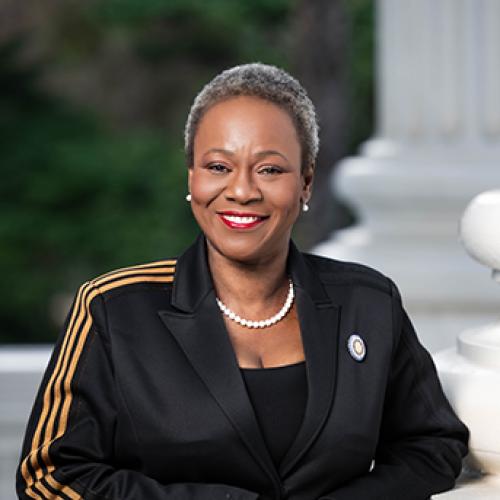
Asm. Tina McKinnor
Sponsored bills
Existing law provides various programs for youth and adolescent health, including requiring a youth sports organization that elects to offer an athletic program to ensure athletes have access to an automated external defibrillator during official practice and regulating youth football. Existing law also authorizes a community youth athletic program to request state and federal level criminal history information for volunteer or hired coach candidates. This bill, the Youth Sports for All Act, would require the State Public Health Officer to establish and convene the Blue Ribbon Commission on the Development of a California Department of Youth Sports or an Equivalent Centralized Entity to conduct a comprehensive study on the need for and feasibility of creating a centralized entity charged with supporting and regulating youth sports, as provided, on or before July 1, 2026, or 6 months after implementation commences as described below, whichever is later. The bill would require the commission to submit the study to the Legislature and the Governor on or before January 1, 2028, or 2 years after implementation commences, whichever is later. The bill would make implementation of its provisions contingent upon an appropriation by the Legislature or upon the State Department of Public Health obtaining sufficient funds from federal, nonprofit, or private sources. This bill would create the Youth Sports Blue Ribbon Commission Fund in the State Treasury and would authorize moneys in the account to be expended by the department, upon appropriation by the Legislature, for purposes of the commission. The bill would create the Youth Sports Blue Ribbon Commission Special Fund Subaccount within the fund for the receipt and deposit of the aforementioned federal, nonprofit, or private moneys, and would continuously appropriate moneys in the subaccount to the department for purposes of the commission, thereby making an appropriation. This bill would repeal its provisions on January 1, 2033.
Under existing law, a prisoner can reduce their term of imprisonment by earning credit for, among other things, continuous incarceration, good behavior, and participation in approved rehabilitative programming. Existing law makes an inmate of a county jail or state prison who has completed training for assignment to a conservation camp, state or county facility, or a correctional institution as an inmate firefighter, or who is assigned to a state or county facility or a correctional institution as an inmate firefighter, and who is eligible to earn one day of credit for every one day of incarceration, instead eligible to earn 2 days of credit for every one day served in that assignment or after completing that training. Existing law authorizes a juvenile court to order placement of a ward at the Pine Grove Youth Conservation Camp if specified criteria are met, including if the county has entered into a contract with the Department of Corrections and Rehabilitation and the department has found the ward amenable. Existing law authorizes the department to enter into contracts with counties to operate the Pine Grove Youth Conservation Camp through a state-local partnership, or other management arrangement, to train justice-involved youth, as specified, in wildland firefighting skills. This bill would require an incarcerated individual hand crew member, in addition to receiving credits, and a ward or youth hand crew member placed at the Pine Grove Youth Conservation Camp to be paid an hourly wage equal to $7.25 while assigned to an active fire incident. The bill would require that wage rate to be reviewed annually. The bill would require the Department of Corrections and Rehabilitation and counties to maintain regulations regarding an administrative adjudication and remedy process for any disputes over sums owned pursuant to these provisions. This bill would declare that it is to take effect immediately as an urgency statute.
(1) Existing law requires the Superintendent of Public Instruction to establish and implement a system of complaint processing, known as the Uniform Complaint Procedures, for specified educational programs, and requires the State Department of Education to review those regulations pertaining to uniform complaint procedures for specified types of complaints, including those that allege unlawful discrimination, harassment, intimidation, or bullying against any protected group, as provided. Existing law requires the department to, on or before March 31, 2019, commence rulemaking proceedings to revise those regulations, as necessary, to conform to specified provisions. Beginning July 1, 2026, this bill would require, upon receipt by the department of a complaint subject to the Uniform Complaint Procedures that alleges unlawful discrimination, harassment, intimidation, or bullying, the Superintendent to collect specified information, including, among other things, a description of the complaint received. The bill would require the Superintendent to create and post on the department's internet website a summary report of the data described above. (2) Existing law, the California Fair Employment and Housing Act, among other things, establishes the Civil Rights Department and authorizes it to receive, investigate, conciliate, mediate, and prosecute complaints alleging various civil rights violations, including violations of provisions regarding individuals with disabilities. Existing law, the Lesbian, Gay, Bisexual, Transgender, and Intersex Disparities Reduction Act, requires the Civil Rights Department, among other specified state entities, in the course of collecting demographic data directly or by contract as to the ancestry or ethnic origin of Californians, to collect voluntary self-identification information pertaining to sexual orientation, gender identity, and variations in sex characteristics/intersex status, as specified. Existing law, the California Public Records Act, generally requires public records to be open for inspection by the public. Existing law provides numerous exceptions to this requirement. This bill would require the Civil Rights Department to collect, for a complaint received, certain demographic information, including the ethnicity, race, and gender of the individual submitting the complaint, and certain information related to the complaint. The bill would require the department, commencing July 1, 2027, to publish a summary report no later than October 1 of each year of the compiled information for the preceding calendar year on its internet website. This bill would require, for any information or data acquired pursuant to the bill's provisions, that information or data to be confidential and protected from public disclosure, including disclosure pursuant to the California Public Records Act, except that the information may be disclosable pursuant to that act to the same extent as the underlying complaint. The bill would also prohibit the above-described summary reports, dashboards, and transmitted data from containing any personally identifying information about any individual. The bill would require information in the summary reports, dashboards, and transmitted data to be sufficiently deidentified to prevent the identification of the individuals involved in a complaint. (3) Existing constitutional provisions require that a statute that limits the right of access to the meetings of public bodies or the writings of public officials and agencies be adopted with findings demonstrating the interest protected by the limitation and the need for protecting that interest. This bill would make legislative findings to that effect.
(1) The Outdoor Advertising Act, a violation of which is a crime, provides for the regulation by the Department of Transportation of advertising displays, as defined, within view of public highways. Existing law exempts from certain provisions of the act advertising displays located in specific geographic areas in the City of Los Angeles if those displays meet prescribed conditions and requirements, including the condition that the advertising display is authorized by, or in accordance with, an ordinance adopted by the City of Los Angeles that regulates advertising displays by identifying the specific displays or establishing regulations that include, at a minimum, specified restrictions, as provided. This bill would authorize the ordinance adopted by the City of Los Angeles to authorize a framework of allowable signage that preserves flexibility in the ultimate placement, sizing, and scope of advertising displays, and define a range or maximum signage capacity, as specified. The bill would also authorize the City of Los Angeles to adopt implementing ordinances that sequence or phase the authorization of advertising displays over time. (2) This bill would declare that it is to take effect immediately as an urgency statute.
Existing law prohibits public funds from being used in connection with any athletic program conducted under the auspices of a school district governing board or any student organization within the district, which does not provide equal opportunity to both sexes for participation and for use of facilities. Existing law prohibits a city, county, city and county, or special district from discriminating against any person on the basis of gender in the operation, conduct, or administration of community youth athletics programs, as defined, or in the allocation of parks and recreation facilities and resources, as defined, that support or enable these programs. Existing law creates an independent right to bring a civil action for a violation of this prohibition for equitable and monetary relief, as specified. This bill would instead prohibit a city, county, city and county, special district, school district, county office of education, or charter school from discriminating against a person on the basis of sex or gender in the operation, conduct, or administration of community youth athletics programs, or in the allocation of parks and recreation facilities and resources or school and recreation facilities and resources that support or enable these programs. The bill would define various terms for these purposes and make related conforming changes. By imposing a new duties on local agencies, the bill would impose a state-mandated local program. The California Constitution requires the state to reimburse local agencies and school districts for certain costs mandated by the state. Statutory provisions establish procedures for making that reimbursement. This bill would provide that, if the Commission on State Mandates determines that the bill contains costs mandated by the state, reimbursement for those costs shall be made pursuant to the statutory provisions noted above.
Former law, Chapter 319 of the Statutes of 2020, until July 1, 2023, established a task force to, among other things, identify, compile, and synthesize the relevant corpus of evidentiary documentation of the institution of slavery that existed within the United States and the colonies, as specified, and to recommend the form of compensation that should be awarded, the instrumentalities through which it should be awarded, and who should be eligible for this compensation. Existing law, the California Fair Employment and Housing Act, establishes the Civil Rights Department and sets forth its powers and duties, including, among others, receiving, investigating, and prosecuting complaints alleging violations of civil rights, as specified. This bill would establish the Bureau for Descendants of American Slavery within the department, under the control of the deputy director, who would be appointed by the Governor and confirmed by the Senate. The bill would require the bureau to create a Genealogy Division, as specified, and to verify an individual's status as a descendant and would require proof of an individual's descendant status to be a qualifying criterion for benefits authorized by the state for descendants. The bill would also require the bureau to create an Education and Outreach Division and a Legal Affairs Division. The bill would impose various requirements on the bureau relating to the collection, storage, and disclosure of personal and genetic information, as specified. The bill would authorize the bureau to receive moneys from any federal, state, or local grant and from any nongovernmental entity, as specified. This bill would make implementation of its provisions contingent upon appropriation by the Legislature, as specified. This bill would include findings and declarations relating to a gift of public funds. Existing constitutional provisions require that a statute that limits the right of access to the meetings of public bodies or the writings of public officials and agencies be adopted with findings demonstrating the interest protected by the limitation and the need for protecting that interest. This bill would make legislative findings to that effect.
Existing law establishes in state government, within the office of the Governor, the Office of Emergency Services. Existing law requires the office to be responsible for the state's emergency and disaster response services for natural, technological, or manmade disasters and emergencies, including responsibility for activities necessary to prevent, respond to, recover from, and mitigate the effects of emergencies and disasters to people and property. Existing law, the FIRESCOPE Act of 1989, requires the office to establish and administer a program, known as the FIRESCOPE program, to maintain and enhance the efficiency and effectiveness of managing multiagency firefighting resources in responding to an incident. Existing law requires the office, in collaboration with the Department of Forestry and Fire Protection and the board of directors of the FIRESCOPE program, to develop standards and regulations for any privately contracted private fire prevention resources operating during an active fire incident in the state, as provided, and to develop regulations to govern the use of equipment used by privately contracted private fire prevention resources during an active fire incident, as provided. This bill would additionally require the office to develop regulations prohibiting privately contracted private fire prevention resources from hooking up their equipment to public water sources, unless approved by incident command or the authority having jurisdiction over the active fire incident and unless the equipment includes a backflow prevention device. The California Safe Drinking Water Act provides for the operation of public water systems and imposes certain responsibilities on community water systems related to the operation of water distribution systems, as defined. This bill would explicitly state that none of the above-described regulations governing the use of equipment used by privately contracted fire prevention resources during an active fire incident shall alter, impair, or interfere with the authority of a community water system to operate a water distribution system.
Existing law regulates sale transactions of real property. On January 7, 2025, the Governor proclaimed a state of emergency to exist in the Counties of Los Angeles and Ventura due to fire and windstorm conditions that caused multiple fires. Executive Order No. N-7-25, signed by the Governor on January 14, 2025, prohibited a buyer from making an unsolicited offer to an owner of real property located in specified ZIP Codes in the County of Los Angeles to purchase the real property for an amount less than what the fair market value of the property was on January 6, 2025. Executive Order No. N-17-25 expanded that prohibition to include real properties in additional specified ZIP Codes. Subsequent executive orders extended the prohibition until July 1, 2025. Existing law makes a violation of the executive order a misdemeanor, as specified. Existing law, the Real Estate Law, provides for the licensure and regulation of real estate brokers and salespersons by the Real Estate Commissioner, the chief officer of the Department of Real Estate within the Business, Consumer Services, and Housing Agency. Existing law makes a willful violation of the Real Estate Law a crime. This bill would prohibit a person, as defined, from making an unsolicited offer to purchase residential real property in certain ZIP Codes in the County of Los Angeles covered by the above-described executive orders and other specified ZIP Codes in the Counties of Los Angeles and Ventura. The bill would define "unsolicited offer to purchase" for this purpose. The bill would require the buyer and seller, before the transfer of title in the purchase of residential real property subject to the above-described prohibition, to execute a written attestation affirming compliance with that prohibition, which, if signed, would create a presumption that the accepted offer was solicited by the seller, as specified. The bill would require the buyer to record the signed attestation as an attachment to the deed or other conveyance of title when recording the transfer of title, as specified. Because the bill would expand the crime of perjury, the bill would impose a state-mandated local program. This bill would make a written offer in violation of these provisions by a licensed person under the Real Estate Law on their own behalf, or on behalf of another person while conducting licensed activity, a violation of the person's licensing law, unless SB 641 is enacted and becomes operative, in which case the offer would be a violation of a provision added by SB 641. The bill would authorize the Attorney General, a county counsel, city attorney, or a district attorney to bring a civil action to enforce these provisions. In addition to any other available remedies or penalties, the bill would grant a seller the right to cancel a purchase agreement entered into in violation of these provisions, as specified. The bill would subject a person who violates the above-described prohibition on making an unsolicited offer to purchase real property in those ZIP Codes to an assessment of a civil penalty, and would make the violation a misdemeanor, as specified. By creating new crimes, this bill would impose a state-mandated local program. This bill would make these provisions severable, would make these provisions operative 30 days after the effective date of the bill, and would repeal these provisions on January 1, 2027. This bill would make legislative findings and declarations as to the necessity of a special statute for the Counties of Los Angeles and Ventura. The California Constitution requires the state to reimburse local agencies and school districts for certain costs mandated by the state. Statutory provisions establish procedures for making that reimbursement. This bill would provide that no reimbursement is required by this act for a specified reason. This bill would declare that it is to take effect immediately as an urgency statute.
(1) Existing law, the Alcoholic Beverage Control Act, is administered by the Department of Alcoholic Beverage Control and regulates the granting of licenses for the manufacture, distribution, and sale of alcoholic beverages within the state. The act requires the department to make and prescribe rules to carry out the purposes and intent of existing state constitutional provisions on the regulation of alcoholic beverages, and to enable the department to exercise the powers and perform the duties conferred upon it by the state constitution and the act, not inconsistent with any statute of this state. The act makes it unlawful for any person other than a licensee of the department to sell, manufacture, or import alcoholic beverages in this state, with exceptions. The department, pursuant to its powers and in furtherance of emergency declarations and orders of the Governor under the California Emergency Services Act regarding the spread of the COVID-19 virus, established prescribed temporary relief measures to suspend certain legal restrictions relating to, among other things, the expansion of a licensed footprint, sales of alcoholic beverages to-go, and delivery privileges. Existing law authorizes the department, for a period of 365 days following the end of the state of emergency proclaimed by the Governor on March 4, 2020, in response to the COVID-19 pandemic, to permit licensees to exercise license privileges in an expanded license area authorized pursuant to a COVID-19 Temporary Catering Authorization approved in accordance with the Fourth Notice of Regulatory Relief issued by the department, as specified. Existing law makes these provisions effective only until July 1, 2026, and repeals them as of that date. This bill, instead, would make those provisions operative until January 1, 2029, repeal those provisions on that date, and make conforming changes. The bill would also prohibit the department from issuing any new COVID-19 Temporary Catering Authorizations on or after January 1, 2027. (2) The Planning and Zoning Law authorizes the legislative body of any city or county to adopt ordinances that regulate zoning within its jurisdiction, as specified. Under that law, variances and conditional use permits may be granted if provided for by the zoning ordinance. Existing law, to the extent that an outdoor expansion of a business to mitigate COVID-19 pandemic restrictions on indoor dining interferes with, reduces, eliminates, or impacts required parking for existing uses, requires a local jurisdiction that has not adopted an ordinance that provides relief from parking restrictions for expanded outdoor dining areas to reduce the number of required parking spaces for existing uses by the number of spaces that the local jurisdiction determines are needed to accommodate an expanded outdoor dining area. Existing law makes these provisions operative only until July 1, 2026, and repeals them on that date. This bill, instead, would make those provisions operative indefinitely. Because the bill would require local officials to perform additional duties for an extended period, the bill would impose a state-mandated local program. (3) Existing law, the California Retail Food Code, establishes uniform health and sanitation standards for, and provides for regulation by the State Department of Public Health of, retail food facilities. Existing law provides that these standards are primarily enforced by local enforcement agencies. Existing law restricts satellite food service to limited food preparation in a fully enclosed permanent food facility that meets specified requirements. Existing law requires a permanent food facility, before conducting satellite food service, to submit to the enforcement agency written operating standards. Existing law, until July 1, 2026, authorizes a permitted food facility within any local jurisdiction that is subject to retail food operation restrictions related to a COVID-19 public health response to prepare and serve food as a temporary satellite food service without obtaining a separate satellite food service permit or submitting written operating procedures. With regard to those provisions that authorize a permitted food facility to prepare and serve food as a temporary satellite food service, this bill, instead, would make those provisions operative indefinitely. (4) Existing law requires permanent food facilities to be fully enclosed in a building consisting of permanent floors, walls, and an overhead structure that meet prescribed minimum standards. This bill would, notwithstanding the requirements described above, authorize a restaurant to operate using open windows, folding doors, or nonfixed store fronts during hours of operation if the restaurant develops, and submits to the enforcement agency for approval, an integrated pest management and food safety risk mitigation plan and meets certain requirements, as specified. The bill would require the plan to be documented in writing, made available upon request to local environmental health enforcement officers, and updated annually or whenever there is a change to the facility or operation. The bill would require the restaurant to self-close upon observation of vermin activity inside the facility and remain closed until all vermin are eliminated. The bill would prohibit a local enforcement agency from unreasonably withholding approval of a proposed pest management and food safety risk mitigation plan and would require approval to be granted unless unique circumstances exist such that no reasonable conditions or measures can sufficiently mitigate a significant risk to public health or safety. (5) The California Constitution requires the state to reimburse local agencies and school districts for certain costs mandated by the state. Statutory provisions establish procedures for making that reimbursement. This bill would provide that no reimbursement is required by this act for a specified reason.