

Existing law requires that any building with a dwelling unit maintain certain characteristics in order to be tenantable, including the maintenance of adequate heating and hot water systems that conform to the standard of quality set by applicable law. This bill would add a stove and refrigerator that are maintained in good working order and are capable of safely generating heat for cooking purposes and capable of safely storing food, respectively, to the list of characteristics required for the dwelling unit to be tenantable for leases entered into, amended, or extended on or after January 1, 2026. The bill would require a landlord to repair or replace a stove or refrigerator that is subject to recall by the manufacturer or a public entity within 30 days of receiving notice that the stove or refrigerator is subject to recall. The bill would also authorize a tenant and landlord to mutually agree when the lease is signed if the tenant chooses to provide and maintain their own refrigerator, subject to certain conditions. The bill would prohibit the application of these new requirements for certain types of dwelling units, including permanent supportive housing, as defined. Existing law authorizes a tenant to repair dilapidations rendering their premises untenantable if the landlord has neglected to repair those dilapidations, subject to certain conditions, or vacate the premises, as specified. This bill would provide that the above-described requirement on a landlord to repair or replace a recalled stove or refrigerator does not prohibit a tenant from exercising any remedy authorized as described above.
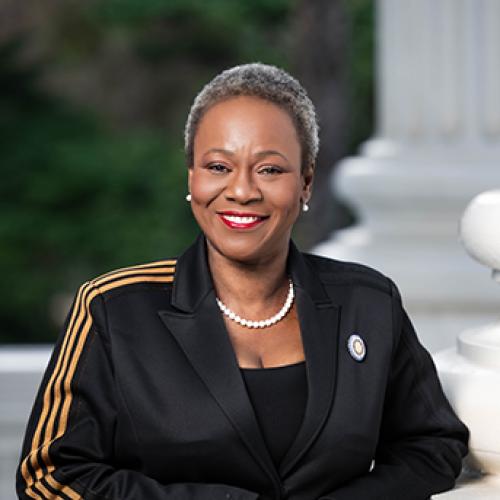
Asm. Tina McKinnor
Sponsored bills
Existing law declares the public policy of the state regarding labor organization, including, among other things, that it is necessary for a worker to have full freedom of association, self-organization, and designation of representatives of their own choosing, to negotiate the terms and conditions of their employment, and to be free from the interference, restraint, or coercion of employers of labor, or their agents, in the designation of such representatives or in self-organization or in other concerted activities for the purpose of collective bargaining or other mutual aid or protection. Existing law, the Protect App-Based Drivers and Services Act, added by Proposition 22, as approved by the voters at the November 3, 2020, statewide general election (the initiative) , categorizes app-based drivers for network companies, as defined, as independent contractors if certain conditions are met. Existing law requires, among other things, that the network company provide a health care subsidy to qualifying app-based drivers, provide a minimum level of compensation for app-based drivers, and not restrict app-based drivers from working in any other lawful occupation or business. Existing case law holds that specified provisions of the initiative are invalid on separation of powers grounds; however, the court severed the unconstitutional provisions, allowing the rest of the initiative to remain in effect. Existing law also establishes the Public Employment Relations Board (board) in state government as a means of resolving disputes and enforcing the statutory duties and rights of specified public employers and employees under various acts regulating collective bargaining. Existing law vests the board with jurisdiction to enforce certain provisions over charges of unfair practices for represented employees. This bill, the Transportation Network Company Drivers Labor Relations Act (act) , would establish that transportation network company (TNC) drivers have the right to form, join, and participate in the activities of TNC driver organizations, to bargain through representatives of their own choosing, to engage in concerted activities for the purpose of bargaining or other mutual aid or protection, and to refrain from such activities. The bill would require the board to enforce these provisions. This bill would require all TNCs to submit certain information every quarter, including information identifying and related personal work information about TNC drivers to the board in a list format, as prescribed. The bill would establish various procedures governing the certification and decertification of TNC driver organizations for purposes of representing drivers in the collective bargaining process. In this connection, the bill would require the board to determine if an entity is a TNC driver organization, as prescribed, and make certain determinations as to whether a specific organization has been designated as the bargaining representative for TNC drivers pursuant to an election process. The bill would establish various notice requirements, conditions, and timelines governing the representation of TNC drivers. The bill would, among other things, require TNCs and certified driver bargaining organizations to negotiate in good faith pursuant to the act, as described, and would set forth procedures for mediation and arbitration for purposes of reaching a sectoral agreement. The bill would set forth procedures and guidelines for the board to approve or disapprove sectoral agreements. The bill would require a TNC that was not a covered TNC when a sectoral agreement took effect but subsequently became a covered TNC to be bound by all terms of the sectoral agreement, as specified. This bill would make it an unfair practice for a TNC, an agent of a TNC, or a multicompany committee, as defined, to fail or refuse to negotiate in good faith with a certified driver bargaining organization, among other things. The bill would also make it an unfair practice for a certified driver bargaining organization or its agents to fail to negotiate in good faith with a TNC or multicompany committee, among other things. The bill would set forth unfair practice charge procedures and remedies for those practices. The bill would define terms for purposes of the act, make the provisions of the act severable, and make related legislative policy statements. Existing law, the Bagley-Keene Open Meeting Act, generally requires all meetings of a state body to be open and public. This bill would exempt any meeting of a mediator or arbitrator with any party or group to the negotiations process and the mediation and arbitration processes in the act from the Bagley-Keene Open Meeting act. Existing law, the California Public Records Act, requires state and local agencies to make their records available for public inspection, unless an exemption from disclosure applies. This bill would exclude from public disclosure information regarding TNC drivers that is submitted to the board pursuant to the act, except as specified. Existing constitutional provisions require that a statute that limits the right of access to the meetings of public bodies or the writings of public officials and agencies be adopted with findings demonstrating the interest protected by the limitation and the need for protecting that interest. This bill would make legislative findings to that effect.
Existing law prohibits a person from offering for sale or distribution, or otherwise entering into commerce in the state, bulk hydrofluorocarbons or bulk blends containing hydrofluorocarbons that exceed a specified global warming potential limit beginning January 1, 2025, and lower global warming potential limits beginning January 1, 2030, and January 1, 2033. Existing law exempts from that prohibition hydrofluorocarbons that are reclaimed, as defined under a specified federal regulation. Under existing law, a violation of these prohibitions is a crime. This bill would eliminate the exemption for reclaimed hydrofluorocarbons and would instead create new exemptions for certain refrigerants, as specified. By eliminating the exemption for reclaimed hydrofluorocarbons, the bill would expand the scope of a crime and thereby impose a state-mandated local program. The California Constitution requires the state to reimburse local agencies and school districts for certain costs mandated by the state. Statutory provisions establish procedures for making that reimbursement. This bill would provide that no reimbursement is required by this act for a specified reason. This bill would declare that it is to take effect immediately as an urgency statute.
(1) Existing law establishes the Department of Industrial Relations within the Labor and Workforce Development Agency and sets forth the functions of the department, which include, among others, fostering, promoting, and developing the welfare of the wage earners of California and improving their working conditions. Existing law establishes within the department the Division of Labor Standards Enforcement, headed by the Labor Commissioner, for the purposes of enforcing labor laws. Existing law requires the Labor Commissioner to enforce and administer a program to register and supervise foreign labor contractors who perform foreign labor contracting activities to recruit or solicit foreign workers. Existing law defines foreign workers for purposes of these provisions to mean any person seeking employment who is not a United States citizen or permanent resident but who is authorized by the federal government to work in the United States, including a person who engages in temporary nonagricultural labor, as specified. Existing law requires foreign labor contractors to register under the program, as prescribed. Existing law requires an applicant for registration as a foreign labor contractor to execute a written application in a form prescribed by the commissioner, as specified, that includes, among other things, the names and addresses of all persons financially interested in the proposed operation as a foreign labor contractor, as provided. Existing law imposes specific requirements on foreign labor contractors relating to recruitment or solicitation for employment and relating to work contracts. Existing law authorizes the commissioner to adopt regulations or policies and procedures to implement these provisions. Existing law authorizes the commissioner, or a person aggrieved by a violation of these provisions, to bring certain actions against the violator, including an action for injunctive relief, as provided. A violation of these provisions is a crime. Existing law makes these provisions applicable only to nonagricultural workers, and exempts persons licensed as farm labor contractors, specified persons exempt from farm labor contractor licensing requirements, and employers of agricultural workers. This bill would, beginning July 1, 2027, expand the above-described provisions to agricultural workers under the federal H-2A visa program. The bill would make related conforming changes and findings and declarations. The bill would additionally require, beginning July 1, 2027, the above-described application to contain a listing of each federal visa program under which the person will be performing foreign labor contracting activities. The bill would authorize the commissioner to enforce the above-described foreign labor contractor registration provisions through specified procedures, including the issuance of a citation or filing of a civil action against a person who violates those provisions. (2) Existing law requires farm labor contractors to be licensed by the commissioner and to comply with specified employment laws applicable to farm labor contractors. Existing law prohibits the commissioner from issuing to any person, or renewing, a license to act as a farm labor contractor unless certain conditions are satisfied, including a requirement that the person has executed a written application in a form prescribed by the commissioner as a foreign labor contractor, as prescribed. This bill would require, beginning July 1, 2027, a person who is licensed or acting as a farm labor contractor and who performs foreign labor contracting activities to register with the commissioner as a foreign labor contractor, as prescribed. The bill would authorize the commissioner to eliminate duplicative application information requirements for information previously obtained from the farm labor contractor's license application, as specified. By expanding the application of the foreign labor contractor registration provisions, the bill would expand an existing crime, thereby imposing a state-mandated local program. This bill would require the Department of Industrial Relations to submit to the Legislature, by January 1, 2028, a study on how to extend foreign labor contractor registration requirements to certain foreign labor contractors, as specified. (3) The California Constitution requires the state to reimburse local agencies and school districts for certain costs mandated by the state. Statutory provisions establish procedures for making that reimbursement. This bill would provide that no reimbursement is required by this act for a specified reason.
Existing law declares the public policy of the state regarding labor organization, including, among other things, that it is necessary for a worker to have full freedom of association, self-organization, and designation of representatives of their own choosing, to negotiate the terms and conditions of their employment, and to be free from the interference, restraint, or coercion of employers of labor, or their agents, in the designation of such representatives or in self-organization or in other concerted activities for the purpose of collective bargaining or other mutual aid or protection. Existing law establishes the Public Employment Relations Board (PERB) in state government as a means of resolving disputes and enforcing the statutory duties and rights of specified public employers and employees under various acts regulating collective bargaining. Under existing law, PERB has the power and duty to investigate an unfair practice charge and to determine whether the charge is justified and the appropriate remedy for the unfair practice. Existing law, the federal National Labor Relations Act (NLRA) , establishes a comprehensive statutory scheme regulating unfair labor practices on the part of employers and labor organizations in industries affecting interstate commerce, and vests in the National Labor Relations Board (NLRB) the power to conduct elections to determine employee representatives and to prevent unfair labor practices affecting commerce. Existing law, the California Public Records Act, requires that public records, as defined, be available to the public for inspection and made promptly available to any person. This bill would expand PERB's jurisdiction by authorizing a worker, to petition PERB to protect and enforce prescribed rights under specified circumstances, including if the worker is employed in a position subject to the NLRA but the NLRB has expressly or impliedly ceded jurisdiction. The bill would authorize PERB to, among other things, decide unfair labor practice cases pursuant to a specified timeline and order all appropriate relief for a violation, including civil penalties, as prescribed. In order to pursue relief from PERB, the bill would require a covered worker or their representative to file an unfair practice charge or petition that includes specified information, including, where applicable, the original charge or petition filed with the NLRB. The bill would require PERB to hold the supporting documentation and evidence confidential and maintain it as part of its investigatory file and would exempt this documentation and evidence from the California Public Records Act. If PERB determines, among other things, it has insufficient resources to process certain cases or doing so would prevent it from meeting specified statutory deadlines, the bill would require PERB to process and prioritize charges, as specified. The bill would also establish the Public Employment Relations Board Enforcement Fund (fund) in the State Treasury, would require the above-described civil penalties to be deposited into the fund, and would make moneys in the fund available upon appropriation by the Legislature to PERB for the purpose of administering the above-specified provisions. The bill would authorize PERB to rely on its own decisions and precedent under the NLRA and would authorize review of its decisions by a state appellate court, as specified. Existing law, the Alatorre-Zenovich-Dunlap-Berman Agricultural Labor Relations Act of 1975, grants agricultural employees the right to form and join labor organizations and engage in collective bargaining, as specified, and prohibits agricultural employers and labor organizations from engaging in unfair labor practices. Those provisions establish the Agricultural Labor Relations Board (ALRB) and empower the ALRB to prevent any person from engaging in those practices. Existing law establishes various definitions for these purposes. Existing law requires the ALRB to follow applicable precedents of the NLRA. This bill would specify that the ALRB has exclusive jurisdiction in all phases of the administration of the act, and to determine whether any person or entity meets one or more of those definitions. The bill would instead authorize the board to follow applicable precedents of the NLRA, but would not obligate the board to follow precedents where the ALRB deems it inappropriate to do so. This bill would make related findings and declarations and would make its provisions severable. Existing constitutional provisions require that a statute that limits the right of access to the meetings of public bodies or the writings of public officials and agencies be adopted with findings demonstrating the interest protected by the limitation and the need for protecting that interest. This bill would make legislative findings to that effect.
This measure would designate November 1, 2025, as Fernando Valenzuela Day, to highlight the positive impact his legacy created in the Latino and Hispanic community.
This measure would recognize the contributions of the music industry to the economic and cultural well-being of the state, its population, and its overall reputation as a worldwide leader in artistic and creative freedom.
This measure would recognize the importance of California Native American Day, celebrated this year on September 26, 2025, and the annual California Indian Cultural Awareness Conference, to the enhancement of awareness of California Indian culture.
Existing law makes it a misdemeanor to wear a mask, false whiskers, or any personal disguise, as specified, with the purpose of evading or escaping discovery, recognition, or identification while committing a public offense, or for concealment, flight, evasion, or escape from arrest or conviction for any public offense. This bill would make it a crime for a law enforcement officer to wear a facial covering in the performance of their duties, except as specified. The bill would define law enforcement officer as anyone designated by California law as a peace officer who is employed by a city, county, or other local agency, and any officer or agent of a federal law enforcement agency or law enforcement agency of another state, or any person acting on behalf of a federal law enforcement agency or agency of another state. The bill would make a violation of these provisions punishable as an infraction or a misdemeanor, as specified. By creating a new crime, this bill would impose a state-mandated local program. The bill would require any law enforcement agency operating in California to, by July 1, 2026, maintain and publicly post a written policy limiting the use of facial coverings, as specified. The bill would exempt personnel of any agency from the crime of wearing a facial covering if an agency maintains a policy pursuant to this section no later than July 1, 2026. The bill would deem a policy consistent with these provisions for the purposes of that exception unless a member of the public, an oversight body, or a local governing authority challenges it. The bill would also impose a specified civil penalty against certain officers for tortious conduct, including, but not limited to, false imprisonment or false arrest of an individual while wearing a facial covering. The bill would, if the agency does not address deficiencies within 90 days, authorize the complaining party to proceed to a court of competent jurisdiction for a judicial determination of the exemption, as specified. The bill would define a law enforcement agency for these purposes as any entity of a city, county, or other local agency, that employs anyone designated by California law as a peace officer, any federal law enforcement agency, or any law enforcement agency of another state. By imposing additional duties on local law enforcement agencies, this bill would create a state-mandated local program. This bill would declare its provisions to be severable. This bill would make related findings and declarations. The California Constitution requires the state to reimburse local agencies and school districts for certain costs mandated by the state. Statutory provisions establish procedures for making that reimbursement. This bill would provide that with regard to certain mandates no reimbursement is required by this act for a specified reason. With regard to any other mandates, this bill would provide that, if the Commission on State Mandates determines that the bill contains costs so mandated by the state, reimbursement for those costs shall be made pursuant to the statutory provisions noted above.
This measure would declare the Legislature's opposition to the unlawful Executive Order No. 14160, entitled "Protecting the Meaning and Value of American Citizenship," ending birthright citizenship as enshrined in the United States Constitution and would affirm the Legislature's commitment to birthright citizenship, as specified.