

(1) Existing law provides that every contract that restrains anyone from engaging in a lawful profession, trade, or business of any kind is, to that extent, void, except as provided. Existing law authorizes any person who sells the goodwill of a business, any owner of a business entity selling or otherwise disposing of all of their ownership interest in the business entity, or any owner of a business entity that sells specified assets or ownership interests to agree with the buyer to refrain from carrying on a similar business within a specified geographic area in which the business so sold, or that of the business entity, division, or subsidiary has been carried on, if the buyer, or any person deriving title to the goodwill or ownership interest from the buyer, carries on a like business therein. Existing law defines "ownership interest" as a partnership interest, membership interest, or a capital stockholder, as described. This bill would modify the definition of "ownership interest" to require the partnership interest, membership interest, or capital stock to be more than a 10% interest of the total partnership interest, more than a 10% interest of the total membership interest, or more than 10% of the total shares of ownership of the entity, respectively. This bill would prohibit an employer, as defined, from entering into, presenting an employee, as defined, or prospective employee as a term of employment, or attempting to enforce any contract in restraint of trade, as defined, that is void, as described. The bill would provide that an employer, as defined, that violates that provision is liable for actual damages and an additional penalty of up to $5,000 per employee, as defined, or prospective employee. The bill would authorize an employee or prospective employee to bring an action for injunctive relief and for the recovery of actual damages and penalties and would provide that a prevailing employee or prospective employee is entitled to recover reasonable costs and attorney's fees. The bill would require the Attorney General to receive and investigate allegations of a violation of this provision and would authorize the Attorney General to bring an action enforcing this provision. Existing law provides for a system of labor standards enforcement administered by the Labor Commissioner. This bill would require the Labor Commissioner to, in coordination with the Attorney General, receive and investigate complaints related to the above-described provisions of this bill. (2) Existing law, the State Bar Act, provides for the licensure and regulation of attorneys by the State Bar of California, a public corporation. Existing law provides that it is cause for suspension, disbarment, or other discipline for any licensee, whether acting on their own behalf or on behalf of someone else, whether or not in the context of litigation, to solicit, agree, or seek agreement that, among other things, misconduct or the terms of a settlement of a claim for misconduct shall not be reported to the State Bar. This bill would provide that it is cause for suspension, disbarment, or other discipline for any licensee to enter into with an employee, prospective employee, or former employee, present an employee, prospective employee, or former employee as a term of employment, or attempt to enforce any employee contract or other agreement in restraint of trade, as provided. (3) Existing law prohibits an employer from requiring an employee who primarily resides and works in the state to agree, as a condition of employment, to a provision that would require the employee to adjudicate outside of the state a claim arising in the state or would deprive the employee of the substantive protection of state law with respect to a controversy arising in the state. Existing law provides that this prohibition does not apply to a contract with an employee who is in fact individually represented by legal counsel in negotiating the terms of an agreement to designate either the venue or forum in which a controversy arising from the employment contract may be adjudicated or the choice of law to be applied. This bill would provide that, for a contract entered into, modified, or extended on or after January 1, 2025, the above-described prohibition does not apply to a contract with an employee who is individually represented by legal counsel, excluding when the counsel is paid for by, or was selected based upon the suggestion of, the employee's employer, in negotiating the terms of an agreement and, at the option of the employee, designates either the venue or forum in which a controversy arising from the employment contract may be adjudicated or the choice of law to be applied.
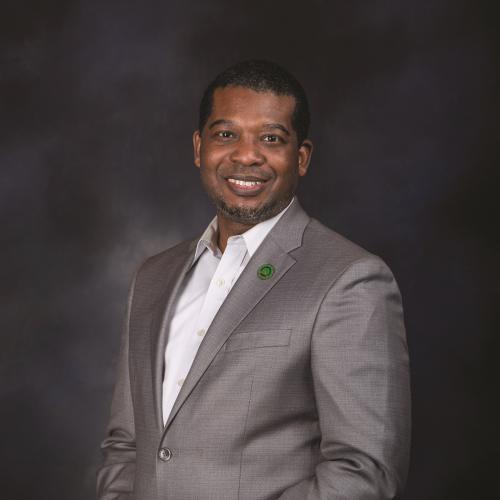
Asm. Corey Jackson
Sponsored bills
Existing law generally requires county boards of supervisors, city councils, and the governing boards of school districts, community college districts, and other special districts, if those bodies are elected using district-based elections, to adopt new boundaries for the districts following each federal decennial census. Notwithstanding that requirement, existing law authorizes a local jurisdiction other than a charter city to establish an independent redistricting commission to adopt new boundaries for the local jurisdiction's districts. This bill would require a county, general law city, charter city, or charter city and county that contains over 300,000 residents, and a school district or community college district that contains over 500,000 residents, to establish an independent redistricting commission to adopt district boundaries after each federal decennial census. The bill would require a county, general law city, charter city, or charter city or county with over 300,000 residents, and a school district or community college district with over 500,000 residents, that does not enact an ordinance, resolution, or charter amendment establishing an independent redistricting commission by January 1, 2030, and January 1 of every subsequent year ending in 0, to establish a 14-member independent redistricting commission according to specified procedures, including procedures for the random selection of the members of the commission from among applicants meeting certain qualifications. By requiring certain local jurisdictions to establish independent redistricting commissions to adopt district boundaries, the bill would impose a state-mandated local program. The bill would prohibit a member of an independent redistricting commission from communicating with any individual or organization regarding redistricting matters, except as provided. The bill would require the State Auditor to provide the contact information of any applicant to serve on the Citizens Redistricting Commission, which is responsible for adjusting the boundary lines of the congressional, legislative, and State Board of Equalization districts, to any city or county that has established an independent or hybrid redistricting commission, provided that the applicant has consented to share this information and the city or county has requested to receive this information, and to inform those applicants of opportunities to serve on an independent or hybrid redistricting commission. The bill would require the State Auditor to establish a database and create and advertise a process for this exchange of information. Under existing law, independent redistricting commissions have been established for the Counties of Los Angeles, San Diego, Riverside, Fresno, and Kern. The bill would exempt the Counties of Los Angeles, San Diego, Riverside, Fresno, and Kern from the bill's provisions requiring a county with over 300,000 residents to establish an independent redistricting commission, unless the existing law provisions establishing independent redistricting commissions for those counties are repealed or invalidated. The bill also would exempt a charter city with a population of at least 2,500,000 people from the bill's provisions if specified conditions are met, including if both this bill and Senate Bill 52 are enacted and if the city complies with certain provisions in Senate Bill 52 that require such cities to establish independent redistricting commissions. This bill would incorporate additional changes to Section 23003 of the Elections Code proposed by Assembly Bill 764 to be operative only if this bill and Assembly Bill 764 are enacted and this bill is enacted last. The bill would include findings that changes proposed by this bill address a matter of statewide concern rather than a municipal affair and, therefore, apply to all cities, including charter cities. The California Constitution requires the state to reimburse local agencies and school districts for certain costs mandated by the state. Statutory provisions establish procedures for making that reimbursement. This bill would provide that, if the Commission on State Mandates determines that the bill contains costs mandated by the state, reimbursement for those costs shall be made pursuant to the statutory provisions noted above.
Existing law, until January 1, 2024, increases the smog abatement fee on certain vehicles by a specified amount and requires the revenues generated by the increase to be deposited in the Air Quality Improvement Fund and the Alternative and Renewable Fuel and Vehicle Technology Fund. Existing law, until January 1, 2024, increases vehicle registration fees and certain service fees for identification plates by specified amounts. Existing law requires the revenue generated by the increase in those fees to be deposited in the Alternative and Renewable Fuel and Vehicle Technology Fund and either the Air Quality Improvement Fund or the Enhanced Fleet Modernization Subaccount, as provided. This bill would extend the increases in those charges to July 1, 2035. Existing law, until January 1, 2024, prohibits the State Air Resources Board from enforcing any element of its clean fuels outlet regulations or other regulation that requires or has the effect of requiring suppliers, as defined, to construct, operate, or provide funding for the construction or operation of publicly available hydrogen-fueling stations. Existing law, until January 1, 2024, requires the state board to aggregate and make available certain information regarding projected leases and sales of, and the registration of, hydrogen-fueled vehicles, to evaluate, based on that information, the need for additional publicly available hydrogen-fueling stations for the actual and projected number of hydrogen-fueled vehicles, the geographic areas where fuel will be needed, and station coverage, and to report the finding of the evaluation to the State Energy Resources Conservation and Development Commission. Existing law, until January 1, 2024, requires the commission to annually allocate $20,000,000 to fund the number of publicly available hydrogen-fueling stations identified by the state board, not to exceed 20% of the moneys appropriated by the Legislature from the Alternative and Renewable Fuel and Vehicle Technology Fund, until at least 100 publicly available hydrogen-fueling stations are operating in the state. This bill would extend the above-described provisions to July 1, 2035, and would repeal them as of January 1, 2036. The bill would lower the annual allocation described above to $10,000,000, require the commission to make that allocation only until July 1, 2030, and impose other specified requirements. The bill would also delete the requirements that the hydrogen-fueling stations be publicly available and that there be at least 100 hydrogen-fueling stations operating in the state. Existing law creates the Enhanced Fleet Modernization Program to provide compensation for the retirement and replacement of passenger vehicles and light-duty and medium-duty trucks that are high polluters. Existing law requires the Bureau of Automotive Repair to administer the program and the state board to adopt the guidelines for the program. Existing law requires the guidelines to ensure vehicle replacement or a mobility option be an option for all motor vehicle owners and may be in addition to compensation for vehicles retired. Existing law creates the Enhanced Fleet Modernization Subaccount in the High Polluter Repair or Removal Account and makes available, upon appropriation, all moneys in the account to establish, implement, and administer the program. This bill would require the guidelines to ensure each replacement vehicle in the program be either a plug-in hybrid or zero-emission vehicle unless the state board makes a specified determination regarding either the availability of vehicles or the availability of charging and refueling capabilities in consultation with the commission, as specified. Existing law establishes the Clean Transportation Program that is administered by the commission to provide financial assistance to develop and deploy innovative technologies that transform California's fuel and vehicle types to help attain the state's climate change policies with an emphasis on the development and deployment of technology and alternative and renewable fuels in the marketplace. Existing law authorizes the commission to make a single source or sole source award for applied research. This bill would revise and recast the Clean Transportation Program to, among other things, change the emphasis of the program to the development and deployment of zero-emission technology and fuels in the marketplace where feasible and near-zero-emission technology and fuels elsewhere. The bill would additionally authorize the commission to make a single source or sole source award to public or nonpublic entities that manage a United States Department of Energy national laboratory. The bill would require the commission, on and after January 1, 2025, to expend at least 50% of the moneys appropriated to the program on programs and projects that directly benefit or serve residents of disadvantaged and low-income communities and low-income Californians. The bill would also require the State Energy Resources Conservation and Development Commission, by January 1, 2028, in consultation with the State Air Resources Board and the Department of Motor Vehicles, to propose to the Legislature alternative funding methodologies or fee structures for funding zero-emission vehicle infrastructure for light-, medium-, and heavy-duty vehicles. The bill would require the proposal to include an assessment of the economic equity of the alternatives. This bill would declare that it is to take effect immediately as an urgency statute.
Existing law imposes taxes upon income and real property, as well as taxes upon certain transactions and excise taxes. This bill would, for taxable years beginning on or after January 1, 2024, and before January 1, 2026, impose an annual tax at a rate of 1.5% of a resident of this state's worldwide net worth in excess of $1,000,000,000, or in excess of $500,000,000 in the case of a married taxpayer filing separately. The bill would, for taxable years beginning on or after January 1, 2026, impose an annual tax at a rate of 1% of a resident's worldwide net worth in excess of $50,000,000, or in excess of $25,000,000 in the case of a married taxpayer filing separately. The bill would also impose, for taxable years beginning on or after January 1, 2026, an additional tax at a rate of 0.5% of a resident's worldwide net worth in excess of $1,000,000,000, or in excess of $500,000,000 in the case of a married taxpayer filing separately. The bill would describe worldwide net worth with reference to specific federal provisions and would provide that worldwide net worth does not include specific assets, including personal property situated out of state, directly held real property, or liabilities related to directly held real property. The bill would also authorize the Franchise Tax Board to adopt regulations to carry out these provisions, including regulations regarding the valuation of certain assets that are not publicly traded. The bill would require new certifications by taxpayers, made under penalty of perjury. By expanding the crime of perjury, this bill would impose a state-mandated local program. This bill would establish the Wealth Tax Advisory Council. The bill would require the council to determine an adequate level of annual funding and staffing for the administration and collection of the wealth tax imposed by this bill. The bill would provide specific guidelines for what constitutes adequate levels of annual funding and staffing for the administration and collection of a wealth tax. The bill would establish 2 continuously appropriated funds in the State Treasury to cover the expenses of the administration and collection of the wealth tax. Under the bill, the funds would be funded by the greater of either a specified amount or a certain percentage of revenues estimated to be generated by the wealth tax. By establishing new continuously appropriated funds, this bill would make an appropriation. Existing law, the False Claims Act, provides that any person who commits specified acts, including, but not limited to, knowingly presenting a false or fraudulent claim for payment or approval or knowingly making or using a false record or statement material to a false or fraudulent claim, is liable to the state or to the political subdivision for 3 times the amount of damages that the state or political subdivision sustained because of the act and for the costs of a civil action brought to recover any penalties or damages, and is subject to a civil penalty. That act requires the Attorney General or the prosecuting authority of a political subdivision to diligently investigate violations of those specific acts involving state funds or political subdivision funds, respectively, and authorizes the Attorney General, the prosecuting authority, or a qui tam plaintiff to bring a civil action against a person who commits those acts. That act does not apply to claims, records, or statements made under the Revenue and Taxation Code. This bill would apply the provisions of the False Claims Act to claims, records, or statements made in relation to the wealth tax imposed by the bill, as specified. Existing law generally makes it a misdemeanor for specified persons, including, among others, officers or employees of the state or its political subdivisions, to disclose information set forth or disclosed in returns, reports, or documents required to be filed under the franchise and income tax laws. This bill would create an exception to these rules in the case of information related to the Wealth Tax, as requested by the University of California or the Wealth Tax Advisory Council, so long as specified information privacy protections are in place, and the request is for a specified purpose. This bill would specify that the tax imposed by the bill shall only become operative if a specified constitutional amendment is approved by the voters and takes effect. This bill would include a change in state statute that would result in a taxpayer paying a higher tax within the meaning of Section 3 of Article XIIIA of the California Constitution, and thus would require for passage the approval of 23 of the membership of each house of the Legislature. Existing constitutional provisions require that a statute that limits the right of access to the meetings of public bodies or the writings of public officials and agencies be adopted with findings demonstrating the interest protected by the limitation and the need for protecting that interest. This bill would make legislative findings to that effect. The California Constitution requires the state to reimburse local agencies and school districts for certain costs mandated by the state. Statutory provisions establish procedures for making that reimbursement. This bill would provide that no reimbursement is required by this act for a specified reason.
Existing law establishes the Department of General Services to provide centralized services, including, but not limited to, planning, acquisition, construction and maintenance of state buildings and property. Existing law authorizes the Director of General Services, with the consent of the state agency concerned, to lease state-owned real property when the Director of General Services deems that leasing serves a beneficial public purpose limited to the development of housing. This bill would enact the Social Housing Act and would create, in the Department of General Services, the Social Housing Program, the mission of which would be to ensure that qualified social housing developments are produced on leased state property to help address the housing crisis, as specified. The bill would authorize the program to identify and develop up to 3 qualified social housing projects, as specified, with the intent to use the results to inform public policy related to developing an independent public entity to develop statewide qualified social housing. The bill would require the program to solicit bids to develop qualified social housing units, and prioritize bids that demonstrate long-term revenue neutrality or a cost rent model, as those terms are defined. The bill would require the program to employ 2 different leasing models, the rental model and the ownership model, as specified, in creating social housing. The bill would prohibit a city or county from denying a social housing development authorized under the program. The bill would authorize a city or county to propose objective design review standards, as specified, and authorize a city or county to propose modifications to mitigate any specific, adverse impacts on public health or safety, as specified.
Existing law establishes the State Department of Public Health and prescribes its duties and organization. Existing law defines a "hate crime" as a criminal act committed, in whole or in part, because of actual or perceived characteristics of the victim, including, disability, gender, nationality, race or ethnicity, religion, and sexual orientation. This bill, upon appropriation by the Legislature and commencing on or before the later of either July 1, 2025, or one year after the date of the appropriation, would require the department to establish the Hate Crimes Intervention Program within the Injury and Violence Prevention Branch to implement evidence-based community interventions in conjunction with community leaders and organizations in communities that have been most impacted by hate crimes confirmed by the Department of Justice. Existing law, the California Fair Employment and Housing Act, establishes the Civil Rights Department within the Business, Consumer Services, and Housing Agency and sets forth its powers and duties relating to enforcement of civil rights laws and assistance to communities in resolving disputes, disagreements, or difficulties relating to discriminatory practices. This bill, upon appropriation by the Legislature and commencing on or before the later of either July 1, 2025, or one year after the date of the appropriation, would require the department to create and distribute statewide and regional radio, social media, and television campaigns for the purposes of discouraging discrimination. The bill would require the department to convene a working group to develop a plan to implement the campaigns above. The bill would exempt the working group from the Bagley-Keene Open Meeting Act.
Existing law, the Knox-Keene Health Care Service Plan Act of 1975, provides for the licensure and regulation of health care service plans by the Department of Managed Health Care, and makes a willful violation of the act a crime. Existing law provides for the regulation of health insurers by the Department of Insurance. Existing law requires a health care service plan or health insurer that provides hospital, medical, or surgical coverage shall provide coverage for medically necessary treatment of mental health and substance use disorders, under the same terms and conditions applied to other medical conditions, as specified. Existing law also includes requirements for timely access to care, including mental health services, including a requirement that a health care service plan or health insurer provide or arrange for the provision of covered health care services in a timely manner appropriate for the nature of the enrollee's or insured's condition consistent with good professional practice. This bill would require a health care service plan contract or health insurance policy issued, amended, renewed, or delivered on or after January 1, 2024, to provide coverage for treatment of urgent and emergency mental health and substance use disorders. The bill would require the treatment to be provided without preauthorization, and to be reimbursed in a timely manner, pursuant to specified provisions. The bill's provisions would only be implemented upon appropriation by the Legislature for administrative costs of the departments. The bill would clarify that it would not relieve a health plan or insurer of existing obligations, as specified. Because a violation of the bill's requirements by a health care service plan would be a crime, the bill would impose a state-mandated local program. The California Constitution requires the state to reimburse local agencies and school districts for certain costs mandated by the state. Statutory provisions establish procedures for making that reimbursement. This bill would provide that no reimbursement is required by this act for a specified reason.
Existing law requires the Board of Parole Hearings, among other responsibilities, to conduct parole suitability hearings and determine whether an inmate is suitable for parole. Existing law allows an unlawfully imprisoned person to prosecute a writ of habeas corpus to inquire into the cause of the imprisonment. This bill would require the Board of Parole Hearings to notify a parole candidate who has been denied parole of their right to petition the court for habeas relief, as specified. The bill would authorize the court to, upon request, appoint counsel to a parole candidate who has reached their minimum eligible parole date who petitions the court for habeas relief after being denied parole. The bill would establish that a parole candidate who has reached their minimum eligible parole date has made a case for relief that should be accepted as correct unless proved otherwise and that the reviewing court may not deny a petition based on that fact without a hearing. The bill would require a court reviewing a petition for habeas relief based on a parole denial to uphold a decision to deny parole only if the court finds, by a preponderance of the evidence, that the person presents a current, unreasonable risk of danger to others, as specified.
(1) Existing law, subject to an appropriation, requires the State Department of Education to recommend best practices and identify training programs for use by local educational agencies that serve pupils in any of grades 7 to 12, inclusive, to address youth behavioral health, on or before January 1, 2023, as provided. Existing law requires the department to ensure that each identified training program, among other requirements, provides instruction on recognizing the signs and symptoms of youth behavioral health disorders, including common psychiatric conditions and substance use disorders. This bill would delete the term "common" and replace "use" with "abuse" for purposes of that instruction requirement. The bill would, subject to an appropriation, require the department to, on or before January 1, 2025, recommend best practices and identify training programs for use by local educational agencies serving pupils in kindergarten or any of grades 1 to 6, inclusive, to address youth behavioral health for those pupils, as provided. The bill would require, on or before July 1, 2027, local educational agencies serving pupils in any of grades 7 to 12, inclusive, to certify to the department that 40% of its classified employees and 100% of its certificated employees, who serve and have direct contact with pupils in any of grades 7 to 12, inclusive, at school, have received the above-described youth behavioral health training, as specified. The bill would prohibit the training in youth behavioral health to be a condition of employment or hiring. By imposing training certification duties on local educational agencies, the bill would impose a state-mandated local program. (2) Existing law requires the adopted course of study for grades 1 to 6, inclusive, to include certain areas of study, including, among others, English, mathematics, social sciences, science, visual and performing arts, and health, as specified. With respect to the study of health, existing law requires instruction in the principles and practices of individual, family, and community health. This bill would require that health area of study for grades 1 to 6, inclusive, to also include instruction on mental health. To the extent that this requirement would impose new duties on local educational agencies, it would constitute a state-mandated local program. (3) This bill would incorporate additional changes to Section 51210 of the Education Code proposed by AB 285 and AB 446 to be operative only if this bill and either or both of those bills are enacted and this bill is enacted last. (4) The California Constitution requires the state to reimburse local agencies and school districts for certain costs mandated by the state. Statutory provisions establish procedures for making that reimbursement. This bill would provide that, if the Commission on State Mandates determines that the bill contains costs mandated by the state, reimbursement for those costs shall be made pursuant to the statutory provisions noted above.
(1) Existing law categorizes certain drugs and other substances as controlled substances and prohibits various actions related to those substances, including their manufacture, transportation, sale, possession, and ingestion. This bill would, on and after January 1, 2025, make lawful the possession, preparation, obtaining, or transportation of, specified quantities of psilocybin, psilocyn, dimethyltryptamine (DMT) , and mescaline, for personal use, as defined, by and with persons 21 years of age or older. The bill would provide penalties for possession of these substances on school grounds, or possession by, or transferring to, persons under 21 years of age. The bill would require the California Health and Human Services Agency to convene a workgroup to study and make recommendations on the establishment of a framework governing the therapeutic use, including facilitated or supported use, of those substances. The bill would require that workgroup to send a report to the Legislature containing those recommendations on or before January 1, 2025. (2) Existing law prohibits the cultivation, transfer, or transportation, as specified, of any spores or mycelium capable of producing mushrooms or other materials that contain psilocybin or psilocyn. This bill would, on and after January 1, 2025, make lawful the cultivation or transportation of specified quantities of spores or mycelium capable of producing mushrooms or other materials that contain psilocybin or psilocyn for personal use, as defined, by and with persons 21 years of age or older. (3) Existing law prohibits the possession of drug paraphernalia, as defined. This bill would exempt from this prohibition, paraphernalia related, as specified, to these specific substances. The bill would also exempt from the prohibition items used for the testing and analysis of controlled substances. (4) Existing law states the intent of the Legislature that the messages and information provided by various state drug and alcohol programs promote no unlawful use of any drugs or alcohol. This bill would repeal those provisions. (5) By eliminating and changing the elements of existing crimes and creating new offenses, and by requiring new duties of local prosecutors, this bill would impose a state-mandated local program. The California Constitution requires the state to reimburse local agencies and school districts for certain costs mandated by the state. Statutory provisions establish procedures for making that reimbursement. This bill would provide that with regard to certain mandates no reimbursement is required by this act for a specified reason. With regard to any other mandates, this bill would provide that, if the Commission on State Mandates determines that the bill contains costs so mandated by the state, reimbursement for those costs shall be made pursuant to the statutory provisions noted above. (6) This bill would state that its provisions are severable.