

Existing law gives control of the state park system to the Department of Parks and Recreation, and requires the Director of Parks and Recreation to promote and regulate the use of the state park system in a manner that conserves the scenery, natural and historic resources, and wildlife for the enjoyment of future generations. Existing law authorizes the department to collect fees, rents, and other returns for use of any state park system area, as provided. Existing law prohibits the department from collecting from any group of pupils in kindergarten or grades 1 to 12, inclusive, or their escorts, any fee, rental, or other return for use of any unit in the state park system when the group is visiting the area pursuant to a school outing or field trip under the direction of a school personnel, as provided. This bill, commencing on July 1, 2024, would require the department to waive the day use entrance fees to a unit of the state park system for any child in the 4th grade, or the 4th grade equivalent, who holds a valid federally issued "Every Kid Outdoors" pass, as provided. The bill would require the department to post on its internet website information on how to obtain the federal "Every Kid Outdoors" pass, including a hyperlink to the federal program establishing the pass.
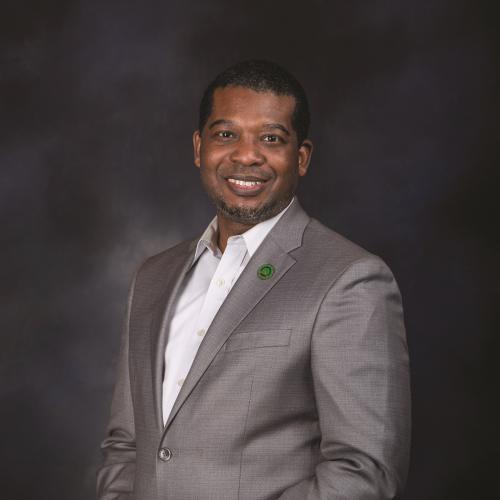
Asm. Corey Jackson
Sponsored bills
Under existing law, the State Department of Social Services administers various social services programs, such as the California Work Opportunity and Responsibility to Kids (CalWORKs) program and the federal Supplemental Nutrition Assistance Program (SNAP) , known in California as CalFresh, to provide benefits to eligible individuals. Existing law requires counties to administer these programs. Existing law requires a county human services agency to designate at least one employee as a staff liaison, as provided. Existing law requires the staff liaison to serve as a point of contact for academic counselors and other relevant professional staff at a campus of an institution of public higher education located within the county and provide information on programs and services offered by the agency that may be available to students attending a campus of an institution of public higher education within the county. This bill would require the department to convene a workgroup that meets quarterly, comprised of relevant stakeholders as needed to share best practices, updates, challenges, or other topics related to programs and services offered by the department that may be available to students attending a campus of an institution of public higher education. The bill would require the department, with input from relevant stakeholders, to, among other things, discuss and examine different approaches or activities that could increase enrollment in programs of eligible students. The bill would require the department, in collaboration with stakeholders, to submit a report, on or before June 30, 2024, and every 3 years thereafter, to the Legislature with findings and recommendations relating to increasing enrollment in programs and services offered by the department that may be available to students, as specified.
Existing law requires the State Board of Education to, on or before March 31, 2014, adopt a template for a local control and accountability plan (LCAP) and an annual update to the LCAP for use by school districts, county superintendents of schools, and charter schools. Existing law, on or before January 31, 2022, requires the template adopted by the state board to require the inclusion of certain information, including, among other information, a description of the annual goals to be achieved for certain state priorities, as specified, a description of the specific actions that the school district, county office of education, or charter school will take during each year of the LCAP to achieve these goals, and an assessment of the effectiveness of the specific actions described in the existing LCAP toward achieving the goals, as provided. This bill would require the template adopted by the state board to instead require the inclusion of an assessment of the effectiveness, or lack thereof, of the specific actions described in the existing LCAP toward achieving the goals, as provided. The bill would require actions that have not proven effective over a 3-year period of implementation to be changed and would require the description of changes to include an explanation of the reasons for lack of progress indicated by the analysis and how the action will be better addressed with a new or strengthened approach, except as provided. The bill would also require certain actions to be changed for each school within a school district, school operated by a county superintendent of schools, and charter school that for 2 consecutive years receives the lowest performance measure for purposes of the school climate state priority, as specified. Under existing law, the process of developing and annually updating the LCAP should support school districts, county offices of education, and charter schools in, among other things, improvement across the state priorities, as provided. The bill would instead provide that the process of developing and annually updating the LCAP should support school districts, county offices of education, and charter schools in, among other things, improvement across the state priorities, particularly to address and reduce disparities in opportunities and outcomes between pupil groups indicated by the California School Dashboard. By imposing new duties on local educational agencies, the bill would constitute a state-mandated local program. The California Constitution requires the state to reimburse local agencies and school districts for certain costs mandated by the state. Statutory provisions establish procedures for making that reimbursement. This bill would provide that, if the Commission on State Mandates determines that the bill contains costs mandated by the state, reimbursement for those costs shall be made pursuant to the statutory provisions noted above.
The California Constitution entitles the victim of a crime to restitution. Existing law requires the court in each criminal case to order a convicted defendant to pay restitution, as specified. Existing law requires the order of restitution to include interest at the annual rate of 10%. Under existing law, certain delinquent payments, including payments for fines, fees, and restitution, may be referred to the Franchise Tax Board for collection. Existing law imposes interest on these delinquent payments. This bill would change the annual interest rate on restitution orders and the annual interest rate charged by the Franchise Tax Board on certain delinquent payments, including fines, fees, and restitution, to no more than 1%.
Existing federal law establishes the federal Old-Age, Survivors, and Disability Insurance (OASDI) program to provide monthly benefits to qualified retired and disabled workers and their spouses, dependents, and survivors. Existing federal law provides various benefits to veterans, their dependents, and their survivors administered by the United States Department of Veterans Affairs (USDVA) . This bill would require the Department of Child Support Services to issue guidance to local child support agencies directing them to, and would require local child support agencies to, inform a custodial parent or guardian of benefits under the federal OASDI program and benefits provided to survivors of veterans by the USDVA when the local child support agency becomes aware that a child's noncustodial parent has died and the local child support agency has information that suggests that the child may be eligible for either of those programs. The bill would similarly require the State Department of Social Services and the State Department of Health Care Services to jointly issue guidance to county human services agencies directing them to, and would require county human services agencies to, inform a parent or guardian of benefits under the federal OASDI program and benefits provided to survivors of veterans by the USDVA when the county becomes aware that a child's parent has died and the county has information that suggests that the child may be eligible for either of those programs. By imposing new duties on local agencies, the bill would impose a state-mandated local program. The bill would require the State Department of Social Services to submit a report to the Legislature that includes information on the requirements and cost to establish a state-funded program to provide cash assistance to a child with a deceased parent who is not eligible for survivor benefits under the federal OASDI program and how many children in California would be eligible for that state-funded program. This bill would, subject to an appropriation by the Legislature or a provision of federal or private funds for these purposes, require the State Department of Social Services to establish and oversee the California Survivor Benefit (CalSurvivor) Program, a county- or county consortia-administered program to provide cash assistance for a minor who is a California resident with a deceased parent, who was also a California resident upon their death, when the minor is not eligible for federal OASDI survivor benefits, as specified. The bill would authorize the department to authorize counties to establish an advocacy program to assist specified applicants and recipients of CalSurvivor benefits in the application process for federal OASDI survivor benefits if they do not meet certain verification requirements of the program. The bill would require participating counties, as part of the advocacy program, to inform the applicant of the potential impact of receiving benefits under the CalSurvivor Program on their eligibility for other assistance programs. The bill would require the department to report to the Legislature, by July 1, 2027, on the outcomes of the CalSurvivor Program and the advocacy programs. The bill would authorize the department to implement these provisions though all-county letters or similar instructions or emergency regulations. By requiring counties to administer the CalSurvivor Program, this bill would impose a state-mandated local program. The California Constitution requires the state to reimburse local agencies and school districts for certain costs mandated by the state. Statutory provisions establish procedures for making that reimbursement. This bill would provide that, if the Commission on State Mandates determines that the bill contains costs mandated by the state, reimbursement for those costs shall be made pursuant to the statutory provisions noted above.
Existing law provides for the compensation of victims and derivative victims of specified types of crimes by the California Victim Compensation Board from the Restitution Fund, a continuously appropriated fund, for specified losses suffered as a result of those crimes. Existing law defines various terms for purposes of these provisions, including "crime," which includes any public offense wherever it may take place that would constitute a misdemeanor or felony. This bill would revise the definition of "crime" to include, solely for the purposes of eligibility for compensation under this chapter, an incident occurring on or after January 1, 2024, in which an individual sustains serious bodily injury, as defined, or death as a result of a law enforcement officer's use of force, regardless of whether the law enforcement officer is arrested for, charged with, or convicted of committing a crime. The bill would define "law enforcement officer" for these purposes. By expanding the types of incidents for which compensation can be paid from a continuously appropriated fund, the bill would make an appropriation. Existing law requires that a person be ineligible for compensation under specified conditions, including, among other things, if the board determines that denial of the claim for compensation is appropriate because of the nature of the victim's involvement in the events leading to the crime or the involvement of the person whose injury or death gives rise to the application. Existing law requires the board to deny an application if it finds that the victim failed to cooperate reasonably with a law enforcement agency in the apprehension and conviction of the person committing the crime. This bill, in the case of a claim based on a victim's serious bodily injury or death that resulted from a law enforcement officer's use of force, as described above, would prohibit the board from denying an application based on certain circumstances, including the victim's or other applicant's involvement in the crime, except as specified, the victim's failure to cooperate, or the contents of a police report, or the lack thereof. The bill, in the case of a claim based on a victim's serious bodily injury or death as a result of a crime, would require the board to adopt guidelines that allow the board to rely on evidence other than a police report, as specified. Existing law requires that the board be subrogated to the rights of the recipient to the extent of any compensation granted by the board. This bill would specify that the above-described subrogation of the board applies to compensation by the board for any claim, including a claim based on serious bodily injury or death that resulted from a law enforcement officer's use of force.
Existing law establishes various public social services programs, including, among others, CalWORKs and the State Supplementary Program for Aged, Blind and Disabled. Existing law sets forth the purposes of public social services for which state grants are made to counties that include, among others, providing reasonable support and maintenance for needy and dependent families and persons. This bill would instead state that providing reasonable support and maintenance for needy and vulnerable children, adults, and families is a purpose of public social services.
Existing law, generally, regulates state and local law enforcement agencies regarding subject matter that includes the selection and training of peace officers, the maintenance and release of records, the use of force, and the use of certain equipment. Previous law, until January 1, 2023, prohibited the use of real-time facial recognition technology by law enforcement agencies in connection with body-worn cameras. This bill would prescribe the acceptable and prohibited uses for facial recognition technology (FRT) , as defined, by a law enforcement agency or peace officer, as defined. The bill would set certain requirements for FRT systems and reference databases, as defined, used by law enforcement agencies. The bill would require the Department of Technology, in consultation with the Chief of the Office of Information Security, to issue standards to ensure the confidentiality and cybersecurity of FRT data and results. The bill would require law enforcement agencies to establish written policies that adhere to those standards. The bill would require law enforcement agencies utilizing FRT to keep certain records and to annually report certain data to the California State Auditor. The bill would require any law enforcement agency utilizing FRT to have a written policy, as specified, and to post that policy on their internet website. The bill would require a law enforcement agency to provide certain information to any person that FRT is used to identify. The bill would also require each district attorney's office, city prosecutor's office, and the Attorney General to annually report certain data to the California State Auditor. By imposing a new reporting requirement on district attorneys and city prosecutors, this bill would impose a state-mandated local program. The bill would require the California State Auditor to annually analyze the data submitted and to prepare and publicize a report, as specified. The bill would authorize a person harmed by a violation of these provisions to bring a civil action for damages, including statutory damages, as specified. The California Constitution requires the state to reimburse local agencies and school districts for certain costs mandated by the state. Statutory provisions establish procedures for making that reimbursement. This bill would provide that, if the Commission on State Mandates determines that the bill contains costs mandated by the state, reimbursement for those costs shall be made pursuant to the statutory provisions noted above.
Under existing law, there is established in each county treasury a Supplemental Law Enforcement Services Account (SLESA) to receive all amounts allocated to a county for specified purposes. In any fiscal year for which a county receives moneys to be expended for implementation, existing law requires the county auditor to allocate the moneys in the county's SLESA within 30 days of the deposit of those moneys into the fund. Existing law requires the moneys to be allocated in specified amounts, including, but not limited to, 50% to a county or city and county to implement a comprehensive multiagency juvenile justice plan, as specified. Existing law requires the juvenile justice plan to be developed by the local juvenile justice coordinating council in each county and city and county. Existing law requires the plan to be annually reviewed and updated by the council and submitted to the Board of State and Community Corrections. Existing law requires the multiagency juvenile justice plan to include certain components, including, but not limited to, a local juvenile justice action strategy that provides for a continuum of responses to juvenile crime and delinquency. Existing law also requires each council to annually report to their board of supervisors and the board information on the effectiveness of the programs and strategies funded under these provisions, and requires the board to annually report this information to the Governor and the Legislature and post it on its internet website. This bill would revise and recast required components of the multiagency juvenile justice plan to, among other things, additionally require a plan to include an assessment of existing community-based youth development services, identification and prioritization of areas of the community that are vulnerable to court system involvement due to high rates of poverty and the incarceration of at-promise youth's family members, among other things, and a description of the target population funded under these provisions. The bill would require programs and strategies funded under these provisions to, among other things, be modeled on healing-centered, restorative, trauma-informed, and positive youth development approaches and in collaboration with community-based organizations. The bill would require no less than 80% of the funds allocated under these provisions to be distributed to community-based organizations and other public agencies or departments that are not law enforcement entities, as specified, and prohibits this portion of the funds from being used for law enforcement activities or personnel. The bill would require a council to include additional information in its annual report to the board of supervisors and the board relating to their programs, including data on youth participants and council members. Existing law requires a juvenile justice coordinating council to consist of certain members, including, but not limited to, the chief probation officer, as chair, and a representative from the district attorney's office, the public defender's office, and the sheriff's department, among others. This bill would revise and recast those membership provisions, and instead require each juvenile justice coordinating council to, at a minimum, consist of at least 50% community representatives with the remainder of the seats allocated to representatives from government agencies, as specified. The bill would require a council to select 2 cochairs from amongst its members, at least one of whom shall be a community representative. The bill would require a council to meet no less than 3 times per year and announce its meetings at least 10 days in advance of a meeting.
Existing law declares that it is the policy of the state that no adoptable animal should be euthanized if it can be adopted into a suitable home. Existing law also declares that it is the policy of the state that no treatable animal should be euthanized.. This bill, Bowie's Law, would require all animal shelters, as defined, to provide public notice on their internet website at least 72 hours before euthanizing any dog, cat, or rabbit, except as provided. The bill would require that notice to indicate that the animal is subject to euthanasia and to include information about the animal and its availability for adoption. The bill would authorize an animal shelter to provide this public notice for less than 72 hours if the animal shelter makes certain determinations. The bill would, for each instance where the animal shelter provides public notice for less than 72 hours, require the animal shelter to document the reason and to keep it on file and available for public inspection, as provided. By imposing new requirements on a public animal control agency or shelter, the bill would constitute a state-mandated local program. The bill would also require the Department of Food and Agriculture to conduct a study on the overcrowding of California's animal shelters, the ways in which the state might address animal shelter overcrowding, and the feasibility of a statewide database of dogs and cats that provides public notice and information at the statewide level, as specified. The bill would require the department to, on or before January 1, 2026, submit a report on its study findings to the Legislature, as provided. The bill would repeal these study and reporting requirements on January 1, 2027. The California Constitution requires the state to reimburse local agencies and school districts for certain costs mandated by the state. Statutory provisions establish procedures for making that reimbursement. This bill would provide that, if the Commission on State Mandates determines that the bill contains costs mandated by the state, reimbursement for those costs shall be made pursuant to the statutory provisions noted above.