This measure would designate, in perpetuity, the 4th week of January as Data Privacy Week and the last Sunday of January as Data Privacy Day.
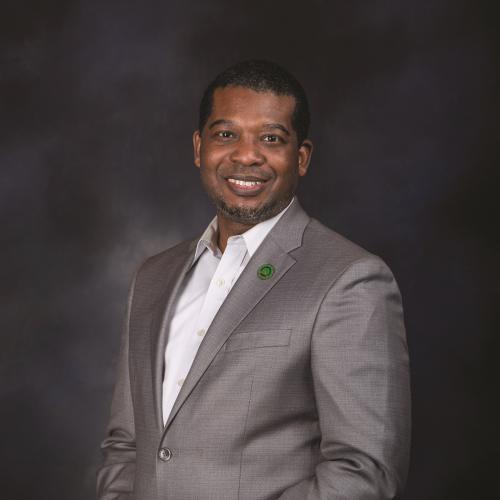
Asm. Corey Jackson
Sponsored bills
Existing law authorizes a peace officer to use reasonable force to effect the arrest, to prevent escape, or to overcome resistance of an individual. Existing law requires law enforcement agencies to maintain a policy on the use of force. Existing law prohibits the use of kinetic energy projectiles or chemical agents by any law enforcement agency to disperse any assembly, protest, or demonstration, except in compliance with specified standards. This bill would prohibit the use of an unleashed police canine by law enforcement to apprehend a person unless the person is being pursued for a felony that threatened or resulted in the death of or serious bodily injury to another person and the person poses an imminent danger of death or serious bodily injury to the officer or to another person and any use of a police canine for crowd control. The bill would prohibit a police canine from being used to bite unless there is an imminent threat of death or serious bodily injury to the officer or another person by the person against whom the canine is used. The bill would attribute the death of or serious bodily injury to a person caused by a police canine to the canine's handler as constituting deadly force. The bill would prohibit law enforcement agencies from authorizing any use or training of a police canine that is inconsistent with this bill.
Existing law establishes the Milton Marks "Little Hoover" Commission on California State Government Organization and Economy (the commission) for the purpose of securing assistance for the Governor and itself in promoting economy, efficiency, and improved service in the transaction of the public business, as specified, and in making the operation of all state departments, agencies, and instrumentalities, and all expenditures of public funds, more directly responsive to the wishes of the people as expressed by their elected representatives through various means. Existing law requires the commission to review final reports and make recommendations to the Legislature and the Governor concerning the results of state audits and the revenues and expenditures of the state, its departments, subdivisions, and agencies, and other public entities. Existing law authorizes the commission to meet at any time and place as it may deem proper. Existing law declares that the availability of housing is of vital statewide importance. Existing law declares that the provision of housing affordable to low- and moderate-income households requires the cooperation of all levels of government. Existing law declares that housing prices in California have risen dramatically in all parts of the state in the past decade, while the wealth gap, especially the racial wealth gap, continues to be a growing problem in California. This bill would require the commission to study the causes and effects of the rising cost of living in California and develop solutions toward making California a more affordable place to live, as specified. The bill would require the commission to meet quarterly, as specified. The bill would require the commission to complete 2 reports describing the commission's findings and recommendations, as specified. The bill would repeal these provisions as of January 1, 2027.
Existing law authorizes specified state departments and authorities, as well as counties, upon determination that an advance payment is essential for the effective implementation of a program, to advance to a community-based private nonprofit agency with which it has contracted for the delivery of services funds not exceeding 25% of the annual allocation to be made to the agency during the fiscal year. Existing law also establishes a pilot program, which is repealed on July 1, 2025, to explore possible improvements to the state's existing advance payment practices for state-funded assistance grants. Existing law authorizes an administering state agency of a grant program to advance a payment to a recipient entity, which means a local agency or a nongovernmental entity that is awarded a grant by an administering state agency and with whom the administering state agency has entered into a contract pursuant to that grant, in accordance with specified procedures. This bill would require state and county departments that offer grants to nonprofit organizations to advance a payment of 10% of the total grant amount awarded to the nonprofit organization, upon request of the nonprofit administrators. By imposing additional duties on counties, the bill would impose a state-mandated local program.
Existing law, the Medical Practice Act, provides for the licensing and regulation of physicians and surgeons by the Medical Board of California. Existing law requires the board, in determining its continuing education requirements, to consider including a course in integrating mental and physical health care in primary care settings, especially as it pertains to early identification of mental health issues and exposure to trauma in children and young adults and their appropriate care and treatment. Existing law requires a physician and surgeon to provide notice to patients at an initial office visit regarding a specified database. Existing law requires the State Department of Public Health to license and regulate health facilities, including general acute care hospitals. A violation of those provisions is generally a crime. Existing law requires a general acute care hospital to establish and adopt written policies and procedures to screen patients who are 12 years of age and older for purposes of detecting a risk for suicidal ideation and behavior. Existing law, the Knox-Keene Health Care Service Plan Act of 1975, provides for the licensure and regulation of health care service plans by the Department of Managed Health Care, and makes a willful violation of the act a crime. Existing law provides for the regulation of health insurers by the Department of Insurance. This bill would require a physician and surgeon, a general acute care hospital, a health care service plan, and a health insurer to provide to each legal guardian of a patient, enrollee, or insured, 10 to 18 years of age, a written or electronic notice regarding the benefits of a behavioral health and wellness screening. The bill would require the providers to provide the notice at least once every 2 years in the preferred method of the legal guardian. Because a violation of the bill's requirements relative to health care service plans and health facilities would be crimes, the bill would impose a state-mandated local program. Existing law establishes the Medi-Cal program, which is administered by the State Department of Health Care Services and under which qualified low-income individuals receive health care services. The Medi-Cal program is, in part, governed and funded by federal Medicaid program provisions. Existing law requires a Medi-Cal managed care plan, no later than January 1, 2025, to conduct annual outreach and education for its enrollees, based on a plan that the Medi-Cal managed care plan develops and submits to the department, as specified, regarding the mental health benefits that are covered by the Medi-Cal managed care plan. This bill would require a Medi-Cal managed care plan to include the above-described notice requirement in their outreach and education plan. The California Constitution requires the state to reimburse local agencies and school districts for certain costs mandated by the state. Statutory provisions establish procedures for making that reimbursement. This bill would provide that no reimbursement is required by this act for a specified reason.
Existing law prohibits any person from being unlawfully denied full and equal access to the benefits of, or from being unlawfully subjected to discrimination under, any program or activity that is conducted, operated, or administered by the state or by any state agency funded directly by the state, or that receives any financial assistance from the state, on the basis of race. Existing law prohibits the state, including any county, from discriminating against, or granting preferential treatment to, any individual or group on the basis of race in the operation of public employment, public education, or public contracting. Existing law prohibits the inclusion of any question relative to an applicant's race in any application blank or form required to be filled in and submitted by an applicant to any department, board, commission, officer, agent, or employee of this state. Existing law makes a violation of this provision a misdemeanor. Existing law requires the Controller to superintend the fiscal concerns of the state and to audit all claims against the state. Existing law requires the Controller to suggest plans for the improvement and management of the public revenues. Existing law requires the Controller to summon county auditors to meet with the Controller at least once each year for the purpose of discussion, among other things, promotion of uniformity of procedure in all matters pertaining to the duties of county auditors throughout the state. This bill would require the Controller, on or before January 1, 2025, and every 5 years thereafter, to perform a comprehensive antiracism audit, as defined, of each state agency and county. The bill would require each state agency and county, within one year following completion of its audit, to establish and implement an action plan, as specified, tailored to the function of the agency or particular activities of the county, to rectify deficiencies in the agency's or county's efforts to identify, interrupt, and dismantle racist practices, policies, and attitudes identified by the antiracism audit. Because the bill would require local officials to perform additional duties, the bill would impose a state-mandated local program. This bill would require the Controller to evaluate and approve the sufficiency of each action plan to rectify deficiencies in the agency's or county's efforts to identify, interrupt, and dismantle racist practices, policies, and attitudes. The bill would authorize the Controller, if they determine that appropriate progress has not been made by a state agency or county toward rectifying deficiencies identified in the antiracism audit within 3 years following completion of the action plan, to impose a civil penalty or to bring an action in a court of appropriate jurisdiction to hold all property of the state agency or county subject to a receivership in a manner directed or ratified by the court. The bill would require the Controller to establish rules and regulations to carry out the purposes of this section. The California Constitution requires the state to reimburse local agencies and school districts for certain costs mandated by the state. Statutory provisions establish procedures for making that reimbursement. This bill would provide that, if the Commission on State Mandates determines that the bill contains costs mandated by the state, reimbursement for those costs shall be made pursuant to the statutory provisions noted above.
(1) Existing law authorizes the governing board of a school district to establish a school police department under the supervision of a school chief of police and employ peace officers to ensure the safety of school district personnel and pupils, as provided. This bill would require a police officer who is not employed or contracted as a school resource officer to notify the principal of a school, or the principal's designee, before accessing school grounds or engaging with pupils, except as provided. The bill would require the governing board of a school district, if it provides training to a police officer employed by the school district, to provide that same training to a police officer with whom the governing board of the school district has contracted to perform law enforcement activities, as provided. (2) Under existing law, each school district and county office of education is responsible for the overall development of a comprehensive school safety plan for each of its schools operating kindergarten or any of grades 1 to 12, inclusive, in cooperation with certain local entities. Existing law requires that the plan include identification of appropriate strategies and programs that will provide or maintain a high level of school safety and address the school's procedures for complying with existing laws related to school safety. This bill would additionally require, as part of the comprehensive school safety plan, the development of procedures and policies relating to use of police officers, including school resource officers, or any other law enforcement official acting as a school resource officer, on school campus, to include prohibitions on the use of handcuffs and pepper spray on a school campus, except as provided. Existing law prohibits a chartering authority from denying a petition for the establishment of a charter school unless it makes written factual findings supporting at least one of specified bases for denial. One of those bases for denying a petition is if the petition does not contain a reasonably comprehensive description of the development of a school safety plan that includes the same safety topics required in the comprehensive school safety plan of a school district or county office of education. This bill would authorize a chartering authority to deny a charter school petition that does not include in its proposed development of a school safety plan the same provisions on procedures and policies relating to use of police officers, including school resource officers, or any other law enforcement official acting as a school resource officer, as are required by the bill in a school district or county office of education comprehensive school safety plan. By creating new duties for local educational agencies, including charter schools, the bill would impose a state-mandated local program. (3) The California Constitution requires the state to reimburse local agencies and school districts for certain costs mandated by the state. Statutory provisions establish procedures for making that reimbursement. This bill would provide that, if the Commission on State Mandates determines that the bill contains costs mandated by the state, reimbursement for those costs shall be made pursuant to the statutory provisions noted above.
Existing law provides that the supervision, management, and control of the state prisons, and the responsibility for the care, custody, treatment, training, discipline, and employment of persons confined therein are vested in the Secretary of the Department of Corrections and Rehabilitation. Existing law requires the secretary to provide facilities and licensed professional personnel for a psychiatric and diagnostic clinic and any such branches thereof as may be required at one or more of the state prisons or institutions under the jurisdiction of the department. This bill would require the department to conduct mental health treatment for state prison inmates in a manner to accomplish various goals, including providing, to the greatest extent possible, regular and consistent mental health therapy to inmates who seek it, and ensuring that an inmate is provided an introductory mental health therapy appointment within 2 weeks of the inmate requesting care. The bill would also make Legislative findings and declarations.
(1) Existing state sales and use tax laws impose a tax on retailers measured by the gross receipts from the sale of tangible personal property sold at retail in this state of, or on the storage, use, or other consumption in this state of, tangible personal property purchased from a retailer for storage, use, or other consumption in this state. The Sales and Use Tax Law provides various exemptions from those taxes, including an exemption for the sale of, or the storage, use, or consumption of, food products for human consumption. Proposition 163, an initiative measure approved by the voters at the November 3, 1992, general election, amended the California Constitution to prohibit the State of California or any of its political subdivisions from levying or collecting a sales or use tax on the sale of, or the storage, use, or other consumption in the state of, food products for human consumption except as provided by statute as of the effective date of that provision and in statute defined, for purposes of the sales and use tax exemption described above, "food products" to mean, among other things, sugar and sugar products, candy, gum, confectionery, and cocoa and cocoa products. This bill would delete "candy" from the definition of "food products," described above, that are exempt from tax. The California Constitution authorizes the Legislature to amend or repeal an initiative statute by another statute that becomes effective when approved by the electors. This bill would provide that the deletion provision described above would become effective only upon approval of the voters. It would also provide for submission of this measure to the voters for approval at the next statewide general election. (2) This bill would also enact the Child Welfare Funding Act that would require a sales tax return filed with the California Department of Tax and Fee Administration (CDTFA) to report gross receipts for sales tax purposes to segregate the taxable sales attributable to the sale of candy, as defined, on a line or a separate form, as prescribed by the department. The bill would require an amount equal to the total amount of gross receipts, or adjusted gross receipts, attributable to the sale of candy for the prior fiscal year as reported to the Department of Finance (DOF) by the CDTFA, as specified, to be deposited into the Candy Tax Fund, created by the bill, as soon as reasonably possible and would require all amounts in the fund to be distributed to the Child Welfare Grant Program Fund, a continuously appropriated fund that the bill would create for the purpose of funding the Child Welfare Grant Program grants described below. By creating a continuously appropriated fund and allocating moneys to that fund, this bill would make an appropriation. This bill would also establish the Child Welfare Grant Program and would require the State Department of Social Services to annually, on or before December 31, distribute to any qualified recipient with dependent minors a Child Welfare Grant Program grant, as prescribed. The bill would define "qualified recipient" to mean an individual who is a resident of the state and either filed a joint income tax return for the preceding taxable year that reported gross income in an amount not exceeding $150,000 or filed an individual income tax return for the preceding taxable year that reported gross income in an amount not exceeding $112,000. This bill would provide that the provisions described above relating to the Child Welfare Funding Act and the Child Welfare Grant Program would become operative only if the amendment to Proposition 163 described above is approved by the voters and takes effect. The bill would make the operation of its provisions contingent upon approval by the voters of an unspecified Assembly Constitutional Amendment of the 2023–24 Regular Session.