

Existing law, the Corporate Securities Law of 1968, provides for the regulation of the issuance of corporate securities, requires the qualification of an offer or sale of securities, and provides for exemptions from qualification with the Commissioner of Financial Protection and Innovation. Existing law exempts certain securities and transactions from provisions requiring qualification of the security and provides that certain securities and transactions are not subject to qualification. This exemption includes shares or memberships issued by a corporation organized pursuant to the Cooperative Corporation Law, if the aggregate investment of a shareholder or member in shares or memberships sold does not exceed $1,000. Existing law also specifies the circumstances in which this exemption does not apply, including, to shares or memberships if a promoter thereof expects or intends to make a profit from a business or activity associated with the corporation. This bill would expand the above exemption to also apply to any credits to a member's capital issued to a shareholder or member by any corporation organized pursuant to that law, if the aggregate investment in the corporation of that shareholder or member in shares, memberships, or credits to that member's capital sold pursuant to that provision does not exceed $1,000. The bill would specify that this $1,000 limitation does not apply to any shares, memberships, or credits allocated to a member's capital as all, or part of, any patronage distributions.
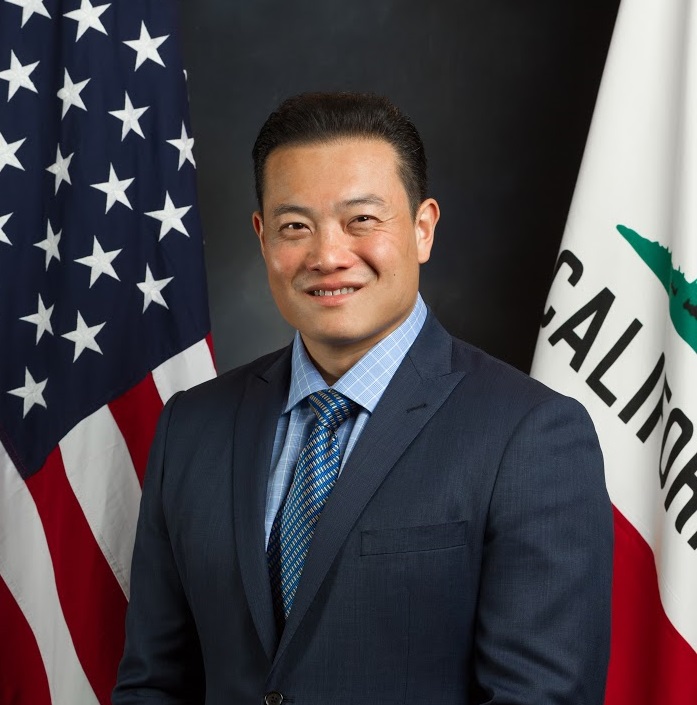
Asm. Phillip Chen
Sponsored bills
Existing law, commencing on January 1, 2023, prohibits a state agency from sending any outgoing United States mail that contains an individual's social security number unless the number is truncated to its last 4 digits or in specified circumstances, including when federal law requires inclusion of the social security number or when documents are mailed to a current or prospective state employee. This bill would instead require state agencies, as soon as is feasible, but no later than January 1, 2023, to stop sending any outgoing United States mail to an individual that contains the individual's social security number unless the number is truncated to its last four digits, except in specified circumstances. This bill would declare that it is to take effect immediately as an urgency statute.
Existing law provides for the payment of unemployment compensation benefits to eligible persons who are unemployed through no fault of their own through a federal-state unemployment insurance program administered by the Employment Development Department, subject to oversight by the Director of Employment Development. Existing law requires the Department of Justice to maintain state summary criminal history information, including the identification and criminal history of a person, including name, date of birth, social security number, physical description, fingerprints, photographs, dates of arrests, arresting agencies and booking numbers, charges, dispositions, sentencing information, and similar data about the person. Existing law requires the Attorney General to furnish this information to specified persons, agencies, or organizations, including the Department of Corrections and Rehabilitation, if needed in the course of their duties. Existing law makes it a crime for any person authorized by law to receive state summary criminal history information to knowingly furnish the information to a person who is not authorized by law to receive it. This bill would require the Department of Corrections and Rehabilitation to provide the name, known aliases, birth date, social security number, and booking date and expected release date, if known, of a current inmate to the Employment Development Department for the purposes of preventing payments on fraudulent claims for unemployment compensation benefits. The bill would require this information to be provided to the Employment Development Department on the first of every month and upon the Employment Development Department's request. Because this bill would expand the scope of an existing crime, the bill imposes a state-mandated local program. This bill would require, for purposes of preventing payments on fraudulent claims for unemployment compensation benefits, the Director of Employment Development to verify with the information provided by the Department of Corrections and Rehabilitation that the claimant is not an inmate currently incarcerated in the state prisons. The bill would require the Employment Development Department to complete necessary system programming or automation upgrades to allow electronic monitoring of Department of Corrections and Rehabilitation inmate data to prevent payment on fraudulent claims for unemployment compensation benefits at the earliest possible date, but not later than September 1, 2023. The California Constitution requires the state to reimburse local agencies and school districts for certain costs mandated by the state. Statutory provisions establish procedures for making that reimbursement. This bill would provide that no reimbursement is required by this act for a specified reason. This bill would declare that it is to take effect immediately as an urgency statute.
The Control, Regulate and Tax Adult Use of Marijuana Act (AUMA) , an initiative measure approved as Proposition 64 at the November 8, 2016, statewide general election, authorizes a person who obtains a state license under AUMA to engage in commercial adult-use cannabis activity pursuant to that license and applicable local ordinances. The Medicinal and Adult-Use Cannabis Regulation and Safety Act (MAUCRSA) , among other things, consolidates the licensure and regulation of commercial medicinal and adult-use cannabis activities, including retail commercial cannabis activity. Existing law places specified requirements on the packaging of cannabis and cannabis products, including requiring that the cannabis and cannabis products be placed in a resealable, tamper-evident, child-resistant package. This bill would authorize cannabis beverages to be packaged in glass containers that are clear or any color.
Existing law authorizes and regulates the formation and operation of a corporation, nonprofit public benefit corporation, nonprofit mutual benefit corporation, nonprofit religious corporation, or cooperative corporation. Existing law authorizes these types of corporations, in anticipation of or during an emergency, to take specified actions necessary to conduct the corporation's ordinary business operations and affairs, unless emergency bylaws provide otherwise. Existing law, however, prohibits the boards of these corporations, in anticipation of or during an emergency, from taking any action that requires the vote of the shareholders or members or that is not in the corporation's ordinary course of business. This bill would recast those provisions to authorize the board, in anticipation of or during an emergency, to take any action that it determines to be necessary or appropriate to respond to the emergency, mitigate the effects of the emergency, or comply with lawful federal and state government orders, but would prohibit action that requires the vote of the shareholders or members, unless the required shareholder or member approval was obtained prior to the emergency, and would make conforming changes regarding corporate bylaws. Existing law defines "emergency," for these purposes, to mean any of specified events or circumstances, as a result of which, and only so long as, a quorum of the corporation's board of directors cannot be readily convened for action. Under existing law, "emergency" includes an attack on this state or nation by an enemy of the United States of America, as specified. Existing law also defines "emergency" to include a natural catastrophe, including, among others, a drought, fire, or explosion. This bill would revise the above provision to specifically refer to an attack on or within this state or on the public security of its residents by an enemy of this state or on the nation by an enemy of the United States. The bill would specify that "emergency" includes an epidemic, pandemic, or disease outbreak. The bill would remove references to the corporation's "ordinary" business operations and affairs to instead refer to the corporation's business operations and affairs. Existing law, with respect to the above-described corporations, authorizes meetings of shareholders or members to be held at any place as stated or fixed in the bylaws, as specified. Existing law provides that unless prohibited by the bylaws of the corporation, if authorized by the board of directors, and subject to certain consent requirements and procedures, shareholders or members not physically present may, by electronic transmission or electronic video screen communication, participate in a meeting of the shareholders or members, be deemed present, and vote, as specified. This bill would authorize shareholders or members, if specified conditions are met, to also participate, be deemed present, and vote in shareholder or member meetings by conference telephone or other remote communications, in accordance with certain procedures. Existing law generally requires notice of a shareholders' or members' meeting or any report, with respect to the above-described corporations, to be given personally, by electronic transmission by the corporation, by mail, or, in various other circumstances, by other specified means. Existing law authorizes certain corporations to provide for delegates in its bylaws and requires those bylaws to set forth information relating to delegates if delegates are provided for. Under existing law, delegates may only act personally at a meeting or by written ballot. This bill would remove the provision specifying that delegates may only act personally at a meeting or by written ballot and instead authorizes the bylaws to set forth the manner in which delegates may participate in meetings of delegates, as provided. The bill would also state that each delegate has one vote on each matter presented for action. This bill, notwithstanding the foregoing provision, would authorize notice of a shareholders' or members' meeting or any report to be sent by electronic communication or other means of remote communication if the board determines it is necessary or appropriate because of an emergency, as defined. The bill would make related, conforming changes to these provisions. This bill would incorporate additional changes to Section 7511 of the Corporations Code proposed by SB 432 to be operative only if this bill and SB 432 are enacted and this bill is enacted last.
(1) Existing law prohibits a state agency from sending any outgoing United States mail, as defined, to an individual that contains personal information about that individual, including, but not limited to, the individual's social security number, unless that personal information is contained within sealed correspondence and cannot be viewed from the outside of that sealed correspondence. Existing law also prohibits, commencing on or before January 1, 2023, a state agency from sending any outgoing United States mail to an individual that contains the individual's social security number, except as provided. Existing law requires state agencies that are unable to comply with this prohibition to submit an annual corrective action plan to the Legislature until it is in compliance. Existing law makes the corrective action plan and related correspondence confidential and prohibits their public disclosure. This bill would require an annual corrective action plan to contain specified information and to be submitted to the Legislature every December 15. If the Employment Development Department fails to comply by January 1, 2023, the bill would require, upon appropriation by the Legislature, the department to provide access to and pay for identity theft monitoring for any individual who receives outgoing United States mail from the department that contains full social security numbers in violation of the bill's provisions. (2) Existing law establishes the department within the Labor and Workforce Development Agency and sets forth its powers and duties, including administration of the unemployment and disability insurance programs for California. Existing law requires the department to pay unemployment compensation benefits to unemployed individuals meeting specified requirements, to periodically review policies and practices used to determine eligibility for and the amount of benefits in the unemployment insurance program, and to report to the Legislature, as specified. Under existing law, unemployment compensation benefits are paid from the Unemployment Fund, and the expenses for administering these provisions are paid from the Unemployment Administration Fund, which is continuously appropriated for these purposes. This bill would require the department, for purposes of unemployment compensation, upon appropriation by the Legislature, to comply with various reporting and review processes. The bill would set forth a timeline for the department to follow in implementing these tasks. In this regard, the bill would require the department, among other things, to report specified information regarding overpayments at least once every 6 months on its internet website, to immediately perform a risk assessment of its deferred workloads, and to develop a workload plan that prioritizes its deferred workloads based on that risk assessment. The bill would require the department to immediately begin modeling workload projections that account for possible scenarios that would cause a spike in unemployment insurance claims, as provided. This bill would require the department to revise its public dashboards with regard to the number of backlogged claims, as specified. The bill would require the department to determine the reasons that claimants cannot successfully complete their identity verification, as specified, and to identify the elements of the Benefit System Modernization that can assist the department in making timely payments. The bill would require the department to implement a formal policy that establishes a process for tracking and periodically analyzing the reasons why unemployment insurance claimants call for assistance and to regularly analyze this data, as specified, to improve its call center. This bill would require the department, by March 1, 2022, to designate a unit as responsible for coordinating all fraud prevention and detection, as specified. Existing law requires the Director of Employment Development to report to various committees of the Legislature by June 30 of each year on the department's fraud deterrence and detection activities. This bill would require that report to include an assessment of the effectiveness of the department's system of cross matching claims against information about incarcerated individuals, as specified. The bill would authorize the department to generalize, exclude, or redact details on fraud methods and tools to protect the fraud deterrence practices of the department. The bill would also remove an obsolete reference to a predecessor committee and would instead refer to the Senate Committee on Labor, Public Employment and Retirement. This bill would also require the department to request any personal identification information required from the claimant in accordance with the most recent federal National Institute of Standards and Technology Special Publication 800-63 standards, as specified. Existing constitutional provisions require that a statute that limits the right of access to the meetings of public bodies or the writings of public officials and agencies be adopted with findings demonstrating the interest protected by the limitation and the need for protecting that interest. This bill would make legislative findings to that effect.
Existing law authorizes a person who has been convicted and incarcerated for a felony and later pardoned on the basis of innocence or found to be factually innocent of that crime, as specified, to present a claim against the state to the California Victim Compensation Board for the pecuniary injury sustained by the person through the erroneous conviction and incarceration. Existing law requires the board to recommend to the Legislature that an appropriation be made and the claim paid if a court has made a finding that the person is factually innocent or if the person proves to the board that they are factually innocent. Existing law specifies that there is no presumption in any other proceeding for failure to make a motion or obtain a favorable ruling pursuant to these provisions. Existing law establishes the process and timeframes for the Attorney General to respond to a claim and for the board to set a hearing and make a recommendation on the claim. Under existing law, the person is considered factually innocent if the crime with which they were charged was either not committed at all, or if committed, was not committed by that person. This bill would revise and recast these provisions to instead require the board, upon application by a person whose writ of habeas corpus was granted in state or federal court, or whose motion to vacate the charges was granted by a state court and the charges were dismissed, or if the person was acquitted of the charges on retrial, to recommend to the Legislature that an appropriation be made without a hearing, unless the Attorney General establishes that the claimant is not entitled to compensation. The bill would require the Attorney General, for claims brought under specified provisions, to establish by clear and convincing evidence that the claimant committed the acts constituting the offense in order to establish that the claimant is not entitled to compensation. The bill would prohibit the Attorney General, from relying solely on the trial record of a conviction that has been reversed or dismissed to establish that the claimant is not entitled to compensation. This bill would specify that no res judicata or collateral estoppel finding can be made in any other proceeding for failure to make a motion or obtain a favorable ruling under these provisions.
Existing law provides for the Medi-Cal program, which is administered by the State Department of Health Care Services, under which qualified low-income individuals receive health care services pursuant to a schedule of benefits. The Medi-Cal program is, in part, governed and funded by federal Medicaid program provisions. Subject to an appropriation by the Legislature for this purpose, this bill would expand the schedule of benefits to include an annual cognitive health assessment for Medi-Cal beneficiaries who are 65 years of age or older if they are otherwise ineligible for a similar assessment as part of an annual wellness visit under the Medicare Program. The bill would make a Medi-Cal provider eligible to receive the payment for this benefit only if they comply with certain requirements, including completing cognitive health assessment training. The bill would require the department to determine specified training and validated tools in consultation with prescribed entities, including the State Department of Public Health's Alzheimer's Disease Program. By January 1, 2024, and every 2 years thereafter, the bill would require the department to consolidate and analyze data related to the benefit, and to post information on the utilization of, and payment for, the benefit on its internet website. The bill would authorize the department to implement these provisions by various means, including all-plan letters, without taking regulatory action, and would condition the implementation of these provisions to the extent federal approvals are obtained and federal financial participation is available.
The Radiologic Technology Act makes it unlawful for any licentiate of the healing arts to administer or use diagnostic, mammographic, or therapeutic x-ray on human beings in this state, unless that person is certified by the State Department of Public Health and acting within the scope of that certification. The act requires the department to prescribe minimum qualifications for granting a fluoroscopy permit and continuing education requirements for the holders of that permit. A person who violates a provision of the Radiologic Technology Act or regulation of the department adopted pursuant to that act is guilty of a misdemeanor. This bill would, notwithstanding those requirements, authorize the department to issue a physician and surgeon or a doctor of podiatric medicine a one-time, nonrenewable, temporary permit to operate, or supervise the operation of, fluoroscopic x-ray equipment if the physician and surgeon or the doctor of podiatric medicine meets specified criteria, including attesting under penalty of perjury of having at least 40 hours of experience using that equipment while not subject to the act. By expanding the scope of the crime of perjury, the bill would impose a state-mandated local program. The bill would require the temporary permit to convey the same rights as a fluoroscopy permit for the period for which it is issued, in the classification for which the physician and surgeon or the doctor of podiatric medicine is eligible. The temporary permit would be valid for up to 12 months from the date of issue. Under the bill, the fee for the temporary permit would be $58, which the department would be authorized to revise under specified conditions. The California Constitution requires the state to reimburse local agencies and school districts for certain costs mandated by the state. Statutory provisions establish procedures for making that reimbursement. This bill would provide that no reimbursement is required by this act for a specified reason.
(1) Existing law requires the Office of the State Foster Care Ombudsperson to be established in the State Department of Social Services with prescribed powers and duties relating to the management of foster children, including the dissemination of information on the rights of children and youth in foster care. Existing law requires the Director of Social Services, in consultation with a committee of interested individuals chosen by the director, to appoint the ombudsperson for a term of 4 years. Under existing law, the office is required to keep information obtained by the office from a complaint confidential. This bill would define "foster care" for purposes of the ombudsperson's duties to include voluntary or governmental placements in certain residential facilities, with a resource family, or with a family pending approval as a resource family, or placement pursuant to a juvenile court order, as specified. The bill would revise existing selection requirements for the position. The bill would also require the ombudsperson, in the performance of the duties and for the duration of the appointment, to be independent and would prohibit the ombudsperson, in exercising discretion, from being directly or indirectly controlled, supervised, or directed by the director. The bill would prohibit removal of the ombudsperson from their office for exercising their independence and discretion in furtherance of their duties and powers, and would set forth criteria for replacement of the ombudsperson in the event of a vacancy in the office. The bill would require the ombudsperson to maintain confidentiality with respect to the identities of the complainants or witnesses coming before the ombudsperson, except as specified. The bill would authorize the office to establish policies and procedures for receiving and processing complaints, conducting investigations, and reporting findings. The bill would authorize the ombudsperson to access and inspect premises within the control of a state or local agency or a contractor with a state and local agency, and access and inspect a licensed or approved children's residential facility, as specified, for the purpose of carrying out the duties of the office. (2) Existing law provides that, except as otherwise provided by statute, all relevant evidence is admissible. The California Constitution provides for the Right to Truth-In-Evidence, which requires a 23 vote of the Legislature to exclude any relevant evidence from any criminal proceeding, as specified. This bill would prohibit the ombudsperson or their staff from being compelled to testify or be deposed, or to disclose specified records, in a judicial or administrative proceeding. Because this prohibition would affect the admissibility of relevant evidence in criminal proceedings, the bill would require a ⅔ vote of the Legislature. The bill would also immunize the ombudsperson and any representative of the office from liability for exercising the investigative, complaint resolution, and technical assistance functions of the office, as specified. (3) Existing law requires a toll-free telephone number to be established for the office and requires social workers to provide foster children with that telephone number and verbal or written information regarding the existence and purpose of the office. This bill would require probation officers, as well as social workers, to provide foster children with the toll-free telephone number and additional information. By expanding the duties of probation officers, this bill would impose a state-mandated local program. Existing constitutional provisions require that a statute that limits the right of access to the meetings of public bodies or the writings of public officials and agencies be adopted with findings demonstrating the interest protected by the limitation and the need for protecting that interest. This bill would make legislative findings to that effect. (4) This bill would incorporate additional changes to Section 16164 of the Welfare and Institutions Code proposed by AB 1140 to be operative only if this bill and AB 1140 are enacted and this bill is enacted last. (5) The California Constitution requires the state to reimburse local agencies and school districts for certain costs mandated by the state. Statutory provisions establish procedures for making that reimbursement. This bill would provide that no reimbursement is required by this act for a specified reason.