

Existing law imposes an annual minimum franchise tax of $800, except as provided, on every corporation incorporated in this state, qualified to transact intrastate business in this state, or doing business in this state. Existing law also imposes an annual tax in an amount equal to the minimum franchise tax on every limited partnership, limited liability partnership, and limited liability company doing business in this state, as specified. Existing law requires any bill authorizing a new tax expenditure to contain, among other things, specific goals, purposes, and objectives the tax expenditure will achieve, detailed performance indicators, and data collection requirements. This bill would suspend the minimum franchise tax and the annual tax for taxable years beginning on or after January 1, 2020, and before January 1, 2023. This bill would also include additional information required for any bill authorizing a new tax expenditure. This bill would take effect immediately as a tax levy.
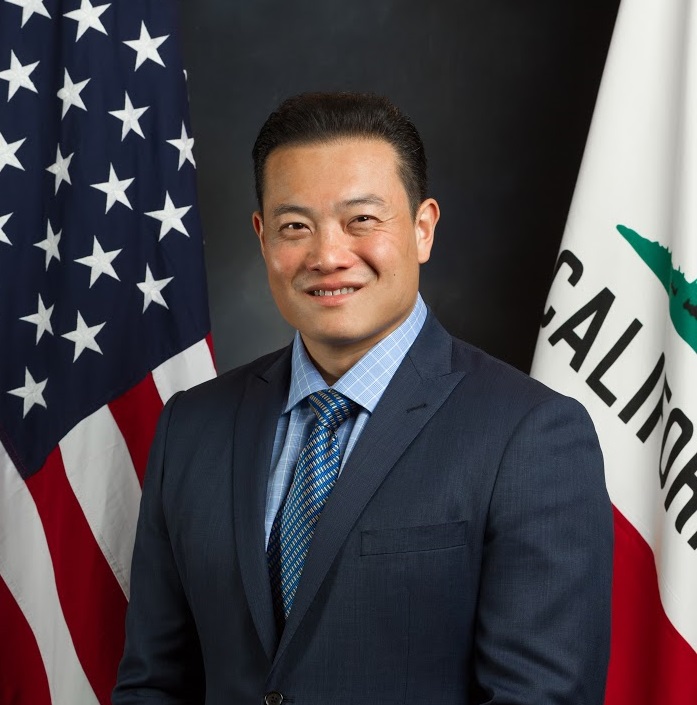
Asm. Phillip Chen
Sponsored bills
Existing law, the Nursing Practice Act, provides for the licensure and regulation of the practice of nursing by the Board of Registered Nursing. The Vocational Nursing Practice Act provides for the licensure and regulation of vocational nurses by the Board of Vocational Nursing and Psychiatric Technicians of the State of California. The Nursing Practice Act establishes the Board of Registered Nursing Fund and the Vocational Nursing Practice Act establishes the Vocational Nursing and Psychiatric Technicians Fund. This bill would enact the Nurse Licensure Compact, under which the Board of Registered Nursing and the Board of Vocational Nursing and Psychiatric Technicians would be authorized to issue a multistate license that would authorize the holder to practice as a registered nurse or a licensed vocational nurse, as applicable, in all party states under a multistate licensure privilege, as specified. The bill would designate the Board of Registered Nursing as the licensing board for registered nurses for purposes of the compact and would designate the Board of Vocational Nursing and Psychiatric Technicians as the licensing board for vocational nurses for purposes of the compact. The bill would require the boards to participate in a coordinated licensure information system that would include all of the licensure and disciplinary history of all licensed registered nurses and licensed vocational nurses. The bill would provide that the Board of Registered Nursing and the Board of Vocational Nursing and Psychiatric Technicians shall alternate as the administrator of the compact for the state and as members of an entity known as the Interstate Commission of Nurse Licensure Compact Administrators. The bill would authorize the commission to adopt rules that have the force and effect of law. The bill would prohibit fees collected by the Board of Registered Nursing or the Board of Vocational Nursing and Psychiatric Technicians for purposes of granting a multistate license pursuant to the bill from exceeding the cost of administering that multistate license under the compact and would require those fees to be deposited in the Board of Registered Nursing Fund or the Board of Vocational Nursing and Psychiatric Technicians Fund, as applicable. By authorizing out-of-state licensees to practice in this state under the multistate compact privilege created by the bill, the bill would expand the scope of the criminal provisions of the Nursing Practice Act and Vocational Nursing Practice Act, thereby imposing a state-mandated local program. The California Constitution requires the state to reimburse local agencies and school districts for certain costs mandated by the state. Statutory provisions establish procedures for making that reimbursement. This bill would provide that no reimbursement is required by this act for a specified reason.
The Personal Income Tax Law and the Corporation Tax Law, in modified conformity with federal law, generally define "gross income" as income from whatever source derived, except as specifically excluded, and provides various exclusions from gross income for purposes of computing tax liability. Existing law requires any bill authorizing a new tax expenditure to contain, among other things, specific goals, purposes, and objectives that the tax expenditure will achieve, detailed performance indicators, and data collection requirements. This bill, for taxable years beginning on or after January 1, 2021, and before January 1, 2026, would exclude, under both laws, from gross income the amount of a grant awarded pursuant to the California Small Business COVID-19 Relief Grant Program. This bill would take effect immediately as a tax levy.
Existing law defines "hate crime" as a criminal act committed, in whole or in part, because of actual or perceived characteristics of the victim, including, among other things, race, religion, disability, and sexual orientation. Existing law provides punishments for hate crimes that range from misdemeanors with specified penalties to felonies with additional terms of one to 3 years in state prison, depending on the underlying criminal act and other circumstances. This bill would require the Board of State and Community Corrections to establish a hate crimes task force. The bill would authorize local law enforcement agencies to participate in the task force through regional task forces, as specified. The bill would require the board to, upon appropriation by the Legislature, administer grants to law enforcement agencies that participate in the regional hate crime task forces. The bill would require funds allocated to the regional task forces to be expended with the goal of reducing hate crimes, identifying suspects engaging in hate crimes, identifying interregional movement of offenders, coordinating enforcement efforts, and promoting law enforcement training and best practices to reduce the incidence of hate crimes. The bill would require the regional task forces to report specified information to the board, and would require the board to compile that information and report it to the Legislature, as specified.
Existing law establishes the Employment Development Department within the Labor and Workforce Development Agency and sets forth its powers and duties, including administration of the unemployment and disability insurance programs for California. Existing law requires the department to pay unemployment compensation benefits to unemployed individuals meeting specified requirements, to periodically review policies and practices used to determine eligibility for and the amount of benefits in the unemployment insurance program, and to report to the Legislature, as specified. Under existing law, unemployment compensation benefits are paid from the Unemployment Fund, and the expenses for administering these provisions are paid from the Unemployment Administration Fund, which is continuously appropriated for these purposes. This bill would establish the Unemployment Insurance Reform Project to be administered by the Director of Employment Development. Under the bill, the Employment Development Department would be required to comply with various reporting and review processes. In this regard, the bill would require the department to report specified information regarding overpayments at least once every 6 months on its internet website, to immediately perform a risk assessment of its deferred workloads, and to develop a workload plan that prioritizes its deferred workloads based on that risk assessment. The bill would require the department to develop a recession plan so that it is well prepared to provide services during future economic downturns, as specified. The bill would require the department to, by March 1, 2021, revise its public dashboards with regard to the number of backlogged claims, as specified. This bill would require the department to convene a working group to assess the lessons learned from claim surges and identify the processes that the department can still improve and issue a report by January 1, 2022, as specified. The bill would require the department, by June 1, 2021, to determine the reasons that claimants cannot successfully complete their identity verification, as specified, and to identify the elements of the Benefit System Modernization that can assist the department in making timely payments. This bill would require the department to, by May 1, 2021, implement a formal policy that establishes a process for tracking and periodically analyzing the reasons why unemployment insurance claimants call for assistance and, by October 1, 2021, and every 6 months thereafter, to analyze this data to improve its call center. Because this bill would authorize the expenditure of funds from the Unemployment Administration Fund for new purposes, the bill would make an appropriation.
Existing law establishes the Office of Small Business Advocate within the Governor's Office of Business and Economic Development for the purpose of advocating for the causes of small business and to provide small businesses with the information they need to survive in the marketplace. This bill, the Keep California Working Act, would establish the Keep California Working Grant Program. The act would require the Small Business Advocate to administer the program and award grants, as specified, to small businesses and nonprofit entities that meet specified criteria, including that the entity has experienced economic hardship resulting from the COVID-19 pandemic. The act would specify that grant money awarded pursuant to the program may be used only for specified purposes, including payroll costs, health care benefits, paid sick, medical, or family leave, and insurance premiums. The act would appropriate $2.6 billion dollars to the Office of Small Business Advocate for those purposes. The Personal Income Tax Law and the Corporation Tax Law, in conformity with federal income tax law, generally define "gross income" as income from whatever source derived, except as specifically excluded, and provide various exclusions from gross income. This bill would exclude from gross income, for state income tax purposes, the amount of a grant awarded pursuant to the Keep California Working Grant Program. Existing law requires a bill authorizing a new tax expenditure to contain, among other things, specific goals, purposes, and objectives that the tax expenditure will achieve, detailed performance indicators, and data collection requirements. The bill also would include additional information required for a bill authorizing a new tax expenditure. This bill would declare that it is to take effect immediately as an urgency statute.
Existing law establishes a motor vehicle inspection and maintenance program, commonly known as the smog check program, that is administered and enforced by the Department of Consumer Affairs. The smog check program requires inspection of motor vehicles upon initial registration, biennially upon renewal of registration, upon transfer of ownership, and in certain other circumstances. Among other things, the smog check program requires the department to provide a licensed smog check station with a sign informing customers about options when their vehicle fails a biennial smog check inspection. Existing law requires the sign to be posted conspicuously, as provided, and requires the sign in all licensed smog check stations. Existing regulations implement this requirement. A person who violates these laws, including any order, rule, or regulation of the department adopted pursuant to these laws, is guilty of a misdemeanor. This bill would require the department to provide a licensed smog check station with a sign informing customers about strategies for deterring catalytic converter theft, including the etching of identifying information on the catalytic converter. The bill would require the sign to be posted conspicuously in an area frequented by customers and would require it in all licensed smog check stations. The bill would also authorize stations where licensed smog check technician repairs are performed to offer and recommend to customers the etching as an optional service provided in conjunction with the smog check. Because the department would adopt regulations implementing the new requirements and a violation of these regulations would be a crime, the bill would impose a state-mandated local program. The California Constitution requires the state to reimburse local agencies and school districts for certain costs mandated by the state. Statutory provisions establish procedures for making that reimbursement. This bill would provide that no reimbursement is required by this act for a specified reason.
This measure would designate a specified portion of State Route 57 in the Cities of Orange and Anaheim as the Orange County Sheriff Sandra Hutchens Memorial Highway. The measure would request that the Department of Transportation determine the cost of appropriate signs showing this special designation and, upon receiving donations from nonstate sources covering that cost, erect those signs.
Existing law designates all parks, public campgrounds, monument sites, landmark sites, and sites of historical interest established or acquired by the state, or that are under its control, as the state park system, except as specified. Under existing law, the Department of Parks and Recreation controls the state park system, which is made up of units, one of which is the Chino Hills State Park. This bill would require the department to provide assistance acquiring and accepting land immediately adjacent to, and that expands, Chino Hills State Park, by transferring 3 specified properties into the state park system. The bill would require the department to manage the acquired properties and parcels with specified funds as part of the Chino Hills State Park, as provided.
Existing law requires every off-highway motor vehicle that is not registered under the Vehicle Code to display an identification plate or device issued by the Department of Motor Vehicles, with certain exceptions, including an off-highway motor vehicle with a currently valid identification or registration permit issued by another state. Except as otherwise specified, a violation of the Vehicle Code is punishable as an infraction. This bill would permit application of that exception only if the other state recognizes an identification plate or device issued by the department as valid for use in that state. By narrowing the exception, the bill would expand the scope of an existing crime and would therefore impose a state-mandated local program. The California Constitution requires the state to reimburse local agencies and school districts for certain costs mandated by the state. Statutory provisions establish procedures for making that reimbursement. The bill would provide that no reimbursement is required by this act for a specified reason.