

Passed Feb 9, 2026
0 co-sponsors
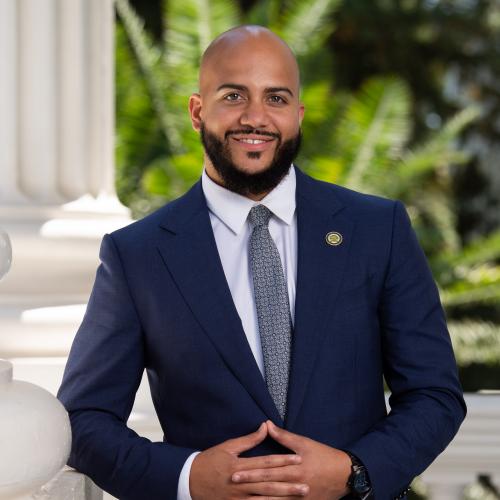
Asm. Isaac Bryan
Total votes
17,249
all sessions
Attendance
93%
744 missed
Near the chamber average
With party
99%
of cast votes
Near the chamber average
Bipartisan score
0%
crosses aisle rarely
Near the chamber average
Sponsored
1,230
bills & resolutions
Near the chamber average
Committees
12
assignments
1,230 bills and resolutions
Sponsored bills
Total
1,230
Primary
117
Co-sponsor
1,113
This page
1,230
matching current filters
Relative to Unclaimed Property Month.
Maddy summaryThis bill designates February 2026 as Unclaimed Property Month in California to raise awareness about state-held financial assets. It encourages residents to check the state Controller's website to claim unclaimed funds such as uncashed checks and insurance proceeds. The resolution does not change any laws or policies but serves as a public awareness campaign to help people locate and claim their abandoned property. It directs the Assembly Chief Clerk to distribute copies of the resolution for public distribution.
Passed Feb 5, 2026
1 co-sponsor
Relative to school governance.
Maddy summaryThis House Resolution declares January 2026 as School Board Recognition Month to honor the nearly 5,000 school board members across California's 1,000 school districts and county offices of education. The resolution recognizes these locally elected officials for their work in guiding public education and serving diverse communities, emphasizing their role in ensuring students' academic, social-emotional, and health needs are met. It calls on community members to join in acknowledging the dedication of school board members and collaborate to improve the education system. The bill has no operational effect beyond this symbolic recognition and does not change any laws or policies.
Passed Feb 5, 2026
1 co-sponsor
Relative to affordable homeownership.
Maddy summaryThis House Resolution formally recognizes the importance of affordable homeownership for California families, particularly those with lower incomes, and highlights how nonprofit-led programs help build generational wealth and reduce economic disparities. The document emphasizes that existing state programs like CalHome support the construction and preservation of affordable homes through competitive funding to cities, counties, indigenous communities, and nonprofit builders such as Habitat for Humanity. While the resolution does not create new laws or funding, it serves as an official acknowledgment of homeownership's role in improving educational outcomes, health, civic participation, and neighborhood stability. The text also notes California's significant housing deficit and racial wealth gaps as context for why expanding affordable ownership opportunities is a priority for state policy.
Passed Feb 5, 2026
1 co-sponsor
Pupil instruction: dual enrollment.
Existing law authorizes the governing board of a school district to authorize a pupil who meets specified criteria to attend community college as a special part-time or full-time student. Existing law authorizes a community college district to admit to any community college under its jurisdiction as a special part-time or full-time student a pupil who is eligible to attend community college under these provisions. This bill would require, commencing with the 2029–30 academic year, a local educational agency serving high school pupils that does not have an existing dual enrollment program to establish a dual enrollment program through a formal partnership or agreement with the governing board of a community college district, as provided. The bill would require a local educational agency that does not have an existing dual enrollment program to establish a formal partnership through a College and Career Access Pathways partnership or an early or middle college high school, as specified. The bill would require courses offered through a dual enrollment program pursuant to these provisions to lead to a degree, credential, certificate, or transfer. To the extent the bill would impose additional duties on local educational agencies and community college districts, the bill would impose a state-mandated local program. The California Constitution requires the state to reimburse local agencies and school districts for certain costs mandated by the state. Statutory provisions establish procedures for making that reimbursement. This bill would provide that, if the Commission on State Mandates determines that the bill contains costs mandated by the state, reimbursement for those costs shall be made pursuant to the statutory provisions noted above.
Failed Feb 2, 2026
0 co-sponsors
Tenancy: just cause termination: rent increases.
(1) Existing law prohibits the owner of a residential real property from terminating a tenancy without just cause, as defined, after a tenant has continuously and lawfully occupied a residential real property for 12 months. Among other residential real properties or residential circumstances, existing law exempts from these provisions a residential real property, including a mobilehome, that is alienable separate from the title to any other dwelling unit if the owner meets specified criteria and the tenants have been provided a specified written notice of the exemption. Existing law repeals these provisions on January 1, 2030. This bill would revise these provisions by removing the exemption for separately alienable residential real property and, instead, only exempting a mobilehome if the above-described criteria are met. The bill would delete the January 1, 2030, repeal date, thereby extending these provisions indefinitely. (2) Existing law prohibits an owner of residential real property, except as specified, from increasing over the course of any 12-month period the gross rental rate for a dwelling or a unit more than 5% plus the percentage change in the cost of living, or 10%, whichever is lower, of the lowest gross rental rate charged for that dwelling or unit at any time during the 12 months prior to the effective date of the increase, as specified. This bill would reduce the permissible gross rental rate increase under these provisions to the lesser of 2% plus the percentage change in the cost of living, or 5%. Among other residential real properties, existing law exempts from these provisions a residential real property that is alienable separate from the title to any other dwelling unit, including a mobilehome, if the owner meets specified criteria and the tenants have been provided a specified written notice of the exemption. This bill would revise these provisions by removing the exemption for separately alienable residential real property and, instead, only exempting a mobilehome if the above-described criteria are met. Existing law repeals these provisions on January 1, 2030. This bill would delete the January 1, 2030, repeal date, thereby extending these provisions indefinitely. (3) Notwithstanding the above-described gross rental rate increase prohibition, existing law, upon the expiration of rental restrictions, as defined, authorizes the owner of affordable housing units that meet certain requirements to establish the initial rental rate for the unit, and also authorizes the owner of an assisted housing development who demonstrates compliance with certain requirements under penalty of perjury to establish the initial unassisted rental rate for units in the assisted housing development. Existing law repeals these provisions on January 1, 2030. This bill would remove the January 1, 2030, repeal date, thereby extending the initial rental rate authorizations indefinitely. By extending provisions that require the owner of an assisted housing development to demonstrate compliance with specified requirements under penalty of perjury, the bill would impose a state-mandated program. (4) The California Constitution requires the state to reimburse local agencies and school districts for certain costs mandated by the state. Statutory provisions establish procedures for making that reimbursement. This bill would provide that no reimbursement is required by this act for a specified reason.
Failed Feb 2, 2026
1 co-sponsor
Workplace surveillance tools.
Existing law establishes the Division of Labor Standards Enforcement within the Department of Industrial Relations. Existing law authorizes the division, which is headed by the Labor Commissioner, to enforce the Labor Code and all labor laws of the state, the enforcement of which is not specifically vested in any other officer, board, or commission. This bill would generally regulate the use of workplace surveillance tools and an employer's use of worker data. The bill would, among other things, require an employer, at least 30 days before introducing a workplace surveillance tool, to provide a worker who will be affected a written notice that includes, among other things, a description of the worker data to be collected, the intended purpose of the workplace surveillance tool, and how this form of worker surveillance is necessary to meet that purpose. The bill would define "employer" to include public employers, as specified. The bill would prohibit an employer from transferring, selling, disclosing, or licensing worker data to a vendor, unless the vendor is under contract to analyze or interpret the worker data and the contract includes certain terms. The bill would prohibit an employer from using certain workplace surveillance tools, including a workplace surveillance tool that incorporates facial, gait, or emotion recognition technology, except as specified. The bill would also prohibit an employer from using a workplace surveillance tool to infer specified categories of information about a worker, including, among others, their immigration status, veteran status, ancestral history, religious or political beliefs, disability status, criminal record, or credit history. The bill would require the Labor Commissioner to enforce the bill's provisions, would authorize an employee to bring a civil action for specified remedies for a violation of the bill's provisions, and would authorize a public prosecutor to enforce the provisions. The bill would subject an employer who violates the bill's provisions to a civil penalty of $500 for each violation. The bill would define various terms for purposes of its provisions.
Labor & EmploymentSupports Labor & EmploymentBill regulates workplace surveillance tools and employer data use, directly protecting worker privacy and rights under labor enforcement framework.
TechnologySupports TechnologyRegulates workplace surveillance and employer data use, directly protecting worker privacy under data privacy policies.
Failed Feb 2, 2026
0 co-sponsors
Juvenile court: visitation.
Existing law establishes a system of statewide child welfare services, administered by the State Department of Social Services and county child welfare agencies, with the intent that all children are entitled to be safe and free from abuse and neglect. Existing law establishes the jurisdiction of the juvenile court, which may adjudge a child to be a dependent of the court under certain circumstances, including when the child suffered, or there is a substantial risk that the child will suffer, serious physical harm, or a parent fails to provide the child with adequate food, clothing, shelter, or medical treatment. Existing law establishes the grounds for removal of a dependent child from the custody of their parents or guardian, and establishes procedures to determine placement of a dependent child. Existing law authorizes the court to make orders regarding visitation between a child and parent or legal guardian, subject to specified conditions. Existing law prohibits a visitation from jeopardizing the safety of a child. This bill would require, at the initial petition hearing, the court to make an order regarding visitation between the child and the parent or legal guardian, setting forth the frequency and duration most conducive to quality family time, and whether the visitation must be supervised. The bill would require the court to order contact between the parent and child commencing within 72 hours. The bill would remove the above-described prohibition prohibiting a visitation from jeopardizing the safety of a child. This bill would require a court to order unsupervised visitation between a parent or legal guardian and a child or children, unless unsupervised visitation is contrary to the child's welfare and there is a substantial danger to the physical health of the child or the child is suffering severe emotional damage and the child's physical or emotional health cannot reasonably be protected without supervised visitation, or there is substantial evidence that the parent or legal guardian may flee the jurisdiction with the child. The bill would require, if the court orders supervised visitation, the court to specify the factual basis for its order and order the agency to assess persons proposed by a parent or guardian to supervise the visitation. The bill would also require social workers or their designee to supervise visits in specified circumstances when an alternate individual has not been approved to supervise visits. The bill would require the court to order that the agency has discretion to liberalize the visitation to unsupervised unless the court finds granting this discretion would be contrary to the child's safety. Existing law requires social workers to create reports and recommendations to be reviewed by the court as part of a permanency review hearing. This bill would require social workers to specify why the return of the child would be detrimental to the child and, if visitation has not been liberalized, what efforts were put in place to liberalize the parent or legal guardian's visits and why liberalization was contrary to the child's welfare. By increasing the duties of county social workers, this bill would impose a state-mandated local program. The California Constitution requires the state to reimburse local agencies and school districts for certain costs mandated by the state. Statutory provisions establish procedures for making that reimbursement. This bill would provide that no reimbursement is required by this act for a specified reason.
Failed Feb 2, 2026
1 co-sponsor
Authority to remove vehicles.
Existing law authorizes a peace officer, as defined, or a regularly employed and salaried employee, who is engaged in directing traffic or enforcing parking laws and regulations, of a city, county, or jurisdiction of a state agency in which a vehicle is located, to remove a vehicle located within the territorial limits in which the officer or employee may act, under designated circumstances, including, but not limited to, when a vehicle is found upon a highway or public land, or removed pursuant to the Vehicle Code, and it is known that the vehicle has been issued 5 or more notices of parking violations to which the owner or person in control of the vehicle has not responded within designated time periods, or the registered owner of the vehicle is known to have been issued 5 or more notices for failure to pay or failure to appear in court for traffic violations for which a certificate has not been issued by the magistrate or clerk of the court hearing the case, as specified. Under existing law, a vehicle that has been removed and impounded under those circumstances that is not released may be subject to a lien sale to compensate for the costs of towage and for caring for and keeping safe the vehicle. This bill would remove the authority of a peace officer or public employee, as appropriate, to remove a vehicle under the above-described circumstances, and make conforming changes. Existing law similarly authorizes a peace officer, as defined, or a regularly employed and salaried employee, who is engaged in directing traffic or enforcing parking laws and regulations, of a city, county, or jurisdiction of a state agency in which a vehicle is located, to remove a vehicle from an off-street parking facility located within the territorial limits in which the officer or employee may act, when the vehicle is known to have been issued 5 or more notices of parking violation over a period of 5 or more days, to which the owner or person in control of the vehicle has not responded or when any vehicle is illegally parked so as to prevent the movement of a legally parked vehicle. Existing law authorizes the vehicle to be impounded until the owner or person in control of the vehicle furnishes to the impounding law enforcement agency evidence of their identity and an address within this state at which they can be located and furnishes satisfactory evidence that bail has been deposited for all notices of parking violation issued for the vehicle. In lieu of requiring satisfactory evidence that the bail has been deposited, existing law authorizes the impounding law enforcement agency to, in its discretion, issue a notice to appear for the offenses charged, as specified. In lieu of either furnishing satisfactory evidence that the bail has been deposited or accepting the notice to appear, existing law authorizes the owner or person in control of the vehicle to demand to be taken without unnecessary delay before a magistrate within the county in which the offenses charged are alleged to have been committed and who has jurisdiction of the offenses and is nearest or most accessible with reference to the place where the vehicle is impounded. This bill would delete the authorization to remove a vehicle from an off-street parking facility when the vehicle is known to have been issued 5 or more notices of parking violation over a period of 5 or more days, to which the owner or person in control of the vehicle has not responded. The bill would also delete the impounding provisions described above. Existing law authorizes a peace officer, as defined, or a regularly employed and salaried employee who is engaged in directing traffic or enforcing parking laws and regulations of the jurisdiction in which a vehicle is located, to immobilize the vehicle that is located on a highway or public lands located within the territorial limits in which the officer or employee may act, if the vehicle is found upon a highway or public lands and it is known to have been issued 5 or more notices of parking violations that are delinquent because the owner or person in control of the vehicle has not responded to the agency responsible for processing notices of parking violation within designated time periods, or the registered owner of the vehicle is known to have been issued 5 or more notices for failure to pay or failure to appear in court for traffic violations for which no certificate has been issued by the magistrate or clerk of the court hearing the case, as specified. Existing law authorizes the vehicle to be immobilized until the person furnishes to the immobilizing law enforcement agency evidence of their identity and an address within this state at which they can be located and furnishes satisfactory evidence that the full amount of parking penalties been deposited for all notices of parking violation issued for the vehicle and any other vehicle registered to the registered owner of the immobilized vehicle and that bail has been deposited for all traffic violations of the registered owner that have not been cleared. This bill would delete that provision.
Failed Feb 2, 2026
1 co-sponsor
School employees: cultural competency training.
Existing law establishes a system of public elementary and secondary schools in this state and authorizes local educational agencies throughout the state to operate schools and provide instruction to pupils in kindergarten and grades 1 to 12, inclusive. Existing law authorizes local educational agencies to employ personnel to provide services in schools pursuant to that system. This bill would require the State Department of Education to, on or before July 1, 2027, develop an online cultural competency training delivery platform and online cultural competency training curriculum for school employees to support pupils of color. The bill would, commencing with the 2027–28 school year and ending with the completion of the 2031–32 school year, require a school district, county office of education, or charter school serving pupils in kindergarten or any of grades 1 to 12, inclusive, to annually provide that training to all school employees, unless an employee is exempt from the training or an employee provides proof of completion for a cultural competency training completed while employed at another local educational agency, as provided. The bill would also require local educational agencies to provide a proof of completion to school employees that complete the training and to ensure that all school employees complete the required training on paid time during the employees' regular work hours or designated professional development hours, as provided. By imposing additional duties on local educational agencies, this bill would impose a state-mandated local program. The bill would require the department to (1) monitor compliance with the training requirement as part of the department's annual compliance monitoring of state and federal programs, (2) report data, within 9 months of the completion of the 5-year training period, from that compliance monitoring to the Legislature, and (3) post the report on the department's internet website, as provided. The bill would make these provisions inoperative on July 1, 2033, and would repeal them as of January 1, 2034. The California Constitution requires the state to reimburse local agencies and school districts for certain costs mandated by the state. Statutory provisions establish procedures for making that reimbursement. This bill would provide that, if the Commission on State Mandates determines that the bill contains costs mandated by the state, reimbursement for those costs shall be made pursuant to the statutory provisions noted above.
Failed Feb 2, 2026
1 co-sponsor
Ask Maddy
·
AI policy assistant
Ask Maddy about Isaac Bryan
Scope: california
Hi! I can help you understand Isaac Bryan's legislative record. What would you like to know?
Try one of these
i
Maddy answers using official bill text and legislative records. Always verify before sharing.
Sources cited inline