Maddy summaryThis bill designates September 2026 as Childhood Cancer Awareness Month. It directly affects state agencies and organizations by encouraging them to recognize this specific month for awareness activities. The measure does not change laws or allocate funding but serves as a formal commemorative resolution.
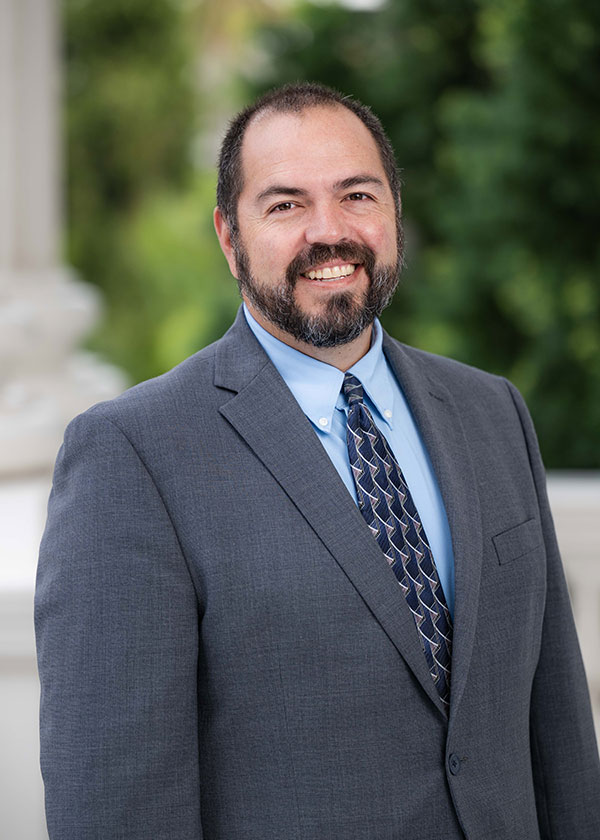
Rep. Robert Garcia
Sponsored bills
This measure would recognize and affirm the important role of artists, arts organizations, creative arts therapists, and arts for health initiatives in supporting behavioral health, promoting recovery, strengthening community resilience, and contributing to public safety. The measure would encourage and recognize exploration, support, and integration of arts and behavioral health within California's health care, behavioral health, and community-based systems.
This measure would recognize that sudden cardiac arrest is a critical issue facing student athletes and provide that the Legislature supports the important work nonprofit organizations are doing to raise awareness of sudden cardiac arrest, increase preventative screenings, and reduce the number of cases.
Existing law, the Knox-Keene Health Care Service Plan Act of 1975, provides for the licensure and regulation of health care service plans by the Department of Managed Health Care. Existing law requires a health care service plan contract that includes terms requiring binding arbitration for dispute settlement to provide a specified disclosure to subscribers or enrollees. Existing law, the California Arbitration Act, provides a statutory framework for the enforcement of contractual arbitration under California law. Existing law establishes standards for arbitration, and requires a court to vacate an arbitration award if it makes certain findings. This bill would require the Attorney General to oversee compliance by health care service plans with specified provisions regulating the use of binding arbitration to settle disputes. The bill would authorize the Attorney General to require reports from health care service plans for this purpose. The bill would also require the Attorney General to notify the director of the department of any corrective action taken pursuant to these provisions.
Existing law establishes various programs and services for older adults, as defined, including, among other things, the Adult Education Program under the administration of the Chancellor of the California Community Colleges and the Superintendent of Public Instruction, and health promotion and preventative health services for older adults under the administration of the State Department of Public Health. This bill would authorize a local health department, area agency on aging, community college, public or private college, public or private university, or other appropriate county department, as determined by a county, to establish a Healthy Aging Community Partnership Program for older individuals designed to promote healthy aging, social engagement, and independent living in collaboration with relevant local entities, including school districts, libraries, faith institutions, and community organizations. The bill would authorize program activities to include, among other things, technology assistance, physical activity, and other community-based enrichment activities that support healthy aging and social connection. The bill would make implementation of these provisions subject to the availability of local resources and partnerships. The bill would specify that these provisions do not duplicate or supplant specified current adult education courses, classes, and services provided by the California Community Colleges, including through the Adult Education Program, as provided.
The California Voting Rights Act of 2001 (CVRA) prohibits a political subdivision from imposing or applying an at-large method of election for members of the political subdivision's governing body in a manner that impairs the ability of a protected class to elect candidates of its choice or its ability to influence the outcome of an election, as specified. Existing law requires courts to implement appropriate remedies, including the imposition of district-based elections, for violations of the CVRA. This bill would revise the CVRA. The bill would prohibit a political subdivision or state agency from implementing, imposing, or enforcing any election policy or practice, as defined, that results in, or is likely to result in, voter suppression. An election policy or practice would result in voter suppression if it (1) causes a material disparity in voter participation, access to voting opportunities, or the opportunity or ability to participate in the political process for members of a protected class, which is defined as any race, color, or language-minority group; or (2) based on the totality of circumstances, causes an impairment of the equal opportunity or ability of members of a protected class to participate in the political process. An election policy or practice would not violate the prohibition on voter suppression if the political subdivision or state agency demonstrates, by clear and convincing evidence, that the election policy or practice is necessary to significantly further a compelling and particularized governmental interest and there is no reasonable alternative that comparably furthers the governmental interest and results in a smaller disparity between members of a protected class and other members of the electorate. The bill would also prohibit a political subdivision from employing any method of election, as defined, that has the effect, or will likely have the effect, of diluting the vote of protected class members. Vote dilution would be established if there is an impairment of the equal opportunity or ability of protected class members to nominate or elect candidates of their choice, as provided, and another method of election or a change to the existing method of election would likely mitigate the impairment. The bill sets forth various factors that courts could, and could not, consider when evaluating whether voter suppression or vote dilution exists within a political subdivision. The Attorney General, or any voter who is a member of a protected class and who resides in a political subdivision where a violation is alleged, would have standing to bring an action in a superior court of competent jurisdiction or any county in which the Attorney General has an office. The bill would require a potential plaintiff, before filing an action alleging voter suppression or vote dilution, to send a notice letter to the political subdivision identifying the potential violation and how the party's proposed remedy would address it. For allegations of voter suppression, the bill would permit the potential plaintiff to file an action if the political subdivision has not enacted a remedy within 45 days of receipt of the notice letter or if the political subdivision's remedy would not redress the alleged violation. For allegations that a political subdivision's method of election results in vote dilution, the bill would permit the potential plaintiff to file an action if the political subdivision has not, within 60 days, passed a resolution outlining its intention to make changes to its method of election or petitioned a court for authorization to implement a different, appropriate remedy. Notwithstanding the notice requirement, the bill would authorize a potential plaintiff to file an action against a political subdivision at any time if the action is for a preliminary injunction with respect to an election that will occur within 180 days, another party has already submitted a notice letter alleging a substantially similar violation arising out of the same set of facts and the required number of days have passed, or the prospect of obtaining relief would otherwise be futile. If the political subdivision provides some or all of the relief sought in a potential plaintiff's notice letter, the bill would authorize the potential plaintiff to recover their costs, which would be capped at an amount equal to the present value of $30,000 in 2016, subject to an annual inflation adjustment. The bill would prohibit any political subdivision from enacting or administering any covered practice without obtaining preapproval from the Attorney General, if the political subdivision, within the previous 10 years, has entered into a settlement agreement admitting liability for a violation of, or been found by a court to have violated, this bill, the federal Voting Rights Act of 1965, or any other state law concerning the right to vote for protected class members. Under the bill, covered practices would include new or modified methods of election, annexations and deannexations, or reductions in language assistance. The bill would authorize the Attorney General to grant preapproval to a political subdivision only if the covered practice will not diminish the equal opportunity or ability of members of the protected class to participate in the political process or elect candidates of choice and the covered practice is unlikely to violate the provisions of the bill. The bill would require any law, regulation, charter, ordinance, or other enactment of any political subdivision relating to voting to be construed liberally in favor of the right to vote. Existing law generally prohibits using a voting system unless it has been certified or conditionally approved by the Secretary of State before any election at which it is to be used. This bill would require the Secretary of State to examine and test a voting system and, if the Secretary of State determines that it meets the applicable requirements, certify or conditionally approve the system for use in an election conducted using a method of election adopted to remedy a violation of the CVRA, as provided. Existing law requires the adoption of new election district boundaries for a legislative body that is elected using district-based elections following each federal decennial census. This bill would require a districting body responsible for the adoption of new election district boundaries to comply with the requirements of this bill when adopting new boundaries following the decennial census. By increasing the duties of local elections officials, the bill would create a state-mandated local program. The California Constitution requires the state to reimburse local agencies and school districts for certain costs mandated by the state. Statutory provisions establish procedures for making that reimbursement. This bill would provide that, if the Commission on State Mandates determines that the bill contains costs mandated by the state, reimbursement for those costs shall be made pursuant to the statutory provisions noted above.

Existing law establishes the State Seal of Civic Engagement to recognize pupils who have demonstrated excellence in civics education and participation and have demonstrated an understanding of the United States Constitution, the California Constitution, and the democratic system of government, as provided, and establishes the State Seal of Biliteracy to recognize high school graduates who have attained a high level of proficiency in speaking, reading, and writing in one or more languages in addition to English. Commencing January 1, 2027, existing law vests all executive and administrative functions of the State Department of Education in an Education Commissioner. This bill would establish the State Seal of Climate Literacy for the purpose of giving high school pupils personal agency to help them and their communities understand and adapt to the effects of climate change. The bill would require the Education Commissioner, on or before December 31, 2027, to recommend to the State Board of Education criteria for awarding a State Seal of Climate Literacy to pupils who have demonstrated mastery in climate literacy disciplines, green skills or technical green skills, as defined, and any and all other best practices for climate literacy. The bill would require the Commissioner, in developing the criteria, to consider including (1) the successful completion of at least 2 approved courses in the area of climate literacy and (2) the successful completion and presentation of a climate literacy final experiential learning project, as provided. The bill would require the state board, on or before January 31, 2029, to adopt, or adopt with modifications, the criteria recommended by the Commissioner. The bill would require the Commissioner to, among other things, prepare and deliver to participating local educational agencies an appropriate insignia to be affixed to the diploma or transcript of the pupil indicating that the pupil has been awarded a State Seal of Climate Literacy by the Commissioner. The bill would make a local educational agency's participation in awarding the State Seal of Climate Literacy voluntary. For a local educational agency that chooses to participate, the bill would require the local educational agency, on or after the date that the state board adopts criteria, to, among other things, establish a process for determining if a pupil has met the criteria necessary to earn a State Seal of Climate Literacy.
Existing law requires the State Board of Education, on or before January 31, 2024, to appoint an independent panel of experts for the purpose of creating an approved list of evidence-based, culturally, linguistically, and developmentally appropriate screening instruments for pupils in kindergarten and grades 1 and 2 to assess pupils for risk of reading difficulties, including possible neurological disorders such as dyslexia, as specified. Existing law requires the governing board or body of a school district, county office of education, or charter school serving pupils in kindergarten or grades 1 or 2 to adopt, on or before June 30, 2025, one or more screening instruments from the approved list to assess pupils for risk of reading difficulties, as specified, and commencing no later than the 2025–26 school year, requires those local educational agencies to assess each pupil in kindergarten and grades 1 and 2 for risk of reading difficulties using the screening instrument or instruments adopted by the governing board or body of the local educational agency, as specified. This bill would, on or before July 31, 2027, require the state board to approve and the State Department of Education to post on its internet website criteria and guidance for selecting evidence-based, culturally, linguistically, and developmentally appropriate mathematics diagnostic assessments for pupils in kindergarten and grades 1 and 2 to assess pupils' mathematics knowledge and learning needs and identify pupils in need of additional support. The bill would require the department, on or before January 31, 2028, to (1) publish on its internet website a list of approved diagnostic assessments that meet the criteria, and (2) post on its internet website additional guidance to assist local educational agencies in selecting diagnostic assessments from the approved list, as provided. The bill would require the list to include diagnostic assessments that are developed for both English learners and non-English learners, as provided. The bill would require the state board and the department to solicit stakeholder input when developing the criteria, guidance, and list of diagnostic assessments pursuant to these provisions and to allow for public comment. The bill would authorize the department to periodically update the list of approved assessments. The bill would require the governing board or body of a school district, county office of education, or charter school serving pupils in kindergarten or grades 1 or 2 to adopt, on or before June 30, 2028, one or more diagnostic assessments from the published list of approved diagnostic assessments to assess pupils' mathematics knowledge and learning needs. The bill would authorize a local educational agency to satisfy this requirement by using a diagnostic assessment that is not on the published list if the governing board or body self-certifies that the assessment tool meets the above-described criteria. The bill, commencing no later than the 2028–29 school year, would require those local educational agencies to assess each pupil in kindergarten and grades 1 and 2 for mathematics knowledge using the diagnostic assessment or assessments adopted by the governing board or body of the local educational agency. The bill would require a local educational agency to provide parents or guardians of pupils eligible for assessment with information about the assessment and to make pupil results available to parents or guardians, as required by the state board, as provided. By imposing additional duties on local educational agencies, the bill would impose a state-mandated local program. The bill would require the department, by April 30, 2028, to curate and maintain on its internet website guidance and resources on evidence-based support, intervention, and instructional strategies aligned with the Mathematics Framework for California Public Schools: Kindergarten Through Grade Twelve. The California Constitution requires the state to reimburse local agencies and school districts for certain costs mandated by the state. Statutory provisions establish procedures for making that reimbursement. This bill would provide that, if the Commission on State Mandates determines that the bill contains costs mandated by the state, reimbursement for those costs shall be made pursuant to the statutory provisions noted above.

Existing law makes it a crime for a law enforcement officer to wear a facial covering in the performance of their duties, except as specified. Existing law defines law enforcement officer for these purposes as anyone designated by California law as a peace officer who is employed by a city, county, or other local agency, and any officer or agent of a federal law enforcement agency, agency or law enforcement agency of another state, or any person acting on behalf of a federal law enforcement agency. This bill would add peace officers employed by a state agency to the definition of law enforcement officers, thereby making those law enforcement officers subject to those criminal penalties. The bill would specify that facial coverings does not include certain items, including, among other things, sunglasses. The bill would, for all of the items excluded from the definition of facial coverings, limit that exclusion if the items are combined or otherwise used in a manner intended to conceal or obscure an officer's identity. By expanding the scope of a crime, this bill would impose a state-mandated local program. Existing law prohibits any person who is found to have committed an assault, battery, false imprisonment, false arrest, abuse of process, or malicious prosecution, while wearing a facial covering in a knowing and willful violation of these provisions, from asserting any privilege or immunity for their tortious conduct against a claim of civil liability, and makes that person liable for the greater of actual damages or statutory damages of not less than $10,000, whichever is greater. This bill would instead make a person who is found liable for false imprisonment or false arrest liable for those damages if the trier of fact finds that the person knowingly and willfully concealed their identity through the use of a facial covering at the time of the conduct giving rise to liability. Existing law requires a law enforcement agency operating in California to, by July 1, 2026, maintain and publicly post a written policy limiting the use of facial coverings, as specified. Existing law defines a law enforcement agency for these purposes as any entity of a city, county, or other local agency, that employs anyone designated by California law as a peace officer, any federal law enforcement agency, or any law enforcement agency of another state. This bill would add to the definition of law enforcement agency, a state entity that employs a peace officer and would change the date any law enforcement agency has to comply with that requirement to January 1, 2027. The bill would also require those policies to exempt certain surveillance operations related to enforcement of the Fish and Game Code, or similar federal law. The California Constitution requires the state to reimburse local agencies and school districts for certain costs mandated by the state. Statutory provisions establish procedures for making that reimbursement. This bill would provide that no reimbursement is required by this act for a specified reason.
Existing law establishes, within the California Health and Human Services Agency, the State Department of Public Health, which has authority over various programs promoting public health, including the California Tobacco Control Program. Existing law requires the department to, among other things, establish a program on tobacco use and health to reduce tobacco use in California by conducting health education interventions and behavior change programs at the state level, in the community, and other nonschool settings. Existing law also requires the department to conduct statewide surveillance of tobacco-related behaviors, knowledge, and attitudes and evaluate the department's local and state tobacco control programs. Under existing law, the department funds the Kick It California program, which is a tobacco cessation program. Existing law, the California Cigarette and Tobacco Products Licensing Act of 2003, provides for the licensure by the California Department of Tax and Fee Administration of manufacturers, distributors, wholesalers, importers, and retailers of cigarette or tobacco products that are engaged in business in California. The act authorizes the department to suspend or revoke a retailer's license or impose a civil penalty for a violation of the act's provisions and requires all moneys collected under the act to be deposited in the Cigarette and Tobacco Products Compliance Fund to be available for expenditure, upon appropriation by the Legislature, for specified uses. Existing law requires a retailer to conspicuously display its license to engage in the sale of cigarettes or tobacco products at each retail location in a manner visible to the public. This bill would require the State Department of Public Health, no later than July 1, 2027, to make available signage to raise lung cancer screening awareness, as specified, which would include, among other things, eligibility criteria for lung cancer screening and the toll-free telephone number of the Kick It California tobacco cessation program. The bill would require the sign to be available at no cost on the department's internet website. The bill would require, beginning January 1, 2028, a retailer, as defined, to conspicuously display the signage at each retail location. The bill would make a retailer who violates that requirement liable for a civil penalty of $500 for each offense at a retail location and would require those penalties to be deposited into the Cigarette and Tobacco Products Compliance Fund.