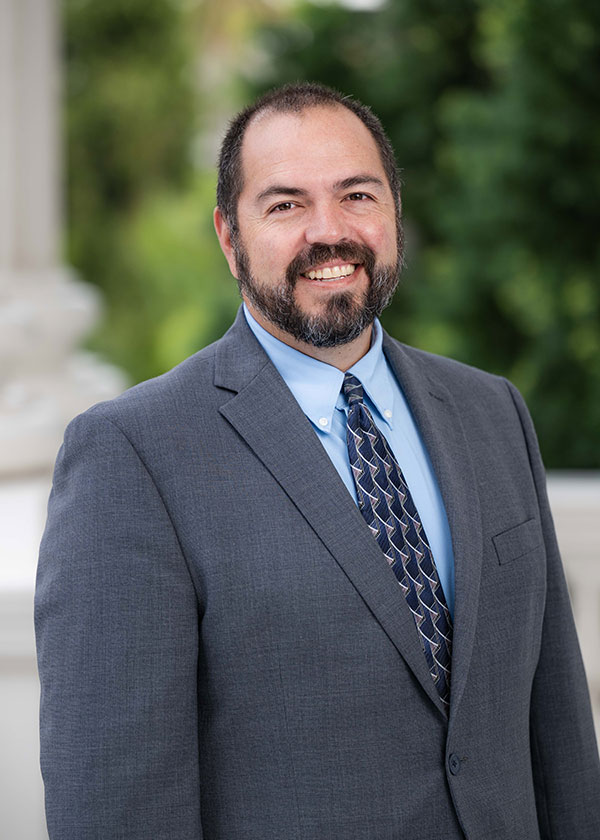
Photo of Robert Garcia
D California House · District 50 On the 2026 ballot

Rep. Robert Garcia

Compare
Total votes
4,851
all sessions
Attendance
93%
254 missed
Near the chamber average
With party
99%
of cast votes
Near the chamber average
Bipartisan score
0%
crosses aisle rarely
Near the chamber average
Sponsored
421
bills & resolutions
Higher than 79% of chamber peers
Committees
10
assignments
421 bills and resolutions

Sponsored bills

Total
421
Primary
34
Co-sponsor
387
This page
421
matching current filters
Co-sponsor AB 2760
Passed · California House · Co-sponsor
Law enforcement: wearable electroshock devices.

Existing law requires each law enforcement agency, on or before January 1, 2021, to maintain a policy that provides a minimum standard on the use of force. Existing law requires that the policy include, among other things, training standards and requirements relating to demonstrated knowledge and understanding of the law enforcement agency's use of force policy by officers, investigators, and supervisors. Existing law prohibits a law enforcement agency from authorizing the use of a carotid restraint or choke hold by any peace officer employed by that agency. This bill would, until January 1, 2030, prohibit a law enforcement agency, including a federal law enforcement agency, from using a wearable electroshock device within the State of California. The bill would also prohibit a law enforcement agency from using state funds to purchase a wearable electroshock device. The bill would require a law enforcement agency to update their use of force policies to prohibit the use of a wearable electroshock device. By increasing the duties on local law enforcement, the bill would impose a state-mandated local program. The bill would require the Division of Law Enforcement within the Department of Justice to conduct a study on the safety and community impacts of wearable electroshock devices and provide recommendations for appropriate standards and safeguards for their use, and would require the department to report to the Legislature on the findings and recommendations of the study on or before January 1, 2029. The California Constitution requires the state to reimburse local agencies and school districts for certain costs mandated by the state. Statutory provisions establish procedures for making that reimbursement. This bill would provide that, if the Commission on State Mandates determines that the bill contains costs mandated by the state, reimbursement for those costs shall be made pursuant to the statutory provisions noted above.


Passed Aug 30, 2026 1 co-sponsor
Co-sponsor AB 2225
Passed · California House · Co-sponsor
Education governance: Education Commissioner: reporting.

Commencing January 1, 2027, existing law vests all executive and administrative functions of the State Department of Education in an Education Commissioner. Existing law requires the Education Commissioner, on or before October 1, 2027, to develop findings and recommendations for a 2nd phase of education governance consolidation and streamlining, as specified, and to submit to the Governor and the appropriate policy and fiscal committees of the Legislature (1) an interim report, by June 30, 2027, with a detailed description of the process used to gather required input for the development of those findings and recommendations and (2) a final report, by October 1, 2027, containing its findings and recommendations. This bill would require the Education Commissioner, utilizing those findings and recommendations, to submit a report, on or before October 1, 2028, to the Governor and appropriate policy and fiscal committees of the Legislature on, among other things, progress toward implementation of the recommended actions or activities for education governance consolidation and streamlining and recommendations of any additional steps the Governor and Legislature can take to consolidate or eliminate fragmented or duplicative state requirements and activities that require statutory or budgetary authority.

Passed Aug 30, 2026 1 co-sponsor
Co-sponsor AB 1896
Passed · California House · Co-sponsor
Public employment: disqualifications.

Existing law contains numerous provisions governing the qualifications, standards, and training of peace officers. Existing law specifies circumstances that disqualify a person from holding office or being employed as a peace officer, including, among other things, having been convicted of a felony. This bill, the GTFO Act, would, commencing January 1, 2028, disqualify from being a peace officer a person previously employed as a sworn law enforcement officer or individual contractor and personally engaged in immigration enforcement, as defined, except as specified. Existing law requires each class of public officers or employees declared by law to be peace officers to meet specified minimum standards, including that they be 18 years of age or older, be fingerprinted for purposes of search of local, state, and national fingerprint files to disclose a criminal record, and be of good moral character, as determined by a thorough background investigation. This bill would, for purposes of those background investigations, authorize a hiring agency to consider news articles, verified social media posts, filings of civil complaints, and other verified sources. This bill, for purposes of an applicant who was previously employed as a sworn law enforcement officer or individual contractor and personally engaged in immigration enforcement, would require the hiring agency to complete the background investigation before the candidate participates in a Peace Officer Standards and Training (POST) basic course. The bill would require the hiring agency to review the background investigation and determine if the individual is suitable to enter the POST basic course subject to certain suitability standards adopted by the Commission on Peace Officer Standards and Training. This bill would require every applicant seeking appointment as a peace officer or enrollment in a POST basic course to submit to the hiring agency a declaration submitted under penalty of perjury that states whether the applicant has, at any time been employed as a sworn law enforcement officer or individual contractor that personally engaged in immigration enforcement, as specified. By requiring this statement to be made under penalty of perjury, the bill would expand the scope of a crime and impose a state-mandated local program. Existing law, the State Civil Service Act, requires that the employment procedures of the Department of Human Resources (CalHR) and of each state agency conform to the federal and state laws governing employment practices, including the use of employment forms. Existing law requires employment forms used by a state agency to require a person applying for employment to disclose whether the person has entered into an agreement with the state regarding any previous employment with the state that prohibits the person from seeking or accepting any subsequent employment with the state. This bill would additionally require the above-described employment forms to require a person applying for employment to disclose whether the person has been employed as a sworn law enforcement officer or individual contractor that personally engaged in immigration enforcement, as defined. Existing law authorizes CalHR or a designated appointing power to refuse to examine or, after examination, to refuse to declare as eligible, or to withhold or withdraw from certification, prior to appointment, anyone who meets certain criteria, such as a person who has misrepresented themselves during the application process. This bill would add to these criteria a person who was previously employed as a sworn law enforcement officer or individual contractor and personally engaged in immigration enforcement, as defined, except as specified. Existing law makes a person ineligible to hold office or employment of any kind with the state, or any county, city, district, or other political or governmental unit of the state, if the person has by oath bound themselves to support, maintain, or further the military or political activities or policies of a foreign government, as specified, or to obey the orders or directions of any foreign government or its officials. This bill, commencing January 1, 2028, would make a person ineligible to hold public employment, including employment with a city, county, district, or any other public agency of the state, because the person was previously employed as a sworn law enforcement officer or individual contractor and personally engaged in immigration enforcement, as defined, except as specified. Existing law requires the Commission on Peace Officer Standards and Training to establish a certification program for peace officers. Existing law requires, for each applicant for admission to a basic course of training certified by the commission that includes the carrying and use of firearms, who is not sponsored by a local or other law enforcement agency or is not a peace officer employed by a state or local agency, department, or district, to submit written certification from the Department of Justice that the applicant is eligible to possess, receive, own, and purchase a firearm pursuant to state and federal law. This bill would, for purposes of an applicant for the basic course who was previously employed as a sworn law enforcement officer or individual contractor and personally engaged in immigration enforcement, require the commission to deny suitability for enrollment in the basic course, unless the commission receives notice from the hiring agency granting the applicant's suitability, as specified. The bill, by January 1, 2028, would require the commission to adopt, by regulation, a definition of "suitability," as specified. Existing law requires any background investigation of a candidate for a peace officer position to include an inquiry into whether the candidate has engaged or is engaging in membership in a hate group. This bill would require the background investigation to include an inquiry into whether the candidate has engaged in immigration enforcement. By increasing the duties of local agencies, this bill would impose a state-mandated local program. The bill would make the provisions of the act severable. The bill would include findings that changes proposed by this bill address a matter of statewide concern rather than a municipal affair and, therefore, apply to all cities, including charter cities. This bill would incorporate additional changes to Section 1029 of the Government Code proposed by AB 1627 to be operative only if this bill and AB 1627 are enacted and this bill is enacted last. The bill would also incorporate additional changes to Section 13510.8 of the Penal Code proposed by AB 2337 to be operative only if this bill and AB 2337 are enacted and this bill is enacted last. The California Constitution requires the state to reimburse local agencies and school districts for certain costs mandated by the state. Statutory provisions establish procedures for making that reimbursement. This bill would provide that with regard to certain mandates no reimbursement is required by this act for a specified reason. With regard to any other mandates, this bill would provide that, if the Commission on State Mandates determines that the bill contains costs so mandated by the state, reimbursement for those costs shall be made pursuant to the statutory provisions noted above.
Passed Aug 30, 2026 1 co-sponsor
Co-sponsor SB 1360
Passed · California Senate · Co-sponsor
Elections: translation of election materials.

The federal Voting Rights Act of 1965 requires a state or political subdivision in which more than 5% of voting-age citizens, or more than 10,000 voting-age citizens, are members of a single language minority and limited-English proficient to provide certain election materials, including ballots, in the language of the applicable language minority group. Existing state law requires the Secretary of State to determine for each county and precinct whether it is appropriate to provide facsimile copies of the ballot and other election materials in languages other than English. If the Secretary of State determines the number of voting age residents in a county or precinct who are members of a single language minority, and who lack sufficient skills in English to vote without assistance, is 3% or more of the voting-age residents of the county or precinct, county elections officials must provide facsimile ballots and other election materials in the applicable language. This bill would require the Secretary of State, on or before December 15, 2031, and on or before December 15 in every year ending in 1 or 7 thereafter, to identify the counties where at least 10,000 voting age citizens, or 5% of voting age citizens, are limited English proficient and either members of a single language minority group or speak a shared language. The bill would require the elections official in an identified political subdivision to provide translated election materials in any language that meets those criteria or, for an election occurring before December 15, 2031, in any language in which the political subdivision is required to provide language assistance under the Voting Rights Act of 1965, within a specified period of time. The elections official would be required to translate, among other things, all official and sample ballots, voter registration forms, and election notices and instructions. The elections official would also be required to have a sufficient number of bilingual election workers to provide language assistance to any voter who needs it. If the Secretary of State or another state agency provides election-related forms, instructions, assistance, or other materials or services in an identified political subdivision, the bill would require the Secretary of State or other state agency to translate the materials or services into any language that meets the criteria within that political subdivision. Beginning January 1, 2027, the bill would also authorize the Secretary of State to require a political subdivision to provide translated election materials if interested citizens or entities provide the Secretary of State with a preponderance of evidence that a language group meets any of the above-described criteria. The bill would also make various conforming changes. By increasing the duties of local elections officials, the bill would create a state-mandated local program. The bill would include findings that changes proposed by this bill address a matter of statewide concern rather than a municipal affair and, therefore, apply to all cities, including charter cities. This bill would incorporate additional changes to Section 13307 of the Elections Code proposed by SB 715 to be operative only if this bill and SB 715 are enacted and this bill is enacted last. The California Constitution requires the state to reimburse local agencies and school districts for certain costs mandated by the state. Statutory provisions establish procedures for making that reimbursement. This bill would provide that, if the Commission on State Mandates determines that the bill contains costs mandated by the state, reimbursement for those costs shall be made pursuant to the statutory provisions noted above.

Passed Aug 30, 2026 1 co-sponsor
Co-sponsor AB 1600
Passed · California House · Co-sponsor
Disadvantaged communities: farmworker communities.

Existing law defines "disadvantaged communities" and requires the California Environmental Protection Agency to identify disadvantaged communities for investment opportunities from the Greenhouse Gas Reduction Fund and for other purposes. This bill would require the agency to do specified things regarding farmworker communities for purposes of identifying disadvantaged communities including, among other things, assessing whether designating farmworker communities as disadvantaged communities would increase those communities' access to investment opportunities and identifying potential barriers faced by low-income farmworker communities in accessing investment opportunities, as specified. The bill would require the agency to make its findings publicly available on its internet website and consider those findings when identifying disadvantaged communities. The bill would require the agency and the Office of Environmental Health Hazard Assessment to develop and implement a strategy for engaging with farmworker communities on environmental, health, and socioeconomic burdens, as provided.

Passed Aug 30, 2026 1 co-sponsor
Co-sponsor AB 28
Passed · California House · Co-sponsor
Solid waste landfills: subsurface temperatures.

(1) The California Integrated Waste Management Act of 1989, administered by the Department of Resources Recycling and Recovery (CalRecycle) , generally regulates the disposal, management, and recycling of solid waste, as defined. The act authorizes CalRecycle to certify a local enforcement agency and requires CalRecycle and certified local enforcement agencies to perform specified functions with regard to the regulation of solid waste management, including issuing and enforcing solid waste facility permits. The act prohibits a person from operating a solid waste facility without a solid waste facilities permit, as provided. The California Global Warming Solutions Act of 2006 charges the State Air Resources Board with monitoring and regulating sources of emissions of greenhouse gases that cause global warming in order to reduce emission of greenhouse gases. The act requires the state board to adopt rules and regulations to achieve the maximum technologically feasible and cost-effective greenhouse gas emissions reductions, as provided. This bill would require the owner or operator of a solid waste landfill, as defined, to, among other things, notify the Department of Resources Recycling and Recovery if a subsurface elevated temperature event occurs. The bill would define "subsurface elevated temperature event" to mean an event where subsurface gas or waste temperatures at a solid waste landfill persistently exceed 131 degrees Fahrenheit over a substantial area and meets other performance criteria, as determined by the department. The bill would authorize the department to require the owner or operator of a solid waste landfill experiencing a subsurface elevated temperature event to create a corrective action plan that includes, but is not limited to, a cost assessment for fully implementing the corrective action plan. The bill would authorize the department or a local enforcement agency to impose an administrative civil penalty of $100,000 per day for failing to comply with these requirements, as provided. The bill would require all penalties collected to be deposited into the Landfill Subsurface Fire Mitigation Community Fund, which the bill would create in the State Treasury. The bill would continuously appropriate moneys in the fund to the California Alternative Energy and Advanced Transportation Financing Authority, to be paid to counties in which a subsurface elevated temperature event occurred to mitigate harm to a person or community affected by a subsurface elevated temperature event and to be paid to the authority for its costs of implementation. The bill would require the authority to develop guidelines for dispersing these funds, as specified. The bill would authorize the department to become the enforcement agency for a solid waste landfill experiencing a subsurface elevated temperature event, as specified. This bill would authorize the Secretary for Environmental Protection to select and coordinate a multiagency coordination group to investigate and provide recommendations on how to achieve resolution of a subsurface elevated temperature event, as specified. The bill would require a local health department to initiate community health needs assessments to identify and collect information regarding the effects of a subsurface elevated temperature event on an affected community and to share the findings, as provided. By requiring a local health department and a local air pollution control district to perform additional duties, the bill would impose a state-mandated local program. The bill would, upon request by a multiagency coordination group, require the owner or operator of a solid waste landfill that experiences a subsurface elevated temperature event to implement an air monitoring and sampling plan, as specified. The bill would require the owner and operator of a solid waste landfill that experiences a subsurface elevated temperature event to reimburse the members of a multiagency coordination group and the local health department for all reasonable and necessary expenses incurred, as specified. The bill would authorize the department to adopt regulations to implement and enforce them as emergency regulations, as specified. (2) This bill would declare its provisions to be severable. (3) The California Constitution requires the state to reimburse local agencies and school districts for certain costs mandated by the state. Statutory provisions establish procedures for making that reimbursement. This bill would provide that no reimbursement is required by this act for a specified reason.

Passed Aug 30, 2026 1 co-sponsor
Primary AB 2142
Passed · California House · Lead sponsor
School districts: community college districts: short-term employees: classified service.

Existing law requires the governing board of a school district and the governing board of a community college district to employ persons for positions not requiring certification qualifications and to classify, as defined, these employees and positions. Existing law requires these employees and positions to be known as the classified service. Existing law prohibits substitute and short-term employees, as defined, employed and paid for less than 75% of a school year or college year, from being part of the classified service. This bill would establish a rebuttable presumption that a school district or community college district is required to replace a short-term employee position with a position in the classified service if (1) the short-term employee performs the required service of the position beyond 75% of a school year or college year, (2) the short-term employee voluntarily separates or is laid off or terminated from employment for at least 50% but less than 75% of a school year or college year and is then rehired in the next school year or college year to perform substantially the same services for at least 50% of the school year or college year, or (3) the services of the short-term employee position are used at least 50% of a school year or college year for 3 of 5 consecutive school years or college years.

Passed Aug 28, 2026 0 co-sponsors
Co-sponsor SB 1349
Passed · California Senate · Co-sponsor
Taxation: tax expenditures: Legislative Analyst's Office: assessment, report, and recommendation.

Existing law, including, but not limited to, property tax law, the Sales and Use Tax Law, the Personal Income Tax Law, the Corporation Tax Law, the Motor Vehicle Fuel Tax Law, the law governing the taxation of insurers, the Use Fuel Tax Law, and the Diesel Fuel Tax Law, provides for tax expenditures, including exemptions, deductions, exclusions, and credits against the taxes imposed by those laws. The bill would require the Legislative Analyst's Office (LAO) to comprehensively assess the major tax expenditures, as defined, of the state, write and publish a report on each major tax expenditure, and make a recommendation to the Legislature based on each report. In this regard, the bill would require LAO, as part of the comprehensive assessments, to identify any savings that the Legislature can realize by reducing or limiting the major tax expenditures, and require them to consider certain criteria when finalizing each report, including the extent to which the major tax expenditure is a cost-effective use of resources compared to other options to address the same purpose, intent, or goal. The bill would require LAO to complete and publish on its internet website its first report on a major tax expenditure by January 1, 2028, and to complete and publish on its internet website each subsequent report on a major tax expenditure annually in a sequence determined by the office thereafter until the fifth and final report is submitted on January 1, 2032. The bill would require the Senate Committee on Revenue and Taxation and the Assembly Committee on Revenue and Taxation, to hold a joint public hearing on these reports by each August 15 of the second year of the legislative session, as specified. To the extent that LAO needs access to taxpayer data and information, the bill would require the Franchise Tax Board, the California Department of Tax and Fee Administration, and the Employment Development Department to ensure that relevant anonymized taxpayer data is made available and ensure that appropriate levels of data security and privacy protections are in place for transferred or sensitive data. The bill would repeal its provisions on January 1, 2033. The bill would make findings and declarations relating to these provisions.

Passed Aug 28, 2026 1 co-sponsor
Co-sponsor AB 1624
In committee · California House · Co-sponsor
Public Lands Protection Act.

The Planning and Zoning Law requires each county and city to adopt a comprehensive, long-term general plan for the physical development of the county or city, and of any land outside its boundaries that bears relation to its planning. Existing law authorizes the legislative body of a county or city to adopt ordinances that, among other things, regulate the use of buildings, structures, and land as between industry, business, residences, open space, and other purposes, as provided. For these purposes, existing law authorizes the legislative body to divide a county or city into zones, but requires that regulations adopted be uniform for each class or kind of building or use of land throughout each zone. The California Environmental Quality Act (CEQA) requires a lead agency, as defined, to prepare an environmental impact report on a project that it proposes to carry out or approve that may have a significant effect on the environment or to adopt a negative declaration if it finds that the project will not have that effect. This bill, the Public Lands Protection Act, would, upon transfer to any private or nonfederal entity of a parcel of land located within the state that is owned by the United States government on or after January 1, 2025, and that has been designated in an adopted general plan or zoning ordinance as open space, public land, resource conservation, or an equivalent conservation-oriented designation, immediately subject that parcel to the zoning designation and associated state and local restrictions. The bill would also, upon transfer of a parcel of land located within the state that is owned by the United States government on or after January 1, 2025, and that has not been designated in an adopted general plan or zoning ordinance at the time of transfer to any private or nonfederal entity, automatically subject that parcel to the most restrictive conservation-oriented zoning designation currently applied in the jurisdiction, by operation of law. The bill would prohibit a parcel of land governed by these provisions from being rezoned, subdivided, or granted any development entitlement that is inconsistent with a conservation-oriented zoning designation, unless certain requirements are satisfied, including that a full environmental impact report is completed in accordance with CEQA. Notwithstanding these provisions, the bill would require electric infrastructure and clean energy facilities necessary to achieve California's climate and decarbonization goals to be deemed permitted uses in a conservation-oriented zoning designation if certain conditions are met. The bill would also exempt certain other parcels from these provisions. This bill would include findings that changes proposed by this bill address a matter of statewide concern rather than a municipal affair and, therefore, apply to all cities, including charter cities. This bill would make these provisions severable. This bill would declare that it is to take effect immediately as an urgency statute.

In committee Aug 28, 2026 1 co-sponsor
Showing 1 to 10 of 421 bills
1 2 3 43 Next