

Elections.
Summary
The California Voting Rights Act of 2001 (CVRA) prohibits a political subdivision from imposing or applying an at-large method of election for members of the political subdivision's governing body in a manner that impairs the ability of a protected class to elect candidates of its choice or its ability to influence the outcome of an election, as specified. Existing law requires courts to implement appropriate remedies, including the imposition of district-based elections, for violations of the CVRA. This bill would revise the CVRA. The bill would prohibit a political subdivision or state agency from implementing, imposing, or enforcing any election policy or practice, as defined, that results in, or is likely to result in, voter suppression. An election policy or practice would result in voter suppression if it (1) causes a material disparity in voter participation, access to voting opportunities, or the opportunity or ability to participate in the political process for members of a protected class, which is defined as any race, color, or language-minority group; or (2) based on the totality of circumstances, causes an impairment of the equal opportunity or ability of members of a protected class to participate in the political process. An election policy or practice would not violate the prohibition on voter suppression if the political subdivision or state agency demonstrates, by clear and convincing evidence, that the election policy or practice is necessary to significantly further a compelling and particularized governmental interest and there is no reasonable alternative that comparably furthers the governmental interest and results in a smaller disparity between members of a protected class and other members of the electorate. The bill would also prohibit a political subdivision from employing any method of election, as defined, that has the effect, or will likely have the effect, of diluting the vote of protected class members. Vote dilution would be established if there is an impairment of the equal opportunity or ability of protected class members to nominate or elect candidates of their choice, as provided, and another method of election or a change to the existing method of election would likely mitigate the impairment. The bill sets forth various factors that courts could, and could not, consider when evaluating whether voter suppression or vote dilution exists within a political subdivision. The Attorney General, or any voter who is a member of a protected class and who resides in a political subdivision where a violation is alleged, would have standing to bring an action in a superior court of competent jurisdiction or any county in which the Attorney General has an office. The bill would require a potential plaintiff, before filing an action alleging voter suppression or vote dilution, to send a notice letter to the political subdivision identifying the potential violation and how the party's proposed remedy would address it. For allegations of voter suppression, the bill would permit the potential plaintiff to file an action if the political subdivision has not enacted a remedy within 45 days of receipt of the notice letter or if the political subdivision's remedy would not redress the alleged violation. For allegations that a political subdivision's method of election results in vote dilution, the bill would permit the potential plaintiff to file an action if the political subdivision has not, within 60 days, passed a resolution outlining its intention to make changes to its method of election or petitioned a court for authorization to implement a different, appropriate remedy. Notwithstanding the notice requirement, the bill would authorize a potential plaintiff to file an action against a political subdivision at any time if the action is for a preliminary injunction with respect to an election that will occur within 180 days, another party has already submitted a notice letter alleging a substantially similar violation arising out of the same set of facts and the required number of days have passed, or the prospect of obtaining relief would otherwise be futile. If the political subdivision provides some or all of the relief sought in a potential plaintiff's notice letter, the bill would authorize the potential plaintiff to recover their costs, which would be capped at an amount equal to the present value of $30,000 in 2016, subject to an annual inflation adjustment. The bill would prohibit any political subdivision from enacting or administering any covered practice without obtaining preapproval from the Attorney General, if the political subdivision, within the previous 10 years, has entered into a settlement agreement admitting liability for a violation of, or been found by a court to have violated, this bill, the federal Voting Rights Act of 1965, or any other state law concerning the right to vote for protected class members. Under the bill, covered practices would include new or modified methods of election, annexations and deannexations, or reductions in language assistance. The bill would authorize the Attorney General to grant preapproval to a political subdivision only if the covered practice will not diminish the equal opportunity or ability of members of the protected class to participate in the political process or elect candidates of choice and the covered practice is unlikely to violate the provisions of the bill. The bill would require any law, regulation, charter, ordinance, or other enactment of any political subdivision relating to voting to be construed liberally in favor of the right to vote. Existing law generally prohibits using a voting system unless it has been certified or conditionally approved by the Secretary of State before any election at which it is to be used. This bill would require the Secretary of State to examine and test a voting system and, if the Secretary of State determines that it meets the applicable requirements, certify or conditionally approve the system for use in an election conducted using a method of election adopted to remedy a violation of the CVRA, as provided. Existing law requires the adoption of new election district boundaries for a legislative body that is elected using district-based elections following each federal decennial census. This bill would require a districting body responsible for the adoption of new election district boundaries to comply with the requirements of this bill when adopting new boundaries following the decennial census. By increasing the duties of local elections officials, the bill would create a state-mandated local program. The California Constitution requires the state to reimburse local agencies and school districts for certain costs mandated by the state. Statutory provisions establish procedures for making that reimbursement. This bill would provide that, if the Commission on State Mandates determines that the bill contains costs mandated by the state, reimbursement for those costs shall be made pursuant to the statutory provisions noted above.
Bill status
passed both
4 of 5 stages cleared
Introduction
Feb 2026
Committee Review
Jun 2026
Senate Passage
May 2026
Assembly Passage
Aug 2026
Governor
Introduced Feb 18, 2026
Last action Aug 27, 2026
Maddy AI version diff · 10 comparisons
What changed between versions
08/30/26 - Enrolled
→
SB1164
·
1 edit
MINOR
This is not a substantive legislative change. The diff reflects a reformatting of SB 1164 from its enrolled bill text layout (with chapter headings, legislative counsel's digest, and formal section numbering) into a web page presentation format with navigation menus, search tools, version history sidebar, and status indicators. The underlying policy content of the bill - which amends the California Voting Rights Act to add voter suppression and vote dilution prohibitions - is unchanged.
TECHNICAL
The document was reformatted from a traditional enrolled bill layout into a web-based bill viewer page, adding navigation elements (home, FAQ, feedback, sitemap, login), a quick search box, a version history list showing all amendments from introduction through enrollment, and status indicators for each legislative action taken.
Floor votes · Senate May 20, 2026 · Assembly Aug 25, 2026
How they voted
29–9
Passed · 2 other
Total votes 40
May 20, 2026
D
Democratic30
96% Yea
R
Republican10
90% Nay
Vote distribution
All Yea
All Nay
Mixed
No data
Full legislative history
Actions timeline
Total actions
35
Key actions
17
Committee
7
Amendments
13
Aug 27, 2026
Upper · Passed
Assembly amendments concurred in. (Ayes 28. Noes 10.) Ordered to engrossing and enrolling.
upper
Aug 25, 2026
Introduced
In Senate. Concurrence in Assembly amendments pending.
upper
Aug 25, 2026
Lower · Passed
Read third time. Passed. Ordered to the Senate.
lower
Aug 20, 2026
Lower · Passed
Read third time and amended.
lower
Aug 13, 2026
Lower · Passed
Read second time and amended. Ordered to second reading.
lower
Aug 13, 2026
Lower · Passed
From committee: Do pass as amended. (Ayes 11. Noes 4.) (August 13).
lower
Jul 2, 2026
Lower · Passed
Read second time and amended. Re-referred to Com. on APPR.
lower
Jul 1, 2026
Lower · Passed
From committee: Do pass as amended and re-refer to Com. on APPR. (Ayes 6. Noes 2.) (July 1).
lower
Jun 24, 2026
Lower · Passed
From committee with author's amendments. Read second time and amended. Re-referred to Com. on ELECTIONS.
lower
Jun 23, 2026
Lower · Passed
From committee: Do pass and re-refer to Com. on ELECTIONS. (Ayes 9. Noes 3.) (June 23). Re-referred to Com. on ELECTIONS.
lower
Jun 11, 2026
Committee
Re-referred to Coms. on JUD. and ELECTIONS pursuant to Assembly Rule 96.
lower
Jun 1, 2026
Committee
Referred to Coms. on ELECTIONS and JUD.
lower
May 20, 2026
Upper · Passed
Read third time. Passed. (Ayes 29. Noes 9. Page 4380.) Ordered to the Assembly.
upper
May 14, 2026
Upper · Passed
Read second time and amended. Ordered to second reading.
upper
May 14, 2026
Upper · Passed
From committee: Do pass as amended. (Ayes 5. Noes 2. Page 4267.) (May 14).
upper
Apr 27, 2026
Upper · Passed
From committee with author's amendments. Read second time and amended. Re-referred to Com. on APPR.
upper
Apr 22, 2026
Upper · Passed
From committee: Do pass and re-refer to Com. on APPR. (Ayes 11. Noes 2. Page 3978.) (April 21). Re-referred to Com. on APPR.
upper
Apr 21, 2026
Upper · Passed
From committee: Do pass and re-refer to Com. on JUD. (Ayes 4. Noes 1. Page 3971.) (April 21). Re-referred to Com. on JUD.
upper
Apr 14, 2026
Upper · Passed
From committee with author's amendments. Read second time and amended. Re-referred to Com. on E. & C.A.
upper
Apr 8, 2026
Committee
Re-referred to Coms. on E. & C.A. and JUD.
upper
Mar 25, 2026
Upper · Passed
From committee with author's amendments. Read second time and amended. Re-referred to Com. on RLS.
upper
Feb 26, 2026
Committee
Referred to Com. on RLS.
upper
Feb 18, 2026
Introduced
Introduced. Read first time. To Com. on RLS. for assignment. To print.
upper
1 primary · 9 co-sponsors
Sponsors
Role
Legislator
Party
State
District
P

Sabrina Cervantes
DDemocratic
Co

Akilah Weber Pierson
DDemocratic
Co
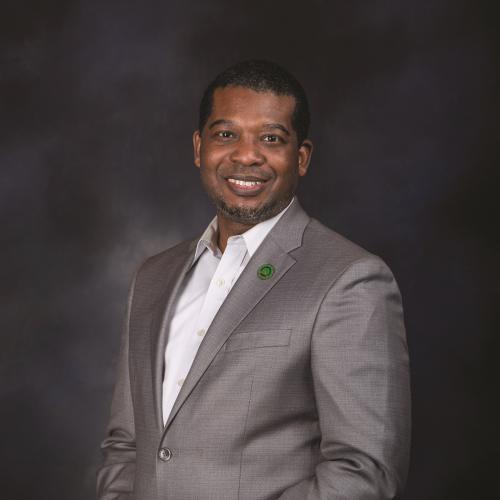
Corey Jackson
DDemocratic
Co
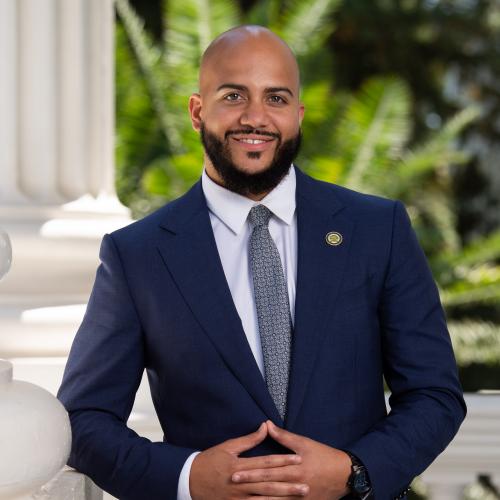
Isaac Bryan
DDemocratic
Co

Jessica Caloza
DDemocratic
Co
JS
José Solache
DDemocratic
Co

LaShae Sharp-Collins
DDemocratic
Co

Patrick Ahrens
DDemocratic
Co

Robert Garcia
DDemocratic
Co

Susan Rubio
DDemocratic
Ask Maddy
·
AI policy assistant
Ask Maddy about SB 1164
Scope: CA
Hi! I can help you understand SB 1164. What would you like to know?
Try one of these
i
Maddy answers using official bill text and legislative records. Always verify before sharing.
Sources cited inline