

Existing law that governs state acquisition of goods and services exempts certain consulting services contracts from advertising and bidding requirements, including contracts that can only be performed by a public entity, as defined. This bill would additionally exempt contracts that can only be performed by a federally recognized California Native American tribe from the above-described advertising and bidding requirements. Existing law requires a state agency to secure at least 3 competitive bids or proposals for each contract for services. Existing law exempts specified contracts from this requirement, including a contract that is with, among other entities, another state agency, a local governmental entity, an auxiliary organization of the California State University, or an auxiliary organization of a California community college. This bill would additionally exempt a contract that is with a federally recognized California Native American tribe from the above-described provisions and would authorize a federally recognized California Native American tribe to include a subcontract with any subdivision, subsidiary, or business enterprise wholly owned by a federally recognized California Native American tribe for the purpose of fulfilling an interagency agreements if the contracting federally recognized California Native American tribe provides a limited waiver of sovereign immunity and a justification of cost of service to show market equivalence of similar services. Existing law prohibits a person, firm, or subsidiary thereof that has been awarded a consulting services contract from submitting a bid for, or being awarded a contract for, the provision of services, the procurement of goods or supplies, or any other related action that is required, suggested, or otherwise deemed appropriate in the end product of the consulting services contract, with certain exceptions. This bill would exempt California Native American tribes awarded a consulting services contract for tribal cultural resources purposes, as defined, from the above-described provisions.
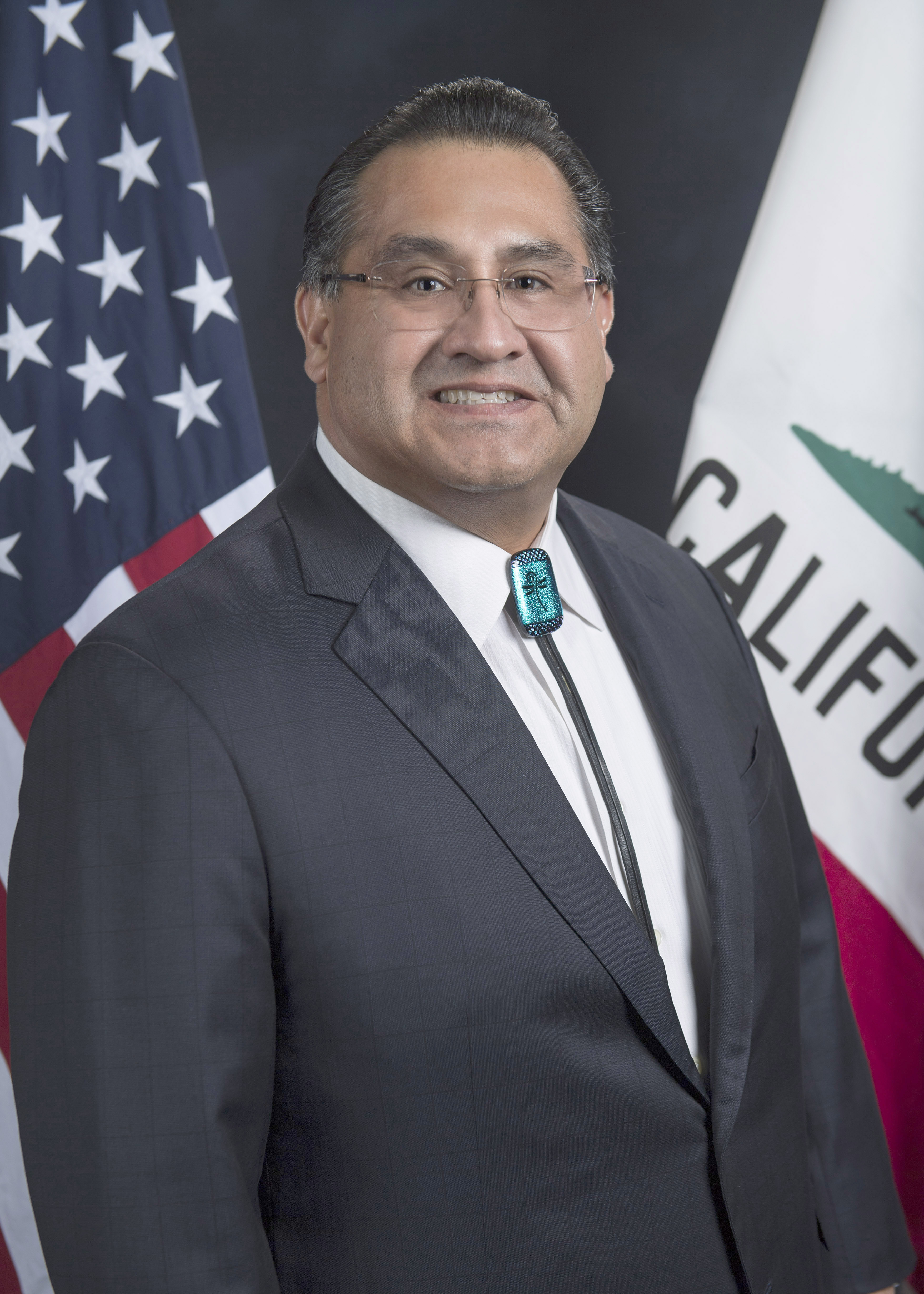
Rep. James Ramos
Sponsored bills
Existing law allows the court to issue a protective order restraining a defendant from any contact with the victim if the defendant has been convicted of a crime of domestic violence, human trafficking, a crime in furtherance of a criminal street gang, or a registerable sex offense. Under existing law, the protective order may be valid for up to 10 years, as determined by the court. This bill would authorize those orders to be valid for up to 10 years, or one year after the person's release from the state prison or a county jail, whichever is later. Existing law authorizes a protective order restraining a person convicted of the crime of battery of specified persons, including a spouse or former spouse, to be valid for up to 15 years. The bill would authorize those orders to be valid for up to 15 years, or one year after the person's release from the state prison or a county jail, whichever is later. By extending the duration of protective orders, a violation of which is punishable as a crime, this bill would impose a state-mandated local program. This bill would incorporate additional changes to Section 136.2 of the Penal Code proposed by SB 1395 and AB 2261, to be operative only if this bill and either or both of those bills are enacted and this bill is enacted last. The California Constitution requires the state to reimburse local agencies and school districts for certain costs mandated by the state. Statutory provisions establish procedures for making that reimbursement. This bill would provide that no reimbursement is required by this act for a specified reason.
Existing law requires every state agency to develop and implement a telecommuting plan as part of its telecommuting program in work areas where telecommuting is identified as being both practical and beneficial to the organization. Existing law requires the Department of General Services to establish a unit for purposes of overseeing telecommuting programs that is required to, among other things, develop and update policy, procedures, and guidelines to assist agencies in the planning and implementation of telecommuting programs. Existing law requires the department to establish criteria for evaluating the state's telecommuting program. Existing law defines "telecommuting" for purposes of those provisions. This bill would revise and recast those provisions. The bill would replace the term "telecommuting" with "telework," as defined. The bill would also require the Department of General Services to establish a telework dashboard that displays the cost-effectiveness and efficiency benefits of state telework programs, including documenting annual savings to the state of reduced office space and operating costs. The bill would additionally require each state agency, every 10 years, to evaluate its telework program to ensure that it aligns with the state agency's unique operational needs to carry out its programmatic missions and to help recruit and retain a qualified workforce. This bill would declare that it is to take effect immediately as an urgency statute.
This measure would designate a specified portion of State Route 18 in the County of San Bernardino as the Huuc Atam Highway. The measure would request that the Department of Transportation determine the cost of appropriate signs showing this special designation and, upon receiving donations from nonstate sources sufficient to cover the cost, to erect those signs.
This measure would proclaim the month of October 2026 as California Firefighter Appreciation Month and October 3, 2026, as California Firefighters Memorial Day.
Existing law authorizes the Department of Parks and Recreation to enter into a statewide agreement with a park support organization to facilitate the implementation of reforms recommended by the Parks Forward Commission and to develop and secure expertise, services, resources, and projects that are not readily available to the state park system for specified purposes. Existing law provides for the department's development of a California Indian Heritage Center for cultural preservation, learning and exchange, land stewardship, and a place to engage all visitors in celebrating the living cultures of California Native American tribes. This bill would authorize the department to enter into an agreement with a California Indian Heritage Center support organization, as defined, for the purpose of creating a collaborative partnership between California Native American tribes and the department to achieve specified purposes in support of the California Indian Heritage Center. The bill would require the California Indian Heritage Center support organization to be overseen by a board of directors, with designated membership, and led by a chief executive officer, as provided.
Existing law establishes the California Community Colleges, the California State University, the University of California, independent institutions of higher education, and private postsecondary educational institutions as the segments of postsecondary education in the state. The missions and functions of these segments are set forth in the Donahoe Higher Education Act. This bill would provide that public higher education additionally consists of tribal colleges and universities geographically located in California that are operated by an Indian tribal government, as defined.
Existing law generally regulates the business of renting passenger vehicles to the public. The law prohibits a rental company from taking various actions, including requiring the purchase of a damage waiver, optional insurance, or another optional good or service, and using electronic surveillance technology to track a renter in order to impose fines or surcharges relating to the renter's use of a rental vehicle. This bill would require any privately owned vehicle rented by, or furnished to, any federal, state, or local law enforcement agency for the use of detaining, arresting, or transporting persons who have violated, or are suspected of having violated, any law, to display a temporary decal displaying the agency name and logo, as specified. The bill would authorize certain attorneys, including the Attorney General, to pursue a civil action against the entity renting the vehicle from the private owner for failure to comply with these provisions. The bill would require the rental car contract to include a term that compliance with state law is mandatory. The bill would exempt privately owned vehicles rented or otherwise furnished or loaned to a law enforcement agency for specified purposes and rental car contracts entered into prior to January 1, 2027, from these provisions. The bill would make related findings and declarations.
Existing law provides that the State of California recognizes and accepts responsibility for the harms and atrocities committed by the state in promoting, facilitating, enforcing, and permitting chattel slavery and apologizes for perpetuating the harms African Americans have faced, as specified. Existing law requires a plaque memorializing this apology to be publicly and conspicuously installed and maintained in the State Capitol Building. This bill, the Rowena Mae Ramos Act, would provide that the State of California recognizes and accepts responsibility for all of the harms and atrocities committed by its representatives who promoted, permitted, facilitated, and enforced policies of violence against California Native Americans. The bill would further provide that the State of California apologizes for perpetuating the harms experienced by California Native Americans as a result of policies enacted, sanctioned, or tolerated by the Legislature. The bill would require a plaque memorializing this apology to be publicly and conspicuously installed and maintained in the State Capitol Building. The bill would impose specified duties on the Department of General Services and the Joint Rules Committee relating to the installation and maintenance of the plaque. The bill would authorize the Department of General Services and the Joint Rules Committee to receive money from grants and private donations and would continuously appropriate those funds for this purpose, as specified. The bill would require the Legislature to prepare the formal apology and would request it be signed by specified state leaders. The bill would require the Secretary of State to submit a final copy of this formal apology to the State Archives, where it would be available for viewing by the general public in perpetuity. The bill would include related legislative findings.
Existing law states the policy of the State of California is to afford all persons in public schools, regardless of their disability, gender, gender identity, gender expression, nationality, race or ethnicity, religion, sexual orientation, or any other specified characteristic, equal rights and opportunities in the educational institutions of the state. Existing law establishes the Office of Civil Rights, under the administration of the Government Operations Agency. Existing law requires the Office of Civil Rights to employ a Religious Discrimination Prevention Coordinator, a Race and Ethnicity Discrimination Prevention Coordinator, a Gender Discrimination Prevention Coordinator, and an LGBTQ Discrimination Prevention Coordinator. Existing law requires each of the coordinators be appointed by the Governor and confirmed by the Senate. This bill would require the Office of Civil Rights to employ a Disability Discrimination Prevention Coordinator to be appointed by the Governor and confirmed by the Senate. The bill would change the title of the LGBTQ Discrimination Prevention Coordinator to instead be the LGBTQ+ Discrimination Prevention Coordinator. The bill would require each of the coordinators, in consultation with the State Department of Education, and under the supervision of the Government Operations Agency, to, among other things, (1) develop, consult on, and provide discrimination education to teachers, staff, governing board and body members, administrators, and other local educational agency personnel to identify and proactively prevent discrimination, as provided, (2) provide technical assistance, upon specified request, to local educational agencies to access restorative justice resources, training, and practitioners, and (3) engage with local educational agencies to ensure administrators are equipped to address conflicts at an early stage with the goal of proactively resolving incidents of discrimination, as specified. This bill would require the Office of Civil Rights to employ a Deputy Coordinator on Anti-Black Racism, a Deputy Coordinator on Anti-Asian American, Native Hawaiian, and Pacific Islander (Anti-AANHPI) Discrimination, a Deputy Coordinator on Anti-Latino Discrimination, and a Deputy Coordinator on Anti-Native American Discrimination, and would require these deputy coordinators to report directly to the Race and Ethnicity Discrimination Prevention Coordinator. The bill would require the Office of Civil Rights to provide resources and training on how to properly assist in cases of discrimination that involve the intersectionality of protected characteristics, as provided.