

(1) Existing federal law, the Indian Child Welfare Act (ICWA) , governs the proceedings for determining the placement of an Indian child when that child is removed from the custody of the child's parent or guardian. Existing law states findings and declarations of the Legislature regarding Indian children, including that the state is committed to protecting the essential tribal relations and best interest of an Indian child by promoting practices in accordance with the ICWA, and it is in the interest of an Indian child that the child's membership or citizenship in the child's Indian tribe and connection to the tribal community be encouraged and protected, and requires the court to consider those findings in all Indian child custody proceedings. This bill would additionally state that the State of California is committed to protecting essential tribal relations by recognizing a tribe's right to protect the health, safety, and welfare of its citizens. (2) Existing provisions of state law govern guardianship and conservatorship proceedings. Existing law provides various definitions for these purposes, including "Indian child," as defined in the ICWA, and sets forth requirements for proceedings involving Indian children. Existing law requires, if the subject of a petition is or may be an Indian child, that the petition state that fact. This bill would define various terms consistent with provisions of the ICWA and for purposes of guardianship and conservator proceedings. The bill would also make conforming changes. This bill would require, if the subject of a petition is or may be an Indian child, that the petition include specified information, including the reasons to know or believe the child of the petition is or may be an Indian child and the efforts taken to prevent the need for the appointment of the guardian. This bill would specify that the court or a petitioner has a duty to inquire whether the child is or may be an Indian child prior to filing a petitioner for guardianship or conservatorship. The bill would require a court presiding over any guardianship or conservatorship proceeding that could result in placement of an Indian child with someone other than a parent or Indian custodian, to inquire at the first hearing on a petition whether the child is, or may be, an Indian child, as specified. This bill would require that, in an Indian child custody proceeding, a party seeking placement of an Indian child provide evidence to the court that active efforts, as defined, have been made to prevent the breakup of the Indian family and efforts have been unsuccessful. The bill would also require the initial and any subsequent placement of the child comply with specified placement preferences. To the extent this requirement would impose additional duties on county employees, this bill would impose a state-mandated local program. This bill would require the testimony of a qualified expert witness in an Indian child custody proceeding in specified circumstances, including testimony that the continued custody of the child by the parent or Indian custodian is likely to result in serious emotional or physical damage to the child. This bill would specify notice requirements for proceedings involving Indian children, and set forth procedures for transfer of a case to jurisdiction of the child's tribe. This bill, in a proceeding involving a child who would otherwise be an Indian child, but is not, based on the child's Indian tribe not having federal recognition, would authorize the court to permit the tribe to participate in the proceeding upon request from the tribe. (3) Under existing law, in an Indian child custody proceeding, when it appears to the court that a parent or Indian custodian desires counsel but is unable to afford and hire counsel, the federal law and regulations authorizing the appointment of counsel applies, as specified. Federal law requires the appointment of counsel for the parent or Indian custodian in any removal, placement, or termination proceeding, in which the court determines the parent or Indian custodian is indigent. This bill would require the court to appoint counsel for the parent or Indian custodian when it appears to the court that a parent or Indian custodian in an Indian child custody proceeding cannot afford to hire counsel and desires to have counsel for the proceedings. (4) Existing law, if the petitioner or proposed guardian has knowledge of any pending adoption, juvenile court, marriage dissolution, domestic relations, custody, or other similar proceeding affecting the child who is the subject of the petition, requires the petition to disclose the pending proceeding. This bill would additionally require a petitioner or proposed guardian to disclose an investigation by a county welfare agency regarding the safety of the child in a petition. (5) The California Constitution requires the state to reimburse local agencies and school districts for certain costs mandated by the state. Statutory provisions establish procedures for making that reimbursement. This bill would provide that, if the Commission on State Mandates determines that the bill contains costs mandated by the state, reimbursement for those costs shall be made pursuant to the statutory provisions noted above.
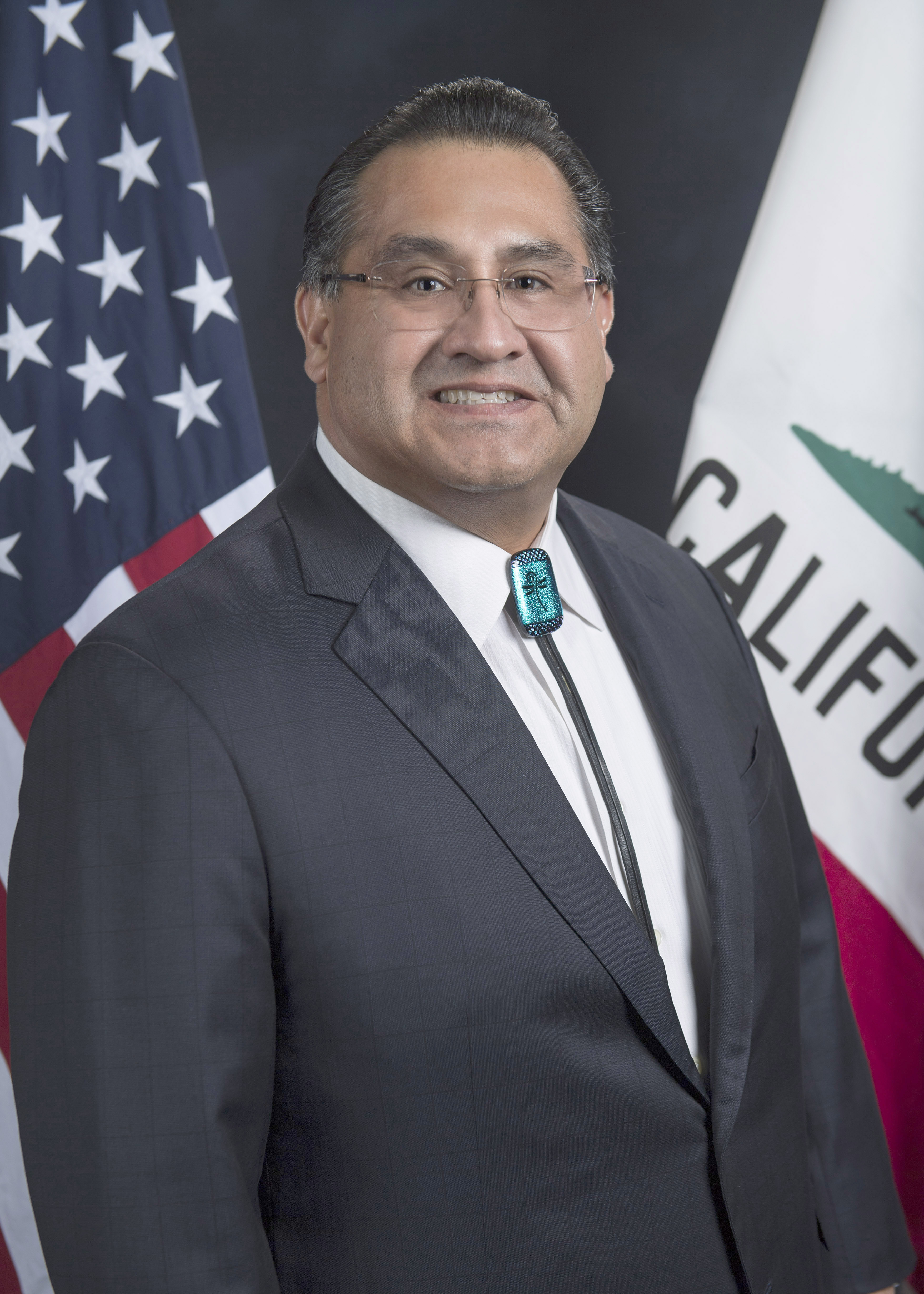
Rep. James Ramos
Sponsored bills
This measure would urge the President of the United States and Congress of the United States to immediately restore full and consistent funding and staffing for the National Park Service.
Existing law provides that any person who comes within the provisions of specified statutes and who otherwise meets all standards imposed by law on a peace officer is a peace officer, grants certain authority to those individuals and their employing entities, and places certain requirements on those individuals and their employing entities. Existing law also grants specified limited arrest authority to certain other persons, including federal criminal investigators, park rangers, and peace officers from adjoining jurisdictions. Existing federal law authorizes tribal governments to employ tribal police for the enforcement of tribal law on tribal lands. Existing federal law requires the State of California to exercise criminal jurisdiction on Indian lands. Existing state law deems a tribal police officer who has been deputized or appointed by a county sheriff as a reserve or auxiliary deputy to be a peace officer in the State of California. Existing law, from July 1, 2026, until July 1, 2029, establishes the Tribal Police Pilot Program under the Department of Justice and the Commission on Peace Officer Standards and Training that grants peace officer authority to certain tribal police officers on Indian lands and elsewhere in the state under specified circumstances. Existing law authorizes the department to select 3 federally recognized tribes to participate in this pilot program, sets certain minimum qualifications and certification and training requirements for a tribal officer to act pursuant to this authority, and places certain requirements on the employing tribe, including a limited waiver of sovereign immunity and the adoption of a tribal law or resolution that authorizes the exercise of that authority and provides for public access to certain records. This bill would rename the pilot program to the Tribal Police Program and would extend the program indefinitely. Existing law creates the Tribal Police Pilot Fund in the State Treasury to, upon appropriation by the Legislature, assist program participants with the cost of information technology necessary to comply with reporting requirements for law enforcement agencies. This bill would rename that fund to the Tribal Police Fund.
Maddy summaryCalifornia Assembly Resolution 140 designates August 2026 as Children's Get Offline and Get Outdoors Month to promote awareness of the benefits of screen-free play for child development. The resolution cites research linking excessive social media use and reduced free play time to increased rates of anxiety, depression, and other behavioral issues among teenagers. It encourages families and communities to support unstructured outdoor activities and highlights ongoing federal efforts to protect children's mental health through technology guardrails.
This measure would urge President Donald J. Trump to avoid raising the cost of living for American consumers by rescinding the tariffs that he has imposed since taking office in January 2025 and refunding the American people for the costs passed on to them by his tariffs. The measure would also urge the United States Congress to enact a joint resolution to rescind President Trump's tariffs and to oppose all future unilateral and arbitrary tariff increases imposed by President Trump.
Maddy summaryCalifornia Assembly Resolution 137 formally recognizes the Diwali festival scheduled for November 8, 2026, and encourages state residents to participate in the celebration. The resolution highlights the cultural significance of the holiday for Indian Americans and South Asian communities, noting its themes of unity, joy, and the triumph of light over darkness. It also acknowledges that California previously designated Diwali as an official state holiday in 2025. This measure serves as a commemorative statement rather than a law with new regulatory or financial provisions.
This measure would declare the Legislature's opposition to any federal executive action that restricts, burdens, or interferes with California's vote by mail system and would call upon the United States Congress to reject any federal legislation that would restrict or eliminate vote by mail options and to protect the constitutional authority of states to administer their own elections.
Maddy summaryThis bill designates 2026 as the International Year of the Woman Farmer to acknowledge the vital contributions of women in agriculture. It functions as a formal proclamation rather than a law that changes regulations or allocates funding. The measure directly affects the state by officially recognizing the importance of female agricultural workers during that year.
This measure would affirm the fundamental importance of indigent defense to due process, equal justice, and democratic governance, recognize public defenders as essential protectors of constitutional rights and the rule of law, and encourage the development of statewide approaches to indigent defense.
Maddy summaryThis bill designates June 2026 as Electronic Dance Music Month to recognize the genre's cultural significance. It directly affects communities and organizations involved in the electronic dance music scene by encouraging public awareness and celebration during that period. The measure requires no new funding or legal changes, serving instead as a symbolic declaration to highlight the month's theme.