

The Donahoe Higher Education Act establishes the California Community Colleges under the administration of the Board of Governors of the California Community Colleges, the California State University under the administration of the Trustees of the California State University, and the University of California under the administration of the Regents of the University of California as the 3 segments of public postsecondary education in the state. A provision of the act requires each of the 3 segments of public postsecondary education to have as a fundamental policy the maintenance of a healthy and expanded student transfer system. The act applies to the University of California only to the extent that the regents, by appropriate resolution, make it applicable. This bill would require the Trustees of the California State University and the governing boards of community college districts that offer a baccalaureate degree, and would request the Regents of the University of California, to develop and implement transfer agreement and articulation programs to support and enhance the transfer of students attending California tribal colleges to campuses of these public postsecondary segments, as provided. The bill would require the transfer agreement and articulation programs to include specified components, including, among other things, early outreach activities. The bill would also require the California State University and the California Community Colleges, and request the University of California, to assess tools, systems, or curricula designed to facilitate student transfer for students attending California tribal colleges, as provided.
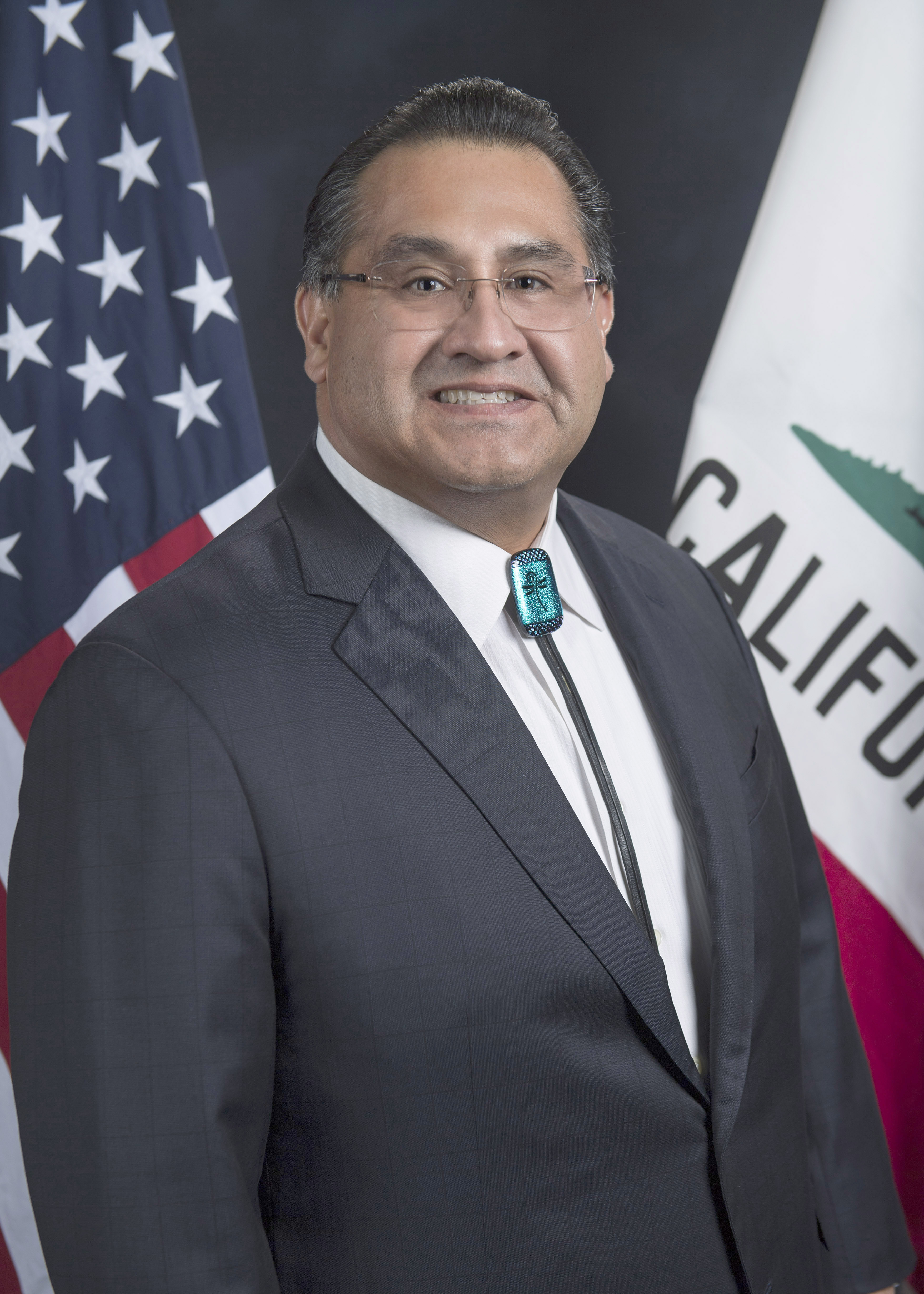
Rep. James Ramos
Sponsored bills
Existing law creates, in the State Department of Education, the American Indian Education Unit to provide technical support to, and proper administrative oversight of, American Indian education programs established by the state in order to ensure that American Indian pupils attending California public schools are able to meet specified challenging academic standards. Existing law establishes the California Longitudinal Pupil Achievement Data System (CALPADS) , which is maintained by the State Department of Education and consists of pupil data from elementary and secondary schools, as specified, relating to demographic, program participation, enrollment, and statewide assessments, among other things. Existing law requires the system to be used to accomplish specified goals, including to provide school districts and the department access to data, including demographic data, necessary to comply with federal reporting requirements. This bill would require the department to, on or before July 1, 2028, and each July 1 thereafter, post, on the department's internet website, statewide aggregate educational outcome data for the prior school year for pupils who identify as American Indian or Alaska Native, as specified.
Existing law establishes the Department of Justice, and makes the department responsible, in part, for overseeing statewide criminal justice programs. Existing law requires the Department of Justice to provide technical assistance to local law enforcement agencies and tribal governments relating to, among other things, providing guidance for law enforcement education and training on policing and criminal investigations on Indian lands, providing guidance on improving crime reporting, crime statistics, criminal procedures, and investigative tools, and facilitating and supporting improved communication between local law enforcement agencies and tribal governments. This bill would establish a Missing and Murdered Indigenous Persons Justice Program within and under the discretion of the Department of Justice. The bill would impose specified responsibilities on the program, including facilitating collaboration and acting as a liaison between tribal victims' families, tribal governments, and federal, tribal, state, and out-of-state law enforcement agencies, where appropriate, regarding active and inactive cases involving missing and murdered indigenous persons in California, including cases involving human trafficking. The bill, beginning July 1, 2030, and until January 1, 2033, would require the program to submit an annual report to both houses of the Legislature containing, among other things, aggregated data on the number of, and facts about, cases involving missing and murdered indigenous persons in California.
Existing law authorizes a school district, county office of education, and charter school to provide emergency naloxone hydrochloride or another opioid antagonist to school nurses and trained personnel who have volunteered, and authorizes school nurses and trained personnel to use naloxone hydrochloride or another opioid antagonist to provide emergency medical aid to persons suffering, or reasonably believed to be suffering, from an opioid overdose. This bill, to be known as the School Safety and Opioid Overdose Prevention Act, and commencing with the 2027–28 school year, would require a school resource officer, as defined, to (1) upon assignment to a schoolsite, and at least every 2 years thereafter, complete an opioid overdose recognition and response training, as specified, and (2) report, on or before July 1, 2028, and annually thereafter until July 1, 2030, to the State Department of Public Health, among other things, the number of times the school resource officer administered an opioid antagonist, and the types of opioid antagonist received and administered, while serving at a schoolsite. The bill would prohibit a school resource officer who administers an opioid antagonist while assigned to a schoolsite, and their employing or contracting entity, from being held liable in a civil action or being subject to criminal prosecution for the school resource officer's acts or omissions, unless those acts or omissions constitute gross negligence or willful and wanton misconduct, as provided. The bill would require the Commission on Peace Officer Standards and Training, in consultation with the State Department of Education, to provide implementation guidance to local educational agencies and law enforcement agencies on accessing opioid antagonists at low or no cost and integrating overdose response into school safety planning. The bill would require the State Department of Public Health, on or before July 1, 2031, to submit a report to the Legislature with the information annually reported by school resource officers, and post specified information on the department's internet website, as provided.
The Planning and Zoning Law requires each county and city to adopt a comprehensive, long-term general plan for the physical development of the county or city, and of any land outside its boundaries that bears relation to its planning. Existing law authorizes the legislative body of a county or city to adopt ordinances that, among other things, regulate the use of buildings, structures, and land as between industry, business, residences, open space, and other purposes, as provided. For these purposes, existing law authorizes the legislative body to divide a county or city into zones, but requires that regulations adopted be uniform for each class or kind of building or use of land throughout each zone. The California Environmental Quality Act (CEQA) requires a lead agency, as defined, to prepare an environmental impact report on a project that it proposes to carry out or approve that may have a significant effect on the environment or to adopt a negative declaration if it finds that the project will not have that effect. This bill, the Public Lands Protection Act, would, upon transfer to any private or nonfederal entity of a parcel of land located within the state that is owned by the United States government on or after January 1, 2025, and that has been designated in an adopted general plan or zoning ordinance as open space, public land, resource conservation, or an equivalent conservation-oriented designation, immediately subject that parcel to the zoning designation and associated state and local restrictions. The bill would also, upon transfer of a parcel of land located within the state that is owned by the United States government on or after January 1, 2025, and that has not been designated in an adopted general plan or zoning ordinance at the time of transfer to any private or nonfederal entity, automatically subject that parcel to the most restrictive conservation-oriented zoning designation currently applied in the jurisdiction, by operation of law. The bill would prohibit a parcel of land governed by these provisions from being rezoned, subdivided, or granted any development entitlement that is inconsistent with a conservation-oriented zoning designation, unless certain requirements are satisfied, including that a full environmental impact report is completed in accordance with CEQA. Notwithstanding these provisions, the bill would require electric infrastructure and clean energy facilities necessary to achieve California's climate and decarbonization goals to be deemed permitted uses in a conservation-oriented zoning designation if certain conditions are met. The bill would also exempt certain other parcels from these provisions. This bill would include findings that changes proposed by this bill address a matter of statewide concern rather than a municipal affair and, therefore, apply to all cities, including charter cities. This bill would make these provisions severable. This bill would declare that it is to take effect immediately as an urgency statute.
Existing federal law, the Indian Gaming Regulatory Act of 1988, provides for the negotiation and execution of tribal-state gaming compacts for the purpose of authorizing certain types of gaming on Indian lands within a state. The California Constitution authorizes the Governor to negotiate and conclude those compacts, subject to ratification by the Legislature. Existing law expressly ratifies a number of tribal-state gaming compacts, and amendments to tribal-state gaming compacts, between the State of California and specified Indian tribes. The California Environmental Quality Act (CEQA) requires a lead agency to prepare, or cause to be prepared, and certify the completion of, an environmental impact report on a project, as defined, that it proposes to carry out or approve that may have a significant effect on the environment, as defined, or to adopt a negative declaration if it finds that the project will not have that effect. This bill would ratify the tribal-state gaming compact entered into between the State of California and the Yurok Tribe of the Yurok Reservation, California, executed on August 4, 2026. The bill would provide that, in deference to tribal sovereignty, certain actions related to this compact are not projects for the purposes of CEQA. This bill would declare that it is to take effect immediately as an urgency statute.
Maddy summaryThis bill designates September 2026 as Childhood Cancer Awareness Month. It directly affects state agencies and organizations by encouraging them to recognize this specific month for awareness activities. The measure does not change laws or allocate funding but serves as a formal commemorative resolution.
This measure would recognize and affirm the important role of artists, arts organizations, creative arts therapists, and arts for health initiatives in supporting behavioral health, promoting recovery, strengthening community resilience, and contributing to public safety. The measure would encourage and recognize exploration, support, and integration of arts and behavioral health within California's health care, behavioral health, and community-based systems.
Existing federal law, the Indian Gaming Regulatory Act of 1988, provides for the negotiation and execution of tribal-state gaming compacts for the purpose of authorizing certain types of gaming on Indian lands within a state. The California Constitution authorizes the Governor to negotiate and conclude those compacts, subject to ratification by the Legislature. Existing law expressly ratifies a number of tribal-state gaming compacts, and amendments to tribal-state gaming compacts, between the State of California and specified Indian tribes. The California Environmental Quality Act (CEQA) requires a lead agency to prepare, or cause to be prepared, and certify the completion of, an environmental impact report on a project, as defined, that it proposes to carry out or approve that may have a significant effect on the environment, as defined, or to adopt a negative declaration if it finds that the project will not have that effect. This bill would ratify the 5th amendment to the tribal-state gaming compact entered into between the State of California and the Picayune Rancheria of Chukchansi Indians of California, the tribal-state gaming compact between the State of California and the Fort Mojave Indian Tribe, and the first amendment to the tribal-state gaming compact entered into between the State of California and the Pechanga Band of Indians. The bill would provide that, in deference to tribal sovereignty, certain actions related to this amended compact are not projects for the purposes of CEQA. This bill would declare that it is to take effect immediately as an urgency statute.
Existing law establishes within the office of the Governor, the office of the Governor's Tribal Advisor, which is headed by the Governor's Tribal Advisor who is appointed by and serves at the pleasure of the Governor. This bill would, instead, establish within the Office of the Governor, the Office of Tribal Affairs (office) , which is headed by the Secretary of Tribal Affairs who is appointed by and serves at the pleasure of the Governor, as specified. The bill would require each state agency that engages, or has programs, services, or responsibilities affecting tribal governments to, among other things, designate a tribal liaison, as described. The bill would require the office to be advised by a Tribal Advisory Committee, as described, and would require the committee to, among other things, provide recommendations and tribal perspectives to assist the office in strengthening government-to-government engagement and improving the design, access, and implementation of state programs and services affecting tribal governments. The bill would require the office to, among other things, support the implementation of consultation policies, facilitate direct engagement between state agencies and tribal governments, and provide training, guidance, and technical assistance to tribal liaisons and state agency personnel, as specified.