

Existing law grants a defendant the right to counsel in a noncapital case, and requires a defendant to be represented by counsel in a capital case. Existing law requires specified assigned counsel to receive a reasonable sum for compensation and for necessary expenses, as determined by the court, to be paid out of the general fund of the county. This bill would, commencing with contracts or memoranda of understanding for indigent defense services entered into after January 1, 2028, revise the process and require a county or court, when contracting for the provision or administration of indigent defense services, to include certain elements in the contract or other agreement for indigent services, as specified. The bill would prohibit a county or court from entering into flat fee contracts, as defined, or per case compensation contracts in cases involving the death penalty or the potential sentence of life without the possibility of parole. The bill would require the structure of the contract for indigent defense services to ensure that attorneys have the resources and time necessary to provide competent legal representation. The bill would require counties that contract with a private entity or law firm to provide indigent defense services to provide all those contracts to the Office of the State Public Defender every 2 years. The bill would make related findings and declarations.
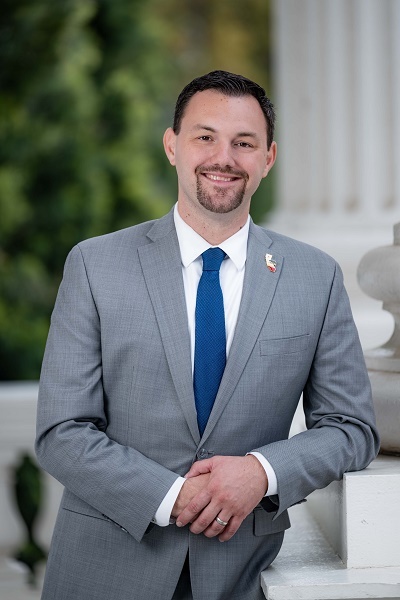
Rep. Nick Schultz
Sponsored bills
Existing law provides a district attorney with the discretion to file criminal charges against an individual. Existing law requires a preliminary examination to be conducted, as specified, before an information is filed. Upon completion of a preliminary hearing, existing law requires the district attorney to file an information against the defendant charging the defendant with either the offense or offenses named in the order of commitment or any offense or offenses shown by the evidence taken before the magistrate to have been committed. Under existing law, when an action is dismissed by a magistrate, as specified, the prosecutor may make a motion in the superior court within 15 days to compel the magistrate to reinstate the complaint or a portion of the complaint and to reinstate the custodial status of the defendant under the same terms and conditions as when the defendant last appeared before the magistrate. Under existing law, the defendant may make a motion to set aside the indictment or information based claim that defendant had been committed without reasonable or probable cause and specifies the procedures for that motion. Existing law requires a writ of prohibition based on the ground that a defendant was committed based on an information without reasonable or probable cause to be filed in the appellate court within 15 days after a motion to set aside an indictment or information has been denied by the court. This bill, the Respect Judicial Decisions Act, would, on or after January 1, 2027, in cases where a defendant was held to answer for at least one felony count at the preliminary hearing, require the district attorney to file a motion seeking leave to charge an offense or offenses that were dismissed at the preliminary examination due to the lack of reasonable or probable cause before the district attorney can file an information reinstating the charge or charges, as specified. The bill would require a writ of prohibition based on the ground that the defendant was committed based on an information without reasonable or probable cause to be filed in the appellate court within 15 days of a court granting the above-described motion to reinstate an offense or offenses. The bill would authorize review of the granting of a motion to reinstate a charge only if a motion for review is brought no later than 60 days following the defendant's arraignment on the information or indictment of a felony, except as specified. By placing new duties on prosecutors, this bill would impose a state-mandated local program. The California Constitution requires the state to reimburse local agencies and school districts for certain costs mandated by the state. Statutory provisions establish procedures for making that reimbursement. This bill would provide that, if the Commission on State Mandates determines that the bill contains costs mandated by the state, reimbursement for those costs shall be made pursuant to the statutory provisions noted above.
Existing law provides that reproductive health care services, gender-affirming health care services, and gender-affirming mental health care services are rights secured by the Constitution and laws of California, and interference with these rights, whether or not under the color of law, is against the public policy of California. Existing law defines "gender-affirming health care services" to mean medically necessary health care that respects the gender identity of the patient, as experienced and defined by the patient, as specified. Existing law provides for various protective measures for persons engaging in legally protected health care activity, including prohibiting a provider of health care, health care service plan, health insurer, or contractor from releasing medical information related to, among other things, an individual seeking or obtaining gender-affirming health care or gender-affirming mental health care, and prohibiting a state or local public agency, or any employee thereof acting in their official capacity, from cooperating with or providing information to an individual or agency from another state or a federal law enforcement agency, as specified, regarding a legally protected health care activity that is lawful in this state and performed in this state. Existing law defines "legally protected health care activity" for those purposes to include, among other things, the exercise and enjoyment, or attempted exercise and enjoyment, by a person of rights to the health care services described above and the provision of those health care services by a person duly licensed under the laws of California. This bill would require a person or entity that is located, headquartered, incorporated, or otherwise conducting business in California and receives, is served with, or is subject to a subpoena, discovery request, or other request for information that is part of a legal process related to a civil, criminal, regulatory, or legislative investigation regarding abortion, as defined, or gender-affirming health care services that are legally protected health care activities secured by the Constitution or laws of California to provide specified notice to the Attorney General at least 7 business days prior to producing records in response to the request unless a shorter response time is required by federal law or other federal obligation, as specified. If a shorter response time is required by federal law or other federal obligation, the bill would require the responding person or entity to provide notice to the Attorney General no later than contemporaneously with producing the responsive records. The bill would exempt a person or entity from the notice requirement if the subpoena, discovery request, or other request for information meets certain requirements, including that it is accompanied by an attestation verifying that the use or disclosure of the requested information meets certain requirements, including that the requested information is related to an investigation or proceeding regarding activity that is unlawful under California civil or criminal law, and it identifies the California law under which the activity is unlawful. The bill would prohibit a person or entity receiving, served with, or subject to a subpoena, discovery request, or other request for information described above who is not subject to the above-described exemption from producing the responsive records until at least 7 business days after providing notice to the Attorney General unless a shorter response time is required by federal law or other federal obligation, as specified. If a shorter response time is required by federal law or other federal obligation, the bill would require the responding person or entity to make best efforts to deliver the responsive records on the date on which the person or entity is required to respond to the subpoena, discovery request, or other request for information. The bill would authorize the Attorney General to make reasonable attempts to notify the individual who provided, sought, received, facilitated, or otherwise engaged in the abortion or gender-affirming health care service pertaining to the subpoena, discovery request, or other request for information. The bill would entitle a person or entity subject to these provisions to rely on the representations made in an attestation described above. The bill would authorize the Attorney General to intervene in any civil action instituted by a person or entity to protect against compliance with or providing information in response to the subpoena, discovery request, or other request for information. The bill would authorize the Attorney General to commence certain actions, including a civil action against any person or entity that attaches a false attestation described above, and would make the attachment of a false attestation by a person or entity punishable by a civil penalty of $15,000, as specified. The bill would require any action brought by the Attorney General to be commenced within 6 years of the date on which the Attorney General received the notice of the subpoena, discovery request, or other request for information at issue, and would require the court to award court costs and attorney's fees to the Attorney General in any civil action in which the court imposes any penalty authorized by the bill's provisions.
Existing law requires the State Fire Marshal to identify areas in the state as moderate, high, and very high fire hazard severity zones, as specified. Existing law also requires the State Fire Marshal to classify lands within state responsibility areas into fire hazard severity zones, and, by regulation, to designate fire hazard severity zones and assign to each zone a rating reflecting the degree of severity of fire hazard that is expected to prevail in the zone. Existing law requires the State Fire Marshal to periodically review very high fire hazard severity zones that are not state responsibility areas, and designated and rated zones that are state responsibility areas, as provided. This bill would require the Office of the State Fire Marshal, on or before January 1, 2028, to develop home hardening standards, as provided. The bill would require the State Fire Marshal to, on or before January 1, 2030, compile a report concerning homes in moderate, high, and very high fire hazard severity zones in state and local responsibility areas. The bill would require the State Fire Marshal, on or before July 1, 2030, to make the completed report available on its internet website and to submit copies to the Legislature, as provided. The bill would require the report to include, among other things, estimates of both the number of homes that meet those home hardening standards and the number of homes that require more home hardening to meet those standards in each responsibility area and county.
Existing law imposes various fees, contingent upon a criminal arrest, prosecution, or conviction, for the cost of administering the criminal justice system, including traffic violator school fees, costs for when a minor is adjudged a ward of the court, as specified, or costs incurred by a state or local agency for the disposal of various substances if the person is convicted of the sale, possession, or transportation of a controlled substance, as specified. This bill would repeal the authority to collect many of those fees, among others. The bill would make the unpaid balance of most court-imposed costs unenforceable and uncollectible and would require any portion of a judgment imposed by those costs to be vacated. The bill would relieve a person who is sentenced to state prison or confined in a county jail from being required to pay any trial court filing fees or costs related to the person's underlying criminal conviction. The bill would make related findings and declarations. The bill would also make various conforming changes.
For purposes of state apportionments based on average daily attendance, as provided, if the average daily attendance of a school district, county office of education, or charter school has been materially decreased during a fiscal year because of a specified emergency, including, among others, the imminence of a major safety hazard as determined by a local law enforcement agency, existing law requires the Superintendent of Public Instruction to estimate the average daily attendance in a manner that credits to the school district, county office of education, or charter school approximately the total average daily attendance that would have been credited to the school district, county office of education, or charter school had the emergency not occurred. This bill, for the above-described purposes, would additionally allow a local fire agency to make a determination of the imminence of a major safety hazard. This bill would declare that it is to take effect immediately as an urgency statute.
Existing law makes it a crime for a law enforcement officer to wear a facial covering in the performance of their duties, except as specified. Existing law defines law enforcement officer for these purposes as anyone designated by California law as a peace officer who is employed by a city, county, or other local agency, and any officer or agent of a federal law enforcement agency, agency or law enforcement agency of another state, or any person acting on behalf of a federal law enforcement agency. This bill would add peace officers employed by a state agency to the definition of law enforcement officers, thereby making those law enforcement officers subject to those criminal penalties. The bill would specify that facial coverings does not include certain items, including, among other things, sunglasses. The bill would, for all of the items excluded from the definition of facial coverings, limit that exclusion if the items are combined or otherwise used in a manner intended to conceal or obscure an officer's identity. By expanding the scope of a crime, this bill would impose a state-mandated local program. Existing law prohibits any person who is found to have committed an assault, battery, false imprisonment, false arrest, abuse of process, or malicious prosecution, while wearing a facial covering in a knowing and willful violation of these provisions, from asserting any privilege or immunity for their tortious conduct against a claim of civil liability, and makes that person liable for the greater of actual damages or statutory damages of not less than $10,000, whichever is greater. This bill would instead make a person who is found liable for false imprisonment or false arrest liable for those damages if the trier of fact finds that the person knowingly and willfully concealed their identity through the use of a facial covering at the time of the conduct giving rise to liability. Existing law requires a law enforcement agency operating in California to, by July 1, 2026, maintain and publicly post a written policy limiting the use of facial coverings, as specified. Existing law defines a law enforcement agency for these purposes as any entity of a city, county, or other local agency, that employs anyone designated by California law as a peace officer, any federal law enforcement agency, or any law enforcement agency of another state. This bill would add to the definition of law enforcement agency, a state entity that employs a peace officer and would change the date any law enforcement agency has to comply with that requirement to January 1, 2027. The bill would also require those policies to exempt certain surveillance operations related to enforcement of the Fish and Game Code, or similar federal law. The California Constitution requires the state to reimburse local agencies and school districts for certain costs mandated by the state. Statutory provisions establish procedures for making that reimbursement. This bill would provide that no reimbursement is required by this act for a specified reason.
Existing law authorizes the finder of fact in a criminal prosecution to find the defendant guilty of an offense that is necessarily included in the charged offense. Case law requires the trial court to instruct the jury that it must find the defendant guilty of a necessarily included offense if there is substantial evidence that the defendant is guilty of the necessarily included offense. This bill would require the court, if requested by a defendant, to instruct the jury on a lesser offense, which is closely related to the offense charged, if the court finds that the defendant has relied on a theory of defense consistent with a conviction for the lesser offense, the evidence of the lesser offense is relevant to and admitted for the purpose of establishing guilt of the charged offense, and a basis exists on which the jury could find the offense to be less than charged. The bill would also authorize the judge to find the defendant guilty of the lesser offense if there is no jury. The bill would require the defendant to provide notice to the prosecution of the intent to seek the above-described jury instruction, as specified.
The Donahoe Higher Education Act establishes the California Community Colleges, under the administration of the Board of Governors of the California Community Colleges, the California State University, under the administration of the Trustees of the California State University, and the University of California, under the administration of the Regents of the University of California, as the 3 segments of public postsecondary education in the state. Existing law establishes uniform residency requirements for purposes of ascertaining the amount of tuition and fees to be paid by students of public postsecondary education institutions. Existing law, until July 1, 2032, entitles a Team USA student athlete, as defined, who trains in the state in an elite level program approved by the United States Olympic and Paralympic Committee to resident classification for the purpose of determining tuition and fees. After July 1, 2032, existing law entitles an amateur student athlete in training at the United States Olympic Training Center in the City of Chula Vista to resident classification for that same purpose. These provisions apply to the University of California only to the extent that the regents, by appropriate resolution, make them applicable. This bill would remove the July 1, 2032, sunset provision, and make conforming changes, thereby extending the provisions that entitle a Team USA student athlete who trains in the state in an elite level program approved by the United States Olympic and Paralympic Committee to resident classification indefinitely. To the extent the bill would require community college districts to exempt more students from nonresident tuition, the bill would impose a state-mandated local program. The California Constitution requires the state to reimburse local agencies and school districts for certain costs mandated by the state. Statutory provisions establish procedures for making that reimbursement. This bill would provide that, if the Commission on State Mandates determines that the bill contains costs mandated by the state, reimbursement for those costs shall be made pursuant to the statutory provisions noted above.
(1) Existing law makes it a misdemeanor to willfully fail to appear in court, as specified. Existing law, when a person has failed to appear and has not posted bail, requires the magistrate to issue a warrant for the person's arrest within 20 days of the failure to appear. This bill would make those sections only apply when the underlying charge is not an infraction. (2) Existing law authorizes the issuance of a bench warrant of arrest when a person fails to appear in court as promised in specified criminal proceedings. This bill would prohibit the issuance of a bench warrant of arrest when the underlying crime is an infraction issued pursuant to the Vehicle Code. The bill would require bench warrants for other infractions to be limited to only authorizing arrest and booking at the scene followed by immediate release, as specified. (3) Existing law makes it a misdemeanor to willfully fail to appear in court for a violation of the Vehicle Code, and requires the court to report a conviction of this offense to the Department of Motor Vehicles. This bill would make that misdemeanor only apply when the underlying charge is not an infraction. The bill would also remove the requirement for the court to report a conviction of this offense to the department. (4) Existing law authorizes the imposition of a civil assessment or the issuance of an arrest warrant when a person fails to make an installment payment on bail imposed by the court for an infraction violation of the Vehicle Code. Existing law also makes it a misdemeanor to fail to pay bail in installments or to fail to pay a fine imposed for the violation of a state or local traffic law. This bill would remove the misdemeanor for failure to pay a bail installment or fine if the original charge was an infraction. The bill would remove the authorization to issue an arrest warrant for failure to pay a bail installment. (5) Existing law, if a defendant does not appear at the time the case is called for a violation of the Vehicle Code, authorizes the court to declare the bail forfeited and order that no further proceedings be had in the case, or to issue a warrant for the arrest of the defendant. However, if a defendant is charged with specified crimes, including disposing of a flaming or glowing substance on or near a road and littering a highway, has previously been convicted of the same crime, and fails to appear at the time the case is called to trial, existing law authorizes the court to declare the bail forfeited and requires the court to issue a bench warrant for the arrest of the person charged, unless the magistrate finds that undue hardship will be imposed by requiring the defendant to appear. This bill would remove the requirement that the magistrate issue a bench warrant when the person has committed one of the crimes specified above.