

(1) Existing law establishes various grant and loan programs for research, including, among others, the California Institute for Regenerative Medicine, California Firefighter Cancer Prevention and Research Program, and the Public Interest Research, Development, and Demonstration Program. This bill would establish the California Foundation for Science and Health Research within the Government Operations Agency. The bill would require the Secretary of Government Operations to oversee the process of appointing the director of the foundation, and would authorize the Secretary of Government Operations to delegate the task of hiring and determining the salaries, bonuses, and benefits of additional personnel to the director, as specified. The bill would require the director and personnel of the foundation to be responsible for implementing the strategic objectives of the California Foundation for Science and Health Research Council, as described below, administering grants, loans, and contracts awarded by the council, and all other duties as deemed necessary for the operation of the foundation. This bill would create the California Foundation for Science and Health Research and Innovation Acceleration Fund and require the moneys in the fund to be used by the foundation to award grants and make loans to, and enter into contracts with, public or private research companies, universities, academic medical centers, institutes, and organizations for scientific research and development and for certain economic sectors, as specified, in specific areas of research, including, but not limited to, biomedical, behavioral health, and climate research. The bill would also create the California Foundation for Science and Health Research and Innovation Acceleration Benefit Fund, to consist solely of private donations. The bill would make the moneys in the benefit fund available for the same purposes as the California Foundation for Science and Health Research and Innovation Acceleration Fund. This bill would require that, prior to the first grant from the foundation and no later than one year from the date the bill takes effect, the council develop various provisions and requirements to facilitate the foundation's goals of affordability and equitable access. The foundation shall impose various requirements on the grantees, loan recipients, and contractors, as specified, including, among other things, developing strategies to promote equitable access to the subject invention in various specified communities and making the data resulting from the bond-funded research available to the broader scientific community, except in cases involving national security interests. The council shall also establish standards requiring that all grants, awards, and contracts be subject to intellectual property agreements that balance the opportunity for the State of California to benefit from the inventions, technologies, patents, royalties, and licenses that result from research funded by certain public and private grants, as specified. This bill would create the California Foundation for Science and Health Research Council, as specified, which shall be vested with full power, authority, and jurisdiction over the foundation. The bill would require the council to, among other things, develop the strategic objectives and priorities of the foundation and provide the opportunity for public comment on the foundation's priorities, as specified, determine the research projects that will be funded by the California Foundation for Science and Health Research and Innovation Acceleration Fund, develop objectives and opportunities that offer support to early career researchers, and adopt certain regulations and standards, as specified. The bill would also require the council to consider how the foundation's research priorities relate to or support various economic and industry considerations, as specified. The bill would provide that a majority of the members of the council constitutes a quorum for the transaction of any business, for the performance of any duty, or for the exercise of any power of the council, except as otherwise provided. The bill would authorize the council to establish one or more scientific peer review panels consisting of experts in specified fields of research for the purposes of reviewing and prioritizing proposals on the basis of the scientific merit of the proposal, the potential benefit to the health and well-being of the population, natural resources, and environment of the state, and the demonstrated background, training, and expertise of the researchers and investigators to conduct the proposed work. This bill would require all research and development funded by the California Foundation for Science and Health Research and Innovation Acceleration Fund to be conducted under established standards of open scientific exchange, peer review, and public oversight. The bill would require the funds and contracts to be awarded on the basis of the research priorities established for the foundation by the council and the scientific merit of the proposed research, as determined by an open, competitive, scientific peer review process that ensures objectivity, consistency, and high quality. This bill would enact the California Science and Health Research Bond Act, which, if approved by the voters, would authorize the issuance of bonds in the amount of $7,500,000,000, pursuant to the State General Obligation Bond Law, to finance grants and loans to fund research and operate and maintain facilities for research. The bill would provide for the submission of the bond act to the voters at the March 7, 2028, statewide primary election. (2) Existing law establishes prohibitions and penalties with respect to ethical obligations and conflicts of interest for public officials, including a prohibition on engaging in activities that are incompatible with their official duties and a prohibition on being financially interested in a contract made by them in their official capacity or the board of which they are a part. This bill would authorize a council member to participate in a decision to approve or award a grant, loan, or contract for the purpose of research into a disease in which the member or their immediate family member has a personal interest, as specified. The bill would provide that service with specified educational institutions and organizations is not incompatible with a council member's duties. The bill would provide that the prohibition on being financially interested in a contract, as specified, does not apply if the council member recuses themself from a decision to award or approve a grant, loan, or contract that would otherwise be subject to the prohibition. The bill would provide that council members are subject to certain disclosure requirements relating to personal investments and potential conflicts of interest, as specified. (3) Existing law, the Bagley-Keene Open Meeting Act, requires that all meetings of a state body be open and public and all persons be permitted to attend any meeting of a state body, with specified exceptions for authorized closed sessions. This bill would require the Bagley-Keene Open Meeting Act to apply to all meetings of the council and scientific peer review panels, except as specified for when the council or scientific peer review panels meet to consider or discuss specified matters in closed sessions, including matters involving information relating to patients or medical or scientific research subjects, the disclosure of which would constitute an unwarranted invasion of personal privacy. Existing constitutional provisions require that a statute that limits the right of access to the meetings of public bodies or the writings of public officials and agencies be adopted with findings demonstrating the interest protected by the limitation and the need for protecting that interest. This bill would make legislative findings to that effect. (4) This bill would declare that it is to take effect immediately as an urgency statute.
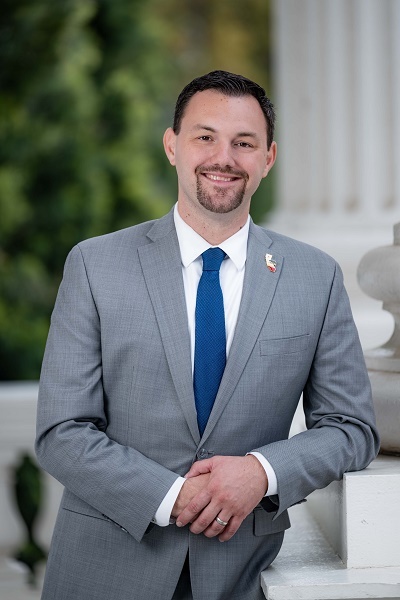
Rep. Nick Schultz
Sponsored bills
Existing law generally regulates the business of renting passenger vehicles to the public. The law prohibits a rental company from taking various actions, including requiring the purchase of a damage waiver, optional insurance, or another optional good or service, and using electronic surveillance technology to track a renter in order to impose fines or surcharges relating to the renter's use of a rental vehicle. This bill would require any privately owned vehicle rented by, or furnished to, any federal, state, or local law enforcement agency for the use of detaining, arresting, or transporting persons who have violated, or are suspected of having violated, any law, to display a temporary decal displaying the agency name and logo, as specified. The bill would authorize certain attorneys, including the Attorney General, to pursue a civil action against the entity renting the vehicle from the private owner for failure to comply with these provisions. The bill would require the rental car contract to include a term that compliance with state law is mandatory. The bill would exempt privately owned vehicles rented or otherwise furnished or loaned to a law enforcement agency for specified purposes and rental car contracts entered into prior to January 1, 2027, from these provisions. The bill would make related findings and declarations.
Existing law, commonly referred to as the Density Bonus Law, requires a city or county to provide a developer that proposes a housing development, as defined, within the city or county with a density bonus, other incentives or concessions, and waivers or reductions of development standards, as specified, if the developer agrees to construct specified units and meets other requirements. Existing law, among other things, requires compliance with certain affordability requirements, including requiring that the applicant agree to ensure, and that the city, county, or city and county ensure, that a for-sale unit that qualified the applicant for the award of the density bonus is either (1) initially sold to and occupied by a person or family of very low, low, or moderate income, as specified, or (2) if the unit is not purchased by an income-qualified person or family within 180 days after the issuance of the certificate of occupancy, the unit is purchased by a qualified nonprofit housing corporation, as provided. This bill would additionally allow the applicant and the city, county, or city and county to comply with the above-described affordability requirements with respect to a for-sale unit by ensuring that the unit is purchased by a nonprofit housing corporation, as specified, for properties to be sold to and occupied by extremely low, very low, or lower income families who participate in a below market interest rate loan program, as described. By adding to the duties of local agencies to implement the Density Bonus Law, this bill would impose a state-mandated local program. The California Constitution requires the state to reimburse local agencies and school districts for certain costs mandated by the state. Statutory provisions establish procedures for making that reimbursement. This bill would provide that no reimbursement is required by this act for a specified reason.
(1) Existing law authorizes any person adversely affected by any regulation, rules, omission, interpretation, decision, or practice of any state agency respecting the administration of any building standard to appeal the issue for resolution to the California Building Standards Commission. Existing law authorizes any local agency having authority to enforce a state building standard and any person adversely affected by any regulation, rule, omission, interpretation, decision, or practice of that agency respecting that building standard to appeal to the commission, provided that both wish to appeal the issue for resolution to the commission. Existing law authorizes the commission to accept those appeals only if the commission determines that the issues involved in the appeal have statewide significance. This bill would revise and recast those provisions to expand the reasons for which a person can appeal to the commission to include, among other things, a request for approval to use an alternate material. The bill would modify the conditions under which the commission may accept an appeal by removing the requirement that both the local agency and the adversely affected person wish to appeal the issue, and by requiring that certain issues appealed have both statewide significance and that the person seeking the appeal has exhausted all local appeals procedures before appealing to the commission, subject to a certain exception. The bill would require the commission to review those appealed issues with specified stakeholders. The bill would additionally authorize any person to request a code interpretation from the commission relative to the intent of any regulation or provision adopted by the commission. The bill would require the commission to post, on its internet website and in a searchable format, decisions on appeals and code interpretations that it issues. (2) Existing law requires a local enforcement agency's written rules and regulations that clarify the application of the California Building Standards Code to be made available to the public upon request. This bill would, instead, require those written rules and regulations to be posted on the agency's internet website in a manner that clearly identifies the rules or regulations as a local interpretation or policy and links those rules or regulations, where applicable, to the related local amendments and express findings. (3) The bill would include findings that changes proposed by this bill address a matter of statewide concern rather than a municipal affair and, therefore, apply to all cities, including charter cities. (4) By increasing the duties of local officials, this bill would impose a state-mandated local program. The California Constitution requires the state to reimburse local agencies and school districts for certain costs mandated by the state. Statutory provisions establish procedures for making that reimbursement. This bill would provide that, if the Commission on State Mandates determines that the bill contains costs mandated by the state, reimbursement for those costs shall be made pursuant to the statutory provisions noted above.
Under existing law, the board of supervisors of any county may establish the office of public defender for the county and authorize reciprocal or mutual assistance agreements with boards of supervisors of other counties authorizing their respective public defenders to enter into reciprocal or mutual assistance agreements, or authorize reciprocal or mutual assistance agreements with the State Public Defender, if the public defender of the county is unable to perform public defender duties because of, among other reasons, lack of personnel, lack of expertise, or lack of other resources by the local office. Existing law, subject to an appropriation by the Legislature, requires the State Public Defender, in consultation with the California Public Defenders Association and other subject matter experts, to undertake a study to assess appropriate workloads for public defenders and indigent defense attorneys and to submit a report with their findings and recommendations to the Legislature no later than January 1, 2024. This bill would require the board of supervisors of each county to specify a contact person with the applicable oversight and to collect specified information on public defense services provided in the county, and report that data to the Office of the State Public Defender every 2 years beginning on January 1, 2029. Because the bill would require local officials to perform additional duties, it would impose a state-mandated local program. The bill would require the Office of the State Public Defender to create and post on its internet website a summary report on public defense services, as specified. The bill would make its provisions operative upon appropriation by the Legislature for these purposes. The California Constitution requires the state to reimburse local agencies and school districts for certain costs mandated by the state. Statutory provisions establish procedures for making that reimbursement. This bill would provide that, if the Commission on State Mandates determines that the bill contains costs mandated by the state, reimbursement for those costs shall be made pursuant to the statutory provisions noted above.
Existing law vests the Public Utilities Commission with regulatory authority over public utilities, including electrical corporations, while local publicly owned electric utilities are under the direction of their governing boards. This bill would, until January 1, 2030, exempt a portable solar generation device, as defined, from all interconnection requirements imposed by state law, the commission, electrical corporation rules, or local publicly owned electric utility rules, as specified. The bill would, until January 1, 2030, prohibit an electrical corporation or a local publicly owned electric utility from requiring a customer using a portable solar generation device to take specified actions, including, among other things, paying any fee or charge related to the device or the electricity the device feeds into a building's electrical system. The bill would, until January 1, 2030, authorize an electrical corporation or a local publicly owned electric utility to require a customer using a portable solar generation device to notify the electrical corporation or local publicly owned electric utility, using a simple online registration form, of the address, make, model, and size of the portable solar generation device, as provided. Beginning January 1, 2030, the bill would prohibit the sale of a portable photovoltaic energy generation device that is designed to be connected to and disconnected from a building's electrical system through a receptacle and does not meet the definition of a portable solar generation device, as specified. Under existing law, a violation of any order, decision, rule, direction, demand, or requirement of the commission is a crime. Because a violation of a commission action implementing the bill's requirements would be a crime, the bill would impose a state-mandated local program. Additionally, by imposing new duties on local publicly owned electric utilities, the bill would impose a state-mandated local program. The California Constitution requires the state to reimburse local agencies and school districts for certain costs mandated by the state. Statutory provisions establish procedures for making that reimbursement. This bill would provide that no reimbursement is required by this act for specified reasons.
Existing law allows a person who is unlawfully imprisoned or restrained of their liberty to prosecute a writ of habeas corpus to inquire into the cause of their imprisonment or restraint. Existing law allows a writ of habeas corpus to be prosecuted on several bases, including on the basis of false evidence that is material on the issue of guilt or punishment, as specified, or the discovery of new evidence that exists that is presented without substantial delay, is admissible, and that has not been previously presented and heard at trial and has been discovered after trial. Existing law creates a presumption in favor of granting relief through habeas when the district attorney in the county of the conviction or the Attorney General concedes or stipulates to a legal or factual basis for habeas relief. This bill would revise the above-described standards to no longer require false evidence to be material and would instead require that the evidence create any reasonable likelihood it could have affected the outcome of the case. The bill would also change the new evidence standard to instead require that there be a reasonable probability it would have produced a different result sufficient to undermine confidence in the outcome of the case. The bill would revise the presumption in favor of granting relief to instead make a stipulation binding on the parties, if certain conditions are met, unless the moving party proves by a preponderance of the evidence that the other party violated the terms or the state withheld evidence, as specified. The bill would also revise the process for a concession and instead prohibit a party from withdrawing a concession if the concession is contained in a return or other written filing signed by counsel for respondent, as specified. Existing law allows a person who is no longer unlawfully imprisoned or restrained to prosecute a motion to vacate a judgment on the basis of newly discovered evidence of fraud by a government official that completely undermines the prosecution's case, is conclusive, and points unerringly to their innocence, newly discovered evidence that a government official testified falsely at trial that resulted in the conviction and that the testimony was substantially probative on the issue of guilt or punishment, or newly discovered evidence of misconduct by a government official committed in the underlying case that resulted in fabrication of evidence that was substantially material and probative on the issue of guilt or punishment. The bill would revise the above-described standards to instead require a demonstration that there is a reasonable probability the evidence would have produced a different result sufficient to undermine confidence in the outcome of the case, as specified. The bill would make other conforming changes. The bill would make related findings and declarations.
Existing law generally regulates the use of pesticides, and requires every manufacturer of, importer of, or dealer in any pesticide, except as specified, to obtain a certificate of registration from the Department of Pesticide Regulation before the pesticide is offered for sale. Existing law requires a pesticide use report to be submitted to a county agricultural commissioner or the Director of Pesticide Regulation, as provided. This bill would require the department, on or before January 1, 2028, or on or before the posting of the pesticide use reporting database containing 2026 data, whichever occurs first, and annually thereafter, to indicate if a pesticide contains perfluoroalkyl and polyfluoroalkyl substances (PFAS) pesticide ingredients, as defined, in the pesticide use reporting database on its internet website, include PFAS as a category of interest for purposes of that database, and include pesticide use trends of PFAS pesticide ingredients from the pesticide database in the pesticide use annual report and other relevant pesticide use reporting documents. The bill would also require the department to, on or before January 1, 2028, publish a list of all registered pesticides that contain PFAS pesticide ingredients and submit this list to the commissioner of each county, and to, within 60 calendar days of the registration of a new pesticide containing PFAS pesticide ingredients, update the list on its internet website and submit the updated list to the commissioner of each county.
Existing law, the Reproductive Privacy Act, declares as contrary to the public policy of this state a law of another state that authorizes a person to bring a civil action against a person or entity that engages in certain activities relating to obtaining or performing an abortion. Existing law prohibits the state from applying an out-of-state law to a case or controversy in state court or enforcing or satisfying a civil judgment under the out-of-state law. This bill would specify that the protections applicable to persons who engage in legally protected health care activity, as defined, apply to a person who previously has undertaken one or more acts or omissions while in another United States jurisdiction to aid or encourage, or attempt to aid or encourage, any person in the exercise and enjoyment, or attempted exercise and enjoyment, of rights to reproductive health care services or gender affirming health care services if the acts or omissions were permissible under the laws of the jurisdiction in which the person was located at the time of the acts or omissions. Existing law prohibits a state or local law enforcement agency or officer from knowingly arresting or knowingly participating in the arrest of any person for performing, supporting, or aiding in the performance of legally protected health care activity, if the health care activity is lawful in this state. Existing law prohibits a state or local public agency from cooperating with or providing information to an individual or agency from another state or a federal law enforcement agency, as specified, regarding a legally protected health care activity that is lawful in this state. Under existing law, the Governor may surrender, on demand of executive authority of any other state, any person in this state charged in the other state, as specified, with committing an act in this state, or in a 3rd state, intentionally resulting in a crime in the state whose executive authority is making the demand. This bill would prohibit the Governor from recognizing a request for extradition of a person subject to criminal liability based on the alleged provision or receipt of, assistance in the provision or receipt of, material support for, or in any theory of vicarious, joint, several, or conspiracy liability for any legally protected health care activity, except as specified.
The California Environmental Quality Act (CEQA) requires a lead agency, as defined, to prepare, or cause to be prepared, and certify the completion of, an environmental impact report on a project that it proposes to carry out or approve that may have a significant effect on the environment or to adopt a negative declaration if it finds that the project will not have that effect. CEQA also requires a lead agency to prepare a mitigated negative declaration for a project that may have a significant effect on the environment if revisions in the project would avoid or mitigate that effect and there is no substantial evidence that the project, as revised, would have a significant effect on the environment. CEQA, until January 1, 2033, exempts from its requirements certain actions for affordable housing projects that meet specified requirements, including confirmation by a public agency that, among other things, the project site satisfies specified requirements and a vacant project site does not contain tribal cultural resources that could be affected by the development that were found pursuant to a consultation and the effects of which cannot be mitigated, as provided. This bill would extend the operation of the above-described exemption to January 1, 2037, and would expand the exemption to also include a public university or public college housing project, as defined, that meets specified requirements. Because the bill would extend the operation of the exemption and would increase duties on a lead agency related to the expansion of this exemption, the bill would impose a state-mandated local program. The California Constitution requires the state to reimburse local agencies and school districts for certain costs mandated by the state. Statutory provisions establish procedures for making that reimbursement. This bill would provide that no reimbursement is required by this act for a specified reason.