

Existing law prohibits law enforcement officers from employing threats, physical harm, deception, or psychologically manipulative interrogation tactics, as specified, during a custodial interrogation of a person 17 years of age or younger. This bill would prohibit a law enforcement officer from seeking statements or information while working undercover, or by individuals working in collaboration with, or acting as agents of, law enforcement, from a person who was 17 years of age or younger during the commission of crime and who is under 26 years of age while in custody. The bill would direct a court to consider any willful failure of a law enforcement officer in violation of these provisions in determining the credibility of that law enforcement officer. The bill would specify that these provisions do not apply to the admissibility of statements or information provided to an officer or individuals working in collaboration with law enforcement that were sought to protect against an imminent threat to life.
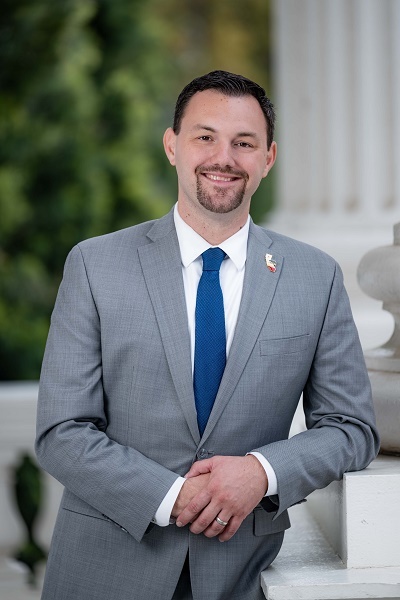
Rep. Nick Schultz
Sponsored bills
Existing law, as amended by the Public Safety and Rehabilitation Act of 2016, enacted by Proposition 57 at the November 8, 2016, statewide general election, authorizes the district attorney to make a motion to transfer a minor from juvenile court to a court of criminal jurisdiction in a case in which a minor is alleged to have committed a felony when the minor was 16 years of age or older, or in a case in which a specified serious offense is alleged to have been committed by a minor when the minor was 14 or 15 years of age, but the minor was not apprehended prior to the end of juvenile court jurisdiction. Existing case law prohibits the use of a minor's statements made at a transfer hearing or to a probation officer from being used during a criminal prosecution of the minor transferred to the court of criminal jurisdiction. This bill would codify existing case law to prohibit the use of the minor's statements made during a transfer hearing or to the minor's probation officer for the purposes of preparing a report for a transfer hearing from being used against the minor during subsequent juvenile proceedings or subsequent criminal proceedings, as specified. This bill would state that the provisions of this bill are declaratory of existing law.
This measure would urge the President of the United States and Congress of the United States to immediately restore full and consistent funding and staffing for the National Park Service.
Maddy summaryCalifornia Assembly Resolution 140 designates August 2026 as Children's Get Offline and Get Outdoors Month to promote awareness of the benefits of screen-free play for child development. The resolution cites research linking excessive social media use and reduced free play time to increased rates of anxiety, depression, and other behavioral issues among teenagers. It encourages families and communities to support unstructured outdoor activities and highlights ongoing federal efforts to protect children's mental health through technology guardrails.
Existing law allows a person who was arrested or convicted of a nonviolent offense while they were a victim of human trafficking to petition the court, under penalty of perjury, for vacatur relief. Existing law requires a court that issues an order for relief pursuant to these provisions to also order specified law enforcement agencies to seal and destroy their records of the offense. This bill would authorize a person who has suffered an arrest for, or was charged with, any offense that did not result in conviction or who was convicted of an eligible offense, as defined, to petition the court to have their records of that conviction, charge, or arrest sealed if 4 years have elapsed since the date, including, among others, on which the person was arrested, as specified, or on which the defendant completed any terms of incarceration, probation, mandatory supervision, postrelease community supervision, or parole associated with the record, whichever was later, during which the person has not been convicted of a new offense. The bill would require a court granting this relief to also order specified law enforcement agencies to seal their records. By increasing duties on local law enforcement, this bill would impose a state-mandated local program. The bill would exclude specified offenses from being considered an eligible offense, including, among others, a serious or violent felony, or a sex offense. The bill would authorize a criminal justice agency to access and use a conviction record sealed pursuant to these provisions as required by an initiative statute and for the limited purpose of determining eligibility and suitability of a defendant for diversion. The California Constitution requires the state to reimburse local agencies and school districts for certain costs mandated by the state. Statutory provisions establish procedures for making that reimbursement. This bill would provide that, if the Commission on State Mandates determines that the bill contains costs mandated by the state, reimbursement for those costs shall be made pursuant to the statutory provisions noted above.
Existing law requires the Department of Corrections and Rehabilitation to maintain a canteen at its active facilities, and until January 1, 2028, prohibits the sale prices of the articles offered for sale in a canteen from exceeding a 35% markup above the price of the articles paid to the vendors. Existing law, commencing on January 1, 2028, requires the sale amounts of the articles to be offered for sale to be fixed by the secretary at amounts that will render each canteen self-supporting. This bill would prohibit the sale price of an article offered for sale in a commissary, as defined, at a private detention facility, defined as a detention facility that is operated by a private, nongovernmental, for-profit entity, and operating pursuant to a contract or agreement with a governmental entity, from exceeding a 35% markup above the amount paid to a vendor for that article.
This measure would urge President Donald J. Trump to avoid raising the cost of living for American consumers by rescinding the tariffs that he has imposed since taking office in January 2025 and refunding the American people for the costs passed on to them by his tariffs. The measure would also urge the United States Congress to enact a joint resolution to rescind President Trump's tariffs and to oppose all future unilateral and arbitrary tariff increases imposed by President Trump.
Existing law provides for the prosecution of crimes by the district attorney of each county. Existing law establishes procedures for litigating claims of factual innocence based on newly discovered evidence, including a motion for a new trial or a writ of habeas corpus. This bill would, if the district attorney accepts a case for postconviction review, as defined, authorize the district attorney to file a notice with the court notifying the court of the intent to investigate a claim of factual innocence. The bill would, upon the filing of the above-described notice, deem the case to be treated as if it were an open case for the purposes of investigating a claim of factual innocence. The bill would provide the district attorney with the power to issue subpoenas, compel the production of document and testimony, and file necessary motions to investigate claims, as specified. The bill would also require all materials obtained by the district attorney to be subject to a protective order, as specified, and to be disclosed to the petitioner or the petitioner's counsel within 60 days of the termination of the investigation.
Maddy summaryCalifornia Assembly Resolution 137 formally recognizes the Diwali festival scheduled for November 8, 2026, and encourages state residents to participate in the celebration. The resolution highlights the cultural significance of the holiday for Indian Americans and South Asian communities, noting its themes of unity, joy, and the triumph of light over darkness. It also acknowledges that California previously designated Diwali as an official state holiday in 2025. This measure serves as a commemorative statement rather than a law with new regulatory or financial provisions.
This measure would declare the Legislature's opposition to any federal executive action that restricts, burdens, or interferes with California's vote by mail system and would call upon the United States Congress to reject any federal legislation that would restrict or eliminate vote by mail options and to protect the constitutional authority of states to administer their own elections.