

(1) The Outdoor Advertising Act, a violation of which is a crime, provides for the regulation by the Department of Transportation of advertising displays, as defined, within view of public highways. Existing law exempts from certain provisions of the act advertising displays located in specific geographic areas in the City of Los Angeles if those displays meet prescribed conditions and requirements, including the condition that the advertising display is authorized by, or in accordance with, an ordinance adopted by the City of Los Angeles that regulates advertising displays by identifying the specific displays or establishing regulations that include, at a minimum, specified restrictions, as provided. This bill would authorize the ordinance adopted by the City of Los Angeles to authorize a framework of allowable signage that preserves flexibility in the ultimate placement, sizing, and scope of advertising displays, and define a range or maximum signage capacity, as specified. The bill would also authorize the City of Los Angeles to adopt implementing ordinances that sequence or phase the authorization of advertising displays over time. (2) This bill would declare that it is to take effect immediately as an urgency statute.
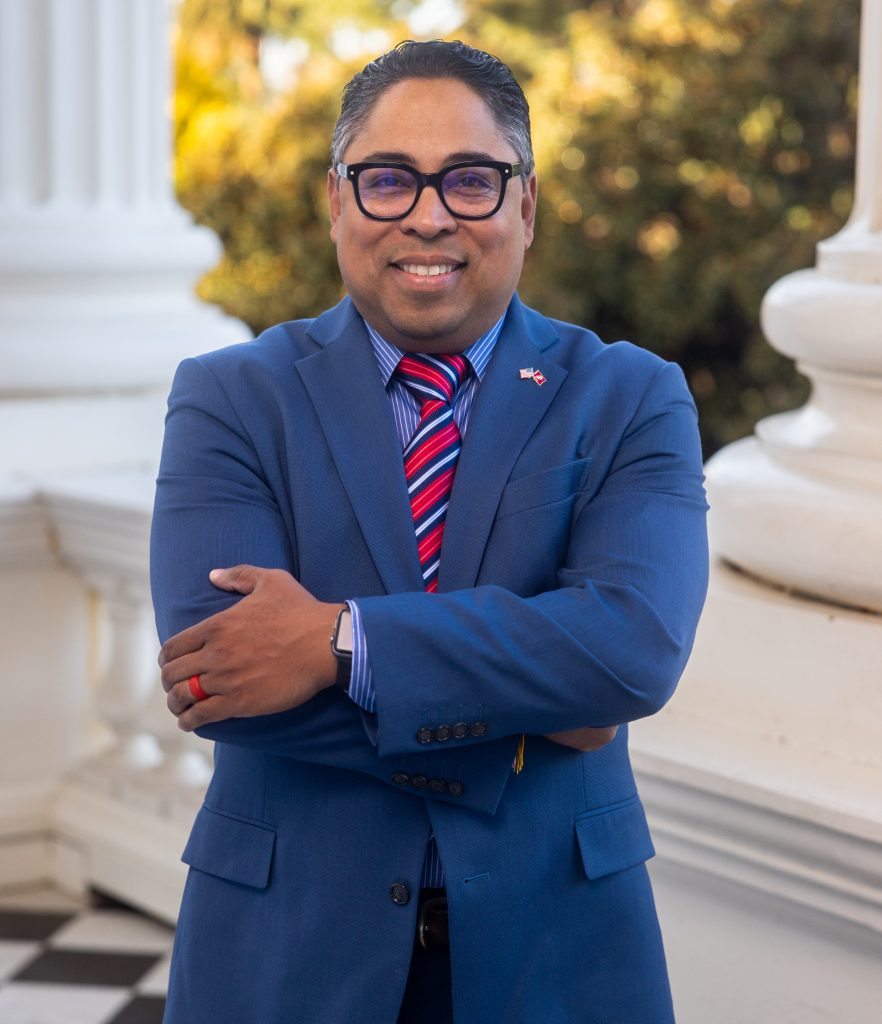
Asm. Jeff Gonzalez
Sponsored bills
(1) Under existing law, a caregiver who is 18 years of age or older and signs a caregiver's authorization affidavit under penalty of perjury for a minor who lives in their home is authorized to enroll the minor in school and consent to school-related medical care on behalf of the minor. Under existing law, a caregiver who is 18 years of age or older, signs the caregiver's authorization affidavit under penalty of perjury, and who is a certain type of relative of the minor who lives in their home, has the same rights to authorize medical care and dental care for the minor that are given to guardians, as specified. Under existing law, a person who acts in good faith reliance on a completed caregiver's authorization affidavit to provide medical or dental care, without actual knowledge of facts contrary to those stated on the affidavit, is not subject to criminal or civil liability or professional disciplinary action for that reliance, but is not relieved from liability for violations of other provisions of law. This bill, the Family Preparedness Plan Act of 2025, would revise the definition of relative to expand the type of relative who is authorized to execute a caregiver's authorization affidavit and grant them the same rights to authorize school-related medical care, as defined, for the minor that are given to guardians, as specified. By expanding who is authorized to sign a caregiver's authorization affidavit for these purposes under penalty of perjury, this bill would expand the crime of perjury, thereby imposing a state-mandated local program. This bill would amend the statutory form for a caregiver's authorization affidavit. (2) Existing law generally provides for the establishment and administration of guardianships. Existing law authorizes a court to appoint joint guardians of a person, an estate, or a person and an estate. Existing law requires a nomination of a guardian to become effective when made, and remain effective, unless stated otherwise in writing, as specified. This bill would authorize a court, in its discretion, to appoint a custodial parent and a person nominated by the custodial parent as joint guardians of the person of the minor, if the custodial parent will be temporarily unavailable due to specified circumstances, including, among other things, an immigration-related administrative action, as specified. The bill would make all records, petitions, orders, and documents related to these proceedings confidential, as specified. The bill would provide that absence is a basis for a delayed effectiveness of a guardianship and that such circumstances would not be a basis for subsequent legal incapacity for the nomination. (3) Existing law prohibits, except as required by state or federal law or as required to administer a state or federally supported educational program, school officials and employees of a local educational agency, as defined, from collecting information or documents regarding citizenship or immigration status of pupils or their family members. Existing law requires the governing board or body of a local educational agency to perform specified actions relating to pupils and immigration status, including, among others, providing information to parents and guardians, as appropriate, regarding their child's right to a free public education, regardless of immigration status or religious beliefs. Existing law requires the Attorney General, by April 1, 2018, in consultation with the appropriate stakeholders, to publish model policies limiting assistance with immigration enforcement at public schools, to the fullest extent possible consistent with federal and state law, as specified. Existing law requires all local educational agencies to adopt the model policies developed by the Attorney General, or equivalent policies, by July 1, 2018. This bill would revise the information disclosure requirements to require the governing board or body of a local educational agency to provide information related to specified guidance on immigration enforcement issued by the Attorney General and would require that information to be revised as necessary to be consistent with any revisions or updates to the Attorney General's guidance. This bill would also require local educational agencies to revise their model policies as necessary to be consistent with any revisions or updates to the model policies developed by the Attorney General, as specified. By imposing additional duties on local educational agencies, the bill would impose a state-mandated local program. (4) Existing law, the California Child Day Care Facilities Act, provides for the licensure and regulation of child daycare facilities, including daycare centers and daycare homes, by the State Department of Social Services. The act exempts certain types of facilities from licensure under its provisions, including California state preschool programs that meet certain requirements, including, among other things, that the programs are operated by local educational agencies in a school building. Similar to the provisions related to local educational agencies described above, this bill would prohibit licensed child daycare facilities, as defined, employees of licensed child daycare facilities, and license-exempt California state preschool program facilities from collecting information or documents regarding citizenship or immigration status of children or their family members, except as required by state or federal law or as required to administer a state or federally supported educational program. The bill would require the licensee or administrator of a licensed child day care facility, as applicable, to report to the department and the Attorney General any requests for information or access to the facility by an officer or employee of a law enforcement agency. The bill would authorize license-exempt California state preschool program facilities to make that report to the State Department of Education and the Attorney General. The bill would require the State Department of Social Services to provide any information on California state preschool programs collected pursuant to those provisions to the Superintendent of Public Instruction. The bill would require a licensed child daycare facility and a license-exempt California state preschool program facility to first exhaust any parental instruction relating to the child's care found in the child's emergency contact information if an employee of the facility is aware that a child's parent or authorized representative is not available to care for the child. The bill would require licensees or administrators of those facilities to request that parents or authorized representatives update their emergency contact information. The bill would require the Attorney General, by April 1, 2026, in consultation with the appropriate stakeholders, to publish model policies limiting assistance with immigration enforcement at child daycare facilities and license-exempt California state preschool program facilities similar to the model policies developed for local educational agencies described above. The bill would require the State Department of Social Services to inform licensed daycare facilities, and the State Department of Education to inform license-exempt California state preschool program facilities, of the model policies. The bill would require all California state preschool programs to adopt the model policies developed by the Attorney General, or equivalent policies, as soon as possible, but in no event later than July 1, 2026. The bill would require California state preschool programs to update these policies to conform with any revisions or updates to the model policies developed by the Attorney General. The bill would require a licensed child daycare facility and license-exempt California state preschool program facilities to provide the parent or authorized representative with information about how to access those model policies. The bill would require the State Department of Social Services to inform licensed child day care facilities, and the State Department of Education to inform license-exempt California state preschool program facilities, of any revisions or updates to the model policies and require any information, policies, or guidance provided by facilities to parents or authorized representatives to be updated to include any revisions or updates to the model policies issued by the Attorney General. The bill would authorize the State Department of Social Services to administer these provisions by interim licensing standards until regulations are adopted. (5) This bill would provide that its provisions are severable. (6) Existing constitutional provisions require a statute that limits the right of access to the meetings of public bodies or the writings of public officials and agencies to be adopted with findings demonstrating the interest protected by the limitation and the need for protecting that interest. This bill would make legislative findings to that effect. (7) The California Constitution requires the state to reimburse local agencies and school districts for certain costs mandated by the state. Statutory provisions establish procedures for making that reimbursement. This bill would provide that with regard to certain mandates no reimbursement is required by this act for a specified reason. With regard to any other mandates, this bill would provide that, if the Commission on State Mandates determines that the bill contains costs so mandated by the state, reimbursement for those costs shall be made pursuant to the statutory provisions noted above. This bill would incorporate additional changes to Section 234.7 of the Education Code proposed by AB 49, AB 419, or both, to be operative only if this bill and AB 49, AB 419, or both, are enacted and this bill is enacted last.
Existing law, the Cal Grant Program, establishes the Cal Grant A Entitlement Awards, the Cal Grant B Entitlement Awards, the California Community College Expanded Entitlement Awards, the California Community College Transfer Entitlement Awards, the Competitive Cal Grant A and B Awards, the Cal Grant C Awards, and the Cal Grant T Awards under the administration of the Student Aid Commission. Existing law, the Cal Grant Reform Act, revises and recasts the provisions establishing and governing the existing Cal Grant Program into a new Cal Grant Program. Existing law specifies that the act becomes operative only if General Fund moneys over the multiyear forecasts beginning in the 2024–25 fiscal year are available to support ongoing augmentations and actions, and if funding is provided in the annual Budget Act to implement the act. Under either Cal Grant Program that is operative, existing law establishes eligibility requirements for awards under the program for participating students attending qualifying institutions, including, among others, California residency requirements, as provided. Existing law establishes the Middle Class Scholarship Program (MCSP) under the administration of the commission. Existing law makes an undergraduate student eligible for a scholarship award under the MCSP if the student is enrolled at the University of California or the California State University, or enrolled in upper division coursework in a community college baccalaureate program, and meets certain eligibility requirements, including, among others, that the applicant meets the eligibility requirements for a Cal Grant. This bill would extend Cal Grant and MCSP eligibility to a student who was not a resident of California at the time of high school graduation or its equivalent but meets all other applicable eligibility requirements and is a dependent natural or adopted child, stepchild, or spouse of a member of the Armed Forces of the United States stationed outside of California on active duty, if the member of the Armed Forces of the United States otherwise maintains California as their state of legal residence. The bill also would make conforming changes.
Existing law contains various provisions relating to contracts for the performance of private works of improvement, including provisions applicable to a retention withholding by an owner from a direct contractor or by a direct contractor from a subcontractor. This bill would establish, until January 1, 2030, for contracts entered into on or after January 1, 2026, a claim resolution process, as specified, applicable to any claim by a contractor or subcontractor, as described, in connection to a work of improvement or site improvement, except as specified. The bill would define a claim for these purposes as a separate demand by the contractor or subcontractor, as described, sent by registered mail or certified mail with return receipt requested, for, among other things, a time extension for relief from damages or penalties for delay assessed by an owner under contract for a work of improvement or site of improvement. The bill would make related findings and declarations.
(1) Existing law requires local educational agencies, as defined, to identify, locate, and assess individuals with exceptional needs and to provide those pupils with a free appropriate public education in the least restrictive environment, with special education and related services as reflected in an individualized education program. Existing law requires each special education local plan area to ensure that a continuum of program options is available to meet the needs of individuals with exceptional needs for special education and related services, as required by federal law. Existing law requires the continuum of program options to include, among other options, a resource specialist program, designated instruction and services, and special classes, as provided. Existing law requires the resource specialist program to provide, among other things, monitoring of pupil progress on a regular basis, participation in the review and revision of individualized education programs, as appropriate, and referral of pupils who do not demonstrate appropriate progress to the individualized education program team. Existing law requires caseloads for resource specialists to be stated in specified local policies and in accordance with regulations established by the State Board of Education, and prohibits a resource specialist from having a caseload that exceeds 28 pupils. This bill would require local educational agencies to take all reasonable steps to distribute the workload associated with initial assessments across all resource specialists employed by the local educational agency in an equal manner, unless otherwise collectively bargained. By imposing additional duties on local officials, the bill would impose a state-mandated local program. (2) Existing law requires special classes that serve pupils with similar and more intensive educational needs to be available, and authorizes special classes to enroll pupils only when the nature or severity of the disability of the individual with exceptional needs is such that education in the regular classes with the use of supplementary aids and services, including curriculum modification and behavioral support, cannot be achieved satisfactorily. This bill would require the Superintendent of Public Instruction, on or before July 1, 2027, to recommend a maximum adult-to-pupil staffing ratio for those special classes, as provided, and to post the recommendation on the department's internet website. The bill would require the Superintendent to report their recommendations to the appropriate policy and fiscal committees of the Legislature and the state board on or before April 1, 2027, as specified. (3) The California Constitution requires the state to reimburse local agencies and school districts for certain costs mandated by the state. Statutory provisions establish procedures for making that reimbursement. This bill would provide that, if the Commission on State Mandates determines that the bill contains costs mandated by the state, reimbursement for those costs shall be made pursuant to the statutory provisions noted above.
Existing law defines an off-highway motor vehicle as a motor vehicle that operates on lands, other than a highway, that are open and accessible to the public, as specified. Existing law establishes rules for the operation of an off-highway vehicle and imposes specified safety requirements, including, among other things, a requirement that a person operating an off-highway vehicle wear a safety helmet. Existing law requires every off-highway motor vehicle that is not registered under the Vehicle Code to display an identification plate or device issued by the Department of Motor Vehicles, except as specified. A violation of these rules and requirements is a crime. This bill would define the term "off-highway electric motorcycle" as an off-highway motorcycle subject to identification that is (1) designed by the manufacturer for operation primarily off the highway, (2) powered by an electric motor for which a motor number is not required, (3) has handlebars for steering control, (4) has a straddle seat provided by the manufacturer, (5) has two wheels, and (6) is not equipped with pedals from the manufacturer. The bill would classify an off-highway electric motorcycle as an off-highway motor vehicle, thereby subjecting off-highway electric motorcycles to the rules and regulations relating to off-highway motor vehicles. By expanding the scope of existing crimes with respect to off-highway electric motorcycles, this bill would impose a state-mandated local program. The California Constitution requires the state to reimburse local agencies and school districts for certain costs mandated by the state. Statutory provisions establish procedures for making that reimbursement. This bill would provide that no reimbursement is required by this act for a specified reason.
(1) If an individual with exceptional needs, as defined, transfers from outside the state to a district, as defined, in the state, or transfers from district to district, within the same academic year, existing law requires local educational agencies, as defined, to provide the pupil with a free appropriate public education, including services comparable to those described in the previously approved individualized education program, in consultation with the parents, until the local educational agency conducts a federally required assessment, if determined to be necessary by the local educational agency, and develops a new individualized education program, if appropriate, that is consistent with federal and state law. This bill would require a local educational agency, within 30 days of receipt of official records or specified unofficial records, to either adopt and implement the individualized education program previously adopted for the pupil or develop, adopt, and implement a new individualized education program for the pupil that is consistent with federal and state law, if applicable. To the extent the bill would impose additional duties on local education agencies, the bill would impose a state-mandated local program. (2) Existing law ratifies the Interstate Compact on Educational Opportunity for Military Children, as specified. Existing law requires the new school in which an individual with exceptional needs enrolls to take reasonable steps to promptly obtain the pupil's records from their previous school, including the individualized education program and supporting documents and any other records relating to the provision of special education and related services to the pupil, pursuant to specified federal law. This bill would expressly require those reasonable steps to also be consistent with specified requirements of the Interstate Compact on Educational Opportunity for Military Children, and would require the new school to accept unofficial records provided by the pupil's parent or guardian until validated by official records, consistent with specified requirements of the Interstate Compact on Educational Opportunity for Military Children. To the extent the bill would impose additional duties on local educational agencies, the bill would impose a state-mandated local program. (3) Existing law provides that each person between 6 and 18 years of age not exempted is subject to compulsory full-time education and requires a person subject to compulsory education to attend the public full-time day school or continuation school or classes in the school district in which the residence of the parents or legal guardian is located. Existing law provides that a pupil complies with the residency requirements if the pupil's parent is transferred or is pending transfer to a military installation within the state while on active military duty pursuant to an official military order, and requires a parent to provide proof of residence in the school district within 10 days after the published arrival date provided on official documentation. This bill would expressly provide that the above-described provisions apply to all pupils whose parent is an active duty member of the Armed Forces of the United States, including pupils eligible for services or accommodations pursuant to the federal Individuals with Disabilities Education Act, Section 504 of the federal Rehabilitation Act of 1973, or the federal Americans with Disabilities Act of 1990, as applicable. The bill would require school districts, upon notification that a pupil who is enrolling pursuant to the above-described provisions is receiving, or may eligible to receive, services or accommodations pursuant to federal law, to promptly coordinate with the pupil's parents and previous school, as provided. To the extent the bill would impose additional duties on local educational agencies, the bill would impose a state-mandated local program. (4) The California Constitution requires the state to reimburse local agencies and school districts for certain costs mandated by the state. Statutory provisions establish procedures for making that reimbursement. This bill would provide that, if the Commission on State Mandates determines that the bill contains costs mandated by the state, reimbursement for those costs shall be made pursuant to the statutory provisions noted above.
Existing law provides for taking and possession of listed nongame birds without a hunting license if taken in compliance with specified requirements. This bill would allow, until January 1, 2031, a mute swan to be taken or possessed under similar circumstances as other listed nongame birds. The bill would encourage a person to report to the Department of Fish and Wildlife when they take or possess a mute swan. The bill would require the department to collect information about enforcement actions, taken by department personnel, associated with the take and possession of a mute swan.
(1) Existing law states the policy of the State of California is to afford all persons in public schools, regardless of their disability, gender, gender identity, gender expression, nationality, race or ethnicity, religion, sexual orientation, or any other specified characteristic, equal rights and opportunities in the educational institutions of the state. Existing law prohibits the governing board of a school district, a county board of education, or the governing body of a charter school from adopting or approving the use of any textbook, instructional material, supplemental instructional material, or curriculum if its use would subject a pupil to unlawful discrimination, as specified. This bill would additionally prohibit the adoption or approval of the use of any professional development materials if the use of the material would subject a pupil to unlawful discrimination, as specified. The bill would similarly prohibit the adoption or approval of the use of professional development materials or services that promote, endorse, or otherwise support actions or the use of textbooks, instructional materials, supplemental instructional materials, or curriculum that would subject a pupil to unlawful discrimination, as specified. If the governing board of a school district, a county board of education, or the governing body of a charter school knows or has reason to know that materials were used in a classroom or an action occurred that resulted in unlawful discrimination, or knows or has reason to know that professional development materials or services were used that resulted in unlawful discrimination, the bill would require investigation and remediation of the action, as provided. This bill would establish the Office of Civil Rights, under the administration of the Government Operations Agency, with the purpose of working directly with local educational agencies to prevent and address discrimination and bias, as specified. The bill would require the Director of the Office of Civil Rights to be appointed by the Governor and confirmed by the Senate. The bill would require the Office of Civil Rights, in consultation with the State Department of Education and under the supervision of the Government Operations Agency, to, among other things, (A) provide education and educational resources to identify and prevent antisemitism and other forms of discrimination and bias, (B) share relevant laws and regulations with educational state agencies, school districts, county offices of education, charter schools, and community stakeholders, and (C) annually submit a report to the Government Operations Agency, the Superintendent of Public Instruction, the executive director of the State Board of Education, and the Legislature on the state of discrimination and bias in all local educational agencies, as specified. The bill would also require the Office of Civil Rights to employ the Antisemitism Prevention Coordinator to be appointed by the Governor and confirmed by the Senate. The bill would require the Antisemitism Prevention Coordinator to, among other things, develop, consult, and provide antisemitism education to school personnel to identify and proactively prevent antisemitism and to make recommendations, in coordination with the executive director of the state board, to the Legislature on legislation necessary for the prevention of antisemitism in educational settings. (2) Existing law authorizes a party to a written complaint of prohibited discrimination to appeal the action taken by the governing board of a school district to the State Department of Education. This bill would authorize a party to a written complaint of prohibited discrimination to appeal to the department based on the governing board of a school district's failure to issue an investigation report within a certain timeline. Existing law authorizes a person to file a complaint of an alleged violation with the local educational agency using the uniform complaint process or directly with the Superintendent as provided. If the Superintendent determines that a local educational agency has violated that prohibition and has not taken corrective action within 60 days, existing law authorizes the department to use any means authorized to effect compliance. This bill would authorize the department to require local educational agencies to take specified corrective actions, including obtaining technical assistance from the Office of Civil Rights and requiring the local educational agency to engage in regular reporting to the Office of Civil Rights and to use alternative instructional materials. The bill would prohibit instructional materials found to have resulted in unlawful discrimination, as provided, to be used in any current course offerings or any subsequent course offerings. If the unlawful discrimination involves antisemitism, the bill would require an improvement plan to be created in consultation with the Antisemitism Prevention Coordinator. If a determination is made that an organization has contracted to provide any textbook, instructional material, professional development material, supplemental instructional material, or curriculum that violates specified laws that prohibit subjecting a pupil to unlawful discrimination, the bill would require a local educational agency or the Superintendent to notify the organization that it must take corrective action, as provided, and would require the organization found to be in violation to, among other things, reimburse all funds received for their services from the local educational agency. (3) Existing law prohibits instruction or school-sponsored activities that promote a discriminatory bias on the basis of race or ethnicity, gender, religion, disability, nationality, sexual orientation, or other characteristics, as provided. This bill would establish that discriminatory bias in instruction and school-sponsored activities does not require a showing of direct harm to members of a protected group and would not require members of a protected group to be present while the discriminatory bias is occurring for the act to be considered discriminatory bias. If the governing board or body of the local educational agency finds that instruction or school-sponsored activities are discriminatory, as provided, the bill would require corrective action to be taken, as provided. (4) Existing law requires the governing board of a school district to annually notify parents or guardians of minor pupils of specified rights and responsibilities of the parent or guardian and of specified school district policies and procedures. This bill would require the notification to additionally advise the parent or guardian of the protections, requirements, and responsibilities prescribed in this bill. (5) This bill would require the department, by October 1 of each year, to issue a management bulletin to all local educational agencies describing the protections, requirements, and responsibilities prescribed in certain laws. The bill would require the Superintendent, in consultation with the executive director of the state board and the Antisemitism Prevention Coordinator, to develop and maintain a distinct internet web page containing resources and information specific to antisemitism on its internet website. (6) This bill would make the operation of its provisions contingent upon the enactment of SB 48 of the 2025–26 Regular Session. (7) By imposing additional duties on local educational agencies, this bill would impose a state-mandated local program. The California Constitution requires the state to reimburse local agencies and school districts for certain costs mandated by the state. Statutory provisions establish procedures for making that reimbursement. This bill would provide that, if the Commission on State Mandates determines that the bill contains costs mandated by the state, reimbursement for those costs shall be made pursuant to the statutory provisions noted above.
Existing law, the Sustainable Groundwater Management Act, requires all groundwater basins designated as high- or medium-priority basins by the Department of Water Resources to be managed under a groundwater sustainability plan or coordinated groundwater sustainability plans, except as specified. The act requires a groundwater sustainability agency, upon adoption of a groundwater sustainability plan, to submit the groundwater sustainability plan to the department for review. If groundwater sustainability agencies develop multiple groundwater sustainability plans for a basin, the act requires, when the entire basin is covered by groundwater sustainability plans, the groundwater sustainability agencies to jointly submit to the department the groundwater sustainability plans, an explanation of how the plans satisfy specified provisions of the act, and a copy of the coordination agreement between the groundwater sustainability agencies. The act requires the department to evaluate a groundwater sustainability plan within 2 years of its submission and issue an assessment of the plan. This bill would provide that nothing in those provisions relating to making submissions to the department shall be construed to prohibit groundwater sustainability agencies that have developed multiple groundwater sustainability plans for a basin from amending the coordination agreement following department issuance of an assessment of the plans.