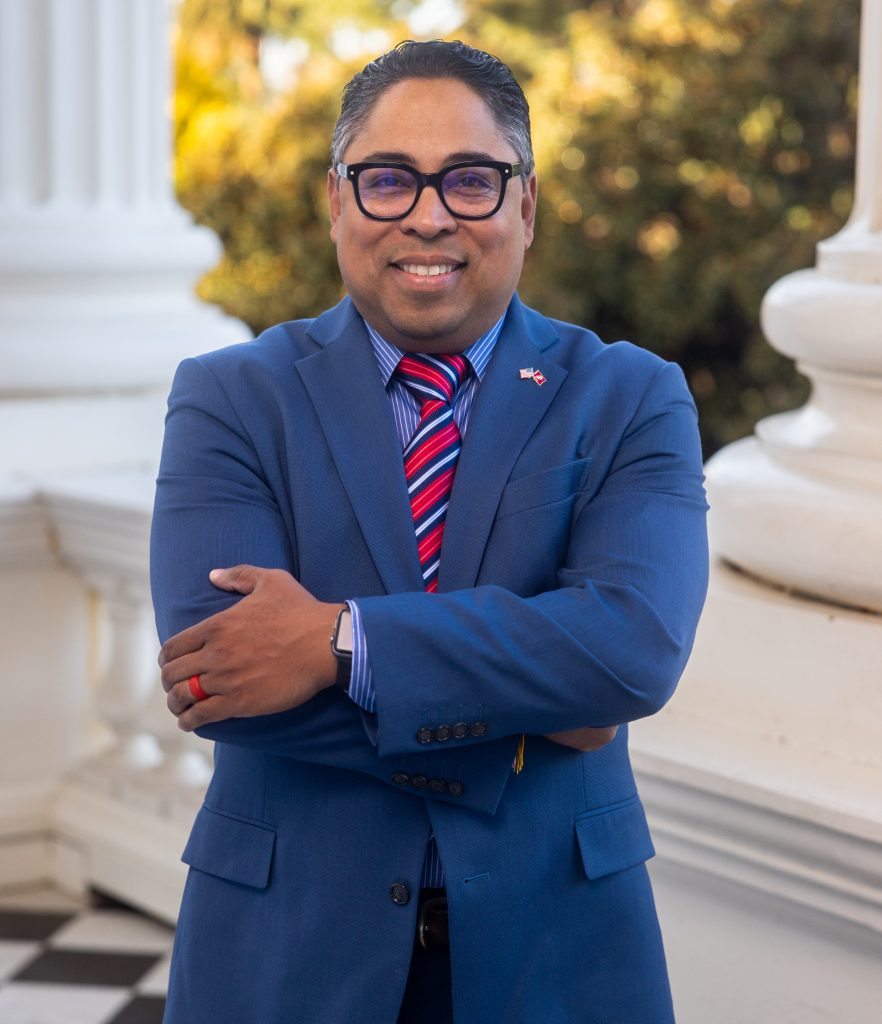
Photo of Jeff Gonzalez
R California Assembly · District 36 On the 2026 ballot

Asm. Jeff Gonzalez

Compare
Total votes
4,352
all sessions
Attendance
89%
446 missed
Lower than 99% of chamber peers
With party
97%
of cast votes
Near the chamber average
Bipartisan score
2%
crosses aisle rarely
Near the chamber average
Sponsored
412
bills & resolutions
Near the chamber average
Committees
15
assignments
412 bills and resolutions

Sponsored bills

Total
412
Primary
43
Co-sponsor
369
This page
412
matching current filters
Co-sponsor SCR 103
Passed · California Senate · Co-sponsor
Probation Services Week.

Maddy summarySCR 103 designates the week of July 20-26, 2025, as "Probation Services Week" in California. This concurrent resolution recognizes the work of probation services professionals across the state. It is a symbolic observance with no new laws, regulations, or direct impact on individuals or policies. The bill does not alter existing statutes or create obligations for any entity.

Passed Jan 26, 2026 1 co-sponsor
Co-sponsor AB 81
Vetoed · California Assembly · Co-sponsor
Veterans: mental health.

Existing law establishes the Department of Veterans Affairs. The department, among other services, provides veterans and their dependents and survivors with assistance in processing service-related disability claims, assistance in obtaining affordable housing, and information about health ailments associated with military service. This bill would require the department to establish a program to fund, upon appropriation by the Legislature, an academic study of mental health among women veterans in California, as specified. The bill would require the department to submit a report that summarizes the findings and recommendations of the study to the Legislature no later than June 30, 2029. The bill would repeal these provisions on January 1, 2030.

Vetoed Jan 22, 2026 1 co-sponsor
Co-sponsor AB 1225
Vetoed · California Assembly · Co-sponsor
State parks: Accessibility Advisory Committee.

Existing law designates all parks, public campgrounds, monument sites, landmark sites, and sites of historical interest established or acquired by the state, or that are under its control, as the state park system, except as specified. Under existing law, the Department of Parks and Recreation controls the state park system, which is made up of units. This bill would require the Director of Parks and Recreation to establish an Accessibility Advisory Committee that consists of the Chief of the Accessibility Division for the department and additional members appointed by the director, as provided. The bill would require the committee to serve in an advisory capacity to the director and make recommendations for improving the accessibility of units of the state park system for individuals with disabilities. The bill would require the committee to evaluate disability accessibility models and provisions, review services, programs, and activities provided by the department, and provide recommendations on general plans for the department, as provided. The bill would authorize the director to implement the committee's recommendations as the director deems appropriate.

Vetoed Jan 22, 2026 1 co-sponsor
Co-sponsor AB 1136
Vetoed · California Assembly · Co-sponsor
Employment: immigration and work authorization.

Existing law, the California Fair Employment and Housing Act, prohibits various forms of employment and housing discrimination, including various types of discrimination because of national origin. Existing law empowers the Civil Rights Department to investigate and prosecute complaints alleging unlawful practices. Existing labor law also prohibits an employer or other person or entity from engaging in, or to directing another person or entity to engage in, unfair immigration-related practices against a person for exercising specified rights. Existing law defines unfair immigration-related practices for these purposes. Existing law additionally makes it unlawful for an employer to request more or different immigration documents than are required under federal law, to refuse to honor documents tendered that reasonably appear to be genuine, and to take other related actions concerning employee work authorization documents. Existing law authorizes an applicant for employment or an employee who is subject to an unlawful act that is prohibited by these provisions, or a representative of that applicant for employment or employee, to file a complaint with the Division of Labor Standards Enforcement. Existing law establishes specified civil penalties for a violation of these provisions. This bill would require each employee, upon request, to be released by their employer for up to 5 unpaid working days within a 12-month period in order to attend appointments, interviews, adjudications, legal proceedings, detainment, or any other meeting at which the employee's presence is required concerning the employee's immigration status, work authorization, visa status, or any other immigration-related matter, as specified. The bill would also require a postintroductory employee, as defined, whose employment has been terminated due to an inability to provide documentation of proper work authorization, to be immediately reinstated to their former classification without loss in seniority, subject to producing proper work authorization, except as provided. The bill would also require an employer, if the employee demonstrates a need for additional time, to rehire the employee into the next available opening in the employee's former classification, as a new hire without retaining seniority, subject to the employee providing proper work authorization and meeting certain other conditions. This bill would require an employer that is notified that an employee has been detained or incarcerated as a result of pending immigration or deportation proceedings, to place the employee on an unpaid leave of absence for a period pending the employee's release from detainment or incarceration and not to exceed 12 months. If the employee is released and provides appropriate work authorization documentation within the period of the authorized unpaid leave of absence, the bill would require the employer to return the employee to their former job classification without loss of seniority, except as specified. This bill would apply the above requirements to a public or private employer, but would exempt a public or private employer with 25 or fewer employees. The bill would prohibit each public or private employer from disciplining, discharging, or discriminating against an employee because of national origin or immigration status, or solely because the employee is subject to immigration or deportation proceedings, except as required to comply with the law. The bill would prohibit an employee subject to immigration or deportation proceedings from being discharged solely because of those proceedings, so long as the employee is authorized to work in the United States. This bill would provide that its provisions do not invalidate a collective bargaining agreement or a memorandum of understanding that contains a provision addressing rehire or reinstatement rights or leave rights regarding employees who are subject to immigration proceedings, nor does it supersede the seniority provisions of a collective bargaining agreement or a memorandum of understanding. The bill would require the Labor Commissioner to enforce the bill's provisions. This bill would make these provisions inoperative on July 1, 2029, and would repeal them on January 1, 2030.

Vetoed Jan 22, 2026 1 co-sponsor
Co-sponsor AB 823
Vetoed · California Assembly · Co-sponsor
Solid waste: plastic microbeads: plastic glitter.

The Plastic Microbeads Nuisance Prevention Law prohibits a person, as defined, from selling or offering for promotional purposes in this state a personal care product containing plastic microbeads that are used to exfoliate or cleanse in a rinse-off product, including, but not limited to, toothpaste. Existing law exempts a product containing less than one part per million (ppm) by weight of plastic microbeads from the prohibition. The Plastic Microbeads Nuisance Prevention Law imposes a civil penalty not to exceed $2,500 per day for each violation of the prohibition, as provided, and authorizes the Attorney General and local officials to enforce the prohibition. This bill would, on and after January 1, 2029, prohibit a person from selling, offering for sale, distributing, or offering for promotional purposes in this state a personal care product containing plastic glitter, or a personal care product in a non-rinse-off product or a cleaning product containing one ppm or more by weight of plastic microbeads that are used as an abrasive, as specified. The bill would authorize, until January 1, 2030, a person to continue to sell, offer for sale, distribute, or offer for promotional purposes in this state an existing stock of personal care products containing plastic glitter, as specified. By adding these prohibitions to the Plastic Microbeads Nuisance Prevention Law, the bill would impose the civil penalty for violations of these prohibitions.

Vetoed Jan 22, 2026 1 co-sponsor
Co-sponsor AB 524
Vetoed · California Assembly · Co-sponsor
Farmland Access and Conservation for Thriving Communities Act.

Existing law, the California Farmland Conservancy Program Act, establishes within the Department of Conservation the California Farmland Conservancy Program. Existing law authorizes the program to offer financial assistance, including grants or contracts, for projects and activities on agricultural lands, as defined, that support agricultural conservation and sustainable land management. This bill would require the department, in collaboration with the California Agricultural Land Equity Task Force, to establish the Farmland Access and Conservation for Thriving Communities Program in the department to provide financial and technical assistance to support agricultural land acquisition and protection. The bill would require the department, subject to specified requirements, to provide financial assistance under the program to qualified entities for the purpose of acquiring agricultural lands to transfer or provide long-term leases to qualified farmer participants, as specified. The bill would establish the Farmland Access Fund in the State Treasury and would make moneys in the fund available, upon appropriation by the Legislature, to the department for program expenditures. The bill would authorize the department to contract with one or more nonprofit organizations to administer the program. The bill would make the operation of the program contingent upon the Legislature making an appropriation for purposes of the program.

Vetoed Jan 22, 2026 1 co-sponsor
Co-sponsor HR 75
Passed · California Assembly · Co-sponsor
Relative to National Human Trafficking Awareness Month.

Maddy summaryThis bill establishes January as National Human Trafficking Awareness Month in California to raise public awareness about human trafficking. The resolution recognizes the severity of human trafficking as a felony crime and highlights statistics showing its prevalence across the country and specific challenges with identifying male victims and labor trafficking cases. It aims to educate the public and encourage reporting and support for victims during this designated month.

Passed Jan 20, 2026 1 co-sponsor
Co-sponsor AJR 24
Introduced Jan 9, 2026 1 co-sponsor
Co-sponsor SB 456
Signed into law · California Senate · Co-sponsor
Contractors: exemptions: muralists.

Existing law, the Contractors State License Law, establishes the Contractors State License Board within the Department of Consumer Affairs and sets forth its powers and duties relating to the licensure and regulation of contractors. Existing law makes it a misdemeanor for a person to engage in the business, or act in the capacity, of a contractor without a license, unless exempted. Existing law exempts from the Contractors State License Law, among other things, a nonprofit corporation providing assistance to an owner, as specified. This bill would exempt from that law an artist who draws, paints, applies, executes, restores, or conserves a mural, as defined, pursuant to an agreement with a person who could legally authorize the work.

Signed into law Oct 13, 2025 1 co-sponsor
Co-sponsor AB 82
Signed into law · California Assembly · Co-sponsor
Health care: legally protected health care activity.

(1) Existing law authorizes reproductive health care service providers, employees, volunteers, and patients, and individuals who face threats of violence or violence or harassment from the public because of their affiliation with a reproductive health care services facility, to complete an application to be approved by the Secretary of State for the purposes of enabling state and local agencies to respond to requests for public records without disclosing a program participant's residence address contained in any public record and otherwise provide for confidentiality of identity for that person, subject to specified conditions. Under existing law, any person who makes a false statement in an application is guilty of a misdemeanor. This bill would expand the address confidentiality program to a gender-affirming health care provider, employee, or volunteer, as defined, who faces threats of violence or harassment from the public because of their affiliation with a gender-affirming health care services facility. The bill would also make conforming changes. By imposing new duties on local agencies and expanding the scope of a crime, this bill would create a state-mandated local program. (2) Existing law prohibits a person, business, or association from knowingly publicly posting or publicly displaying, disclosing, or distributing on internet websites or on social media, the personal information or image of any reproductive health care services patient, provider, or assistant, or other individuals residing at the same home address, with the intent to incite a 3rd person to cause imminent great bodily harm to the person identified in the posting or display, or to a coresident of that person, as specified, or to threaten the person identified in the posting or display, or a coresident of that person, as specified. Existing law additionally prohibits a person, business, or association from soliciting, selling, or trading on the internet or social media the personal information or image of a reproductive health care services patient, provider, or assistant with the intent described above. Existing law establishes a cause of action for injunctive or declarative relief for a violation of these prohibitions. Existing law prohibits a person from posting on the internet or social media, with the intent that another person imminently use that information to commit a crime involving violence or a threat of violence against a reproductive health care services patient, provider, or assistant, or other individuals residing at the same home address, the personal information or image of a reproductive health care services patient, provider, or assistant, or other individuals residing at the same home address. Existing law makes a violation of this prohibition punishable by a fine of up to $10,000 per violation, imprisonment, as specified, or by both that fine and imprisonment. This bill would additionally prohibit a person, business, or association from soliciting, selling, or trading on the internet or social media the personal information or image of a gender-affirming health care services provider, employee, volunteer, or patient with the intent described above. The bill would also prohibit a person from posting on the internet or social media, as described above, the personal information or image of a gender-affirming health care services provider, employee, volunteer, or patient, or other individuals residing at the same home address. The bill would define various terms for these purposes. By expanding the scope of a crime, this bill would create a state-mandated local program. (3) Existing law, the California Uniform Controlled Substances Act (the act) , classifies controlled substances into 5 designated schedules, with the most restrictive limitations generally placed on controlled substances classified in Schedule I, and the least restrictive limitations generally placed on controlled substances classified in Schedule V. The act requires the Department of Justice to maintain the Controlled Substances Utilization Review and Evaluation System (CURES) for the electronic monitoring of the prescribing and dispensing of certain controlled substances by a health care practitioner authorized to prescribe, order, administer, furnish, or dispense those controlled substances. Existing law limits the entities to which data may be provided from CURES, as well as the type of data that may be released and the uses to which it may be put. Existing law makes a violation of the act a crime. Existing law defines the term "legally protected health care activity" to include the exercise of, or an act undertaken to aid a person to exercise, the provision of reproductive health care services, gender-affirming health care services, or gender-affirming mental health care services. This bill would prohibit a prescription for or the dispensing of testosterone or mifepristone from being reported to the department, CURES, or a contractor, as specified. The bill would require the department, on or before January 1, 2027, to remove certain existing records that were created or maintained prior to January 1, 2026, and make other conforming changes. By creating a new crime, the bill would establish a state-mandated local program. (4) Existing law authorizes a court to issue various orders relating to criminal investigations, including the interception of wire or electronic communications, the installation and use of a pen register or trap and trace device, or a search warrant upon specified grounds. Existing law prohibits the issuance of any orders or warrants for the purpose of investigating or recovering evidence of a prohibited violation. Existing law defines "prohibited violation" for this purpose as a violation of a law that creates liability for, or arising out of, either providing, facilitating, or obtaining an abortion or intending or attempting to provide, facilitate, or obtain an abortion that is lawful under the laws of this state. This bill would instead define a prohibited violation as a violation of a law that creates liability for, or arising out of, either providing, facilitating, or obtaining a legally protected health care activity or intending or attempting to provide, facilitate, or obtain a legally protected health care activity, as defined. (5) Existing law requires superior court judges in each county to prepare, adopt, and annually revise a uniform countywide schedule of bail for all bailable offenses, as specified. Existing law requires a uniform countywide schedule of bail to set $0 bail for an individual who has been arrested in connection with a proceeding in another state regarding an individual performing, supporting, or aiding in the performance of an abortion in this state, or an individual obtaining an abortion in this state, if the abortion is lawful under California law. This bill would instead require a uniform countywide schedule of bail to set $0 bail for an individual who has been arrested in connection with a proceeding in another state regarding an individual performing, supporting, or aiding in the performance of a legally protected health care activity in this state, or an individual obtaining a legally protected health care activity in this state, as specified. (6) Existing law prohibits a state or local law enforcement agency or officer from knowingly arresting or knowingly participating in the arrest of any person for performing, supporting, or aiding in the performance of an abortion or for obtaining an abortion, if the abortion is lawful in this state. Existing law prohibits a state or local public agency from cooperating with or providing information to an individual or agency from another state or a federal law enforcement agency, as specified, regarding a lawful abortion. Existing law prohibits specified persons, including a judicial officer, a court employee, or an authorized attorney, among others, from issuing a subpoena in connection with a proceeding in another state regarding an individual performing, supporting, or aiding in the performance of an abortion in this state, or an individual obtaining an abortion in this state, if the abortion is lawful in this state. Existing law does not prohibit the investigation of criminal activity that may involve an abortion, provided that no information relating to any medical procedure performed on a specific individual is shared with an agency or individual from another state for the purpose of enforcing another state's abortion law. This bill would instead expand those above-described provisions to apply to legally protected health care activity, as defined. (7) Existing law prohibits a state or local government employee or a person acting on behalf of the local or state government, among others, from providing information or expending resources in furtherance of an investigation that seeks to impose civil or criminal liability or professional sanctions on an individual for a legally protected health care activity, as defined, that occurred in this state or that would be legal if it occurred in this state. Existing law requires any out-of-state subpoena, warrant, wiretap order, pen register trap and trace order, or other legal process to include an affidavit or declaration under penalty of perjury that the discovery request is not in connection with an out-of-state proceeding relating to a legally protected health care activity, except as specified. This bill would authorize the Attorney General to bring a civil action against a person or entity that submitted a false affidavit under these provisions and would make submission of a false affidavit punishable by a civil penalty of $15,000, in addition to any other penalties or remedies provided by law. (8) Existing constitutional provisions require that a statute that limits the right of access to the meetings of public bodies or the writings of public officials and agencies be adopted with findings demonstrating the interest protected by the limitation and the need for protecting that interest. This bill would make legislative findings to that effect. (9) This bill would incorporate additional changes to Section 11165 of the Health and Safety Code proposed by SB 497 to be operative only if this bill and SB 497 are enacted and this bill is enacted last. (10) The California Constitution requires the state to reimburse local agencies and school districts for certain costs mandated by the state. Statutory provisions establish procedures for making that reimbursement. This bill would provide that with regard to certain mandates no reimbursement is required by this act for a specified reason. With regard to any other mandates, this bill would provide that, if the Commission on State Mandates determines that the bill contains costs so mandated by the state, reimbursement for those costs shall be made pursuant to the statutory provisions noted above.


Signed into law Oct 13, 2025 1 co-sponsor
Showing 271 to 280 of 412 bills
Previous 1 … 27 28 29 … 42 Next