

Proposition 117, an initiative measure approved by the electors at the June 5, 1990, direct primary election, enacted the California Wildlife Protection Act of 1990. The act creates the Habitat Conservation Fund and requires the moneys in the fund to be used for specified purposes generally relating to the acquisition, enhancement, or restoration of wildlife habitat. The act requires the Controller, until June 30, 2020, to annually transfer $30,000,000 from the General Fund to the Habitat Conservation Fund, less any amount transferred to the Habitat Conservation Fund from specified accounts and funds. The act, until July 1, 2020, continuously appropriates specified amounts from the Habitat Conservation Fund to the Department of Parks and Recreation, the State Coastal Conservancy, the Santa Monica Mountains Conservancy, and the California Tahoe Conservancy, and continuously appropriates the balance of the fund to the Wildlife Conservation Board. Chapter 31 of the Statutes of 2019 requires the Controller to continue to annually transfer $30,000,000 from the General Fund, less any amount transferred to the Habitat Conservation Fund from specified accounts and funds, to the Habitat Conservation Fund until June 30, 2030, and continuously appropriates that amount on an annual basis in the same proportions to the specified entities until July 1, 2030. This bill would require the Controller to continue to annually transfer $30,000,000 from the General Fund, less any amount transferred to the Habitat Conservation Fund from specified accounts and funds, to the Habitat Conservation Fund until June 30, 2035, and would continuously appropriate that amount on an annual basis in the same proportions to the specified entities described above until July 1, 2035.
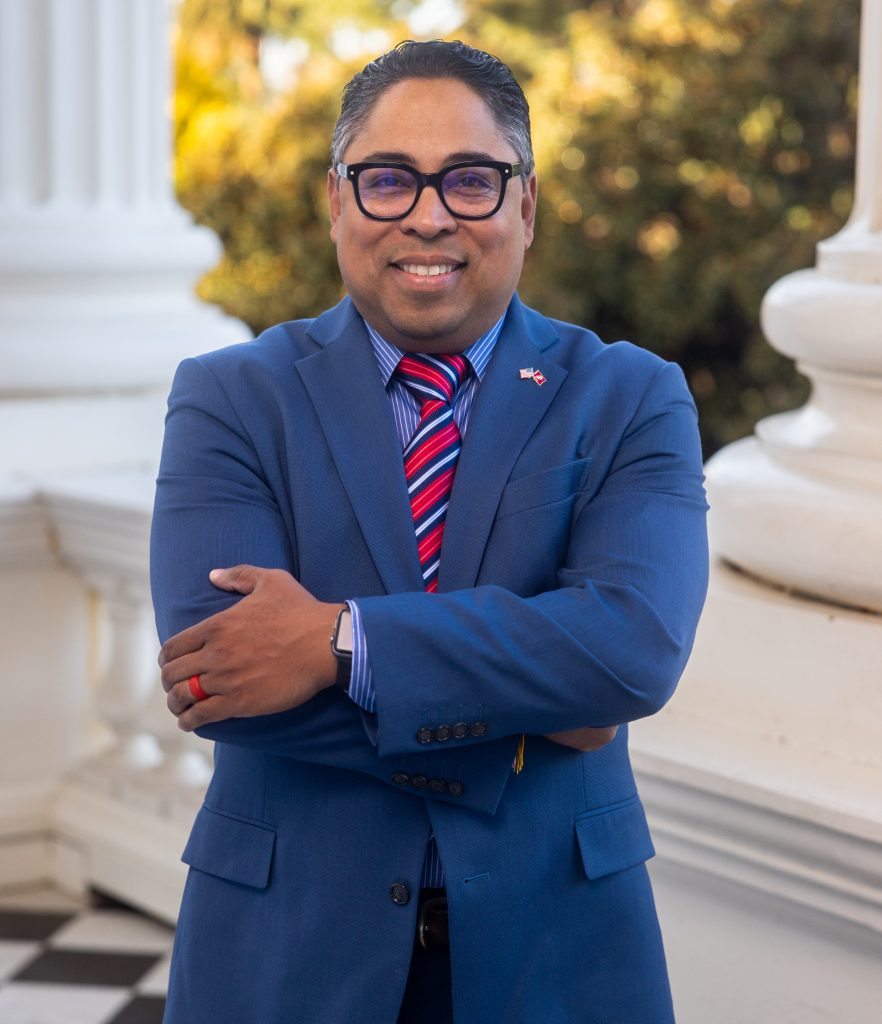
Asm. Jeff Gonzalez
Sponsored bills
Existing sales and use tax laws, among other things, impose a tax on retailers measured by the gross receipts from their sales of tangible personal property sold at retail in this state. The Sales and Use Tax Law makes certain sellers of tangible personal property consumers, and not retailers, of the tangible personal property they sell, including, until January 1, 2026, an all-volunteer fire department, as defined, if the profits are used solely and exclusively in furtherance of the purposes of the all-volunteer fire department, as prescribed. This bill would extend the sunset described above until January 1, 2031. Existing law requires any bill authorizing a new tax expenditure to contain, among other things, specific goals, purposes, and objectives that the tax expenditure will achieve, detailed performance indicators, and data collection requirements. The bill also would include additional information required for any bill authorizing a new tax expenditure. The Bradley-Burns Uniform Local Sales and Use Tax Law authorizes counties and cities to impose local sales and use taxes in conformity with the Sales and Use Tax Law, and existing laws authorize districts, as specified, to impose transactions and use taxes in accordance with the Transactions and Use Tax Law, which generally conforms to the Sales and Use Tax Law. Amendments to the Sales and Use Tax Law are automatically incorporated into the local tax laws. Existing law requires the state to reimburse counties and cities for revenue losses caused by the enactment of sales and use tax exemptions. This bill would provide that, notwithstanding Section 2230 of the Revenue and Taxation Code, no appropriation is made and the state shall not reimburse any local agencies for sales and use tax revenues lost by them pursuant to this bill. This bill would take effect immediately as a tax levy.
Existing law declares the public policy of the state regarding labor organization, including, among other things, that it is necessary for a worker to have full freedom of association, self-organization, and designation of representatives of their own choosing, to negotiate the terms and conditions of their employment, and to be free from the interference, restraint, or coercion of employers of labor, or their agents, in the designation of such representatives or in self-organization or in other concerted activities for the purpose of collective bargaining or other mutual aid or protection. Existing law establishes the Public Employment Relations Board (PERB) in state government as a means of resolving disputes and enforcing the statutory duties and rights of specified public employers and employees under various acts regulating collective bargaining. Under existing law, PERB has the power and duty to investigate an unfair practice charge and to determine whether the charge is justified and the appropriate remedy for the unfair practice. Existing law, the federal National Labor Relations Act (NLRA) , establishes a comprehensive statutory scheme regulating unfair labor practices on the part of employers and labor organizations in industries affecting interstate commerce, and vests in the National Labor Relations Board (NLRB) the power to conduct elections to determine employee representatives and to prevent unfair labor practices affecting commerce. Existing law, the California Public Records Act, requires that public records, as defined, be available to the public for inspection and made promptly available to any person. This bill would expand PERB's jurisdiction by authorizing a worker, to petition PERB to protect and enforce prescribed rights under specified circumstances, including if the worker is employed in a position subject to the NLRA but the NLRB has expressly or impliedly ceded jurisdiction. The bill would authorize PERB to, among other things, decide unfair labor practice cases pursuant to a specified timeline and order all appropriate relief for a violation, including civil penalties, as prescribed. In order to pursue relief from PERB, the bill would require a covered worker or their representative to file an unfair practice charge or petition that includes specified information, including, where applicable, the original charge or petition filed with the NLRB. The bill would require PERB to hold the supporting documentation and evidence confidential and maintain it as part of its investigatory file and would exempt this documentation and evidence from the California Public Records Act. If PERB determines, among other things, it has insufficient resources to process certain cases or doing so would prevent it from meeting specified statutory deadlines, the bill would require PERB to process and prioritize charges, as specified. The bill would also establish the Public Employment Relations Board Enforcement Fund (fund) in the State Treasury, would require the above-described civil penalties to be deposited into the fund, and would make moneys in the fund available upon appropriation by the Legislature to PERB for the purpose of administering the above-specified provisions. The bill would authorize PERB to rely on its own decisions and precedent under the NLRA and would authorize review of its decisions by a state appellate court, as specified. Existing law, the Alatorre-Zenovich-Dunlap-Berman Agricultural Labor Relations Act of 1975, grants agricultural employees the right to form and join labor organizations and engage in collective bargaining, as specified, and prohibits agricultural employers and labor organizations from engaging in unfair labor practices. Those provisions establish the Agricultural Labor Relations Board (ALRB) and empower the ALRB to prevent any person from engaging in those practices. Existing law establishes various definitions for these purposes. Existing law requires the ALRB to follow applicable precedents of the NLRA. This bill would specify that the ALRB has exclusive jurisdiction in all phases of the administration of the act, and to determine whether any person or entity meets one or more of those definitions. The bill would instead authorize the board to follow applicable precedents of the NLRA, but would not obligate the board to follow precedents where the ALRB deems it inappropriate to do so. This bill would make related findings and declarations and would make its provisions severable. Existing constitutional provisions require that a statute that limits the right of access to the meetings of public bodies or the writings of public officials and agencies be adopted with findings demonstrating the interest protected by the limitation and the need for protecting that interest. This bill would make legislative findings to that effect.
(1) The California Constitution provides for the fundamental rights of privacy and to choose to have an abortion. Existing law, the Reproductive Privacy Act, prohibits the state from denying or interfering with a pregnant person's right to choose or obtain an abortion before the viability of the fetus, or when the abortion is necessary to protect the life or health of the pregnant person. Existing law prohibits conditions or restrictions from being imposed on abortion access for incarcerated persons and committed juveniles. Existing laws requiring parental consent for abortion and making assisting in or advertising abortion a crime have been held to be unconstitutional. This bill would repeal those unconstitutional provisions and delete obsolete references to criminal abortion penalties. The bill would make technical changes to provisions authorizing abortion for incarcerated and committed persons. (2) Existing law, the Sherman Food, Drug, and Cosmetic Law, provides for labeling requirements of drugs and devices. The Pharmacy Law requires a pharmacist to dispense a prescription in a container that is correctly labeled with specified information, including the name of the prescriber and the name address of the pharmacy. A violation of the Pharmacy Law is a misdemeanor. This bill would authorize the State Department of Public Health to adopt regulations to include or exclude mifepristone and other medication abortion drugs from the requirements of the Sherman Food, Drug, and Cosmetic Law, but would exclude the drugs from those requirements if the drugs are no longer approved by the United States Food and Drug Administration (FDA) , as specified. The bill would authorize a pharmacist to dispense mifepristone or other drug used for medication abortion without the name of the patient, the name of the prescriber, or the name and address of the pharmacy, subject to specified requirements. The bill would require the pharmacist to maintain a log, as specified, that is not open to inspection by law enforcement without a subpoena, and would prohibit the disclosure of the information to an individual or entity from another state. The bill would prohibit criminal, civil, professional discipline, or licensing action against a pharmacist for manufacturing, transporting, or engaging in specified other acts relating to mifepristone or other medication abortion drugs, and would prohibit the California State Board of Pharmacy from denying an application for licensure or taking disciplinary action against an applicant or licensee for engaging in certain acts relating to mifepristone or other medical abortion drugs. By expanding the scope of a crime under the Pharmacy Law, the bill would impose a state-mandated local program. (3) Existing law establishes various healing arts boards in the Department of Consumer Affairs that license and regulate various healing arts licensees. This bill would prohibit subjecting a healing arts practitioner who is authorized to prescribe, furnish, order, or administer dangerous drugs to civil, criminal, disciplinary, or other administrative action for prescribing, furnishing, ordering, or administering mifepristone or other medication abortion drugs for a use that is different from the use for which that drug has been approved for marketing by the FDA or that varies from an approved risk evaluation and mitigation strategy under federal law, as specified. The bill would state that the laws of another state or federal actions that interfere with the authority of a healing arts practitioner to take specified actions relating to mifepristone or other medication abortion drugs are against the public policy of this state. The bill would prohibit criminal, civil, professional discipline, or licensing actions against an applicant or licensee for manufacturing, transporting, or engaging in certain other acts relating to mifepristone or other medication abortion drugs. (4) Existing law provides for the licensure and regulation of clinics and health facilities by the State Department of Public Health. This bill would prohibit criminal, civil, professional discipline, or licensing action against a licensed clinic or health facility for transporting or engaging in certain other acts relating to mifepristone or other medication abortion drugs that are lawful in California. The bill would prohibit the department from denying an application for licensure or taking disciplinary action against an applicant or licensee for engaging in certain acts relating to mifepristone or other medical abortion drugs. (5) Existing law prohibits a health care provider from knowingly disclosing, transmitting, transferring, sharing or granting access to identifiable medical information related to an individual seeking, obtaining, providing, supporting, or aiding in the performance of an abortion that is lawful under the laws of this state, as specified and subject to specified exclusions. Existing law exempts a health care provider from liability for damages or from civil or enforcement actions for failing to comply this prohibition before January 31, 2026, if the health care provider is working diligently and in good faith to comply with the prohibition. This bill would exempt a health care provider from liability for damages or from civil or enforcement actions for an additional year, until January 31, 2027. (6) Existing law, the Knox-Keene Health Care Service Plan Act of 1975, provides for the licensure and regulation of health care service plans by the Department of Managed Health Care, and makes a willful violation of the act a crime. Existing law provides for the regulation of disability and health insurers by the Department of Insurance. Existing law prohibits a health care service plan contract or a group or individual disability insurance policy or certificate that covers prescription drugs from limiting or excluding coverage of a drug on the basis that the drug is prescribed for a use that is different from the use for which that drug has been approved for marketing by the FDA. Existing law prohibits a contract between a health care service plan or health insurer and a health care services provider from containing any term that would result in termination or nonrenewal of the contract or otherwise penalize the provider based on a civil judgment, criminal conviction, or another professional disciplinary action in another state if the judgment, conviction, or professional disciplinary action is solely based on the application of another state's law that interferes with a person's right to receive care that would be lawful if provided in California. Existing law also prohibits a health care service plan or health insurer from discriminating against a licensed provider solely on the basis of a civil judgment, criminal conviction, or another professional disciplinary action in another state if the judgment, conviction, or professional disciplinary action is solely based on the application of another state's law that interferes with a person's right to receive care that would be lawful if provided in California. This bill would prohibit a health care service plan contract or a group or individual health insurance policy or certificate that covers prescription drugs from limiting or excluding coverage for brand name or generic mifepristone solely on the basis that the drug is prescribed for a use that is different from the use for which that drug has been approved for marketing by the FDA or that varies from an approved risk evaluation and mitigation strategy, except if the state deems it necessary to address an imminent health or safety concern. The bill would require those contracts and policies to include coverage for brand name or generic mifepristone, even if it has not been approved by the FDA if specified requirements are met, except if the state deems it necessary to address an imminent health or safety concern. The bill would prohibit a plan or insurer from contracting with a health care services provider to terminate or nonrenew the contract or otherwise penalize the provider, or from discriminating against a licensed provider, for manufacturing, transporting, or engaging in certain other acts relating to mifepristone or other medication abortion drugs that are lawful in California. Because a violation of these provisions by a health care service plan would be a crime, the bill would impose a state-mandated local program. (7) This bill would incorporate additional changes to Section 4076 of the Business and Professions Code proposed by AB 1503 to be operative only if this bill and AB 1503 are enacted and this bill is enacted last. (8) The California Constitution requires the state to reimburse local agencies and school districts for certain costs mandated by the state. Statutory provisions establish procedures for making that reimbursement. This bill would provide that no reimbursement is required by this act for a specified reason. (9) This bill would declare that it is to take effect immediately as an urgency statute.
This measure would designate November 1, 2025, as Fernando Valenzuela Day, to highlight the positive impact his legacy created in the Latino and Hispanic community.
(1) Existing law prohibits, except as required by state or federal law or as required to administer a state or federally supported educational program, school officials and employees of a school district, county office of education, or charter school from collecting information or documents regarding citizenship or immigration status of pupils or their family members. Existing law requires the superintendent of a school district, the superintendent of a county office of education, and the principal of a charter school, as applicable, to report to the respective governing board or body of the local educational agency in a timely manner any requests for information or access to a schoolsite by an officer or employee of a law enforcement agency for the purpose of enforcing the immigration laws in a manner that ensures the confidentiality and privacy of any potentially identifying information. This bill would prohibit school officials and employees of a local educational agency from allowing an officer or employee of an agency conducting immigration enforcement to enter a nonpublic area of a schoolsite, as defined, for any purpose without being presented with a valid judicial warrant, judicial subpoena, or a court order. The bill would require school officials and employees of a local educational agency, to the extent practicable, to request valid identification of any officer or employee of an agency conducting immigration enforcement seeking to enter a nonpublic area of a schoolsite. The bill would also prohibit a local educational agency and its personnel from disclosing or providing, in writing, verbally, or in any other manner, the education records of or any information about a pupil or a pupil's family and household without the pupil's parents' or guardians' written consent, a school employee, or a teacher to an officer or employee of an agency conducting immigration enforcement without a valid judicial warrant or judicial subpoena, or court order directing the local educational agency or its personnel to do so. By imposing additional duties on local educational agencies, the bill would impose a state-mandated local program. (2) Existing law requires the Attorney General, by April 1, 2018, in consultation with the appropriate stakeholders, to publish model policies limiting assistance with immigration enforcement at public schools, to the fullest extent possible consistent with federal and state law, and ensuring that public schools remain safe and accessible to all California residents, regardless of immigration status, as provided. Existing law requires local educational agencies, by July 1, 2018, to adopt those model policies developed by the Attorney General or equivalent policies. This bill would require the Attorney General, by December 1, 2025, to update those model policies to ensure that the policies align with the above-described prohibitions on school officials and employees of local educational agencies allowing an officer or employee of an agency conducting immigration enforcement to enter a nonpublic area of a schoolsite without a valid judicial warrant or judicial subpoena, or a court order and from disclosing or providing certain information to those officers or employees, as provided. The bill also would require a local educational agency to update its model policy by March 1, 2026, and to make the policy available to the State Department of Education upon request. By imposing additional duties on local educational agencies, the bill would impose a state-mandated local program. (3) This bill would make these provisions severable. (4) The California Constitution requires the state to reimburse local agencies and school districts for certain costs mandated by the state. Statutory provisions establish procedures for making that reimbursement. This bill would provide that, if the Commission on State Mandates determines that the bill contains costs mandated by the state, reimbursement for those costs shall be made pursuant to the statutory provisions noted above. (5) This bill would declare that it is to take effect immediately as an urgency statute.
This measure would declare the month of March to be March4Water Month in California and would encourage all Californians to participate in activities and programs during March4Water Month to promote awareness, education, and actions that prioritize water as a vital resource for the state's future.
Maddy summaryACR 95 designates June 21, 2025, as the International Day of Yoga in California. This ceremonial resolution formally recognizes the day for public awareness but has no legal effect or policy changes. It directly affects California residents by encouraging community observances of the international event. The measure is purely symbolic, with no funding, regulations, or new obligations for state agencies or individuals.
This measure would recognize March 21, 2025, as the United Nations International Day for the Elimination of Racial Discrimination and declare racism as a public health crisis.
This measure would state, among other things, the Legislature and the State of California's commitment to protecting, to the fullest extent of the law, all the data and information provided by students and their families to California's postsecondary education.