

Existing law establishes various healing arts boards within the Department of Consumer Affairs that license and regulate various healing arts licensees. Existing laws, including the Licensed Marriage and Family Therapist Act, the Educational Psychologist Practice Act, the Clinical Social Worker Practice Act, and the Licensed Professional Clinical Counselor Act, make a violation of those acts a crime. Existing law regulates the use of artificial intelligence, as defined. Existing law requires a health facility, clinic, physician's office, or office of a group practice that uses generative artificial intelligence to generate written or verbal patient communications pertaining to patient clinical information to ensure those communications include a disclaimer that indicates to the patient that a communication was generated by artificial intelligence and instructions describing how a patient may contact a human health care provider, employee, or other appropriate person. This bill would regulate the use of artificial intelligence in connection with providing or facilitating psychotherapy services, as defined. The bill, among other things, would authorize an individual, corporation, or entity that provides or facilitates psychotherapy services to use artificial intelligence tools or systems only to assist in providing administrative or supplementary support in psychotherapy services, as specified. The bill would prohibit an individual, corporation, or entity from using artificial intelligence to record or transcribe psychotherapeutic communications or sessions or to triage or screen a person for the need for psychotherapy services unless the patient or client or their authorized representative is informed that artificial intelligence will be used and the purpose of the artificial intelligence tool or system, and the patient or client or their authorized representative provides consent, as specified. The bill would prohibit an individual, corporation, or entity from advertising or otherwise purporting to offer psychotherapy services when the services are provided through the use of companion chatbots. The bill would prohibit an individual, corporation, or entity from allowing artificial intelligence to perform certain acts, including making therapeutic decisions or detecting emotions or mental states, as specified, without review and approval by a licensed professional. The bill would make a violation of the bill's provisions subject to the jurisdiction of the appropriate health care professional licensing board or enforcement agency, as specified, and would authorize those boards and enforcement entities to pursue any remedies authorized by law. Existing law, the Confidentiality of Medical Information Act, generally restricts the persons and entities to whom, and the purposes for which, a health care provider, health care service plan, or contractor may release a patient's medical information. The Confidentiality of Medical Information Act additionally imposes certain disclosure requirements for the release of medical information that specifically relates to the patient's participation in outpatient treatment with a psychotherapist. In this regard, the act prohibits a health care provider, health care service plan, or contractor from releasing that information to persons or entities who have requested that information and who are otherwise authorized by specified laws to receive that information, unless the requester makes certain written disclosures to the patient and to the provider of health care, health care service plan, or contractor, as specified. Those disclosures include, among other things, the specific intended uses of the information, and the length of time during which the information will be kept before being destroyed or disposed of, as specified. Existing law makes a violation of those provisions that result in economic loss or personal injury to a patient punishable as a misdemeanor. This bill would require the use of artificial intelligence in patient or client records for psychotherapy services to comply with the confidentiality requirements of the above-described provision of the Confidentiality of Medical Information Act and would prohibit a company or entity from sharing, selling, storing, or training their models on any data obtained from psychotherapy in a manner inconsistent with any applicable law. By expanding the scope of existing crimes, the bill would impose a state-mandated local program. The California Constitution requires the state to reimburse local agencies and school districts for certain costs mandated by the state. Statutory provisions establish procedures for making that reimbursement. This bill would provide that no reimbursement is required by this act for a specified reason.
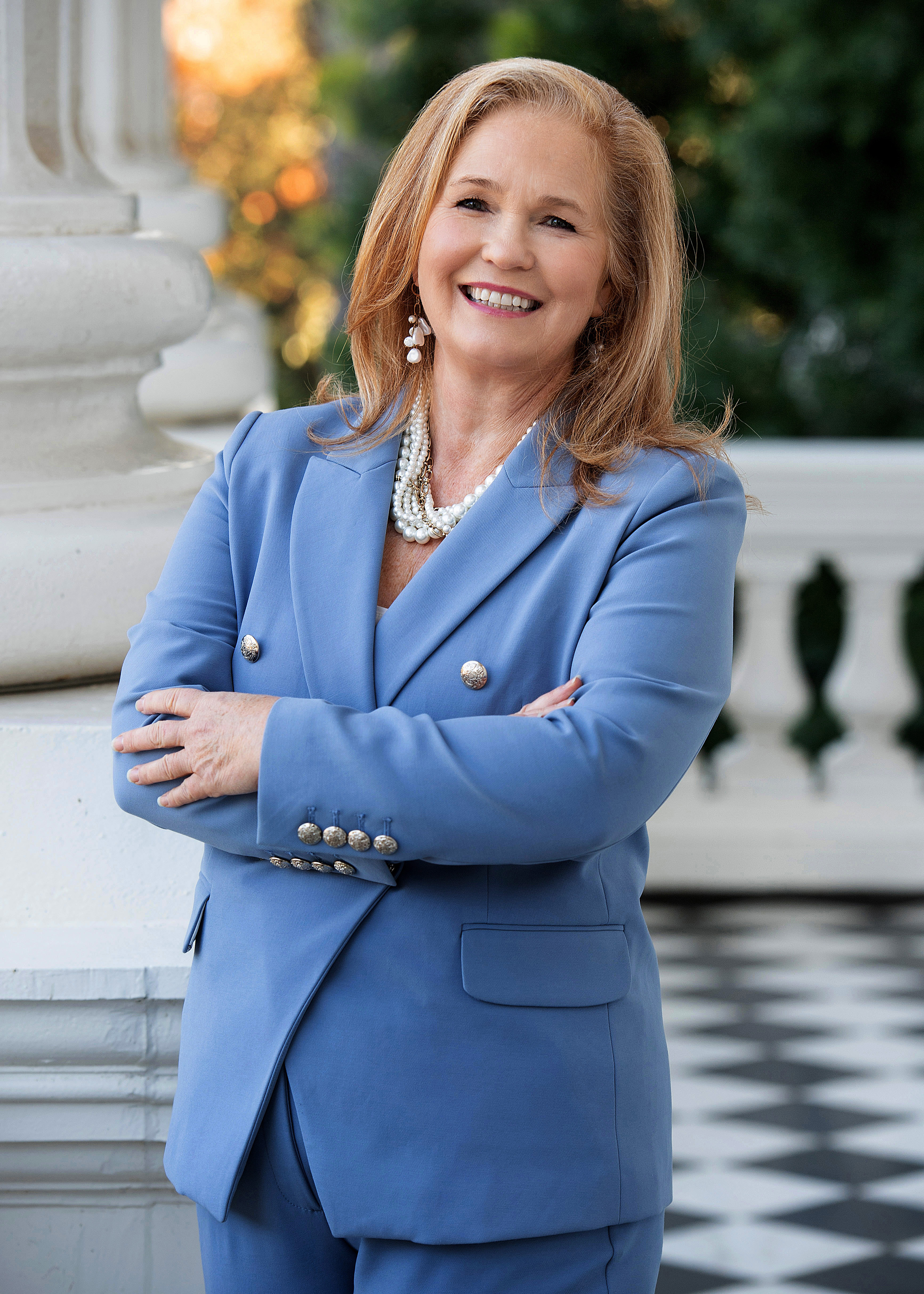
Rep. Gail Pellerin
Sponsored bills
Existing law prohibits a person or entity from knowingly distributing an election communication containing materially deceptive content that portrays specified candidates and officials as doing or saying something that the candidate or official did not do or say if the content is reasonably likely to harm the reputation or electoral prospects of a candidate or is reasonably likely to falsely undermine confidence in the outcome of an election. Existing law applies this prohibition within 120 days of an election in California and, for content involving elections officials and voting machines and related equipment, up to 60 days after an election. Existing law exempts an election communication from this prohibition if the content includes a disclosure stating that the communication has been manipulated. Existing law requires, for visual media, that the text of this disclosure appear in a size that is easily readable by the average viewer and no smaller than the largest font size of other text appearing in the visual media. This bill would instead prohibit the distribution of materially deceptive content that is material to a voter's electoral decisions or to public confidence in an election's process or outcome, as specified. The bill would set forth additional requirements relating to the color and font size of the disclosure's text. The bill would specify that the prohibition applies within the 30 days before an election in California with regard to candidates for any federal, state, or local elected office and elected officials and, with regard to elections officials and voting machines and related equipment, beginning 30 days before an election through 38 days after the election. Under existing law, the prohibition does not apply to an advertisement or other election communication containing materially deceptive content that constitutes satire or parody if the communication includes a specified disclosure. This bill would also exempt an advertisement or other election communication from these prohibitions if a reasonable person would understand that the content was satire or parody. Existing law authorizes a recipient of materially deceptive content, among others, to seek an injunction or to bring an action for general or special damages against the person, committee, or other entity that distributed or republished the materially deceptive content. This bill would instead authorize the individual depicted in the materially deceptive content to seek the injunction or to bring the action for general or special damages. This bill would declare that it is to take effect immediately as an urgency statute.
Under existing law, a county elections official is required to prepare a certified statement of the results of an election and submit it to the county board of supervisors within 30 days of the election. This bill would make it a felony, punishable by imprisonment for 16 months or 2 or 3 years, to seize or cause or assist in the seizure of ballots, election records, or certified voting technology before election results are certified by the elections official. The bill would also make it a felony punishable by imprisonment for 2, 3, or 4 years for any person with authority to direct another person subject to their supervision or authority to seize ballots, election records, or certified voting technology before election results are certified. By creating new crimes, this bill would impose a state-mandated local program. The California Constitution requires the state to reimburse local agencies and school districts for certain costs mandated by the state. Statutory provisions establish procedures for making that reimbursement. This bill would provide that no reimbursement is required by this act for a specified reason. This bill would declare that it is to take effect immediately as an urgency statute.
Existing law sets forth provisions, under the California Constitution, regarding the fundamental right to choose to have an abortion. Existing law, the Reproductive Privacy Act, prohibits the state from denying or interfering with a pregnant person's right to choose or obtain an abortion prior to viability of the fetus, or when the abortion is necessary to protect the life or health of the pregnant person. This bill, the Access to Safe Abortion Care Act, would make legislative findings about medication abortion, with a focus on use of the drugs mifepristone and misoprostol. Under the bill, the Legislature would reaffirm that it has been, and would continue to be, lawful to cause the delivery of, or mail, ship, take, receive, or otherwise transport, any drug, medicine, or instrument that can be designed or adapted to produce an abortion that is lawful in the State of California. The bill would set forth provisions regarding the lack of civil or criminal liability, or professional disciplinary action, for accessing or administering brand name or generic mifepristone or any drug used for medication abortion that is lawful under the laws of the state, on or after January 1, 2020, with this provision applied retroactively, as specified. The bill would make its provisions severable.
(1) The California Integrated Waste Management Act of 1989, administered by the Department of Resources Recycling and Recovery (CalRecycle) , generally regulates the disposal, management, and recycling of solid waste, as defined. The act authorizes CalRecycle to certify a local enforcement agency and requires CalRecycle and certified local enforcement agencies to perform specified functions with regard to the regulation of solid waste management, including issuing and enforcing solid waste facility permits. The act prohibits a person from operating a solid waste facility without a solid waste facilities permit, as provided. The California Global Warming Solutions Act of 2006 charges the State Air Resources Board with monitoring and regulating sources of emissions of greenhouse gases that cause global warming in order to reduce emission of greenhouse gases. The act requires the state board to adopt rules and regulations to achieve the maximum technologically feasible and cost-effective greenhouse gas emissions reductions, as provided. This bill would require the owner or operator of a solid waste landfill, as defined, to, among other things, notify the Department of Resources Recycling and Recovery if a subsurface elevated temperature event occurs. The bill would define "subsurface elevated temperature event" to mean an event where subsurface gas or waste temperatures at a solid waste landfill persistently exceed 131 degrees Fahrenheit over a substantial area and meets other performance criteria, as determined by the department. The bill would authorize the department to require the owner or operator of a solid waste landfill experiencing a subsurface elevated temperature event to create a corrective action plan that includes, but is not limited to, a cost assessment for fully implementing the corrective action plan. The bill would authorize the department or a local enforcement agency to impose an administrative civil penalty of $100,000 per day for failing to comply with these requirements, as provided. The bill would require all penalties collected to be deposited into the Landfill Subsurface Fire Mitigation Community Fund, which the bill would create in the State Treasury. The bill would continuously appropriate moneys in the fund to the California Alternative Energy and Advanced Transportation Financing Authority, to be paid to counties in which a subsurface elevated temperature event occurred to mitigate harm to a person or community affected by a subsurface elevated temperature event and to be paid to the authority for its costs of implementation. The bill would require the authority to develop guidelines for dispersing these funds, as specified. The bill would authorize the department to become the enforcement agency for a solid waste landfill experiencing a subsurface elevated temperature event, as specified. This bill would authorize the Secretary for Environmental Protection to select and coordinate a multiagency coordination group to investigate and provide recommendations on how to achieve resolution of a subsurface elevated temperature event, as specified. The bill would require a local health department to initiate community health needs assessments to identify and collect information regarding the effects of a subsurface elevated temperature event on an affected community and to share the findings, as provided. By requiring a local health department and a local air pollution control district to perform additional duties, the bill would impose a state-mandated local program. The bill would, upon request by a multiagency coordination group, require the owner or operator of a solid waste landfill that experiences a subsurface elevated temperature event to implement an air monitoring and sampling plan, as specified. The bill would require the owner and operator of a solid waste landfill that experiences a subsurface elevated temperature event to reimburse the members of a multiagency coordination group and the local health department for all reasonable and necessary expenses incurred, as specified. The bill would authorize the department to adopt regulations to implement and enforce them as emergency regulations, as specified. (2) This bill would declare its provisions to be severable. (3) The California Constitution requires the state to reimburse local agencies and school districts for certain costs mandated by the state. Statutory provisions establish procedures for making that reimbursement. This bill would provide that no reimbursement is required by this act for a specified reason.
Existing law creates within the Department of Corrections and Rehabilitation, under the Undersecretary for Operations, the Division of Adult Institutions, among others, and requires each division to be headed by a director, who is appointed by the Governor, as specified. Existing law also requires the Governor to appoint 4 subordinate officers to the division, as specified. Existing law requires each subordinate officer appointed to oversee an identified category of adult institutions, one of which oversees female offender facilities. This bill would instead require the Governor to appoint 3 subordinate officers, as specified, who would oversee an identified category of male adult institutions, and one subordinate officer, as specified, who would oversee female adult institutions. The bill would create within the department, and under the Undersecretary for Operations, the Division of Female Programs and Services. The bill would require the director of this division to be responsible solely for female adult institutions and community facilities housing female offenders. The bill would require the director to report to the undersecretary and to have a minimum of 5 years of experience serving a female correctional population in a custody setting. The bill would also require this new division to manage and provide oversight of adult female programs, including prisons, conservation camps, and parole and community programs and to develop gender-responsive, trauma-informed, culturally sensitive approaches to program and policy development. Existing law requires the department to create a Female Offender Reform Master Plan and present it to the Legislature by a specified date. Existing law requires the department to, among other things, create policies and operational practices that are designed to ensure a safe and productive institutional environment for female offenders. This bill would require the department to provide a report to the Legislature on the implementation of the plan, and update statistics contained in the plan, by March 1, 2027, and every 3 years thereafter. The bill would require the department to maintain the plan, including subsequent updates and reports, in consultation with the commission and others, as specified. The bill would also require the department to post the plan, any reports, and any updates to the plan to the department's internet website. This bill would require the department to establish the Gender Responsive Strategies Commission (GRSC) to develop active partnerships and to support successful implementation of gender responsive practices and rehabilitation programs for incarcerated individuals. The bill would require the GRSC to be composed of 19 representatives, as specified, and would require the department, by June 1, 2027, and annually thereafter, to provide a written report to the Legislature on appointments to the GRSC and the department's response and progress toward implementing the GRSC's recommendations. Existing law also requires the department to contract with nationally recognized gender-responsive experts in prison operational practices, staffing, classification, substance abuse, trauma treatment services, mental health services, transitional services, and community corrections to, among other things, conduct a staffing analysis of all current job classifications assigned to each prison that houses only females, as specified, and develop programs and training for department staff in correctional facilities. This bill would require the department, through this contract, no later than March 1, 2027, and every 3 years thereafter, to prepare and submit to the Legislature an updated staffing analysis and would require a comprehensive review of the office's policies and practices and other aspects of women-centered corrections developed to enhance safety and rehabilitative efforts, as specified. The bill would also require the training program to include training at the academy and, for those working in a female prison, 40 hours of initial training with a curriculum specifically focused on working with the population within female institutions and an 8-hour annual training thereafter. Existing law requires the secretary of the department to expand the existing prison ombudsperson program to ensure the comprehensive deployment of ombudspersons throughout the state prison system with specific focus on the maximum security institutions. This bill would instead require the Undersecretary for Operations to perform this duty and would require the undersecretary to appoint an ombudsperson solely assigned to adult female institutions.
Existing law, the Knox-Keene Health Care Service Plan Act of 1975, provides for the licensure and regulation of health care service plans by the Department of Managed Health Care and makes a willful violation of the act a crime. Existing law also provides for the regulation of health insurers by the Department of Insurance. Existing federal law, the federal Paul Wellstone and Pete Domenici Mental Health Parity and Addiction Equity Act of 2008 (MHPAEA) , requires group health plans and health insurance issuers that provide both medical and surgical benefits and mental health or substance use disorder benefits to ensure that financial requirements and treatment limitations applicable to mental health or substance use disorder benefits are no more restrictive than the predominant requirements or limitations applied to substantially all medical and surgical benefits. Existing state law requires an individual, small group, or large group health care service plan contract or health insurance policy to provide covered mental health and substance use disorder benefits in compliance with the MHPAEA and specified federal rules, regulations, and guidance. This bill would require the above-described contracts and policies to provide covered mental health and substance use disorder benefits in compliance with specified federal rules, regulations, and guidance as they existed on January 1, 2025. Because a violation of these requirements by a health care service plan would be a crime, the bill would impose a state-mandated local program. The bill would also require the departments to review provisions of the bill that conflict with or materially differ from federal regulations and collaborate with each other to issue guidance on compliance. The California Constitution requires the state to reimburse local agencies and school districts for certain costs mandated by the state. Statutory provisions establish procedures for making that reimbursement. This bill would provide that no reimbursement is required by this act for a specified reason.
The Equity in Higher Education Act provides, among other things, that all students have the right to participate fully in the educational process, free from discrimination and harassment. Existing law provides that sexual harassment of students is a form of prohibited sex discrimination and defines terms for purposes of the Equity in Higher Education Act. This bill would, commencing August 1, 2027, define additional terms for purposes of the act, including, among other terms, "digitized sexually explicit material," "sextortion," "technology-facilitated sexual harassment," and "affirmative consent." The bill would also revise the definitions of "sexual harassment" and "sexual exploitation," and make conforming changes. To the extent that the bill would impose new duties on community college districts, this bill would impose a state-mandated local program. The California Constitution requires the state to reimburse local agencies and school districts for certain costs mandated by the state. Statutory provisions establish procedures for making that reimbursement. This bill would provide that, if the Commission on State Mandates determines that the bill contains costs mandated by the state, reimbursement for those costs shall be made pursuant to the statutory provisions noted above.
(1) Existing law, the California Fair Employment and Housing Act (FEHA) , establishes the Civil Rights Department to enforce civil rights laws with respect to housing and employment, as prescribed. The FEHA recognizes and declares to be a civil right the opportunity to seek, obtain, and hold employment and housing without discrimination because of a specified characteristic. The FEHA makes certain discriminatory practices based on those characteristics unlawful. The FEHA also declares that its purpose is to provide effective remedies that will eliminate these discriminatory practices. The FEHA defines terms used in connection with unlawful practices. These include "sex," which includes pregnancy or medical conditions related to pregnancy, childbirth or medical conditions related to childbirth, and breastfeeding or medical conditions related to breastfeeding. This bill would include perimenopause, menopause, or postmenopause or other related medical conditions within the above definition of sex. The FEHA separately defines the term "medical condition" to mean either a health impairment related to or associated with a diagnosis of cancer or a record or history of cancer or specified genetic characteristics. The Unruh Civil Rights Act (Unruh Act) establishes that all persons within the jurisdiction of the state are free and equal and, regardless of their sex, race, color, religion, ancestry, national origin, disability, medical condition, genetic information, marital status, sexual orientation, citizenship, primary language, or immigration status are entitled to the full and equal accommodations, advantages, facilities, privileges, or services in all business establishments, as prescribed. The Unruh Act defines "sex" to include, among other things, pregnancy, childbirth, or medical conditions related to pregnancy or childbirth. This bill would provide that "medical condition" as used in the definition of "sex" in FEHA and the Unruh Act includes, but is not limited to, the conditions included in the definition of "medical condition" in FEHA. (2) Existing law requires the Civil Rights Department to provide a poster on discrimination in employment to an employer or a member of the public upon request. Existing law requires the poster to be available at each office of the department and requires each employer to post the poster in a prominent and accessible location in the workplace, as prescribed. This bill would require the department, on or before July 1, 2027, to update the poster to notify people of their rights and protections in regard to perimenopause, menopause, postmenopause, or related medical conditions. (3) This bill would incorporate additional changes to Section 51 of the Civil Code proposed by AB 2563 to be operative only if this bill and AB 2563 are enacted and this bill is enacted last. This bill would incorporate additional changes to Section 12926 of the Government Code proposed by AB 2563 to be operative only if this bill and AB 2563 are enacted and this bill is enacted last.
The California Environmental Quality Act (CEQA) requires a lead agency, as defined, to prepare, or cause to be prepared, and certify the completion of, an environmental impact report on a project that it proposes to carry out or approve that may have a significant effect on the environment or to adopt a negative declaration if it finds that the project will not have that effect. CEQA also requires a lead agency to prepare a mitigated negative declaration for a project that may have a significant effect on the environment if revisions in the project would avoid or mitigate that effect and there is no substantial evidence that the project, as revised, would have a significant effect on the environment. CEQA defines various terms, including "natural and protected lands" for its purposes. This bill would revise the definition of that term to include habitats for protected species identified as candidate, sensitive, or species of special status by state or federal agencies. CEQA exempts from its requirement projects that consist exclusively of a day care center that is not located in a residential area and projects that consist exclusively of an advanced manufacturing facility located on a site zoned exclusively for industrial uses. This bill would additionally exempt projects consisting exclusively of a family day care home, as defined. The bill would, for the exemption for the day care center and family day care home, instead require the projects for those facilities not be located in an area zoned for industrial use or within 3,200 feet of a facility that actively extracts or refines oil or natural gas in order for the exemption to apply. The bill would revise the exemption for advanced manufacturing facility projects to require those projects to be used exclusively for final tier manufacturing, as defined. The bill would require an applicant of an advanced manufacturing project that is exempted from CEQA under the bill's requirement to enter into a bona fide community benefits agreement, as provided, and to comply with certain labor requirements, as provided. The bill would require the lead agency, before determining that an advanced manufacturing project is exempt from CEQA, to hold at least one public hearing on the project and to ensure that the applicant complies with the requirement to enter into a bona fide community benefits agreement and the labor requirements. CEQA exempts from its requirements a rezoning that implements the schedule of actions contained in an approved housing element. CEQA specifies that this exemption does not apply to a rezoning that would allow for the construction of certain facilities, including oil and gas infrastructure. CEQA also specifies that this exemption does not apply rezoning that would allow for construction to occur within the boundaries of any natural and protected lands, except as provided. This bill would repeal the exception from the CEQA exemption for rezoning that would allow for oil and gas infrastructure. The bill would specify that the definition of "natural and protected land" does not include habitats for protected species that would be added to that definition by this bill for purposes the exception for rezoning that would allow for construction to occur within the boundaries of any natural and protected lands to the CEQA exemption. CEQA specifies, for a proposed housing development project that would otherwise be exempt from its requirements but for a single condition required for the exemption to apply, that the application of CEQA is limited to the effects upon the environment that are caused by that single condition. CEQA provides that this limited application of CEQA does not apply if the proposed housing project is located on natural and protected land, but does not include "natural and protected land" that is a site within a very high fire hazard severity zone or within the state responsibility area, except as provided. This bill would additionally specify that "natural and protected land" does not include habitats for protected species that would be added to that definition by this bill. Because the bill would imposes additional duties on a lead agency, this bill would impose a state-mandated local program. The California Constitution requires the state to reimburse local agencies and school districts for certain costs mandated by the state. Statutory provisions establish procedures for making that reimbursement. This bill would provide that no reimbursement is required by this act for a specified reason.