

Maddy summaryThis House Resolution formally recognizes the importance of affordable homeownership for California families, particularly those with lower incomes, and highlights how nonprofit-led programs help build generational wealth and reduce economic disparities. The document emphasizes that existing state programs like CalHome support the construction and preservation of affordable homes through competitive funding to cities, counties, indigenous communities, and nonprofit builders such as Habitat for Humanity. While the resolution does not create new laws or funding, it serves as an official acknowledgment of homeownership's role in improving educational outcomes, health, civic participation, and neighborhood stability. The text also notes California's significant housing deficit and racial wealth gaps as context for why expanding affordable ownership opportunities is a priority for state policy.
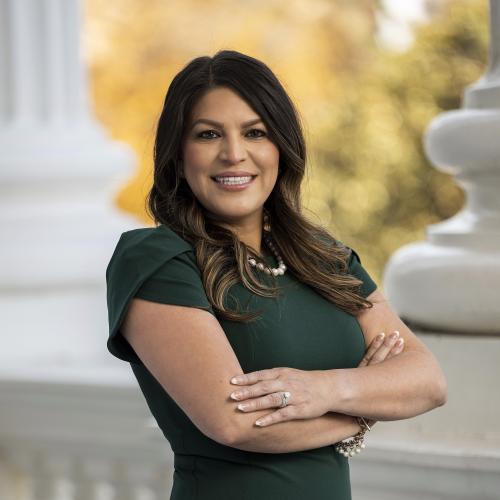
Asm. Esmeralda Soria
Sponsored bills
Existing law provides various sources of funding for water and transportation projects. This bill would appropriate $455,500,000 from the General Fund to the San Luis and Delta-Mendota Water Authority for the purpose of funding the State Highway 152 Route improvements required to complete the B.F. Sisk Dam Raise and Reservoir Expansion Project.
Existing law establishes a workers' compensation system, administered by the Administrative Director of the Division of Workers' Compensation, to compensate an employee, as defined, for injuries sustained in the course of employment. Existing law requires an employer to provide medical treatment that is reasonably required to cure or relieve an employee from the effects of the injury. Existing law allows employers to create networks of medical treatment providers to send employees to for treatment. Existing law sets out criteria for these networks and exceptions for when an employee may be treated outside of the network. This bill would require the administrative director to establish a statewide medical provider network database, consisting of physicians who are willing and able to treat injured employees in the San Joaquin Valley region. The bill would require an employee to first seek treatment within their employer's or insurer's network, unless the employer's or insurer's network is unable to treat the employee within 30 days of the request for medical treatment. The bill would require physicians, in order to be included in the network, to, among other things, be in good standing with the Medical Board of California and agree to comply with the official medical fee schedule, as specified. The bill would require the administrative director to implement the network on or before January 1, 2027. The bill would state the Legislature's intent to address the shortage of available medical treatment for workplace injuries in the central valley region. This bill would make legislative findings and declarations as to the necessity of a special statute for the Counties of Fresno, Kern, Kings, Madera, Merced, San Joaquin, Stanislaus, and Tulare.
Under existing law it is grand theft to steal copper materials valued at more than $950. A violation of this provision is punishable either as a misdemeanor or a felony by imprisonment in county jail and specified fines. This bill would make it a crime to unlawfully possess copper materials, as specified. The bill would define what it means to "unlawfully possess" copper materials to include possessing without documentation proving lawful possession. The bill would prescribe the information that constitutes proof of lawful possession, as specified, including the identity of the seller and the date of the transaction. By expanding the scope of a crime, this bill would impose a state-mandated local program. The bill would also prohibit a person from falsifying any record intending to show proof of lawful possession. By creating a new crime, this bill would impose a state-mandated local program. Existing law prohibits any collector or dealer of metals to purchase certain junk metals, as specified, without first ascertaining that the seller legally possesses the materials. Existing law also requires the dealer to obtain evidence of the identity of the seller, including, but not limited to, the seller's name and address. This bill would require any collector or dealer of metals to ascertain the location from which the purchased material was obtained. Existing law makes it a crime for a person who is engaged in the salvage, recycling, purchase, or sale of scrap metal to possess certain items that have been stolen or obtained by theft or extortion, as specified, and requires that the person knew or reasonably should have known that the property was stolen or failed to report possession of the items, as specified. This bill would additionally prohibit a person who is engaged in the salvage, recycling, purchase, or sale of scrap metal, as specified, from possessing certain items knowing that those items were possessed without proof of lawful possession. The California Constitution requires the state to reimburse local agencies and school districts for certain costs mandated by the state. Statutory provisions establish procedures for making that reimbursement. This bill would provide that no reimbursement is required by this act for a specified reason.
Existing law requires the Public Utilities Commission, on or before December 31, 2018, and biennially thereafter, as part of a specified report, to identify and report to the Legislature on electrical and gas corporation ratepayer-funded energy efficiency programs that are similar to programs administered by the State Energy Resources Conservation and Development Commission, the State Air Resources Board, and the California Alternative Energy and Advanced Transportation Financing Authority. This bill would instead require the commission to identify and report to the Legislature on those programs on an annual basis.
Existing law, the Child Care and Development Services Act, administered by the State Department of Social Services, establishes a system of childcare and development services for children up to 13 years of age. Existing law establishes childcare resource and referral programs to serve a defined geographic area and provide prescribed services. Among the services provided by these programs is the establishment of a referral process that responds to parental need for information and that makes referrals to licensed child daycare facilities, as specified. Existing law requires federal funds allocated to local childcare resource and referral agencies to support their continued participation in COVID-19 relief and recovery to be used to strengthen their role in serving as intermediaries to develop new, and support existing, childcare facilities and capacity and to streamline and improve data collection processes, as specified. This bill would repeal that provision and instead require, upon appropriation by Legislature, local childcare resource and referral agencies to take specified actions relating to assisting childcare providers during a disaster, including, among others, implementing certain roles and responsibilities assigned to them in specified disaster plans. The bill would also require, upon appropriation by the Legislature, the California Child Care Resource and Referral Network to implement the roles and responsibilities assigned to it in those disaster plans. The bill would require the department, in consultation with local childcare resource and referral agencies, to establish data collection and reporting requirements relating to disasters and disaster preparedness for childcare providers.
The California Constitution provides that the University of California constitutes a public trust administered by the Regents of the University of California, a corporation in the form of a board, with full powers of organization and government, subject to legislative control only for specified purposes. Existing law creates the University of California, San Francisco, San Joaquin Valley Regional Campus Medical Education Endowment Fund. Upon an appropriation by the Legislature, existing law requires moneys in the endowment fund to be allocated to the University of California to support the annual operating costs for the development, operation, and maintenance of a branch campus of the University of California, San Francisco, School of Medicine in the San Joaquin Valley, and to generate funding through investment earnings for support of medical education in the San Joaquin Valley, as provided. This bill would request the University of California to submit a report to the Legislature, on or before August 31, 2026, on the financial requirements necessary to expand the current University of California, San Francisco and University of California, Merced medical education collaboration, the San Joaquin Valley PRIME+ program, and to transition the program into a fully independent medical school operated by the University of California, Merced. The bill would request the report to include the projected costs associated with various program components, a list of potential health facilities at which students could conduct residencies, and a timeline and milestones for the completion of an independent school of medicine at the University of California, Merced.
Existing law authorizes various conservancies to acquire, manage, direct the management of, and conserve lands in the state. This bill, upon appropriation by the Legislature or approval of a general obligation bond, as provided, would establish the Huron Hawk Conservancy within the Natural Resources Agency for specified purposes related to the Huron Hawk area, as defined, including to acquire and manage public lands within the Huron Hawk area and to provide recreational, open space, wildlife habitat restoration and protection, and lands for educational uses within the area. The bill would require the conservancy to be governed by a board of directors composed of designated membership, including certain members appointed by certain local agencies. The bill would set forth the powers, duties, and limitations of the board of directors and the conservancy, as provided. The bill would create the Huron Hawk Conservancy Fund and would make moneys in the fund available for expenditure by the conservancy, upon appropriation by the Legislature, for the purposes of these provisions. The bill would authorize the conservancy to accept revenue generated and contributed to the conservancy by member agencies, as defined, which the bill would require to be deposited into the fund. The bill would also authorize the conservancy to accept revenue, money, grants, goods, and services contributed to the conservancy by a public agency, private entity, or person, and would require the revenue, money, and grants to be deposited into the fund. By imposing new duties on local agencies, this bill would create a state-mandated local program. The California Constitution requires the state to reimburse local agencies and school districts for certain costs mandated by the state. Statutory provisions establish procedures for making that reimbursement. This bill would provide that, if the Commission on State Mandates determines that the bill contains costs mandated by the state, reimbursement for those costs shall be made pursuant to the statutory provisions noted above.
Existing law makes it a crime for a person to assault, among other people, a judge of any local, state, or federal court of record in retaliation for or to prevent the performance of their official duties, as specified. Existing law requires a county elections official to, upon application by a public safety officer, make confidential that officer's residence address, telephone number, and email address appearing on the affidavit of voter registration, as specified. Existing law requires, upon request of specified persons, including an active or retired judge, that the person's home address that appears in a record of the Department of Motor Vehicles be made confidential. This bill would additionally make it a crime for a person to assault a judge or former judge of a tribal court in retaliation for or to prevent the performance of their official duties, as specified. The bill would clarify that a tribal judge of a federally recognized California Indian tribe can request to make their records confidential pursuant to the above-described provisions. By expanding the scope of an existing crime, this bill would impose a state-mandated local program. Existing constitutional provisions require that a statute that limits the right of access to the meetings of public bodies or the writings of public officials and agencies be adopted with findings demonstrating the interest protected by the limitation and the need for protecting that interest. This bill would make legislative findings to that effect. The California Constitution requires the state to reimburse local agencies and school districts for certain costs mandated by the state. Statutory provisions establish procedures for making that reimbursement. This bill would provide that no reimbursement is required by this act for a specified reason.
The Personal Income Tax Law allows various credits against the taxes imposed by that law, including a young child tax credit to a qualified taxpayer in a specified amount multiplied by the earned income tax credit adjustment factor, as provided. That law also allows a payment from the continuously appropriated Tax Relief and Refund Account for an amount in excess of tax liability. Existing law defines "qualified taxpayer" for this purpose to include an eligible individual, as defined, who has a qualifying child, defined to be a child younger than 6 years of age as of the last day of the taxable year, and who meets other specified criteria. This bill, for taxable years beginning on or after January 1, 2025, would instead define a "qualifying child" to mean a child younger than a specified age as of the last day of the taxable year, as described. By increasing the payments from the Tax Relief and Refund Account, a continuously appropriated fund, the bill would make an appropriation. Existing law requires any bill authorizing a new tax expenditure to contain, among other things, specific goals that the tax expenditure will achieve, detailed performance indicators, and data collection requirements. This bill would include additional information required for any bill authorizing a new tax expenditure.