

Existing law requires the Labor Commissioner to investigate allegations that a contractor or subcontractor violated the law regulating public works projects, including the payment of prevailing wages. Existing law requires each contractor and subcontractor on a public works project to keep accurate payroll records, showing the name, address, social security number, work classification, straight time and overtime hours worked each day and week, and the actual per diem wages paid to each journeyman, apprentice, worker, or other employee employed by the contractor or subcontractor in connection with the public work. Existing law requires certified copies of records to be available upon request by the public and sets forth a process for the public to request the records either through the awarding body or the Division of Labor Standards Enforcement. Existing law makes any contractor, subcontractor, agent, or representative who neglects to comply with the requirements to keep accurate payroll records guilty of a misdemeanor. This bill would require the awarding body, if a request is made by the public through the awarding body and the body is not in possession of the certified records, to obtain those records from the relevant contractor and make them available to the requesting entity. The bill would authorize the Division of Labor Standards Enforcement to enforce certain penalties if a contractor fails to comply with the awarding body's request within 10 days of receipt of the notice. To the extent that this bill would impose additional duties on any contractor, subcontractor, agent, or representative, the bill would expand the scope of a crime and impose a state-mandated local program. The California Constitution requires the state to reimburse local agencies and school districts for certain costs mandated by the state. Statutory provisions establish procedures for making that reimbursement. This bill would provide that no reimbursement is required by this act for a specified reason.
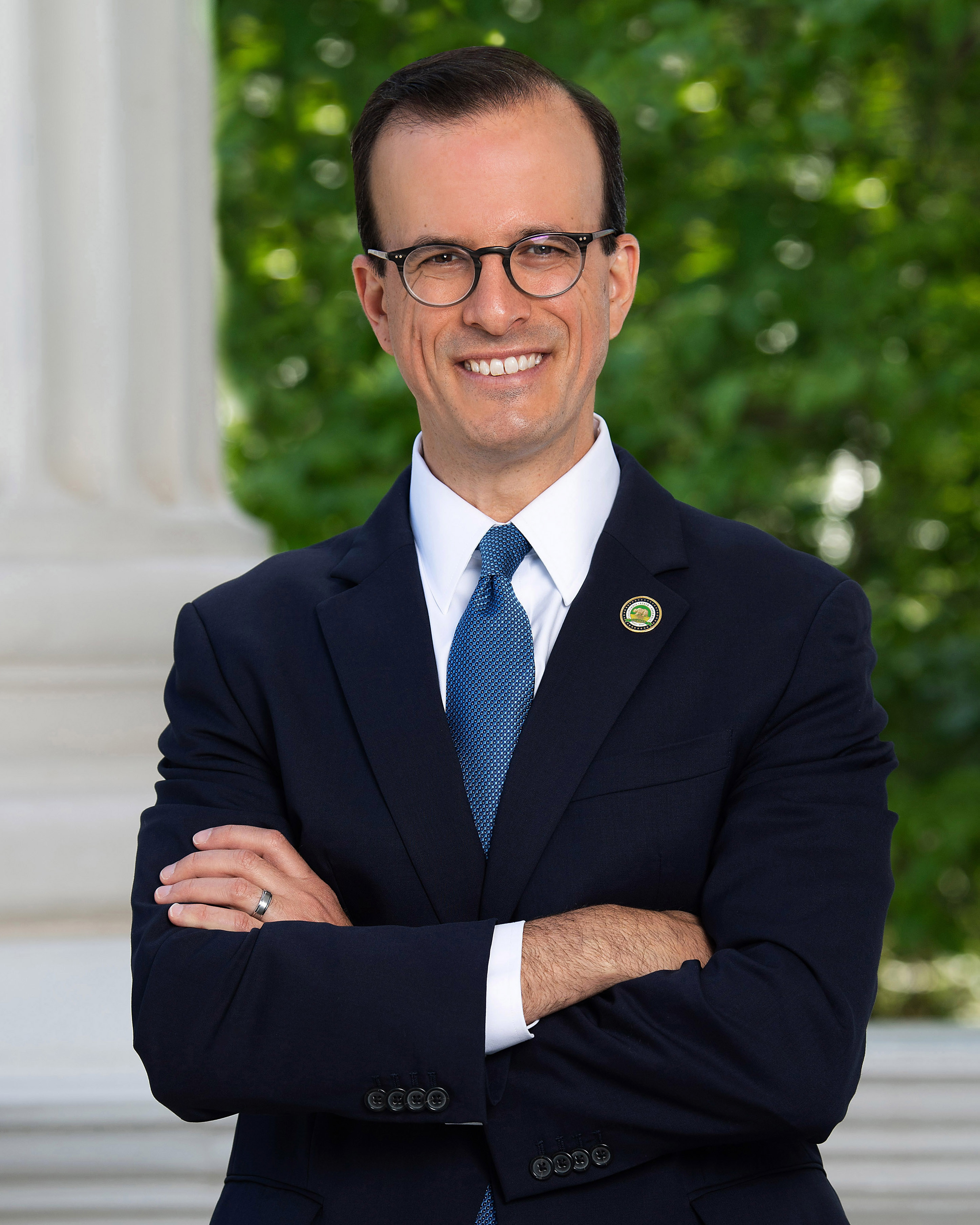
Asm. Marc Berman
Sponsored bills
Existing law creates the Department of Insurance, headed by the Insurance Commissioner, and prescribes the department's powers and duties. Existing law directs the department and commissioner to administer various grant programs that, among other things, defray property retrofitting costs. This bill would establish the California Safe Homes grant program to be developed by the department to reduce local and statewide wildfire losses, among other things. The bill would require the department to prioritize specified needs when awarding grant funds, and would require eligible program applicants, which would include individuals, cities, counties, and special districts, to meet specified criteria. The bill would establish the Sustainable Insurance Account within the Insurance Fund and would make the funds available to the department for the program upon appropriation by the Legislature or upon receipt of federal or other grants or funds. The bill would require the department to collect specified information about the performance of the program and, on or before January 1, 2027, and every 2 years thereafter, to publish a performance report that would be posted to its internet website and submitted to the Legislature.
Existing law prohibits any person from selling, leasing, or transferring any firearm unless the person is licensed as a firearms dealer, as specified. Existing law prescribes certain requirements and prohibitions for licensed firearms dealers. A violation of any of these requirements or prohibitions is grounds for forfeiture of a firearms dealer's license. For purposes of these provisions, existing law defines "machinegun" to mean, among other definitions, any weapon that shoots or is designed to shoot automatically more than one shot, without manual reloading, by a single function of the trigger. This bill would, on and after July 1, 2026, prohibit a licensed firearms dealer to sell, offer for sale, exchange, give, transfer, or deliver any semiautomatic machinegun-convertible pistol, except as specified. For these purposes, the bill would define "machinegun-convertible pistol" as any semiautomatic pistol with a cruciform trigger bar that can be readily converted by hand or with common household tools into a machinegun by the installation or attachment of a pistol converter, as specified, and "pistol converter" as any device or instrument that, when installed in or attached to the rear of the slide of a semiautomatic pistol, replaces the backplate and interferes with the trigger mechanism and thereby enables the pistol to shoot automatically more than one shot by a single function of the trigger. The bill would make a violation of these provisions punishable by a fine, a 2nd violation punishable by a fine that may result in a suspension or revocation of the dealer's license and removal from certain centralized lists maintained by the Department of Justice, and a 3rd violation punishable as a misdemeanor that shall result in the revocation of the dealer's license and removal from certain centralized lists. Existing law prohibits the manufacture, sale, possession, or transportation of a machinegun, except as authorized. A violation of these prohibitions is punishable as a felony. This bill would expand the above definition of "machinegun" to include any machinegun-convertible pistol equipped with a pistol converter and, thus, prohibit the manufacture, sale, possession, or transportation of a machinegun-convertible pistol equipped with a pistol converter. Existing law, subject to certain exceptions, generally makes it an offense to manufacture or sell an unsafe handgun, as defined, and requires the Department of Justice to compile a roster listing all of the handguns that have been tested and determined not to be unsafe handguns. Existing law establishes criteria for determining if a handgun is an unsafe handgun, including, for firearms manufactured after a certain date and not already listed on the roster, the lack of a chamber load indicator and a magazine disconnect mechanism. For any pistol listed on the roster on January 1, 2026, that was not subject to the above-described requirements to be on the list because it was submitted for testing before specified dates, that is thereafter only modified to change the design features that brought the pistol within the definition of a machinegun-convertible pistol, and that is submitted to an independent certified laboratory for testing pursuant to the above-described testing provisions before January 1, 2027, this bill would authorize that pistol to be submitted for testing and added to the roster without meeting those requirements. This bill would make these provisions severable. This bill would incorporate additional changes to Section 3273.50 of the Civil Code proposed by AB 1263 to be operative only if this bill and AB 1263 are enacted and this bill is enacted last. By creating a new crime and expanding the application of an existing crime, this bill would create a state-mandated local program. The California Constitution requires the state to reimburse local agencies and school districts for certain costs mandated by the state. Statutory provisions establish procedures for making that reimbursement. This bill would provide that no reimbursement is required by this act for a specified reason.
(1) Existing law prohibits a person from carrying a concealed firearm or carrying a loaded firearm in public. Existing law authorizes a licensing authority, as specified, if certain requirements and other criteria are met, including, among other things, the applicant has completed a specified course of training, to issue a license to carry a concealed handgun or to carry a loaded and exposed handgun, as specified. Existing law requires a licensing authority to conduct an investigation to determine whether an applicant can receive or renew a license that includes, among other things, a review of all information provided in the application for a license, and a review of the information in the California Restraining and Protective Order System. Existing law prohibits the licensing authority from issuing a license if, among other things, the applicant has been convicted of contempt of court, has been subject to a restraining order, protective order, or other type of court order, unless that order expired or was vacated or otherwise canceled more than 5 years prior to receipt of the completed application, or, in the 10 years prior to the licensing authority receiving the completed application, has been convicted of specified criminal statutes. This bill would also prohibit a licensing authority from issuing a license if an applicant was convicted of, under any federal law or law of any other state that includes comparable elements of, contempt of court or specified criminal statutes in the 10 years prior to the completed application, was subject to any restraining order, protective order, or other type of court order, or is an unlawful user of, or addicted to, any controlled substance, as specified. Upon determining that an applicant is a disqualified person due to being an unlawful user of, or addicted to, any controlled substance, the bill would require the licensing authority to, within 5 days, submit to the National Instant Criminal Background Check System Index specified information of the disqualified person and supporting documentation, as specified. This bill would require the review of the California Restraining and Protective Order System to include information concerning whether the applicant is reasonably likely to be a danger to self, others, or the community at large, as specified. By imposing new duties on local licensing authorities, this bill would create a state-mandated local program. The bill would additionally exempt from the licensure prohibition for applicants previously subject to a restraining order, protective order, or other type of court order, applicants who were previously subject to an above-described order that did not receive notice and an opportunity to be heard before the order was issued. (2) Existing law prohibits a person who is licensed to carry a firearm from carrying a firearm in specified places, including schools, government buildings, hospitals, zoos, parks, churches, and a bus, train, or other form of public transportation. Existing law exempts a firearm that is secured in a lock box, as specified, under certain circumstances, from these prohibitions. This bill would exempt a firearm that is unloaded and locked in a lock box for the purpose of transporting the firearm from the prohibition on carrying the firearm on a bus, train, or other form of public transportation, including a building, real property, or parking area under the control of a public transportation authority. (3) Existing law requires, when a person applies for a new license or license renewal to carry a pistol, revolver, or other firearm capable of being concealed upon the person, a licensing authority, as specified, to issue or renew a license if the applicant has provided proof that, among other things, the applicant has completed a specified course of training, including live-fire shooting exercises on a firing range, and the applicant is the recorded owner of the pistol, revolver, or other firearm for which the license will be issued. This bill would clarify that these requirements for a new license or license renewal specifically apply to a California resident. For non-California residents, the bill would additionally require, among other requirements, the applicant to attest, under oath, that the jurisdiction in which the applicant has applied is the primary location in California in which they intend to travel or spend time, and that the applicant has completed live-fire shooting exercises for each pistol, revolver, or other firearm for which the applicant is applying to be licensed to carry in California. By requiring local agencies to issue licenses for concealed firearms to non-California residents and expanding the scope of the crime of perjury, this bill would create a state-mandated local program. If a psychological assessment on an initial application to carry a pistol, revolver, or other firearm capable of being concealed upon the person is required by a licensing authority, existing law requires the applicant to be referred to a licensed psychologist acceptable to the licensing authority. This bill would authorize a licensing authority to allow a non-California resident applicant to satisfy this psychological assessment with a virtual psychological assessment, as specified, or approve this examination with a provider located within 75 miles of the applicant's residence. Existing law prohibits a license to carry a pistol, revolver, or other firearm capable of being concealed upon the person from being issued if the Department of Justice determines that the applicant is prohibited by state or federal law from possessing, receiving, owning, or purchasing a firearm. Existing law also requires this license to be revoked by the local licensing authority if, at any time, the local licensing authority determines that, among other reasons, the licensee is prohibited by state or federal law from owning or purchasing a firearm. This bill would revoke or prohibit the issuance of that license by the local licensing authority if any certain situation occurred, including that an applicant knowingly provides any inaccurate or incomplete information in connection with an application for a license, a license renewal, or an amendment to a license. The bill would require a licensee to inform the local authority that issued the license of any restraining order or arrest, charge, or conviction of a specified crime and would prohibit the issuance of, or require the revocation of, that license based on the licensee's failure to inform the local licensing authority of any restraining order or arrest, charge, or conviction of a specified crime. (4) Existing law prohibits a person from making an application to purchase more than one firearm within any 30-day period. Existing law prohibits a dealer from delivering a firearm to a purchaser when the dealer is notified by the Department of Justice that, within the preceding 30-day period, the purchaser has made another application to purchase a firearm. Existing law requires a licensed dealer of firearms to conspicuously post a prescribed firearms safety warning message within the licensed premises, including that no person shall make an application to purchase more than one firearm, as specified, within any 30-day period, and no delivery shall be made to any person who has made an application to purchase more than one firearm, as specified, within any 30-day period. An existing federal district court order in a case pending appeal has enjoined the enforcement of the law limiting the number of firearms that a person is allowed to purchase in a 30-day period. This bill would, beginning April 1, 2026, increase the number of firearms that a person can apply to purchase within any 30-day period from one to 3 and would prohibit, beginning April 1, 2026, delivery of a firearm by a dealer if the dealer is notified by the Department of Justice that the purchaser has made an application to purchase one or more firearms that would result in the purchase of more than 3 firearms cumulatively within the 30-day period preceding the date of the application, as specified. The bill would make a conforming change to the required firearms safety warning. (5) Existing law makes it a crime for a person to own or possess a firearm if the person has been convicted of a felony, as specified. Existing law makes those provisions inapplicable to a conviction or warrant for a felony if, both the conviction of a like offense under California law can only result in imposition of felony punishment and the defendant received either, or both, a sentence to a federal correctional facility for more than 30 days and a fine exceeding $1,000. This bill would additionally make those provisions inapplicable to a conviction for a nonviolent felony under the laws of any other state if the conviction has been vacated, set aside, expunged, or otherwise dismissed and, if the conviction resulted in a firearms prohibition, the conviction relief restored the firearms rights, or if the conviction did not involve the use of a dangerous weapon and the person received a pardon, as specified. (6) Existing law requires a licensing authority to give written notice to an applicant, who is applying for a new license or license renewal to carry a pistol, revolver, or other firearm capable of being concealed upon the person, indicating if the license is approved or denied. Existing law requires the licensing authority to give this notice within 120 days of receiving the completed application for a new license or 30 days after receipt of specified information and report from the Department of Justice, whichever is later, and for a license renewal, the licensing authority has within 120 days of receiving the completed application to give this notice. In determining whether to approve or deny these applications, existing law requires the licensing authority to apply the statutory requirements in effect as of the date the licensing authority received the completed applications, except as specified. This bill would apply the 120-day notice requirement for a license renewal to a completed application for a license renewal submitted prior to September 1, 2026. For license renewal applications submitted on or after September 1, 2026, the bill would apply the above notice requirement for a completed application for a new license. The bill would delete the provision requiring the licensing authority to apply the statutory requirements in effect as of the date of receiving the completed application. The California Constitution requires the state to reimburse local agencies and school districts for certain costs mandated by the state. Statutory provisions establish procedures for making that reimbursement. This bill would provide that with regard to certain mandates no reimbursement is required by this act for a specified reason. With regard to any other mandates, this bill would provide that, if the Commission on State Mandates determines that the bill contains costs so mandated by the state, reimbursement for those costs shall be made pursuant to the statutory provisions noted above.
Existing law establishes a prima facie speed limit of 25 miles per hour when approaching or passing a school building or grounds contiguous to a highway or when the school grounds are not separated from the highway, as specified. Existing law authorizes a local authority, by ordinance or resolution, to reduce the prima facie speed limit based on an engineering and traffic survey, as specified. This bill would, notwithstanding the above provision and until January 1, 2031, authorize a local authority, by ordinance or resolution, to determine and declare a prima facie speed limit of 20 miles per hour in a school zone. The bill would, beginning on January 1, 2031, establish a prima facie speed limit of 20 miles per hour in a school zone, as defined, subject to specified conditions, including, among others, when a school speed limit sign states "children are present" and children are present, as defined, and when a school speed limit sign states specific hours, as specified. By establishing new prima facie speed limits in school zones that would require changes to local speed limit signs, this bill would create a state-mandated local program. Existing law authorizes a local authority, by ordinance or resolution, to modify the prima facie speed limit based on distance from a school if the highways have a maximum of 2 traffic lanes and a maximum posted prima facie speed limit of 30 miles per hour immediately before and after the school zone, as specified. The bill would instead authorize a local authority, by ordinance or resolution, to determine and declare a prima facie speed limit of 15 miles per hour in a residence district on a highway with a posted speed limit of 30 miles per hour or slower in a school zone, or 25 miles per hour when approaching from a school zone at a distance of 500 to 1,000 feet, without the above-mentioned conditions, as specified. The bill would, for purposes of the above provisions, define "school zone" as an area of a highway within 500 feet of school grounds in any direction, unless otherwise posted, marked with appropriate signs giving notice of the area. Existing law defines a "speed trap," under certain circumstances, to mean, among other things, a particular section of a highway or state highway with a prima facie speed limit that is provided by law, as specified, if that prima facie speed limit is not justified by an engineering and traffic survey conducted within a certain specified time period, and enforcement of the speed limit involves the use of radar or another specified electronic device. Existing law exempts application of that definition to a local street, road, or school zone, senior zone, business activity district, or speed limit adopted by a local authority under certain conditions. This bill would change the definition of school zone for purposes of these provisions to conform with the definition of school zone described above. The California Constitution requires the state to reimburse local agencies and school districts for certain costs mandated by the state. Statutory provisions establish procedures for making that reimbursement. This bill would provide that, if the Commission on State Mandates determines that the bill contains costs mandated by the state, reimbursement for those costs shall be made pursuant to the statutory provisions noted above.
The California FAIR Plan Association is a joint reinsurance association in which all insurers licensed to write basic property insurance participate in administering a program for the equitable apportionment of basic property insurance for persons who are unable to obtain that coverage through normal channels. Existing law requires the association's plan of operation and any amendment to the plan to be approved by the Insurance Commissioner. Existing law establishes the California Infrastructure and Economic Development Bank and authorizes it to issue bonds to provide funds for the payment of costs of a project for a participating party or upon request by a state entity. This bill would authorize the association, if granted prior approval from the commissioner, to request the California Infrastructure and Economic Development Bank to issue bonds, and would authorize the bank to issue those bonds to finance the costs of claims, to increase liquidity and claims-paying capacity of the association, and to refund bonds previously issued for that purpose. The bill would specify that the association is a participating party and that financing all or any portion of the costs of claims or to increase liquidity and the claims-paying capacity of the association is a project for bond purposes. The bill would authorize the bank to loan the proceeds of issued bonds to the association, and would authorize the association to enter into a loan agreement with the bank and to enter into a line of credit agreement or other agreement This bill would require the association, if the above-described bonds, loan agreements, or lines of credit received the prior approval of the commissioner, and if the association is unable to timely and fully meet its repayment obligation, to assess members in the amounts and at the times necessary to timely pay in full all obligations of the association with respect to those bonds, loan agreements, lines of credit, and other agreements, as specified. The bill would authorize the association to secure those bonds, loan agreements, lines of credit, and other agreements by a statutory lien, as specified. Existing law establishes the California Infrastructure and Economic Development Bank Fund, a continuously appropriated fund, for the purpose of implementing the objectives of the bank. To the extent that the bill would result in additional revenues being deposited into the California Infrastructure and Economic Development Bank Fund, the bill would make an appropriation. This bill would declare that it is to take effect immediately as an urgency statute.
Existing law, the Lockyer-Polanco-Farr Pet Protection Act, requires dealers of dogs and cats to comply with its provisions, including maintaining certain health and safety standards for pets and providing purchasers and prospective purchasers of pets, upon request, with written notice of consumer rights concerning the sale of a pet, including information about available refunds and other remedies. Existing law prohibits an online pet retailer, as defined, from offering, brokering, making a referral for, or otherwise facilitating a loan or other financing option for, the adoption or sale of a dog, cat, or a rabbit. Existing law makes a violation of these provisions subject to a civil penalty. This bill would prohibit, subject to specified exemptions, a broker from making available for adoption, selling, or offering for sale a dog under one year of age, a cat, or rabbit. The bill would define a broker as a person or business that sells, arranges, negotiates, or processes, either in person or online, the sale of dogs, cats, or rabbits bred by another for profit and would include facilitating the transfer of those animals for profit.
Existing law requires a person seeking to bring a dog into this state, or importing a dog into this state, for the purpose of resale or change of ownership to obtain a health certificate with respect to the dog that has been completed by a licensed veterinarian and is dated within 10 days before the date on which the dog is brought into the state. Existing law requires the person to submit the health certificate to the applicable county health department, as specified. This bill would repeal the above-described requirements, and would instead require a person selling, transporting, or importing a dog into the state for the purpose of resale or change of ownership to obtain, and submit to the Department of Food and Agriculture and the buyer, a health certificate for the dog that has been completed by a licensed veterinarian and is dated no more than 10 days before the date on which the dog is brought into the state, as specified. The bill would require that the health certificate contain specified information. The bill would designate the health certificate as a public record, and require the department to retain a health certificate for 5 years. Under existing law, a violation of the Food and Agricultural Code is a misdemeanor, except as specified. Because the requirements of this bill would be part of the Food and Agricultural Code, the violation of which would be a crime, the bill would create a state-mandated local program. The California Constitution requires the state to reimburse local agencies and school districts for certain costs mandated by the state. Statutory provisions establish procedures for making that reimbursement. This bill would provide that no reimbursement is required by this act for a specified reason.
Existing law, the Lockyer-Polanco-Farr Pet Protection Act, requires pet dealers, as defined, to disclose at the time of sale of a dog or cat specified information, including, among others, the source of the dog or cat, a record of known diseases or illnesses afflicting the dog or cat, and a record of immunizations or inoculations, worming treatments, veterinarian treatment, or medications received by the dog or cat. Existing law, the Polanco-Lockyer Pet Breeder Warranty Act, requires dog breeders to disclose, among other things, the aforementioned medical information to purchasers. Existing law makes a person who violates these provisions liable for civil penalties, as specified. Existing law generally regulates formation and enforcement of contracts, including what constitutes an unlawful contract. Existing law provides that, except as provided, a contract entered into on or after January 1, 2018, to transfer ownership of a dog or cat in which ownership is contingent upon the making of payments over a period of time subsequent to the transfer of possession of the dog or cat is void as against public policy. Existing law provides that a contract entered into on or after January 1, 2018, for the lease of a dog or cat that provides for or offers the option of transferring ownership of the dog or cat at the end of the lease term is void as against public policy. This bill would provide that a contract entered into on or after January 1, 2026, to transfer ownership of a dog, cat, or rabbit that is offered, negotiated, brokered, or otherwise arranged by a person, pet dealer, or business, while the purchaser is located in California, is void as against public policy if the contract includes or requires a nonrefundable deposit. The bill would require a person, pet dealer, or business that sells a dog, cat, or rabbit to a purchaser located in California to disclose the original source and medical information of the dog, cat, or rabbit, as specified. The bill would authorize suit against a person, pet dealer, as defined, or business that violates the above-described provisions in any court of competent jurisdiction for the recovery of money exchanged pursuant to that contract, injunctive relief, and other remedies the court deems appropriate. The bill would authorize a purchaser affected by a violation to bring a civil action pursuant to that provision against the person, pet dealer, or business in violation of the above-described provisions, and would entitle a prevailing plaintiff to reasonable attorney's fees and costs. The bill would also authorize the Attorney General, a county counsel, a district attorney, a city attorney, or a city prosecutor to enforce these provisions in an action brought in the name of the people of the State of California in any court of competent jurisdiction. The bill would require, if money has been exchanged pursuant to a contract that is void pursuant to these provisions, the seller to refund the money to the purchaser within 30 days of receiving notice that the contract is void without expectation that the purchaser return the contract subject. The bill would specify that these provisions do not limit a contract for the transfer of ownership of an animal by or to a governmental agency or the transfer of ownership of a guide, signal, or service dog, as specified. The bill would specify that these provisions do not apply to a public animal control agency or shelter.
(1) Existing law, the California Nutrition Monitoring Development Act of 1986, requires the State Department of Public Health to assess the availability and adequacy of existing state and local food and nutrition data systems. The act requires different state departments, including the State Department of Education, to provide to the State Department of Public Health, upon request, nutrition-related data collection forms, documentation, and reports of various programs. This bill would define "ultraprocessed food" for certain school-related purposes and would require the State Department of Public Health to adopt regulations, on or before June 1, 2028, to define "ultraprocessed foods of concern" and "restricted school foods," as specified. The bill would require the department, when defining ultraprocessed foods of concern and restricted school foods, to consider specified factors, including, among others, whether, based on reputable peer-reviewed scientific evidence, a substance or group of substances are linked to health harms or adverse health consequences, as specified. The bill would require schools, as defined, to begin to phase out restricted school foods and ultraprocessed foods of concern by no later than July 1, 2029. Beginning July 1, 2032, the bill would prohibit a vendor from offering restricted school foods and ultraprocessed foods of concern to a school. This bill, on or before February 1, 2028, and on or before February 1 of each year thereafter through February 1, 2032, would require a vendor to report specified information to the State Department of Public Health for each food product sold to a school in the past calendar year, including, among others, the total quantity of food product sold to schools and whether that food product is an ultraprocessed food, a restricted school food, or an ultraprocessed food of concern. The bill, on or before July 1, 2028, and on or before July 1 of each year thereafter through July 1, 2032, would require the State Department of Public Health, in consultation with the State Department of Education, to submit to the Legislature and the Governor a report that contains, among other things, a summary and analysis of the information reported to the State Department of Public Health by vendors and recommendations for state and local legislative actions that could reduce the consumption of ultraprocessed foods, restricted school foods, and ultraprocessed foods of concern in schools. The bill would require the State Department of Public Health to consult with the State Department of Education regarding compliance training and technical assistance for school food service and procurement staff for these purposes and would require the State Department of Public Health to establish a structure to deliver training and technical assistance to local educational agencies. (2) Existing law requires the State Department of Education to develop and maintain nutrition guidelines for school lunches and breakfasts, and for all food and beverages sold on public school campuses, consistent with the requirements for a nutritionally adequate breakfast and a nutritionally adequate lunch. Existing law defines a nutritionally adequate breakfast and a nutritionally adequate lunch for these purposes to mean those that qualify for reimbursement under the most current meal pattern for the federal School Breakfast Program and the federal National School Lunch Program, respectively. Existing law requires a school district, county superintendent of schools, or charter school maintaining kindergarten or any of grades 1 to 12, inclusive, to make available a nutritionally adequate breakfast and a nutritionally adequate lunch, free of charge, during each schoolday to any pupil who requests a meal without consideration of the pupil's eligibility for a federally funded free or reduced-price meal. Existing law authorizes a school operated and maintained by a school district or county office of education, from the midnight before to 30 minutes after the end of the official schoolday, to sell food and beverages other than meals reimbursed by specified federal nutrition programs, only if the food or beverages meet dietary guidelines, as specified, depending on grade level. This bill, beginning July 1, 2035, would prohibit a school district, county superintendent of schools, or charter school maintaining kindergarten or any of grades 1 to 12, inclusive, from offering a nutritionally adequate breakfast or lunch that includes restricted school foods or ultraprocessed foods of concern, as provided, and would prohibit a school operated and maintained by a school district or county office of education from selling food or beverages, except for food items sold as part of a school fundraising event, containing those restricted school foods or ultraprocessed foods of concern, as provided. (3) To the extent this bill would impose additional requirements on public schools, the bill would impose a state-mandated local program. (4) The California Constitution requires the state to reimburse local agencies and school districts for certain costs mandated by the state. Statutory provisions establish procedures for making that reimbursement. This bill would provide that, if the Commission on State Mandates determines that the bill contains costs mandated by the state, reimbursement for those costs shall be made pursuant to the statutory provisions noted above.