

Existing law establishes a workers' compensation system, administered by the Administrative Director of the Division of Workers' Compensation, to compensate an employee, as defined, for injuries sustained in the course of employment. Existing law creates a rebuttable presumption that specified injuries, such as cancer or post-traumatic stress disorder, developed or manifested in the course of employment of a specified member of law enforcement or a specified first responder arose out of and in the course of employment. Existing law makes these provisions applicable to certain active firefighting members, including active firefighting members of a fire department that serves a United States Department of Defense installation or active firefighting members of a fire department that serves a National Aeronautics and Space Administration installation. This bill would, for injuries occurring on or after January 1, 2026, additionally apply these provisions to active firefighting members of a fire department that provides fire protection to a commercial airport, as specified. Existing law creates a rebuttable presumption that other injuries, including pneumonia, tuberculosis, or meningitis, developed or manifested in the course of employment of a specified member of law enforcement or a specified first responder arose out of and in the course of employment. Existing law makes these provisions applicable to certain active firefighting members, including volunteers who are partly paid or fully paid by, among others, the Department of Forestry and Fire Protection or a county forestry or firefighting unit. The bill would, for injuries occurring on or after January 1, 2026, also apply these provisions to active firefighting members of a fire department that provides fire protection to a commercial airport, National Aeronautics and Space Administration installation, or United States Department of Defense installation.
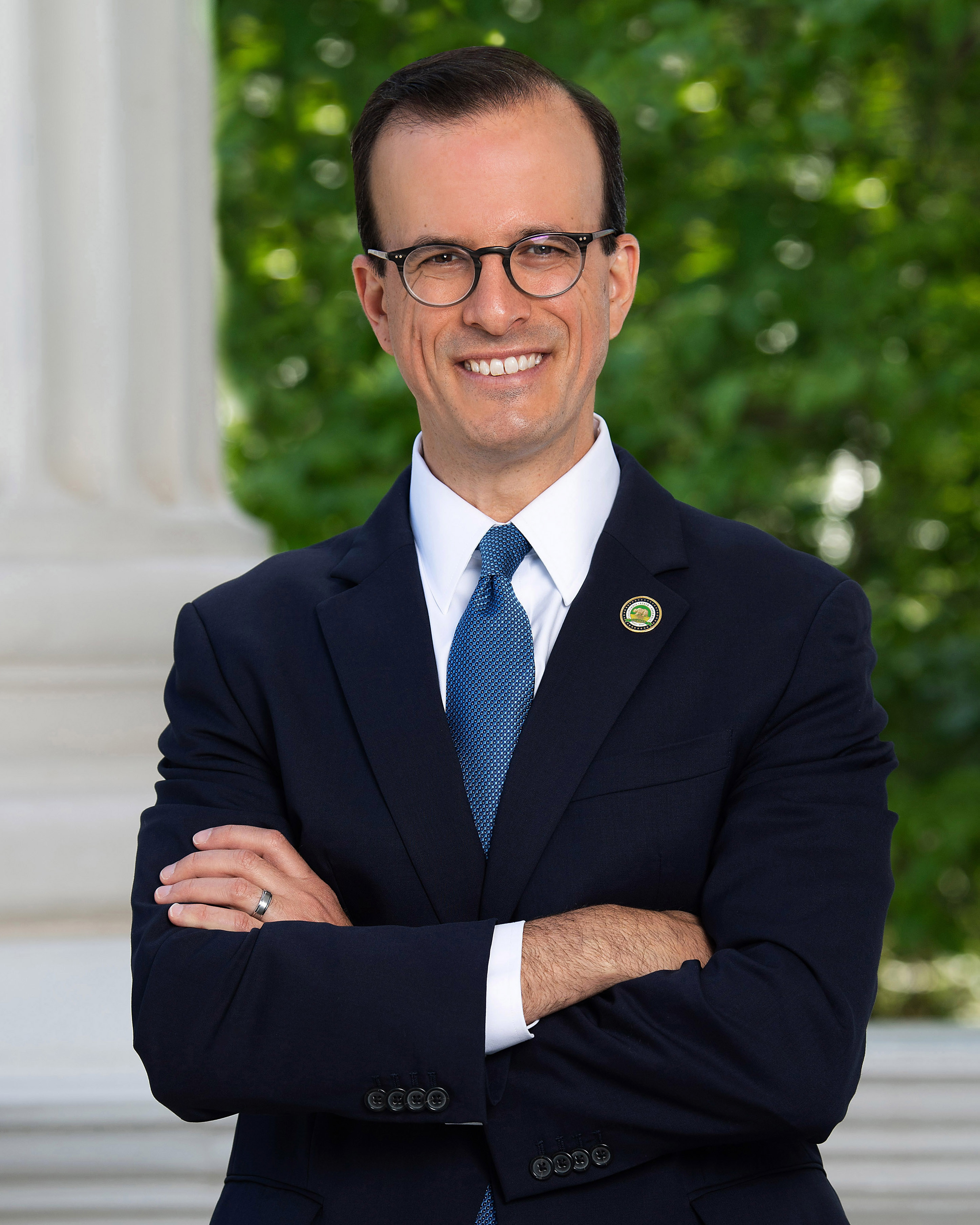
Asm. Marc Berman
Sponsored bills
Existing law authorizes a rental company, when providing a quote, or imposing charges for a rental, to separately state the rental rate, additional mandatory charges, if any, and a mileage charge, if any, that a renter must pay to hire or lease the vehicle for the period of time to which the rental rate applies, and authorizes the rental company to impose other additional charges, as specified. Existing law prohibits a rental company from charging in addition to the rental rate, additional mandatory charges, or a mileage charge, as those may be applicable, any other fee that is required to be paid by the renter as a condition of hiring or leasing the vehicle. Existing law requires, if a rental company states a rental rate in print advertisement or in a quotation, the rental company to disclose clearly in that advertisement or quotation the terms of mileage conditions relating to the advertised or quoted rental rate, as specified, and requires all rate advertisements to include a prominently displayed disclaimer providing that additional specified mandatory charges may be imposed. This bill would additionally apply the above-described provisions to third parties. The bill would also specify that mandatory third-party service fees are included in the additional mandatory charges that a rental company or third party shall not charge in addition to the rental rate. The bill would additionally require a rental company or third party to provide the total charges estimate for the entire rental, including all taxes and fees imposed by a government, as soon as specified information about the rental is provided to the rental company or third party. The bill would require a rental company or third party to clearly indicate the fuel source, as defined, of the vehicle prior to completion of a reservation. Existing law requires rental companies that impose additional mandatory charges to comply with certain requirements, including providing the person receiving the quote with a good faith estimate of the rental rate and all additional mandatory charges, as well as the total charges for the entire rental, as specified. This bill would instead require a rental company to provide the person receiving the quote with a total charges estimate of the rental rate and all additional mandatory charges for the entire rental, as specified. The bill would also require a third party that imposes additional mandatory charges to comply with specified requirements. Existing law requires a person or entity other than a rental company, including a passenger carrier or a seller of travel services, to clearly disclose the existence and amount of additional mandatory charges, as applicable, and provides that the rental car company is not responsible for the failure of that person or entity to comply with this provision if a rental company provides the person or entity with rental rate and additional mandatory charges information. This bill would instead provide that, with regard to specified requirements on imposing charges for a rental, a rental company is not responsible for the failure of a third party to comply with those requirements if the rental company provides the third party with information about certain charges, and also that, if a rental company fails to comply with those requirements when providing a third party with information about certain charges or fails to provide the third party with additional mandatory charges and fuel source information along with the rental rate information, the third party is not responsible for that failure.
The Local Agency Public Construction Act sets forth procedures that a local agency is required to follow when procuring certain services or work. The act also sets forth specific public contracting requirements for certain transit districts, including the San Mateo County Transit District for construction work contracts. The act authorizes certain local agencies, including school districts and community college districts, to engage in job order contracting, as prescribed. This bill would establish a pilot program to authorize the San Mateo County Transit District to use job order contracting as a procurement method. The bill would impose a $5,000,000 cap on awards under a single job order contract and a $1,000,000 cap on any single job order. The bill would limit the term of an initial contract to a maximum of 12 months, with extensions as prescribed. The bill would establish various procedures and requirements for the use of job order contracting under the pilot program. The bill would require the district, on or before January 1, 2030, to submit to the appropriate policy and fiscal committees of the Legislature a report on the use of job order contracting under the bill. The pilot program would be repealed on January 1, 2032. This bill would make legislative findings and declarations as to the necessity of a special statute for the San Mateo County Transit District.
Existing law provides for the regulation of charter-party carriers of passengers by the Public Utilities Commission and includes specific requirements applicable to transportation network companies and their participating drivers. Existing law defines transportation network companies as certain organizations that, using an online-enabled application or platform, connect passengers with drivers using a personal vehicle. Existing law imposes specified requirements for liability insurance coverage on transportation network companies and their drivers, including a requirement that the insurance coverage provide for uninsured motorist coverage and underinsured motorist coverage in the amount of $1,000,000 from the moment a passenger enters the vehicle of a participating driver until the passenger exits the vehicle. Under existing law, that coverage may be satisfied by insurance maintained by the participating driver, the transportation network company, or a combination of insurance maintained by the participating driver and transportation network company. This bill would lower that amount to $60,000 per person and $300,000 per incident. The bill would also make the transportation network company responsible for maintaining the uninsured motorist coverage and underinsured motorist coverage. The bill would require the commission and the Department of Insurance to collaborate on a study of the impacts of the requirements established for uninsured motorist coverage and underinsured motorist coverage to assess whether those requirements are appropriate to the risk of transportation network company services, and to report the findings of this study to specified committees of the Legislature on or before December 31, 2030. Existing law requires the commission to develop, publish, and annually update a report containing specified information, including, among other things, the commission's annual work plan and an accounting of the commission's transactions and proceedings from the prior year. Existing law requires the commission to submit that report to the Governor and Legislature no later than February 1 of each year. This bill would require the report submitted on or before February 1, 2026, to also contain certain information regarding automobile accidents reported to the commission by transportation network companies and uninsured motorist and underinsured motorist claims resulting from those accidents, as specified. The bill would require the report submitted on or before February 1, 2027, to specify the average transportation network company rider fare paid during certain time periods, as provided. This bill would make the operation of its provisions contingent upon the enactment of AB 1340 of the 2025–26 Regular Session.
Existing law requires an elections official, upon receiving a vote by mail ballot, to compare the signature on the identification envelope with either the signature appearing on the voter's affidavit or other signature appearing on a form that is part of the voter's registration record. Existing law prohibits an elections official from reviewing or considering a voter's party preference, race, or ethnicity when comparing signatures. Existing law requires an elections official, if it is determined that the signatures do not compare, to notify the voter of the opportunity to verify the voter's signature, as specified. Existing law prohibits an elections official from rejecting a vote by mail ballot with signatures that do not compare if the voter delivers a signature verification statement and the signature on the verification statement compares with the signature on file in the voter's record. Existing law prohibits an elections official from rejecting a vote by mail ballot with an unsigned identification envelope if, no later than 5 p.m. two days prior to the election, the voter signs the envelope at the office of the elections official or completes and submits an unsigned identification envelope statement, as specified. This bill would additionally prohibit an elections official, when comparing signatures, from considering a voter's identifying information, including gender, name, and address, and the amount of time spent reviewing a signature. The bill would require an elections official to notify the voter when the signatures do not compare after a specified determination is made that the signatures differ. The bill would authorize a voter to work with a nongovernmental entity to complete a signature verification statement and unsigned envelope statement. The bill would require a signature verification statement and unsigned envelope statement to contain a statement that the county elections official is required to compare the voter's signature with the signatures appearing in the voter's registration record, which may include the signature appearing on the voter's driver's license or state identification card. The bill would require the Secretary of State to publish on their internet website a single, combined vote by mail ballot signature verification statement and unsigned ballot identification envelope statement. The bill would require an elections official to accept a form for a signature verification statement or unsigned ballot identification envelope statement if the form was developed by the Secretary of State or an elections official, but would prohibit an elections official from accepting a form created by any other individual, organization, or entity. Existing law permits a member of the county grand jury, and at least one member each of the Republican county central committee, the Democratic county central committee, and of any other party with a candidate on the ballot, and any other interested organization, to observe and challenge the manner in which vote by mail ballots are handled. Existing law requires these individuals be allowed sufficiently close access to enable them to observe the vote by mail ballot return envelopes and the signatures thereon and challenge whether established procedures are being followed for, among other things, verifying signatures on the vote by mail return envelopes. This bill would additionally allow vote by mail observers to observe and challenge the manner in which those individuals handling vote by mail ballots are following procedures for verifying signatures on signature verification statements and unsigned envelope statements. Existing law requires elections officials, beginning no later than the Thursday following an election, to post updated information regarding an election on their internet website at least once per week until publication of the certified statement of results or until the only ballots left to count are vote by mail ballots for which a voter has the opportunity either to verify or provide their signature. Existing law requires the information at a minimum include updated results for any candidate for office or measure appearing on the ballot, the number of ballots processed and an estimated number of outstanding unprocessed ballots, according to specified categories, and the date and time when it is expected that the next results will be posted. This bill would instead require an elections official, beginning no later than the Thursday following an election, to post updated information regarding the election on their internet website at least two times by the following Thursday and at least twice a week thereafter until publication of the certified statement of results or until the only ballots left to count are vote by mail ballots for which a voter has the opportunity either to verify or provide their signature. The bill would revise the categories for reporting the number of ballots processed and estimated number of outstanding ballots remaining unprocessed. The bill would require the date and time when it is expected that the next results will be posted to be on the homepage of an elections official's internet website or on the stand-alone webpage for the specific election on an elections official's internet website. The bill would specify that posting a hyperlink to a separate file does not satisfy the requirements of these provisions. This bill would incorporate additional changes to Section 3019 of the Elections Code proposed by AB 827 to be operative only if this bill and AB 827 are enacted and this bill is enacted last. This bill would incorporate additional changes to Section 15104 of the Elections Code proposed by AB 16 to be operative only if this bill and AB 16 are enacted and this bill is enacted last. By imposing new duties on local elections officials, this bill would impose a state-mandated local program. The California Constitution requires the state to reimburse local agencies and school districts for certain costs mandated by the state. Statutory provisions establish procedures for making that reimbursement. This bill would provide that, if the Commission on State Mandates determines that the bill contains costs mandated by the state, reimbursement for those costs shall be made pursuant to the statutory provisions noted above.
Existing law declares the public policy of the state regarding labor organization, including, among other things, that it is necessary for a worker to have full freedom of association, self-organization, and designation of representatives of their own choosing, to negotiate the terms and conditions of their employment, and to be free from the interference, restraint, or coercion of employers of labor, or their agents, in the designation of such representatives or in self-organization or in other concerted activities for the purpose of collective bargaining or other mutual aid or protection. Existing law, the Protect App-Based Drivers and Services Act, added by Proposition 22, as approved by the voters at the November 3, 2020, statewide general election (the initiative) , categorizes app-based drivers for network companies, as defined, as independent contractors if certain conditions are met. Existing law requires, among other things, that the network company provide a health care subsidy to qualifying app-based drivers, provide a minimum level of compensation for app-based drivers, and not restrict app-based drivers from working in any other lawful occupation or business. Existing case law holds that specified provisions of the initiative are invalid on separation of powers grounds; however, the court severed the unconstitutional provisions, allowing the rest of the initiative to remain in effect. Existing law also establishes the Public Employment Relations Board (board) in state government as a means of resolving disputes and enforcing the statutory duties and rights of specified public employers and employees under various acts regulating collective bargaining. Existing law vests the board with jurisdiction to enforce certain provisions over charges of unfair practices for represented employees. This bill, the Transportation Network Company Drivers Labor Relations Act (act) , would establish that transportation network company (TNC) drivers have the right to form, join, and participate in the activities of TNC driver organizations, to bargain through representatives of their own choosing, to engage in concerted activities for the purpose of bargaining or other mutual aid or protection, and to refrain from such activities. The bill would require the board to enforce these provisions. This bill would require all TNCs to submit certain information every quarter, including information identifying and related personal work information about TNC drivers to the board in a list format, as prescribed. The bill would establish various procedures governing the certification and decertification of TNC driver organizations for purposes of representing drivers in the collective bargaining process. In this connection, the bill would require the board to determine if an entity is a TNC driver organization, as prescribed, and make certain determinations as to whether a specific organization has been designated as the bargaining representative for TNC drivers pursuant to an election process. The bill would establish various notice requirements, conditions, and timelines governing the representation of TNC drivers. The bill would, among other things, require TNCs and certified driver bargaining organizations to negotiate in good faith pursuant to the act, as described, and would set forth procedures for mediation and arbitration for purposes of reaching a sectoral agreement. The bill would set forth procedures and guidelines for the board to approve or disapprove sectoral agreements. The bill would require a TNC that was not a covered TNC when a sectoral agreement took effect but subsequently became a covered TNC to be bound by all terms of the sectoral agreement, as specified. This bill would make it an unfair practice for a TNC, an agent of a TNC, or a multicompany committee, as defined, to fail or refuse to negotiate in good faith with a certified driver bargaining organization, among other things. The bill would also make it an unfair practice for a certified driver bargaining organization or its agents to fail to negotiate in good faith with a TNC or multicompany committee, among other things. The bill would set forth unfair practice charge procedures and remedies for those practices. The bill would define terms for purposes of the act, make the provisions of the act severable, and make related legislative policy statements. Existing law, the Bagley-Keene Open Meeting Act, generally requires all meetings of a state body to be open and public. This bill would exempt any meeting of a mediator or arbitrator with any party or group to the negotiations process and the mediation and arbitration processes in the act from the Bagley-Keene Open Meeting act. Existing law, the California Public Records Act, requires state and local agencies to make their records available for public inspection, unless an exemption from disclosure applies. This bill would exclude from public disclosure information regarding TNC drivers that is submitted to the board pursuant to the act, except as specified. Existing constitutional provisions require that a statute that limits the right of access to the meetings of public bodies or the writings of public officials and agencies be adopted with findings demonstrating the interest protected by the limitation and the need for protecting that interest. This bill would make legislative findings to that effect.
Existing law requires elections officials to commence the canvass for an election no later than the Thursday following the election and to make the canvass open to the public. Existing law requires the canvass to be continued daily, Saturdays, Sundays, and holidays excepted, for not less than six hours each day until completed. Existing law requires elections officials to prepare a certified statement of the results of the election within 30 days of the election and to send the Secretary of State a complete copy of all election results within 31 days of the election. Existing law requires the Secretary of State to prepare, certify, and file a statement of the vote no later than the 38th day after the election. This bill would require elections officials, on or before the 13th day following an election, to finish counting all ballots, with certain exceptions, including provisional ballots and ballots for which the voter must either verify or provide a signature, and release a vote count for those ballots. If an elections official will not meet that deadline, they would be required to file a notice of extension, including the reason for the extension, with the Secretary of State. By increasing the duties of county elections officials, the bill would impose a state-mandated local program. The California Constitution requires the state to reimburse local agencies and school districts for certain costs mandated by the state. Statutory provisions establish procedures for making that reimbursement. This bill would provide that, if the Commission on State Mandates determines that the bill contains costs mandated by the state, reimbursement for those costs shall be made pursuant to the statutory provisions noted above.
(1) Existing law requires an elections official who receives a vote by mail ballot to compare the signature on the identification envelope with the signature in the voter's registration record. If the signature does not compare, or if the identification envelope is missing the signature, the elections official must provide notice to the voter no later than 8 days before certification of the election of the voter's opportunity to verify their signature. The voter may verify their signature no later than 5 p.m. 2 days before certification of the election, including, if applicable, by providing their signature on an unsigned identification statement. This bill would reduce those deadlines for a regularly scheduled statewide election to no later than 14 calendar days after the election for the elections official to provide notice, and no later than 5 p.m. 22 calendar days after the election for the voter to verify their signature. For an election that is not a regularly scheduled statewide election, the bill would reduce those deadlines to 8 calendar days before certification of the election for the elections official to provide notice, and no later than 5 p.m. 2 calendar days before certification of the election for the voter to verify their signature. The bill would permit an elections official to use a vote by mail ballot drop box to receive the form used by the voter to verify their signature pursuant to these provisions. The bill would require an elections official who receives a completed unsigned identification statement that is not timely submitted to compare the signatures and, if the signatures compare, add the signature to the voter's registration record for use in future elections. (2) Existing law requires the official canvass of an election to commence no later than the Thursday following the election, as specified, and to continue daily, with the exception of Saturdays, Sundays, and holidays, for not less than 6 hours each day until completed. This bill would specify that if the only ballots left to count are those for which a voter has been provided, or will be provided, the opportunity to verify or to provide their signature, and the elections official does not need to conduct the official canvas for at least 6 hours per day in order to meet the deadline for certification of the results, then the canvass may be conducted for fewer than 6 hours per day until completed. (3) This bill would incorporate additional changes to Section 2194 of the Elections Code proposed by AB 1392 to be operative only if this bill and AB 1392 are enacted and this bill is enacted last. The bill would also incorporate additional changes to Section 3019 of the Elections Code proposed by SB 3 to be operative only if this bill and SB 3 are enacted and this bill is enacted last. (4) By imposing new duties on local elections officials, the bill would create a state-mandated local program. The California Constitution requires the state to reimburse local agencies and school districts for certain costs mandated by the state. Statutory provisions establish procedures for making that reimbursement. This bill would provide that, if the Commission on State Mandates determines that the bill contains costs mandated by the state, reimbursement for those costs shall be made pursuant to the statutory provisions noted above.
Existing law, the Political Reform Act of 1974, prohibits a public officer from expending, and a candidate from accepting, public moneys for the purpose of seeking elective office. This bill would remove prohibitions imposed on a public officer or candidate to expend or accept public funds, as defined, for the purpose of seeking elective office unless the funds are earmarked by a state or local entity for education, transportation, or public safety. The bill would require candidates to abide by specified expenditure limits and meet strict criteria, as defined, to qualify for public funds. The bill would prohibit public funds from being used to pay legal defense fees or fines or to repay personal loans to their campaign. The bill would permit a statute, ordinance, or charter to establish standards to increase the expenditure limits for each qualified, voluntarily participating candidate pursuant to a specified formula. The bill would provide that the Fair Political Practices Commission is not responsible for administering or enforcing a system of public funding of candidates established by a local governmental agency. Existing law prohibits a foreign government or foreign principal, as defined, from making a contribution, expenditure, or independent expenditure in connection with the qualification or support of, or opposition to, any state or local ballot measure or in connection with the election of a candidate to state or local office. Under existing law, a person who violates this prohibition is guilty of a misdemeanor and subject to a fine equal to the amount contributed or expended. This bill would instead require that a person guilty of that misdemeanor, in addition to other penalties, be fined an amount at least equal to the amount contributed or expended, but not exceeding a maximum amount of 3 times the amount contributed or expended. The Political Reform Act of 1974, an initiative measure, provides that the act may be amended by a statute that becomes effective upon approval of the voters. This bill would require the Secretary of State to submit the provisions of the bill, as specified, to the voters for approval at the November 3, 2026, statewide general election. This bill would incorporate additional changes to Section 85320 of the Government Code proposed by AB 953 to be operative pursuant to specified conditions.
(1) Existing law, the Veterinary Medicine Practice Act, establishes the California Veterinary Medical Board, until January 1, 2026, within the Department of Consumer Affairs and sets forth its powers and duties relating to the licensure and regulation of veterinarians, veterinarian technicians, and the practice of veterinary medicine. Existing law, until January 1, 2026, authorizes the board to appoint a person exempt from civil service as an executive officer to exercise the powers and perform the duties delegated by the board and vested in them. Existing law establishes the membership of the board, including 4 licensed veterinarians, 1 registered veterinary technician, and 3 public members. Existing law makes a violation of the act a crime. This bill would extend the existence of the board until January 1, 2030, add an additional registered veterinary technician member to the board, and make conforming changes. The bill would require at least one of the licensed veterinarian members to practice in equine or livestock care, or both. (2) Existing law requires an individual to meet certain requirements for registration as a veterinary technician, as defined, including furnishing satisfactory evidence of educational or experiential qualifications, as specified. This bill would expand the qualifications that the applicant for registration as a veterinary technician may furnish as proof of compliance with the educational or experiential qualifications requirement to include, among other things, graduation from a veterinary college recognized by the board. The bill would expand the requirements of registration as a veterinary technician to include, among other things, submission of a full set of fingerprints for the purpose of conducting a criminal history record check and a state and federal criminal offender record information search, as specified. (3) Existing law requires an individual to meet certain requirements for issuance of a veterinary assistant controlled substance permit, including submitting to the Department of Justice fingerprint images and related information, as specified. This bill would require an applicant for a veterinary assistant controlled substance permit to disclose each state, Canadian province, or United States territory in which the applicant currently holds or has ever held a license, registration, certificate, or permit to practice veterinary medicine. (4) Existing law requires a veterinarian to keep a written record of all animals receiving veterinary services, and to provide a summary of that record to the owner of animals receiving veterinary services, when requested. Existing law requires the board to establish the minimum amount of information to be included in written records and summaries and the minimum duration of time that a licensed premises must retain the written record or a copy of the written record. This bill would instead require a veterinarian to provide a client or client's authorized agent with a copy of that record, upon their request, as specified. The bill would also require the veterinarian, if requested by the client or client's authorized agent, as specified, because the animal is in critical condition or direct transfer to another veterinary premises for medical care is recommended, to provide a copy or summary of the written record to the client or the client's authorized agent. If a written record is not available upon release of the animal patient, the bill would require the veterinarian to communicate information to facilitate continuity of care of the animal patient either to the receiving veterinarian or veterinary premises or, if the receiving veterinary premises is unknown, to the client or the client's authorized agent. This bill would also require a licensee manager to provide a client or client's authorized agent, upon their request, with a record of client payments made to the veterinary premises related to services and treatment provided, as specified. The bill would require a record of client payments made to the veterinary premises related to services and treatments provided to be maintained for a minimum of 3 years after the animal's last visits. The bill would also require a licensee manager to make any records related to the services a veterinarian has provided on behalf of the registered veterinary premises available for inspection by that veterinarian. By expanding the requirements of the act, the violation of which is a crime, the bill would impose a state-mandated local program. (5) Existing law requires the board to establish a regular inspection program that will provide for random, unannounced inspections of veterinary premises and requires the board to inspect at least 20% of veterinary premises annually. This bill would, instead, provide that the random inspections described above shall be announced or unannounced. The bill would remove the requirement for the board to inspect 20% of veterinary premises annually and would, instead, require the board to make every reasonable effort to ensure veterinary premises are inspected in a timely manner. (6) Existing law authorizes the board to revoke or suspend for a certain time the license or registration of a veterinarian or veterinarian technician to practice veterinary medicine, as specified, and, in addition to its authority to suspend or revoke a license or registration, to assess a fine not in excess of $5,000 against a licensee or registrant, as specified. Existing law authorizes the board to place a licensee or registrant on probation, as specified, and to issue a probationary veterinary assistant controlled substance permit, as specified. Existing law requires the board to prioritize its investigative and prosecutorial resources to ensure that veterinarians and registered veterinary technicians representing the greatest threat of harm are identified and disciplined expeditiously, as specified. Existing law authorizes the executive officer to issue a citation to a veterinarian or registered veterinary technician for specified violations. Existing law authorizes the board to deny, revoke, or suspend a license or registration for specified violations, including a violation of any federal statute, rule, or regulation or any of the statutes, rules, or regulations of this state regulating dangerous drugs or controlled substances. Existing law authorizes the board, upon a plea or verdict of guilty or a conviction following a plea of nolo contendere made to a charge of a felony or of any offense related to the practice of veterinary medicine, to order the suspension or revocation of the license or registration of the convicted individual or to assess a fine, as specified. This bill would recast and expand the above-described authorizations and requirements for the board and authorizations for the executive officer related to the disciplinary proceedings of a licensee or registrant to also apply to a veterinary assistant controlled substance permitholder. The bill would authorize the board to place on probation a license, registration, or permit for certain violations, including the above-described violations relating to dangerous drugs or controlled substances, and would specify that dangerous drugs includes antimicrobial drugs in animal feed. The bill would authorize the executive officer to issue a citation to a person or entity for practicing or offering to practice veterinary medicine without a license, registration, or permit, as specified. The bill would authorize a veterinary assistant controlled substance permitholder to, under the supervision of a licensed veterinarian, compound drugs for animal use, as specified. The bill would authorize a licensee, registrant, or permitholder to enter into a settlement to resolve an administrative action, as specified. Existing law authorizes the board, on reinstatement of a license or registration, to impose certain terms and conditions to be followed by the licensee or registrant, including requiring the licensee or registrant to obtain additional professional training and to pass an examination upon completion of the training. Existing law requires the holder of a revoked license or registration that is reinstated after its expiration to pay a reinstatement fee, as specified. Existing law provides that a person who fails to renew their license within five years of its expiration may not renew it, and it shall not be restored, reissued, or reinstated, but such a person may apply for and obtain a new license, as specified. This bill would also authorize the board to impose the above-referenced terms and conditions on the reinstatement of a veterinary assistant controlled substance permit, and would impose the above-described fee requirement on the reinstatement of that permit. The bill would deem a reinstatement petition abandoned if enforcement fees and costs, as applicable, are not paid by a petitioner within one year of the effective date of a decision reinstating the license, registration, or permit. The bill would deem a license, registration, or permit canceled if it is not renewed within 5 years after its expiration, but would allow the licensee, registrant, or permitholder to apply for and obtain a new license, registration, or permit, as specified. Existing law requires the executive officer in all cases of suspension, revocation, or restriction of licenses or assessment of fines to enter on the register the fact of suspension, revocation, restriction, or fine, as the case may be. Existing law deems a record of any suspension, revocation, restriction, or fine as made by the county clerk to be prima facie evidence of the fact thereof, and of the regularity of all the proceedings of the board in the matter of the suspension, revocation, restriction, or fine. Existing law requires the board to, upon denial of an application for registration, provide certain information related to the denial, as specified. This bill would delete those provisions. Existing law authorizes a person whose license or registration has been revoked or who has been placed on probation to petition the board for reinstatement or modification of penalties, as specified. This bill would require those petitions to be accompanied by a full set of fingerprints for purposes of conducting a criminal history record check. (7) Existing law requires the board to collect specified fees related to, among other things, licensure, registration, issuance of permit, course licensure, and veterinary premises registration and to credit those fees to the California Veterinary Medical Board Contingent Fund, an account in the Professions and Vocations Fund subject to appropriation by the Legislature. Existing law requires the fee for filing an application for approval of a school or institution offering a curriculum for training registered veterinary technicians to be set by the board at an amount not to exceed $300 and requires the school or institution to pay for the reasonable regulatory costs incident to an onsite inspection conducted by the board, as specified. Existing law requires the fees assessed by the board to be reduced, upon specified conditions, but not reduced so as to cause the California Veterinary Medical Board Contingent Fund to have a reserve of less than 3 months of annual authorized board expenditures. This bill would recast those provisions and would revise the cost of those fees to not exceed specified amounts. The bill would establish new categories for veterinary premises registration fees based on the number of full-time equivalent veterinarians providing veterinary services at the premises and would define terms for that purpose. The bill would delete the above-described provisions related to filing an application for approval of a school or institution offering a curriculum for training registered veterinary technicians and the reduction of fees. (8) Existing law requires the board to issue renewal licenses only to applicants who have completed a minimum of 36 hours of continuing education in the preceding 2 years, except as specified, and provides sources to earn continuing education credit, including courses offered by nonprofit annual conferences established in conjunction with state veterinary medical associations. Existing law authorizes the board to require, if the board determines that the public health and safety would be served by requiring all registrants to continue their education after receiving registration, that they submit assurances satisfactory to the board that they will, during the succeeding renewal period, inform themselves of the developments in the field of animal health technology since the issuance of their certificate of registration, as specified. This bill would recast those provisions to instead require all holders of veterinarian licenses and veterinary technician registrations to, except for during the first renewal period, obtain continuing education relevant to developments in the practice of veterinary medicine, as specified, and would make conforming changes. The bill would require a person applying for renewal to certify, under penalty of perjury, that they are in compliance with the applicable continuing education requirements. By expanding the scope of a crime, the bill would impose a state-mandated local program. This bill would authorize the board to audit the records of all applicants to verify the completion of the continuing education requirement. The bill would revise the courses that previously fulfilled that continuing education requirement by, among other things, removing courses offered by the nonprofit annual conferences described above. The bill would, among other things, authorize a veterinarian or a veterinarian technician who teaches a course that meets the continuing education requirement to receive continuing education credit, as specified. The bill would authorize continuing education credit to be received for, among other things, passing the California Veterinary Law Examination. The bill would delete the above provision related to registrant continuing education. This bill would require the board to issue renewed veterinary technician registrations to only those applicants who have completed a minimum of 20 hours of continuing education in the preceding 2 years. The bill would specify sources to earn continuing education credit, including taking self-study courses. The bill would require providers offering continuing education courses for veterinarians or veterinarian technicians to comply with specified requirements and would authorize the board, for good cause, to adopt an order specifying, on a prospective basis, that a continuing education source is no longer an acceptable source. (9) Existing law requires the board to approve all schools or institutions offering a curriculum for training registered veterinary technicians and to furnish application forms to schools requesting approval. This bill would delete those approval and application form requirements. (10) This bill would incorporate additional changes to Sections 4827 and 4883 of the Business and Professions Code proposed by AB 867 to be operative only if this bill and AB 867 are enacted and this bill is enacted last. (11) The California Constitution requires the state to reimburse local agencies and school districts for certain costs mandated by the state. Statutory provisions establish procedures for making that reimbursement. This bill would provide that no reimbursement is required by this act for a specified reason.