

Existing law establishes the California Community Colleges, under the administration of the Board of Governors of the California Community Colleges, as one of the segments of postsecondary education in this state. Existing law, the Seymour-Campbell Student Success Act of 2012, provides that the purpose of the act is to increase California community college student access and success by providing effective core matriculation services of orientation, assessment and placement, counseling, and other education planning services, and academic interventions. This bill would require the board of governors to require all community colleges to award degrees and certificates retroactively in accordance with specified provisions. The bill would require, commencing with the 2026–27 academic year, a community college, before the beginning of the spring term of the academic year, to identify students who, during the previous 5 academic years, (1) have completed the semester or quarter units required to receive a degree or certificate, (2) need 12 semester units or 18 quarter units, or less, to complete the minimum number of units required to receive a degree or certificate, or (3) have completed the general education transfer requirements, and to notify those students, as provided. This bill would require, beginning in September 2026, a community college to annually identify and notify new and returning students who do not have an education plan and ensure that the students identified receive education plans before the end of their first academic year, as provided. By imposing additional duties on community colleges, this bill would impose a state-mandated local program. The California Constitution requires the state to reimburse local agencies and school districts for certain costs mandated by the state. Statutory provisions establish procedures for making that reimbursement. This bill would provide that, if the Commission on State Mandates determines that the bill contains costs mandated by the state, reimbursement for those costs shall be made pursuant to the statutory provisions noted above.
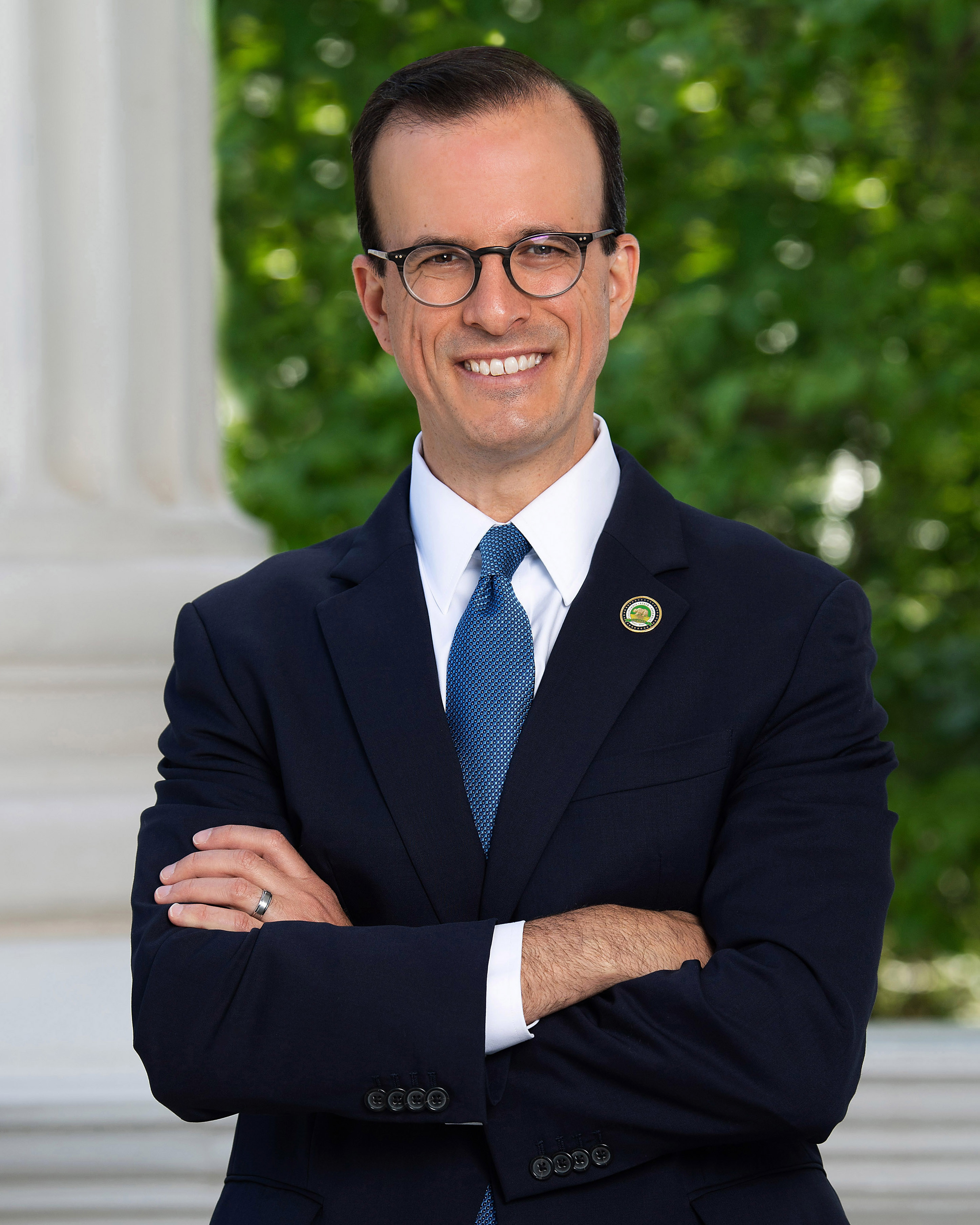
Asm. Marc Berman
Sponsored bills
Existing law requires the State Board of Education to adopt statewide academically rigorous content standards in the core curriculum areas of reading, writing, mathematics, history/social science, and science, as specified. Existing law requires the Instructional Quality Commission to, among other things, recommend curriculum frameworks to the state board and develop criteria for evaluating instructional materials. This bill would require the state board to, on or before January 1, 2028, develop and adopt academically rigorous content standards for ethnic studies instruction in high school. The bill would require the commission, on or before January 1, 2028, to review and recommend to the state board curriculum frameworks and instructional materials for ethnic studies instruction in high school, as specified. The bill would require the state board to provide the commission with evaluation criteria to use in providing its review and recommendations. The bill would state the intent of the Legislature to enact subsequent legislation to establish an advisory committee with a majority of the advisory committee's members being experts in African American studies, Asian American and Pacific Islander studies, Native American studies, and Latino and Chicanx studies, to provide input to the state board on proposed content standards and to the commission on proposed curriculum frameworks and instructional materials for ethnic studies instruction in high school. Existing law requires a pupil to complete designated coursework while in grades 9 to 12, inclusive, in order to receive a diploma of graduation from high school. These graduation requirements include, commencing for pupils graduating in the 2029–30 school year, the completion of a one-semester course in ethnic studies meeting specified requirements. Under existing law, the requirement to complete an ethnic studies course may be fulfilled by the completion of, among others, a course based on the model curriculum developed by the Instructional Quality Commission, an ethnic studies course taught as part of a course that has been approved as meeting the A–G requirements of the University of California and the California State University, or a locally developed ethnic studies course approved by the governing board of a school district or the governing body of a charter school. Existing law requires the curriculum, instruction, and instructional materials for these ethnic studies courses to meet specified requirements, including that they not reflect or promote any bias, bigotry, or discrimination against any person or group of persons on the basis of certain characteristics. Existing law makes these provisions relating to ethnic studies courses operative only upon an appropriation of funds by the Legislature for purposes of these provisions. This bill would require the curriculum, instruction, and instructional materials for any high school ethnic studies course, including ethnic studies courses meeting high school graduation requirements, to meet the above-described requirements, and would require the curriculum, instruction, and instructional materials for all high school ethnic studies courses to additionally, among other things, foster multicultural respect and understanding and focus on the domestic experience and stories of historically marginalized peoples in American society. To the extent that the bill would impose new duties on local educational agencies, the bill would impose a state-mandated local program. The bill would require a school district, county office of education, or charter school to provide, on or before June 30, 2026, the State Department of Education with a copy of all curricula, instruction, and instructional materials in ethnic studies that schools offer or plan to offer to pupils in any of grades 9 to 12, inclusive, and the adoption calendar for curricula, instruction, and instructional materials in ethnic studies proposed for adoption by the governing board or body of the local educational agency for instruction to these pupils. The bill would require a local educational agency that does not have an ethnic studies course in place for its pupils in any of grades 9 to 12, inclusive, on or before June 30, 2026, to provide the department with a copy of all curricula, instruction, and instructional materials in ethnic studies that its schools seek to adopt at least 60 days before being first presented at a public meeting of the governing board or body of the local educational agency for instruction to these pupils. The bill would require the department to post the information received pursuant to these requirements on its internet website. To the extent that the bill would impose new duties on local educational agencies, it would impose a state-mandated local program. The bill would require the department to monitor compliance with the requirements of this bill as part of its annual compliance monitoring of state and federal programs and to provide a report to the relevant policy and fiscal committees of the Legislature summarizing the data collected through compliance monitoring, as specified. The California Constitution requires the state to reimburse local agencies and school districts for certain costs mandated by the state. Statutory provisions establish procedures for making that reimbursement. This bill would provide that, if the Commission on State Mandates determines that the bill contains costs mandated by the state, reimbursement for those costs shall be made pursuant to the statutory provisions noted above.
Existing law, the Medical Practice Act, establishes the Medical Board of California within the Department of Consumer Affairs and sets forth its powers and duties relating to the licensure and regulation of physicians and surgeons. Existing law prohibits a person from using the words "doctor" or "physician," the letters or prefix "Dr.," the initials "M.D.," or any other terms or letters indicating or implying that the person is a physician and surgeon, physician, surgeon, or practitioner, unless the person has been issued a physician's and surgeon's certificate by the board, and makes a violation of these provisions a crime. This bill would specifically prohibit a person who has earned a Master of Divinity from displaying the title "MDiv" or "M.D.i.v." in a communication or advertisement relating to the person's practice unless the title is clearly distinguishable from the title "MD" or "M.D." The bill would provide that prohibited displays include, but are not limited to, using different colors, fonts, or font sizes in a way that makes the "MD" or "M.D." more prominent than the "iv" or "i.v." The bill would provide that a person who violates this provision is not subject to criminal penalties, as specified.
Maddy summaryThis bill establishes January as National Human Trafficking Awareness Month in California to raise public awareness about human trafficking. The resolution recognizes the severity of human trafficking as a felony crime and highlights statistics showing its prevalence across the country and specific challenges with identifying male victims and labor trafficking cases. It aims to educate the public and encourage reporting and support for victims during this designated month.
Existing law, the Contractors State License Law, establishes the Contractors State License Board within the Department of Consumer Affairs and sets forth its powers and duties relating to the licensure and regulation of contractors. Existing law makes it a misdemeanor for a person to engage in the business, or act in the capacity, of a contractor without a license, unless exempted. Existing law exempts from the Contractors State License Law, among other things, a nonprofit corporation providing assistance to an owner, as specified. This bill would exempt from that law an artist who draws, paints, applies, executes, restores, or conserves a mural, as defined, pursuant to an agreement with a person who could legally authorize the work.
Existing law grants to a depicted individual a cause of action against a person who creates and intentionally discloses sexually explicit material if the person knows, or reasonably should have known, that the depicted individual in that material did not consent to its creation or disclosure or who intentionally discloses sexually explicit material that the person did not create if the person knows the depicted individual in that material did not consent to the creation of the sexually explicit material. Existing law defines "sexually explicit material" for purposes of that provision to mean any portion of an audiovisual work that shows the depicted individual performing in the nude or appearing to engage in, or being subjected to, sexual conduct and defines "depicted individual" to mean an individual who appears, as a result of digitization, to be giving a performance the individual did not actually perform or to be performing in an altered depiction. Existing law authorizes a plaintiff to recover, among other relief, statutory damages of not less than $1,500 but not more than $30,000, or $150,000 for a malicious violation, as prescribed. This bill would revise and recast the provision described above to additionally grant to a depicted individual a cause of action against a person who knows, or reasonably should know, that the depicted individual was a minor when the digitized sexually explicit material was created and would additionally grant a cause of action to that depicted individual against a person who knowingly facilitates or recklessly aids or abets conduct prohibited by that provision. The bill would define "digitized sexually explicit material" to mean any portion of a visual or audiovisual work created or substantially altered through digitization, including an image, that shows the depicted individual in the nude or appearing to engage in, or being subjected to, sexual conduct. This bill would make a person that provides a service that enables the ongoing operation of a deepfake pornography service presumed to be engaged in knowing facilitation or reckless aiding or abetting, as described above, if a depicted individual or public prosecutor provides the person with evidence sufficient to demonstrate that the person is providing services that enable the ongoing operation of a deepfake pornography service that engages in conduct described in the provisions described above, and the person fails to take all necessary steps to stop providing services that enable the ongoing operation of a deepfake pornography service within 30 days of receiving that evidence, as specified. This bill would increase the maximum statutory damages available to a depicted individual to $50,000 if the violation was not malicious and $250,000 for a malicious violation and would authorize certain public attorneys to bring a civil action to enforce these provisions, as specified.
Existing law, the Mello-Roos Community Facilities Act of 1982, authorizes the legislative body of a local agency, as defined, to create a community facilities district to finance specified types of services within an area. Existing law prohibits a territory that is dedicated or restricted to agricultural, open-space, or conservation uses from being included within or annexed to a specified community facilities district without the landowner's consent. This bill would, notwithstanding those prohibitions, specify that for territory that is located within the regional shoreline of the County of San Mateo, the consent of a landowner is not required, if specified conditions are met. This bill would make legislative findings and declarations as to the necessity of a special statute for the County of San Mateo.
Existing law establishes various healing arts boards within the Department of Consumer Affairs that license and regulate various healing arts licensees. Existing laws, including, among others, the Medical Practice Act and the Dental Practice Act, make it a crime for a person who is not licensed as a specified health care professional to use certain words, letters, and phrases or any other terms that imply that they are authorized to practice that profession. Existing law requires, with certain exemptions, a health facility, clinic, physician's office, or office of a group practice that uses generative artificial intelligence, as defined, to generate written or verbal patient communications pertaining to patient clinical information, as defined, to ensure that those communications include both (1) a disclaimer that indicates to the patient that a communication was generated by generative artificial intelligence, as specified, and (2) clear instructions describing how a patient may contact a human health care provider, employee, or other appropriate person. Existing law provides that a violation of these provisions by a physician shall be subject to the jurisdiction of the Medical Board of California or the Osteopathic Medical Board of California, as appropriate. This bill would make provisions of law that prohibit the use of specified terms, letters, or phrases to falsely indicate or imply possession of a license or certificate to practice a health care profession, as defined, enforceable against an entity who develops or deploys artificial intelligence (AI) or generative artificial intelligence (GenAI) technology that uses one or more of those terms, letters, or phrases in its advertising or functionality. The bill would prohibit the use by AI or GenAI technology of certain terms, letters, or phrases that indicate or imply that the advice, care, reports, or assessments being provided through AI or GenAI is being provided by a natural person with the appropriated health care license or certificate. This bill would make a violation of these provisions subject to the jurisdiction of the appropriate health care profession board, and would make each use of a prohibited term, letter, or phrase punishable as a separate violation. By expanding the scope of existing crimes, this bill would impose a state-mandated local program. The California Constitution requires the state to reimburse local agencies and school districts for certain costs mandated by the state. Statutory provisions establish procedures for making that reimbursement. This bill would provide that no reimbursement is required by this act for a specified reason.
Existing law makes it a crime to willfully threaten to commit a crime that will result in death or great bodily injury to another person, with the specific intent that the statement is to be taken as a threat that, on its face and under the circumstances in which it is made, is so unequivocal, unconditional, immediate, and specific as to convey to the person threatened a gravity of purpose and an immediate prospect of execution of the threat, and thereby reasonably causes the threatened person to be in sustained fear for their own safety or the safety of their immediate family, as defined. Under existing law, this crime is punishable by imprisonment in a county jail for no more than one year for a misdemeanor, or by imprisonment in state prison for a felony. This bill would make it a crime for a person to willfully threaten, by any means, including, but not limited to, an image or threat posted or published on an internet web page, to commit a crime at specified locations, including a daycare and workplace, with specific intent that the statement is be taken as a threat, even if there is no intent of actually carrying it out, if the threat, on its face and under the circumstances in which it is made is so unequivocal, unconditional, immediate, and specific as to convey to the person or persons threatened a gravity of purpose and an immediate prospect of execution of the threat, and if the threat causes a person or person to reasonably be in sustained fear for their own safety or the safety of others at the specified locations. This bill would make this crime, for a person 18 years of age or older, punishable as a wobbler by imprisonment in the county jail for not more than one year or by imprisonment in the county jail for 16 months or 2 or 3 years. If a person under 18 years of age commits this crime, the bill would require the person to be referred to specified services in lieu of being declared a ward of the court, if eligible. If the person is ineligible, the bill would require the offense to be punished as a misdemeanor. By creating a new crime and imposing additional duties on local governments, this bill would create a state-mandated local program. The California Constitution requires the state to reimburse local agencies and school districts for certain costs mandated by the state. Statutory provisions establish procedures for making that reimbursement. This bill would provide that with regard to certain mandates no reimbursement is required by this act for a specified reason. With regard to any other mandates, this bill would provide that, if the Commission on State Mandates determines that the bill contains costs so mandated by the state, reimbursement for those costs shall be made pursuant to the statutory provisions noted above.
Existing law authorizes the Public Utilities Commission to fix the rates and charges for public utilities, including electrical corporations and gas corporations, and requires those rates and charges to be just and reasonable. Under existing law, a regulated public utility is prohibited from using ratepayer funds for advocacy-related activities that are political or do not otherwise benefit ratepayers. This bill would prohibit, except as provided, each electrical corporation or gas corporation from recording to accounts that contain expenses that the electrical corporation or gas corporation recovers from ratepayers, or otherwise recovering from ratepayers, various expenses, including those associated with political influence activities or promotional advertising, as specified. The bill would require each electrical corporation or gas corporation to clearly and conspicuously disclose in all of its public messages whether the costs of the public messages are paid for by the corporation's shareholders or ratepayers. The bill would require each electrical corporation or gas corporation, on or before May 31, 2026, and annually thereafter, to report, as part of a specified statement to the commission, certain related information. The bill would require the commission to make the reports publicly available, as provided. This bill would require the commission to assess a civil penalty, based on the severity of the violation, against an electrical corporation or gas corporation that violates the prohibition described above, or that neglects to comply with any part or provision of any order, decision, decree, rule, direction, demand, or requirement of the commission related to implementing that prohibition, as provided. Under existing law, a violation of the Public Utilities Act or any order, decision, rule, direction, demand, or requirement of the commission is a crime. Because the above provisions would be part of the act and a violation of a commission action implementing this bill's requirements would be a crime, the bill would impose a state-mandated local program. The California Constitution requires the state to reimburse local agencies and school districts for certain costs mandated by the state. Statutory provisions establish procedures for making that reimbursement. This bill would provide that no reimbursement is required by this act for a specified reason.