

Existing law defines an "automobile dismantler" as a person who is engaged in the business of buying, selling, or dealing in vehicles that are required to be registered under the Vehicle Code, for the purpose of dismantling the vehicles, who buys or sells the integral parts and component materials of those vehicles, or deals in used motor vehicle parts, as specified. The definition of "automobile dismantler" also includes a person who keeps or maintains on property owned by the person, or under their possession or control, 2 or more unregistered motor vehicles no longer intended for, or in condition for, legal use on the highways, as specified. Existing law makes it a crime for a person to act as an automobile dismantler without having an established place of business, meeting specified requirements, and having a current, valid license or temporary permit issued by the Department of Motor Vehicles. This bill would revise the definition of an automobile dismantler to include a person who keeps or maintains on property owned by the person, or under their possession or control, for any of the above-described purposes 9 or more used catalytic converters that have been cut from a motor vehicle using a sharp implement. The bill would make a first violation of acting as an automobile dismantler due to possessing 9 or more catalytic converters as described above punishable as an infraction, and subsequent violations punishable as a misdemeanor, as specified. By expanding the definition of an automobile dismantler, the bill would expand the scope of an existing crime, thereby imposing a state-mandated local program. The bill would exclude from the revised definition of an automobile dismantler a junk dealer, recycler, commercial enterprise, or core recycler, as specified, that has 9 or more of these used catalytic converters. Existing law excludes from the definition of an "automobile dismantler" the owner or operator of any premises on which 2 or more unregistered and inoperable vehicles are held or stored, if the vehicles are used for restoration or replacement parts or otherwise, in conjunction with specified businesses, including the operation and maintenance of any fleet of motor vehicles used for the transportation of persons or property. This bill would also exclude from the definition of an "automobile dismantler" a person who possesses 9 or more catalytic converters that are used in the same manner as the unregistered and inoperable vehicles. The California Constitution requires the state to reimburse local agencies and school districts for certain costs mandated by the state. Statutory provisions establish procedures for making that reimbursement. This bill would provide that no reimbursement is required by this act for a specified reason.
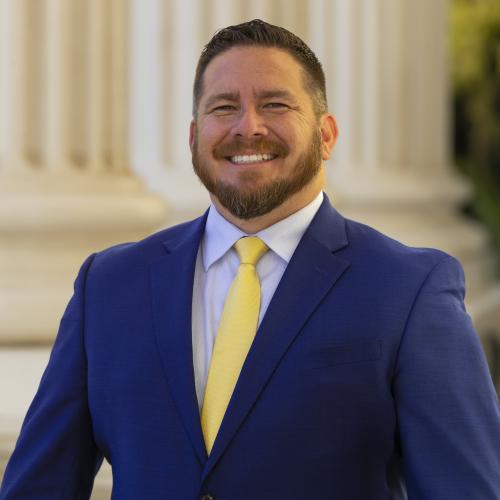
Asm. Juan Alanis
Sponsored bills
Existing law generally provides for the compensation of victims and derivative victims of specified types of crimes by the California Victim Compensation Board from the Restitution Fund, a continuously appropriated fund, for specified losses suffered as a result of those crimes, including emotional injuries where the crime was a violation of specified provisions. This bill would expand eligibility for compensation to include emotional injuries from felony violations of, among other things, attempted murder, rape and sexual assault, mayhem, and stalking. By expanding the authorization for the use of moneys in the continuously appropriated Restitution Fund, this bill would make an appropriation.
Existing law requires the State Department of Public Health, subject to an appropriation in the Budget Act of 2016, to award funding to local health departments, local governmental agencies, or on a competitive basis to other organizations, as specified, to support or establish programs that provide naloxone or another opioid antagonist to first responders and at-risk opioid users through programs that serve at-risk drug users. Existing law exempts from civil liability a person who, in good faith and not for compensation, renders emergency medical or nonmedical care or assistance at the scene of an emergency other than an act or omission constituting gross negligence or willful or wanton misconduct, as provided. This bill would require each stadium, concert venue, and amusement park to maintain unexpired doses of naloxone hydrochloride or any other opioid antagonist on its premises at all times, and to ensure that at least 2 employees are aware of the location of the naloxone hydrochloride or other opioid antagonist. The bill would exempt from civil or criminal liability a person who, in good faith, administers naloxone hydrochloride or another opioid antagonist by nasal spray or auto-injector on the premises of a stadium, concert venue, or amusement park, other than an act or omission constituting gross negligence or willful or wanton misconduct, except as specified. The bill would exempt from civil or criminal liability a stadium, concert venue, or amusement park, or its employees, or an entity that owns, occupies, or operates a stadium, concert venue, or amusement park, or its employees, for the administration of naloxone hydrochloride or another opioid antagonist, or the failure to administer naloxone hydrochloride or another opioid antagonist, on the premises of the stadium, concert venue, or amusement park, as provided.
Existing law establishes the Department of Consumer Affairs under the direction of the Director of Consumer Affairs and sets forth its powers and duties relating to the administration of the various boards under its jurisdiction that license and regulate various professions and vocations. Existing law requires a board to expedite, and authorizes a board to assist, in the initial licensure process for an applicant who supplies satisfactory evidence to the board that the applicant has served as an active duty member of the Armed Forces of the United States and was honorably discharged. Existing law authorizes a board to adopt regulations necessary to administer those provisions. This bill would additionally require, on and after July 1, 2024, a board to expedite, and authorize a board to assist, in the initial licensure process for an applicant who supplies satisfactory evidence to the board that the applicant is an active duty member of a regular component of the Armed Forces of the United States enrolled in the United States Department of Defense SkillBridge program, as specified, and would provide that regulations to administer those provisions be adopted in accordance with the rulemaking provisions of the Administrative Procedure Act.
Existing law, the Ralph C. Dills Act (Dills Act) , governs collective bargaining between the state and recognized state public employee organizations. Existing law excludes certain employees from coverage under the Dills Act, including, among others, managerial employees, supervisory employees, and confidential employees, as defined. Existing law creates the Public Employment Relations Board and authorizes it, among other things, to determine appropriate state employee bargaining units, as specified. This bill would enact the Legislature Employer-Employee Relations Act, to provide employees of the Legislature, except certain specified categories of excluded employees, the right to form, join, and participate in the activities of employee organizations of their own choosing for the purpose of representation on all matters of employer-employee relations. The bill would prescribe rights, duties, and prohibitions in this context that parallel those in the Dills Act. For the purposes of bargaining or meeting and conferring in good faith, the bill would define "employer" to mean the Assembly Committee on Rules or the Senate Committee on Rules. The bill would require the employer to meet and confer with representatives of recognized employee organizations regarding matters within the scope of representation. The bill would exclude certain matters from the scope of representation, as specified. The bill would grant exclusive jurisdiction to the Public Employment Relations Board to make an initial determination as to whether charges of unfair practices are justified, and, if so, the necessary remedy, as specified. However, the bill would prohibit the board from issuing a decision or order that intrudes upon or interferes with the Legislature's core function of efficient and effective lawmaking or the essential operation of the Legislature. The bill would require the board to determine appropriate bargaining units, and would prohibit the board from including employees in a bargaining unit that includes employees other than those of the employer. The bill would prohibit the board from including within a bargaining unit employees from both the Assembly and Senate. This bill would make it a misdemeanor for any person to willfully resist, prevent, impede, or interfere with any member of the board, or any of its agents, in the performance of duties pursuant to its provisions. By expanding the definition of a crime, this bill would impose a state-mandated local program. The bill would provide that the provisions of the Legislature Employer-Employee Relations Act are severable. The bill would become operative on July 1, 2026. The California Constitution requires the state to reimburse local agencies and school districts for certain costs mandated by the state. Statutory provisions establish procedures for making that reimbursement. This bill would provide that no reimbursement is required by this act for a specified reason. This bill would additionally exempt from public inspection records related to activities governed by the Legislature Employer-Employee Relations Act that reveal the employer's deliberative processes, impressions, evaluations, opinions, recommendations, meeting minutes, research, work product, theories, or strategy, or that provide instruction, advice, or training to employees who do not have full collective bargaining and representation rights under the Legislature Employer-Employee Relations Act. Existing constitutional provisions require that a statute that limits the right of access to the meetings of public bodies or the writings of public officials and agencies be adopted with findings demonstrating the interest protected by the limitation and the need for protecting that interest. This bill would make legislative findings to that effect.
Existing law provides for various memorials and monuments within the State Capitol Building and on the State Capitol grounds. Existing law prescribes various duties of the Department of General Services in connection with the development and maintenance of the State Capitol Building and grounds. This bill would authorize a nonprofit organization that represents blind veterans, in consultation with the Department of General Services, to plan, construct, and maintain a braille American flag to serve as a monument to the blind veterans of California and the United States in the State Capitol Building. The bill would specify duties for the Department of General Services in connection with the planning, construction, and maintenance of the monument. The bill would prohibit the construction of the monument until the Joint Rules Committee of the California Legislature approves and adopts a plan for the monument and the committee and the Department of Finance determine that sufficient private funding is available to construct and maintain the monument.
The Horse Racing Law vests the California Horse Racing Board with jurisdiction and supervision over horse racing meetings in the state. The Horse Racing Law requires the board to issue licenses to associations and fairs that participate in horse racing meetings with parimutuel wagering and to allocate racing dates to those associations and fairs in accordance with that law. The Horse Racing law authorizes the board to issue a license to an association or a fair to conduct a horse racing meeting in accordance with its provisions at the track specified in the written application, as specified. Under the Horse Racing Law, the board may allocate racing weeks to an applicant, subject to specified limitations, and specify the racing days, dates, and hours for horse racing meetings that will be in the public interest and will subserve the purposes of that law. The Horse Racing Law requires the board to make allocations of racing weeks as it deems appropriate and specifies the maximum number of racing weeks that may be allocated for horse racing other than at fairs, including, for thoroughbred racing, a maximum of 44 weeks per year of racing weeks in the northern zone and a maximum of 49 weeks per year in the combined central and southern zones. If the board does not license a thoroughbred race meet to be conducted by a racing association at a racetrack located in a specified location in the northern zone after July 1, 2024, this bill would deem a thoroughbred racing association, or racing fair, licensed to meet in the southern or central zone to be operating in the northern zone during certain racing weeks for the purpose of conducting all permissible forms of wagering in the northern zone and making and receiving required distributions from those wagers. The bill would require mandatory distributions to be made in accordance with requirements applicable to the northern zone, as specified, and would require amounts generated for purses and commissions to be distributed in accordance with prescribed requirements. The Horse Racing Law authorizes the board to permit fairs to operate satellite wagering facilities at their fairgrounds, under certain conditions. In addition, the Horse Racing Law permits any fair in the Counties of Kern or Shasta, with the approval of the Department of Food and Agriculture and the authorization of the board, to operate one satellite wagering facility within the boundaries of the fair, as specified. This bill would permit any fair in the County of Stanislaus, with the approval of the Department of Food and Agriculture and the authorization of the board, to operate one satellite wagering facility within the boundaries of the fair, on the same conditions as apply in the Counties of Kern and Shasta.
Existing law requires the loan of a firearm to be processed through a licensed firearm dealer. Existing law exempts from this requirement the loan of a firearm to a person enrolled in the course of basic training prescribed by the Commission on Peace Officer Standards and Training, or any other course certified by the commission, for purposes of participation in the course. Existing law prohibits the sale, transfer, or possession of a large-capacity magazine, as defined. Existing law exempts from this prohibition the sale or transfer to, or the possession by, a peace officer or retired peace officer, as specified, or to or by a person enrolled in the course of basic training prescribed by the Commission on Peace Officer Standards and Training, or any other course certified by the commission, for purposes of participation in the course, as specified. Existing law prohibits the sale, transfer, or possession of an assault weapon, as specified. Existing law exempts from this prohibition the sale or transfer of an assault weapon to, or the possession of an assault weapon by, a peace officer, as specified. This bill would also exempt from this prohibition the loaning of an assault weapon to, or the possession of an assault weapon by, a person enrolled in the course of basic training prescribed by the Commission on Peace Officer Standards and Training, while engaged in firearms training and being supervised by a firearms instructor. The bill would also prohibit the loaned assault weapon from leaving the training facility and would require the enrollee to be currently employed by a law enforcement agency, as specified.
Existing law defines the term "serious felony" for various purposes, including, among others, enhancing the punishment for felonies pursuant to existing sentencing provisions commonly known as the Three Strikes Law. This bill would include human trafficking of a minor within the definition of a serious felony for all purposes, including for purposes of the Three Strikes Law, except as specified. By expanding the scope of an enhancement, this bill would impose a state-mandated local program. The California Constitution requires the state to reimburse local agencies and school districts for certain costs mandated by the state. Statutory provisions establish procedures for making that reimbursement. This bill would provide that no reimbursement is required by this act for a specified reason.
This measure would proclaim the month of September 2023 as Suicide Prevention Awareness Month.