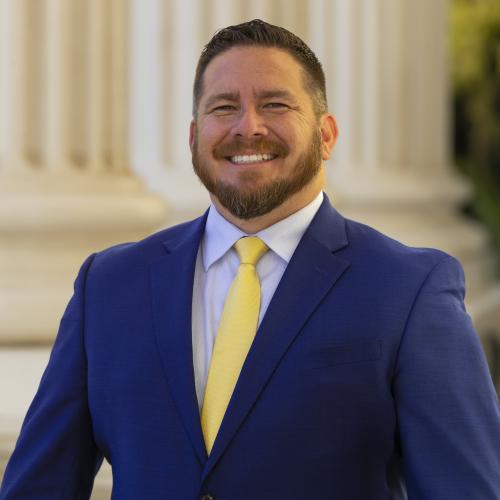
Photo of Juan Alanis
R California Assembly · District 22 On the 2026 ballot

Asm. Juan Alanis

Compare
Total votes
10,307
all sessions
Attendance
93%
551 missed
Lower than 85% of chamber peers
With party
95%
of cast votes
Near the chamber average
Bipartisan score
3%
crosses aisle rarely
Near the chamber average
Sponsored
1,102
bills & resolutions
Higher than 91% of chamber peers
Committees
19
assignments
1,102 bills and resolutions

Sponsored bills

Total
1,102
Primary
101
Co-sponsor
1,001
This page
1,102
matching current filters
Co-sponsor SCR 168
Signed into law · California Senate · Co-sponsor
Relative to Motorcycle Safety Awareness Month in California.

Maddy summaryThis bill designates May 2026 as Motorcycle Safety Awareness Month in California. It affects state agencies and organizations that typically host public awareness campaigns or educational events. The measure requires no changes to existing laws or regulations; it simply establishes a specific timeframe for promoting motorcycle safety. By creating this designated month, the state provides a formal opportunity to focus public attention on rider safety without altering current legal requirements.

Signed into law May 29, 2026 1 co-sponsor
Co-sponsor SCR 123
Signed into law · California Senate · Co-sponsor
California Peace Officers' Memorial Day.

Maddy summaryThis bill designates Monday, May 4, 2026, as California Peace Officers' Memorial Day to honor law enforcement officers. It does not create new laws or change existing policies but serves as a formal proclamation to recognize the date. The measure affects the state by establishing an official day of remembrance for peace officers.

Signed into law May 21, 2026 1 co-sponsor
Co-sponsor AB 1667
In committee · California Assembly · Co-sponsor
Serious felonies: furnishing fentanyl to a minor.

Existing law, as added by the Victims' Bill of Rights, approved as Proposition 8 at the June 8, 1982, statewide primary election, and as amended by the Gang Violence and Juvenile Crime Prevention Act of 1998, approved as Proposition 21 at the March 7, 2000, statewide primary election, among other things, defines a serious felony. Existing law prohibits plea bargaining in a case in which a serious felony is charged and imposes a 5-year enhancement for conviction of a serious felony if the person has previously been convicted of a serious felony. This bill would include knowingly furnishing fentanyl and fentanyl analogs to a minor within the definition of a serious felony. By expanding the scope of an enhancement, this bill would impose a state-mandated local program. The California Constitution requires the state to reimburse local agencies and school districts for certain costs mandated by the state. Statutory provisions establish procedures for making that reimbursement. This bill would provide that no reimbursement is required by this act for a specified reason.

In committee May 21, 2026 1 co-sponsor
Co-sponsor ACR 141
Signed into law · California Assembly · Co-sponsor
Relative to Vesak Day.

This measure would recognize the significance of Vesak Day to people of Buddhist faith and extend sincere best wishes to the state's Buddhist community in celebrating Vesak Day.

Signed into law May 18, 2026 1 co-sponsor
Co-sponsor AB 1702
In committee · California Assembly · Co-sponsor
State park system: admission: veterans and military personnel.

(1) Existing law requires the Department of Parks and Recreation to issue a park pass for free use of all park facilities in the state park system to a veteran of war in which the United States has been, or may be, engaged, who is a resident of this state, who presents to the department proof of a disability, proof of being held captive as a prisoner of war, or proof of being a recipient of a Congressional Medal of Honor, and proof of an honorable discharge from service. This bill would eliminate from the eligibility requirements for this pass that a veteran be a veteran of war. (2) Existing law authorizes the department to offer to a veteran or current active duty or reserve military personnel for the United States Armed Forces or the National Guard of any state a reduced fee or free day use of California state parks, as provided, on Memorial Day and Veterans Day, if proper proof of military service is provided, as specified. This bill would require the department to issue a discount pass entitling the bearer to 15% off the cost to use all facilities in the state park system to these veterans and military personnel, as provided.

In committee May 14, 2026 1 co-sponsor
Co-sponsor SCR 116
In committee · California Senate · Co-sponsor
Relative to National School Choice Week.

Maddy summaryThis bill designates the week of January 25 to January 31, 2026, as National School Choice Week. The measure does not change any laws or affect funding, but it officially recognizes a period intended to highlight school choice options. It is a symbolic resolution that does not alter policy or impose new requirements on schools or families.

In committee May 14, 2026 1 co-sponsor
Co-sponsor AB 2069
In committee · California Assembly · Co-sponsor
Sales and Use Tax Law: exemption: fairgrounds.

Existing state sales and use tax laws impose a tax on retailers measured by the gross receipts from the sale of tangible personal property sold at retail in this state, or on the storage, use, or other consumption in this state of tangible personal property purchased from a retailer for storage, use, or other consumption in this state. The Sales and Use Tax Law provides various exemptions from those taxes. This bill, the Fairground Act for Investment and Revitalization, on and after January 1, 2027, and before January 1, 2032, would exempt the gross receipts from the sale in this state of, and the storage, use, or other consumption in this state of, tangible personal property for use in the construction, development, or ongoing operation of a qualified project, defined to mean a new development project, or new phase of an existing project, that is located on the land of a fairground, undertaken pursuant to a written agreement and approved by a governing body of a fairground, as provided. The bill would require a governing body of a fairground to approve a project. By requiring additional duties be performed by the governing body of a fairground, this bill would impose a state-mandated local program. Existing law requires any bill authorizing a new tax expenditure to contain, among other things, specific goals, purposes, and objectives that the tax expenditure will achieve, detailed performance indicators, and data collection requirements. This bill also would include additional information required for any bill authorizing a new tax expenditure. The Bradley-Burns Uniform Local Sales and Use Tax Law authorizes counties and cities to impose local sales and use taxes in conformity with the Sales and Use Tax Law, and existing laws authorize districts, as specified, to impose transactions and use taxes in accordance with the Transactions and Use Tax Law, which generally conforms to the Sales and Use Tax Law. Amendments to the Sales and Use Tax Law are automatically incorporated into the local tax laws. This bill would provide that the exemption created by the bill does not apply to local sales and use taxes or transactions and use taxes. Existing law imposes or dedicates certain state sales and use tax rates for local funding, including through the Local Revenue Fund 2011. This bill would provide that the exemption created by the bill does not apply to those state sales and use tax rates imposed or dedicated for local government funding, including those rates for which revenues are deposited into the Local Revenue Fund 2011. The California Constitution requires the state to reimburse local agencies and school districts for certain costs mandated by the state. Statutory provisions establish procedures for making that reimbursement. This bill would provide that, if the Commission on State Mandates determines that the bill contains costs mandated by the state, reimbursement for those costs shall be made pursuant to the statutory provisions noted above. This bill would take effect immediately as a tax levy.


In committee May 14, 2026 1 co-sponsor
Primary AB 1765
In committee · California Assembly · Lead sponsor
Vehicles: fee waivers for disabled veterans.

Existing law authorizes the Department of Motor Vehicles to issue special license plates or distinguishing placards to disabled veterans for purposes of certain parking privileges and fee exemptions. Commencing January 1, 2027, existing law exempts, except as specified, a vehicle that is owned by a disabled veteran, a former American prisoner of war, or a Congressional Medal of Honor recipient or a Purple Heart recipient, or the surviving spouse of a former American prisoner of war or Congressional Medal of Honor or Purple Heart recipient, who has elected to retain special license plates, that is of a type subject to registration under the Vehicle Code, and that is not used for hire, compensation, or profit, from certain fees imposed pursuant to the Vehicle Code and a vehicle license fee imposed for the privilege of operating specified vehicles. Existing law defines "vehicle" for purposes of these provisions as a passenger motor vehicle, a motorcycle, or a commercial motor vehicle of less than 8,001 pounds unladen weight. This bill would instead define a vehicle for purposes of the above-described provisions as a passenger motor vehicle, a motorcycle, or a commercial motor vehicle of less than 10,000 pounds unladen weight.

In committee May 14, 2026 0 co-sponsors
Primary AB 2328
In committee · California Assembly · Lead sponsor
Vehicles: leaving the scene of an accident.

Existing law requires the driver of a vehicle involved in an accident resulting in injury to a person, other than that driver, or in the death of a person, to immediately stop the vehicle at the scene of the accident and provide specified personal information to the injured person or the occupants of the other vehicle and to any traffic or police officer at the scene of the accident. Under existing law, if a vehicle accident results in injury, a person who violates the requirement to stop is subject to punishment by imprisonment in the state prison, or in a county jail for not more than one year, or by a specified fine, or both the imprisonment and fine. Under existing law, if a vehicle accident results in permanent, serious injury or death, a person who violates the requirement to stop is subject to punishment by imprisonment in the state prison for 2, 3, or 4 years, or in a county jail for not less than 90 days nor more than one year, or by a specified fine, or both the imprisonment and fine. Existing law requires a person who flees the scene of the crime after committing specified vehicle manslaughter while intoxicated or vehicle manslaughter to be punished for an additional term of imprisonment of 5 years in the state prison, upon conviction, and in addition and consecutive to the punishment prescribed. This bill would instead require a person who violates the requirement to stop to be subject to punishment by imprisonment in the state prison for 3, 4, or 5 years, or in a county jail for not less than 90 days nor more than one year, and by a specified fine, if the vehicle accident results in death.

In committee May 14, 2026 0 co-sponsors
Co-sponsor SB 1334
In committee · California Senate · Co-sponsor
Route 59: adoption.

Existing law provides that the Department of Transportation has full possession and control of all state highways. Existing law describes the authorized routes in the state highway system. Existing law authorizes the California Transportation Commission to select, adopt, and determine the location for state highways on routes authorized by law, as specified. Existing law authorizes the commission to adopt an existing road as a state highway on an authorized route if the road is constructed to adequate standards. Existing law provides that State Highway Route 59 is from Route 152 northerly to Route 99 near the City of Merced and from Route 99 near the City of Merced to Snelling. This bill would, on or before December 31, 2030, require the commission to reach an agreement with the Counties of Merced, Stanislaus, and Tuolumne for the acquisition and adoption of county road J59 as a state highway, as specified. The bill would, on and after January 1, 2031, instead provide that State Highway Route 59 is from Route 152 northerly to Route 99 near the City of Merced and from Route 99 near the City of Merced to the junction of Routes 108 and 120.

In committee May 14, 2026 1 co-sponsor
Showing 181 to 190 of 1,102 bills
Previous 1 … 18 19 20 … 111 Next