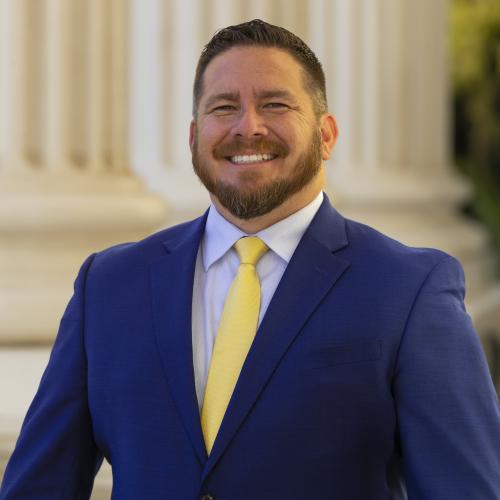
Photo of Juan Alanis
R California Assembly · District 22 On the 2026 ballot

Asm. Juan Alanis

Compare
Total votes
10,307
all sessions
Attendance
93%
551 missed
Lower than 85% of chamber peers
With party
95%
of cast votes
Near the chamber average
Bipartisan score
3%
crosses aisle rarely
Near the chamber average
Sponsored
1,102
bills & resolutions
Higher than 91% of chamber peers
Committees
19
assignments
1,102 bills and resolutions

Sponsored bills

Total
1,102
Primary
101
Co-sponsor
1,001
This page
1,102
matching current filters
Co-sponsor AB 2082
In committee · California Assembly · Co-sponsor
Rural Farmworker Women's Health Act of 2026.

Existing law requires the State Department of Public Health to develop a coordinated state strategy for addressing the health-related needs of women, as specified. This bill, the Rural Farmworker Women's Health Act of 2026, would require the department to, beginning January 1, 2028, and upon appropriation by the Legislature for this purpose, establish a program to work with local nonprofit organizations who have a history of serving farmworker communities to provide free menstrual products in rural or agricultural communities. The bill would require the department to prioritize those communities with the highest rates of poverty.

In committee May 14, 2026 1 co-sponsor
Co-sponsor HR 95
Passed · California Assembly · Co-sponsor
Relative to National Public Works Week.

Maddy summaryThis bill designates the week of May 17 to May 24, 2026, as National Public Works Week throughout California to honor the contributions of public works professionals. It directly affects engineers, managers, and employees in government and the private sector who maintain essential infrastructure like transportation systems, water supplies, and public buildings. The resolution requests that the Governor issue a proclamation encouraging the public to observe the week with educational programs and activities that highlight the importance of these workers.

Passed May 14, 2026 1 co-sponsor
Co-sponsor SB 1137
In committee · California Senate · Co-sponsor
Personal income tax: deduction: medical expenses.

The Personal Income Tax Law, in conformity or modified conformity with federal income tax laws, allows various deductions in computing the income that is subject to the taxes imposed by that law, including a deduction for the medical and dental expenses paid during the taxable year, not compensated for by insurance or otherwise, for the medical or dental care of the taxpayer, spouse, or a dependent, to the extent that such expenses exceed 7.5% of federal adjusted gross income. This bill would, for taxable years beginning on or after January 1, 2026, and before January 1, 2031, allow a deduction from adjusted gross income for the costs of medical care, as defined, of a qualified taxpayer to the extent the costs exceed 4% of the qualified taxpayer's federal adjusted gross income. The bill would limit the deduction to $5,000. The bill would define "qualified taxpayer" for this purpose to mean an individual with adjusted gross income that does not exceed 300% of the federal poverty level and who does not take an itemized deduction for costs of medical care pursuant to the above-referenced provisions on their California income tax return. Existing law requires any bill authorizing a new tax expenditure to contain, among other things, specific goals that the tax expenditure will achieve, detailed performance indicators, and data collection requirements. This bill also would include additional information required for any bill authorizing a new tax expenditure. This bill would take effect immediately as a tax levy.

In committee May 14, 2026 1 co-sponsor
Co-sponsor AB 2365
In committee · California Assembly · Co-sponsor
Education-related positions: egregious misconduct: previous employment disclosures.

(1) Existing law prohibits a permanent school employee from being dismissed, except for one or more of certain enumerated causes, including egregious misconduct, and prescribes specific procedures for dismissals and suspensions based solely on acts of egregious misconduct. Existing law authorizes a first- or 2nd-year probationary employee of a school district to be dismissed during the school year for unsatisfactory performance or for cause, pursuant to specified procedures. Existing law specifies that those provisions do not apply to a probationary employee in a school district having an average daily attendance of less than 250 pupils and instead authorizes their suspension or dismissal for cause, including for egregious misconduct, pursuant to separate procedures that are applicable to permanent employees of a school district. Existing law also prescribes various reporting requirements relating to egregious misconduct for both certificated and noncertificated employees. Existing law, for these purposes, defines "egregious misconduct" as specified sex offenses, controlled substance offenses, and acts subject to the Child Abuse and Neglect Reporting Act. This bill would expand the definition of egregious misconduct for those purposes to include additional offenses, including, among other offenses, those relating to human trafficking, child abandonment and neglect, and impermissible contact or communication with a minor, as specified. (2) Existing law requires the Commission on Teacher Credentialing, on or before July 1, 2027, and contingent upon an appropriation for these purposes in the annual Budget Act or another statute, to develop a statewide data system that includes information relating to investigations of allegations of egregious misconduct of individuals serving in a noncertificated position for a local educational agency, as defined, or in any position for a private school. Existing law requires local educational agency employers and private school employers, following both the start of, and completion of, an investigation of egregious misconduct, to submit notice to the statewide data system, as provided. This bill would require the commission to include a section in the above-described statewide data system that identifies whether the commission received any reports of a certificated employee's possible misconduct submitted to the commission by a school district, county office of education, charter school, state special school or diagnostic center operated by the department, or private school. The bill would require the section of the data system to include the full name, date of birth, and last four digits of the social security number of the credentialholder or applicant, and the name of each school district, county office of education, charter school, state special school or diagnostic center operated by the department, or private school that has submitted a complaint, information, or indictment against the credentialholder or applicant, including specified reports. The bill would require the commission, within 5 business days of receiving a request for access to the statewide data system from a school district, county office of education, charter school, state special school or diagnostic center operated by the department, or private school, to provide the requesting entity access to the data system for the purposes of these provisions. (3) Existing law requires a person applying for a certificated position at a school district, county office of education, charter school, state special school or diagnostic center operated by the State Department of Education, or private school to provide that prospective employer with a complete list of every school district, county office of education, charter school, state special school or diagnostic center operated by the department, and private school that previously employed the applicant. Existing law requires those entities, when considering an applicant for a certificated position, to inquire with each disclosed entity as to whether the applicant, while previously employed by the disclosed entity, was the subject of any credible complaints of, substantiated investigations into, or discipline for, egregious misconduct. Existing law requires the responding entities that have made a report of an employee's egregious misconduct to the commission to disclose this fact to the inquiring entity, and to provide the inquiring entity with a copy of all relevant information within its possession that was reported to the commission. This bill, commencing July 1, 2027, would require a school district, county office of education, charter school, state special school or diagnostic center operated by the department, or private school considering an applicant for a certificated position to instead (A) check the section of the statewide data system maintained by the commission as to whether the commission received a copy of a complaint, information, or indictment, or specified report, relating to the applicant being the subject of a credible complaint of, substantiated investigation into, or discipline for, egregious misconduct, (B) identify any reporting entities, and (C) request from each reporting entity a copy of all relevant information within its possession that was reported to the commission. The bill would require a school district, county office of education, charter school, state special school or diagnostic center operated by the department, or private school identified in the data system as having submitted a report for a certificated employee to provide a copy of all relevant information within its possession to the inquiring entity. The bill would authorize, instead of require, a school district, county office of education, charter school, state special school or diagnostic center operated by the department, or private school that is considering an applicant for a certificated position to directly inquire with a disclosed entity, as described above. To the extent the bill would impose additional duties on local agencies or officials, the bill would impose a state-mandated local program. The California Constitution requires the state to reimburse local agencies and school districts for certain costs mandated by the state. Statutory provisions establish procedures for making that reimbursement. This bill would provide that, if the Commission on State Mandates determines that the bill contains costs mandated by the state, reimbursement for those costs shall be made pursuant to the statutory provisions noted above.


In committee May 14, 2026 1 co-sponsor
Co-sponsor SB 1084
In committee · California Senate · Co-sponsor
Personal income taxes: Fire Safe Home Tax Credits Act.

The Personal Income Tax Law allows various credits against the tax imposed by that law. Existing law requires any bill authorizing a new tax credit to contain, among other things, specific goals, purposes, and objectives that the tax credit will achieve, detailed performance indicators, and data collection requirements. This bill would allow credits against the tax imposed by the Personal Income Tax Law for taxable years beginning on or after January 1, 2027, and before January 1, 2032, to a qualified taxpayer for qualified costs relating to qualified home hardening, as defined, and for qualified costs relating to qualified vegetation management, as defined, in specified amounts, not to exceed an aggregate amount of $50,000,000 per taxable year. This bill would require a qualified taxpayer to reserve a credit for qualified costs relating to qualified home hardening or qualified vegetation management to be eligible for the above-described credits and provide all necessary information for this purpose, as specified. This bill also would include additional information required for any bill authorizing a new income tax credit and would require the Legislative Analyst's Office to prepare a written report regarding the credits, as provided. This bill would take effect immediately as a tax levy.

In committee May 14, 2026 1 co-sponsor
Primary AB 2574
In committee · California Assembly · Lead sponsor
Potentially dangerous and vicious dogs: notice of owner's or keeper's rights.

Existing law regulates potentially dangerous and vicious dogs. Existing law requires the chief officer of a public animal shelter or animal control department, or the head of a local law enforcement agency, if probable cause exists to believe that a dog is potentially dangerous or vicious, to petition the superior court for a hearing in a limited civil proceeding to determine, upon a preponderance of the evidence, whether the dog should be declared potentially dangerous or vicious. Existing law also authorizes a city or county to establish an administrative hearing procedure to hear and dispose of petitions filed for these purposes. Existing law requires notification to the owner or keeper of a dog that a hearing will be held by the superior court or the hearing entity and that the owner or keeper of the dog is authorized to present evidence as to why the dog should not be declared potentially dangerous or vicious. Existing law requires the owner or keeper of the dog to be served with notice of the hearing and a copy of the petition, either personally or by first-class mail with return receipt requested. Existing law requires the hearing to be held promptly within no less than 5 working days and not more than 10 working days after service of notice. Existing law authorizes a law enforcement or animal control officer, if upon investigation it is determined that probable cause exists to believe a dog poses an immediate threat to public safety, to seize and impound the dog pending a hearing to determine whether the dog should be declared potentially dangerous or vicious. Existing law requires, after that hearing, the owner or keeper of the dog to be notified in writing of the determination and orders issued and, if a determination is made that the dog is potentially dangerous or vicious, requires the owner or keeper of the dog to take specified action, as provided. Existing law authorizes the petitioner or the owner or keeper of the dog to, within 5 days of the receipt of the notice of determination, appeal the decision, as specified. Under existing law, the court hearing the appeal is required to conduct the hearing de novo, without a jury, and to decide the issue upon the preponderance of the evidence. Existing law requires that the determination of the court hearing the appeal be final and conclusive on all parties. Under existing law, the above-described provisions regulating potentially dangerous and vicious dogs do not prevent a city or county from adopting or enforcing its own program for the control of potentially dangerous or vicious dogs that includes all, part, or none of these provisions, if that program does not regulate potentially dangerous or vicious dogs in a manner that is specific as to breed, as specified. This bill would instead require a city or county to comply with the above-described hearing, notification, and appeal provisions. This bill would also require, at least 5 working days before each public hearing, the court or hearing entity to post notice of the public hearing in an easily identifiable and accessible location of its internet website. The bill would require the court or hearing entity to admit into evidence all relevant evidence, including incident reports and the affidavits of witnesses. The bill would authorize the court or hearing entity to limit the scope of discovery and to shorten the time to produce records or witnesses, but only when necessary to prevent delay of the proceeding or prevent undue hardship to a party or witness. The bill would repeal the requirement that the determination of the court hearing the appeal be final and conclusive on all parties. This bill would require a law enforcement or animal control officer, if a dog is seized and impounded pending a hearing to determine whether the dog should be declared potentially dangerous or vicious, to provide a notice of rights to the owner or keeper of the dog at the same time as the above-described notice of hearing. The bill would require that the notice include a detailed description of the reason the owner's or keeper's dog is being seized and impounded and specified information on the hearing procedures. The bill would require the person serving a notice of rights, if the notice is served personally, to affirm its validity and document the location, date, and time of the service, and, to the extent feasible, the name of the person who was provided the notice. The bill would require the law enforcement or animal control officer providing the notice to retain a copy of the mailing receipt or the affirmation of the information specified above for no less than 6 months following the exhaustion of all appeals. To the extent the bill would impose additional duties on local law enforcement and animal control agencies, this bill would impose a state-mandated local program. The bill would include findings that changes proposed by this bill address a matter of statewide concern rather than a municipal affair and, therefore, apply to all counties and cities, including charter counties and charter cities. The California Constitution requires the state to reimburse local agencies and school districts for certain costs mandated by the state. Statutory provisions establish procedures for making that reimbursement. This bill would provide that, if the Commission on State Mandates determines that the bill contains costs mandated by the state, reimbursement for those costs shall be made pursuant to the statutory provisions noted above.
In committee May 14, 2026 0 co-sponsors
Primary AB 1814
In committee · California Assembly · Lead sponsor
Peace officer training: driving under the influence.

Existing law establishes the Commission on Peace Officer Standards and Training, and requires the commission to, among other things, establish a certification program for peace officers, as defined. Existing law requires the commission, in consultation with specified subject matter experts, to develop guidelines and a course of instruction and training for law enforcement officers, including, but not limited to, hate crimes, elder and dependent abuse, and stalking. This bill would require peace officers assigned primarily to traffic enforcement to complete a National Highway Transportation Safety Administration (NHTSA) -approved standard field sobriety testing course of a minimum of 16 hours within one year of their assignment and, if an officer leaves employment with a law enforcement agency and does not become employed by a law enforcement agency within 2 years of their departure date, would require the officer to complete any of several specified commission-certified training courses, including a NHTSA refresher course if they are assigned to traffic enforcement. Because this bill would require additional training for local peace officers, it would impose a state-mandated local program. The California Constitution requires the state to reimburse local agencies and school districts for certain costs mandated by the state. Statutory provisions establish procedures for making that reimbursement. This bill would provide that, if the Commission on State Mandates determines that the bill contains costs mandated by the state, reimbursement for those costs shall be made pursuant to the statutory provisions noted above.

In committee May 14, 2026 0 co-sponsors
Co-sponsor SB 1040
In committee · California Senate · Co-sponsor
Veterans Cemetery Maintenance-Endowment Match Act.

Existing law requires the Department of Veterans Affairs, in voluntary cooperation with specified local entities, to design, develop, and construct a state-owned and state-operated Northern and Southern California Veterans Cemetery and California Central Coast Veterans Cemetery. Existing law requires the department to oversee and coordinate the design, development, and construction of these cemeteries. Existing law requires the department to adopt regulations to specify the eligibility requirements for interment in one of these cemeteries. This bill would require the department to establish and administer a state and local matching funds program for veterans cemetery maintenance funds by requiring that for $1 contributed locally by individuals, veterans' service organizations, local governments, or private donors, the state would contribute $1 in matching funds, up to $250,000 per veterans cemetery per fiscal year. The bill would require a veterans cemetery to apply to the department to be part of the program, and would require the department to, among other things, review the applications annually. The bill would establish the Veterans Cemetery Maintenance-Endowment Account in the General Fund that would be administered by the department. The bill would require moneys in the account to be allocated, upon appropriation by the Legislature, to the department for distribution to a veterans cemetery. The bill would require the department to provide to the Legislature a report summarizing all participating veterans cemeteries, total state matches, and fund performance.

In committee May 14, 2026 1 co-sponsor
Co-sponsor SB 1161
In committee · California Senate · Co-sponsor
Administrative regulations: economic impact analysis and standardized regulatory impact assessments: State Air Resources Board.

Existing law designates the State Air Resources Board as the state agency responsible for the preparation of the state implementation plan required by the federal Clean Air Act, and requires the state board to adopt standards, rules, and regulations that are consistent with the state goal of providing a decent home and suitable living environment for every Californian. Existing law, the Administrative Procedure Act, governs, among other things, the procedures for the adoption, amendment, or repeal of regulations by state agencies. Existing law requires a state agency proposing to adopt, amend, or repeal a regulation that is not a major regulation, as defined, to prepare an economic impact assessment, as provided. Existing law requires a state agency that is proposing to adopt, amend, or repeal a major regulation to prepare a standardized regulatory impact analysis, as provided. This bill would require the State Air Resources Board proposing to adopt, amend, or repeal a regulation to include in either the economic impact assessment, or the standardized regulatory impact assessment, a distributional analysis of the costs, benefits, and net impacts on personal income across income levels and an informative digest, as provided.

In committee May 14, 2026 1 co-sponsor
Co-sponsor SB 984
In committee · California Senate · Co-sponsor
Personal Income Tax Law: deductions: tips.

The Personal Income Tax Law, in modified conformity with federal income tax laws, allows various deductions in calculating taxable income. Existing federal income tax law, for taxable years beginning before January 1, 2029, allows deductions in determining taxable income, as defined, for amounts equal to the qualified tips, as defined. This bill, for taxable years beginning on or after January 1, 2026, and before January 1, 2029, would conform to federal income tax law with regard to qualified tips, except as provided. Existing law requires any bill authorizing a new tax expenditure to contain, among other things, specific goals that the tax expenditure will achieve, detailed performance indicators, and data collection requirements. This bill also would include additional information required for any bill authorizing a new tax expenditure. This bill would take effect immediately as a tax levy.

In committee May 14, 2026 1 co-sponsor
Showing 191 to 200 of 1,102 bills
Previous 1 … 19 20 21 … 111 Next