

Existing law establishes the Medi-Cal program, which is administered by the State Department of Health Care Services and under which qualified low-income individuals receive health care services. The Medi-Cal program is, in part, governed and funded by federal Medicaid program provisions. Existing law sets a schedule of benefits that are covered by the Medi-Cal program. The federal Medicaid program prohibits payment to a state for medical assistance furnished to an alien who is not lawfully admitted for permanent residence or otherwise permanently residing in the United States under color of law. Existing state law extends Medi-Cal eligibility for the full scope of Medi-Cal benefits to individuals who do not have satisfactory immigration status if they are otherwise eligible for those benefits, with the exception of specified dental benefits for individuals who are 19 years of age or older. Existing law makes an individual who is 19 years of age or older, who does not have satisfactory immigration status, and who applies for Medi-Cal on or after January 1, 2026, or loses eligibility for eligibility for full-scope Medi-Cal on or after January 1, 2026, eligible only for pregnancy-related services and emergency medical treatment. Existing law, beginning no sooner than July 1, 2027, as specified, requires individuals who do not have satisfactory immigration status, who are not pregnant, and who are 19 to 59 years of age, inclusive, to pay a monthly premium of $30, subject to certain exceptions. This bill would require the Director of the Department of Finance to determine and report to the Legislature and the Governor the cost of implementing eligibility for the full scope of Medi-Cal benefits for individuals who do not have satisfactory immigration status if they are otherwise eligible, and whether including those costs the General Fund would be in a deficit, as defined. The bill would then, on January 1 of the year following such a determination, end the above-described limitations on services for those who apply for Medi-Cal after January 1, 2026, or who lose eligibility for the full-scope of Medi-Cal benefits on or after January 1, 2026, thereby making an individual who is 19 years of age or older, who does not have satisfactory immigration status, eligible for the full scope of Medi-Cal benefits subject to certain limitations, such as the payment of premiums and certain dental benefits. The bill would require that the implementation of eligibility for the full-scope of Medi-Cal benefits be done by groups categorized by age, beginning with individuals over 49 years of age. Because counties are required to make Medi-Cal eligibility determinations and this bill would alter Medi-Cal eligibility, the bill would impose a state-mandated local program. The California Constitution requires the state to reimburse local agencies and school districts for certain costs mandated by the state. Statutory provisions establish procedures for making that reimbursement. This bill would provide that, if the Commission on State Mandates determines that the bill contains costs mandated by the state, reimbursement for those costs shall be made pursuant to the statutory provisions noted above.
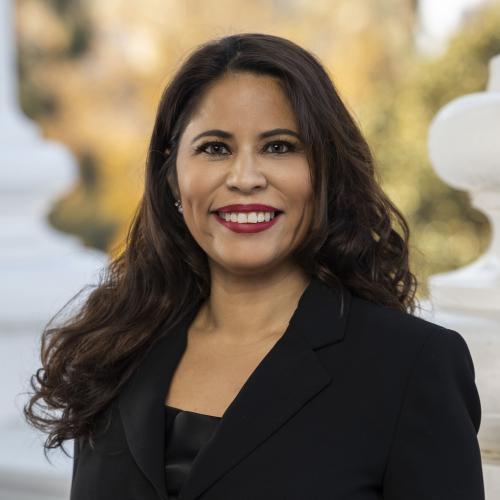
Asm. Liz Ortega
Sponsored bills
Maddy summaryThis bill designates the month of May 2026 as National Stroke Awareness Month. The primary effect is to officially recognize this time period for public education and awareness campaigns regarding stroke prevention and treatment. It does not alter laws, allocate funding, or impose new requirements on individuals or organizations. The measure serves as a symbolic gesture to highlight the importance of stroke awareness during the specified month.
This measure would recognize the historical wrongdoing committed against California Native Americans and urge the federal government to work alongside tribal leaders to address historic injustices, uphold treaty obligations, and ensure equitable access to resources, healthcare, education, and environmental stewardship.
Existing law establishes the Medi-Cal program, which is administered by the State Department of Health Care Services and under which qualified low-income individuals receive health care services. The Medi-Cal program is in part governed by, and funded pursuant to, federal Medicaid program provisions. Existing federal law, Public Law 119-21, enacted on July 4, 2025, sets forth various changes to different health care programs, including certain requirements for Medicaid eligibility with regard to work or community engagement reporting, redeterminations, and cost sharing, among other factors, for certain Medicaid populations pursuant to a specified implementation timeline. Existing law, the federal Patient Protection and Affordable Care Act, imposes a certain assessment on an applicable large employer, as defined, that offers full-time employees and their dependents the opportunity to enroll in minimum essential coverage, and for whom one or more full-time employees have been certified as having enrolled in a qualified health plan for which a premium tax credit or cost-sharing reduction is allowed or paid. This bill would create the Employer Responsibility for Medi-Cal Trust Fund to consist of new taxes and deposits, including employer penalties specified in the Budget Act of 2026. The bill would continuously appropriate moneys in the fund to the department to fund the costs of administering the Medi-Cal program in a manner necessary to prevent loss of or to restore health care coverage, benefits, or access to care following the passage of Public Law 119-21 and subsequent state budget actions. The bill would state that these provisions would become operative only if the Medicaid provisions of Public Law 119-21 are not repealed prior to January 1, 2027. By creating a continuously appropriated fund, the bill would make an appropriation. This bill would declare that it is to take effect immediately as an urgency statute.
This measure would recognize the significance of Vesak Day to people of Buddhist faith and extend sincere best wishes to the state's Buddhist community in celebrating Vesak Day.
Maddy summaryThis House Resolution recognizes May 17, 2026, as the International Day Against Homophobia, Biphobia, Interphobia, and Transphobia within the California Legislature. The measure formally acknowledges the ongoing discrimination faced by LGBTQ+ individuals globally and reaffirms the state's commitment to equality and civil rights. By adopting this resolution, the Assembly encourages all Californians to support inclusive practices and stand against hate toward the LGBTQ+ community.
The Corporation Tax Law imposes on every corporation doing business in the state, as defined, a tax according to or measured by net income and, in the case of a corporation with income derived from or attributable to sources both within and without this state, apportions the income between this state and other states and foreign countries in accordance with a single sales formula based on the sales within and without this state, except that in the case of an apportioning trade or business that derives more than 50% of its gross business receipts from conducting one or more qualified business activities, as defined, business income is apportioned in accordance with a specified 3-factor formula. Existing federal law, for purposes of determining a taxpayer's gross income for federal income tax purposes, requires that a person who is a United States shareholder of any controlled foreign corporation, as defined, to include in their gross income the net CFC tested income, as provided. The Corporation Tax Law, for taxable years beginning on or after January 1, 2003, for purposes of determining income derived from or attributable to sources within this state, allows corporations to make a statutory election as to whether their income is determined on a "water's-edge" basis or on a worldwide unitary basis. Under existing law, the election to report income on a water's-edge basis remains in effect until terminated, and provides conditions for the termination of the election. This bill, for taxable years beginning on or after January 1, 2026, would require a taxpayer that files on a water's-edge basis to account for net CFC tested income within the water's-edge group, as provided. The bill would require a taxpayer that files on a water's-edge basis to include all income and apportionment factors of any corporation, other than a bank, whose sales factor, instead of the average of 3 factors, in the United States is at least 20%. The bill would also terminate all water's-edge elections for the first taxable year beginning on or after January 1, 2028, and would not allow a taxpayer to make a water's-edge election, or file on a water's-edge basis, for taxable years beginning on or after January 1, 2028. The bill would authorize any taxpayer that has made a water's-edge election to terminate that election without the consent of the Franchise Tax Board for taxable years beginning on or after January 1, 2026, and before January 1, 2028. This bill would include a change in state statute that would result in a taxpayer paying a higher tax within the meaning of Section 3 of Article XIIIA of the California Constitution, and thus would require for passage the approval of 23 of the membership of each house of the Legislature. This bill would take effect immediately as a tax levy.
Existing law creates the Department of Insurance, headed by the Insurance Commissioner, and prescribes the department's powers and duties. Existing law establishes the California Safe Homes grant program to be developed by the department to, among other things, reduce local and statewide wildfire losses. Existing law requires the department to prioritize specified needs when awarding grant funds and requires eligible program applicants, which include individuals, cities, counties, and special districts, to meet specified criteria. This bill would, for purposes of the program, require the department to develop standardized procedures and processes, on or before July 1, 2027, for the selection of contractors and award of grant funds to perform specified categories of wildfire mitigation work. The bill would impose specified wage requirements on a contractor who performs any work under these procedures and processes. The bill would prohibit a contractor from being prequalified for, shortlisted for, or awarded a contract unless they provide an enforceable commitment that they will use a skilled and trained workforce to perform all work that falls within an apprenticeable occupation in the building and construction trades, as specified. The bill would impose various requirements on contractors and subcontractors, including requiring each to hold a valid, applicable license issued by the appropriate regulatory entity in this state for the specific task being funded by the program.
Maddy summaryThis bill designates the week of May 17 to May 24, 2026, as National Public Works Week throughout California to honor the contributions of public works professionals. It directly affects engineers, managers, and employees in government and the private sector who maintain essential infrastructure like transportation systems, water supplies, and public buildings. The resolution requests that the Governor issue a proclamation encouraging the public to observe the week with educational programs and activities that highlight the importance of these workers.
Existing law establishes the Division of Labor Standards Enforcement within the Department of Industrial Relations. Existing law authorizes the division, which is headed by the Labor Commissioner, to enforce the Labor Code and all labor laws of the state, the enforcement of which is not specifically vested in any other officer, board, or commission. This bill would prohibit an employer from using a worker's personal information, as defined, to train an artificial intelligence system to replicate, automate, or replace a worker's job, and would prohibit an employer from selling, disclosing, or otherwise providing access to a worker's personal information to a third party for the purpose of training an artificial intelligence system to replicate, automate, or replace a worker's job. The bill would prohibit a vendor providing services to an employer under a contract from providing access to the personal information of an employer's worker to a third party or using the personal information of an employer's worker to train artificial intelligence, as specified. The bill would require a contract between an employer and vendor to include a requirement that the vendor implement and maintain reasonable security procedures to protect the worker's personal information from, among other things, unauthorized or illegal access. The bill would define terms for these provisions, including "employer" and "personal information." The bill would require the Labor Commissioner and authorize a public prosecutor to enforce these provisions. The bill would authorize a worker, or their exclusive representative, who suffered a violation of these provisions to bring a civil action for damages, injunctive relief, punitive damages, and attorney's fees and costs. The bill would establish a statutory penalty for a violation of these provisions of up to $500 for each violation. The bill would include findings that changes proposed by this bill address a matter of statewide concern rather than a municipal affair and, therefore, apply to all cities, including charter cities.