

Existing law authorizes an unmarried person who is under 18 years of age to marry upon obtaining a court order granting permission and the written consent of at least one of the parents or the guardian of each underage party to the marriage, as specified. Existing law requires the court, if it considers it necessary, as part of the court order granting permission to marry, to require the parties to the prospective marriage of a minor to participate in premarital counseling, as specified. Existing law provides that 2 unmarried, unrelated adults who have chosen to share one another's lives in an intimate and committed relationship of mutual caring may establish a domestic partnership by filing a declaration with the Secretary of State, if certain requirements are met. Existing law provides that a person under 18 years of age who, together with the person with whom the person proposes to establish a domestic partnership, meets the requirements for a domestic partnership other than the requirement of being at least 18 years of age, is capable of consenting to and establishing a domestic partnership upon obtaining a court order granting permission to the underage person or persons to establish a domestic partnership. Under existing law, registered domestic partners have the same rights, protections, and benefits as spouses. This bill would repeal the authorization for a person under 18 years of age to be issued a marriage license or to establish a domestic partnership, thereby prohibiting a person under 18 years of age from being issued a marriage license or from establishing a domestic partnership. The bill would make conforming changes. Existing law requires the State Registrar to create a document, no later than March 1, 2020, concerning marriage certificates in which one or both of the parties were minors at the time of solemnization of the marriage. Existing law requires the State Registrar to update that document annually, as specified. Existing law requires the local registrar to submit specified information for the purposes of that report. This bill would repeal those provisions.
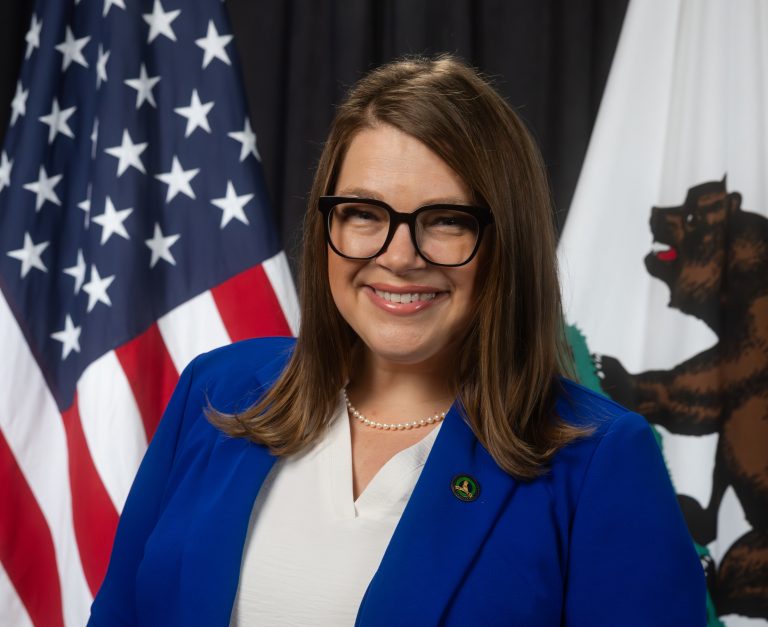
Rep. Heather Hadwick
Sponsored bills
This measure would designate a specified portion of State Route 99 in the County of Butte as the Congressman Doug LaMalfa Memorial Highway. The measure would request that the Department of Transportation determine the cost of appropriate signs showing this special designation and, upon receiving donations from nonstate sources sufficient to cover the cost, to erect those signs.
Existing law establishes the Maddy Emergency Medical Services (EMS) Fund and authorizes each county to establish an emergency medical services fund for reimbursement of costs related to emergency medical services. Existing law, until January 1, 2027, requires 15% of the fund to be used to, among other things, improve access to, and coordination of, pediatric trauma and emergency services, with specified preferences, and requires the cost of administering money deposited into the EMS Fund to be reimbursed from the money collected, as specified. Existing law, until January 1, 2027, authorizes county boards of supervisors to elect to levy an additional penalty, for deposit into the EMS Fund, in the amount of $2 for every $10 upon fines, penalties, and forfeitures collected for criminal offenses. Existing law, until January 1, 2027, requires 15% of the funds collected pursuant to that provision to be used to provide funding for pediatric trauma centers. This bill would extend the operative date of these provisions until January 1, 2037.
This measure would urge the President of the United States and Congress of the United States to immediately restore full and consistent funding and staffing for the National Park Service.
Maddy summaryCalifornia Assembly Resolution 140 designates August 2026 as Children's Get Offline and Get Outdoors Month to promote awareness of the benefits of screen-free play for child development. The resolution cites research linking excessive social media use and reduced free play time to increased rates of anxiety, depression, and other behavioral issues among teenagers. It encourages families and communities to support unstructured outdoor activities and highlights ongoing federal efforts to protect children's mental health through technology guardrails.
Existing law establishes the office of county recorder and requires the county recorder to accept for recordation any instrument, paper, or notice that is authorized or required to be recorded, subject to the collection of specified fees. This bill would require the county recorder to provide access to a true copy of the public record for each recorded instrument, paper, or notice, as specified. By imposing new duties on county recorders, the bill would impose a state-mandated local program. Existing law prohibits the fee for recording and indexing an instrument, paper, or notice from exceeding $10 for recording the first page and $3 for each additional page, which charges are to reimburse the county for the costs of services rendered. Existing law requires the county recorder to impose additional recording fees of $1 per page for nonconforming print spacing and $3 per page for nonconforming page dimensions. Existing law requires $1 of each $3 fee for each additional page to be deposited in the county general fund. The bill would, instead, set the fee for recording and indexing at $15 for recording the first page and $4 for each additional page, and would prohibit the fees from exceeding the reasonable costs of the county recorder's office for providing these services. The bill would delete the provisions requiring $1 and $3 fees for nonconforming spacing and page dimensions, and $1 of each $3 fee for each additional page to be deposited in the county general fund. The bill would require the county recorder collecting a prescribed fee to implement an electronic recording delivery system, and would provide that various other fees are restricted, as prescribed, or solely for the county recorder's office, as specified. Existing law authorizes a county recorder to charge an additional fee of $1 for specified documents requiring additional indexing based on the number of names listed and for each reference to a previously recorded document, other than the first such reference, as specified. The bill would repeal these provisions and make conforming changes. Existing law requires the fee for recording every release of lien, encumbrance, or notice executed by the state, or any municipality, county, city, district, or other political subdivision, to be a certain amount on January 1 of the year the release is recorded if the original lien, encumbrance, or notice was recorded without fee, as specified. This bill would, instead, calculate that fee as of January 1 of the year the original lien, encumbrance, or notice was recorded without fee, as specified. Upon approval by resolution of the board of supervisors and system certification by the Attorney General, existing law authorizes a county recorder to establish an electronic recording delivery system, as specified. Upon system certification, existing law authorizes a county recorder to enter into a contract with any of specified entities for the delivery for recording, and return to the party requesting recording, a digitized electronic record, as specified. Until January 1, 2027, existing law authorizes a county recorder to enter into a contract with an entity other than those specified, as described above, if certain requirements are met. This bill would remove the repeal date of January 1, 2027, and make various conforming changes. Existing law authorizes a county recorder to include in the county's electronic delivery system a secure method for accepting for recording a digital or digitized electronic record that is an instrument of reconveyance, substitution of trustee, or assignment of deed of trust. This bill would remove the limit of the above provisions to those types of documents. The bill would include related legislative findings concerning county recorders and county recorder fees. By imposing new duties on counties relative to recording fees, the bill would impose a state-mandated local program. The California Constitution requires the state to reimburse local agencies and school districts for certain costs mandated by the state. Statutory provisions establish procedures for making that reimbursement. This bill would provide that no reimbursement is required by this act for a specified reason.
Under the Z'berg-Nejedly Forest Practice Act of 1973, the Legislature finds and declares that it is the policy of the state to encourage prudent and responsible forest management of nonindustrial timberlands by approving working forest management plans in advance. Existing law regulates nonindustrial tree farmers and working forest landowners for timberland management purposes, including by setting a maximum acreage each may own, and authorizes a person who intends to become a nonindustrial tree farmer or a working forest landowner to submit to the Department of Forestry and Fire Protection a nonindustrial timber management plan or a working forest harvest plan, respectively, regarding that acreage. Existing law provides a maximum of 2,500 acres owned for nonindustrial tree farmers and nonindustrial timber management plans and a maximum of 10,000 acres owned for working forest landowners and working forest management plans. This bill would increase the maximum acreage for nonindustrial tree farmers and nonindustrial management plans to 4,000 acres and for working forest landowners and working forest management plans to 15,000 acres. Existing law requires the harvest area of a working forest management plan to be contained within a single hydrological area, as defined. This bill would eliminate the requirement that the harvest area of a working forest management plan be contained within a single hydrological area. Existing law requires the working forest landowner who owns, leases, or otherwise controls or operates on all or any portion of any timberland within the boundaries of an approved working forest management plan, and who plans to harvest any of the timber during a given year, to file a working forest harvest notice, as defined, with the department in writing. Existing law exempts the Southern Subdistrict of the Coast Forest District, as described in regulations, from these provisions regarding working forest management plans. This bill would eliminate this exemption.
Existing law, the Child Care and Development Services Act, administered by the State Department of Social Services, establishes a system of childcare and development services for children up to 13 years of age, which includes various programs and services, including, among others, general childcare and development programs and migrant childcare and development programs. Existing law, the Uniform Electronic Transactions Act (UETA) , provides that a record or signature may not be denied legal effect or enforceability solely because it is in electronic form. This bill would specify that a signature required by the Child Care and Development Services Act may be satisfied by use of an electronic signature in compliance with the UETA. The bill would authorize documents with an electronic signature to be created and stored in an electronic format in compliance with the UETA, and would authorize the department to adopt regulations to implement these provisions. Existing law, the Early Education Act, requires the Superintendent of Public Instruction to, among other things, provide an inclusive and cost-effective preschool program. The Early Education Act and the Child Care and Development Services Act authorize contractors operating or providing services under the acts to use digital signatures that comply with state and federal standards, including specified state regulations. This bill would instead condition the authority of contractors operating under the Early Education Act and the Child Care and Development Services Act to use an electronic signature on compliance with the UETA.
This measure would recognize August 26, 2026, as Women's Equality Day and its historic importance to women's rights, including the battle to attain those rights in the past, present, and future.
Maddy summaryThis bill designates 2026 as the International Year of the Woman Farmer to acknowledge the vital contributions of women in agriculture. It functions as a formal proclamation rather than a law that changes regulations or allocates funding. The measure directly affects the state by officially recognizing the importance of female agricultural workers during that year.