

Existing law makes it a crime, punishable by not more than one year in county jail, to manufacture or cause to be manufactured, import into the state for sale, keep for sale, offer or expose for sale, give, or lend an unsafe handgun. Existing law establishes certain exemptions to this prohibition, including, among others, exemptions for sales to specified law enforcement agencies and other specified government agencies for use by specified employees and sales to specified peace officers. Existing law specifies that the sale of an unsafe handgun to certain specified entities, including county probation departments, and members of those entities, is only authorized if the handgun is to be used as a service weapon by a peace officer who has successfully completed the basic course prescribed by the Commission on Peace Officer Standards and Training (POST) and who qualifies with the handgun, as specified, at least every 6 months. Existing law also provides that this training requirement may be satisfied by completion of the firearm portion of a training course prescribed by POST, if that training was completed before January 1, 2021. This bill would instead authorize a peace officer employed by a county probation department and using an unsafe handgun as a service weapon to satisfy the above-described training requirement by completion of the firearm portion of a training course prescribed by POST and who qualifies with the handgun, as specified, at least every 3 months. Existing law imposes certain vehicle storage requirements on specified persons who obtain an unsafe handgun, including sworn members of a county probation department who have completed the basic course or, prior to January 1, 2021, completed the firearm portion of a training course described above. A violation of those provisions is a crime. Because the bill would expand the application of the crime described above to sworn members of a county probation department who have completed the firearm portion of a training course, this bill would impose a state-mandated local program. The California Constitution requires the state to reimburse local agencies and school districts for certain costs mandated by the state. Statutory provisions establish procedures for making that reimbursement. This bill would provide that no reimbursement is required by this act for a specified reason.
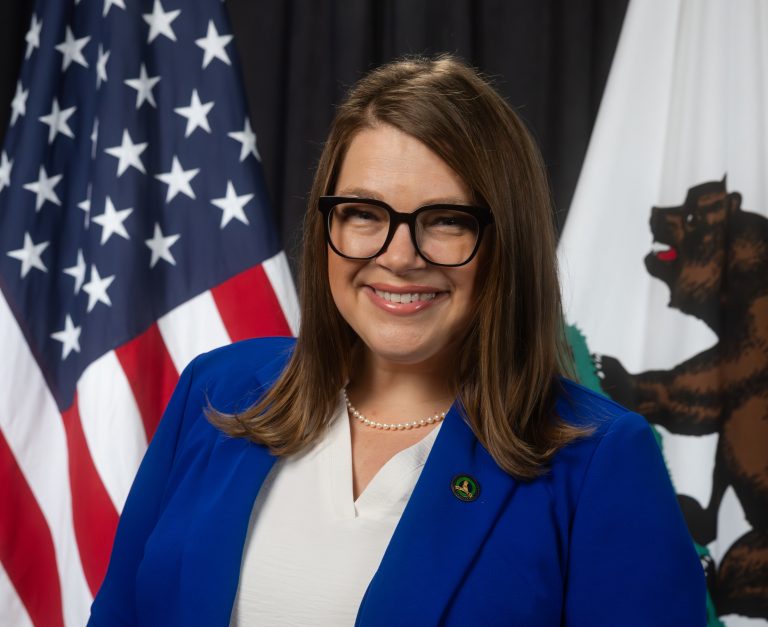
Rep. Heather Hadwick
Sponsored bills
Existing law defines a safe-surrender site to mean a location designated by the board of supervisors of a county or by a local fire agency, or a location within a public or private hospital that is designated by that hospital, to be responsible for accepting physical custody of a minor child who is 72 hours old or younger from a parent or individual who has lawful custody of that child and who surrenders the child. Existing law requires personnel on duty at a safe-surrender site to accept physical custody of the minor child, and to notify child protective services or a county agency providing child welfare services as soon as possible, but no later than 48 hours after accepting custody of the child. Under existing law, a parent or other individual with lawful custody of a minor child 72 hours old or younger who voluntarily surrenders physical custody of the child to personnel on duty at a safe-surrender site cannot be prosecuted for child abandonment. This bill, the Keeping Infants from Danger (KID) Act, would expand the scope of these provisions to apply to children who are 30 days of age or younger. By imposing new duties on local officials, the bill would impose a state-mandated local program. This bill would also make a conforming change. The California Constitution requires the state to reimburse local agencies and school districts for certain costs mandated by the state. Statutory provisions establish procedures for making that reimbursement. This bill would provide that, if the Commission on State Mandates determines that the bill contains costs mandated by the state, reimbursement for those costs shall be made pursuant to the statutory provisions noted above.
Existing law establishes the California Community Colleges, the California State University, the University of California, independent institutions of higher education, and private postsecondary educational institutions as the segments of postsecondary education in the state. The missions and functions of these segments are set forth in the Donahoe Higher Education Act. This bill would provide that public higher education additionally consists of tribal colleges and universities geographically located in California that are operated by an Indian tribal government, as defined.
Existing law makes it a misdemeanor to possess nitrous oxide with the intent of inhaling it for specified purposes, including to cause intoxication. Existing law also makes it a misdemeanor to sell nitrous oxide to any person under 18 years of age. Existing law makes it a misdemeanor to dispense nitrous oxide to a person and knowing that the person will use it for specified prohibited purposes, if that person then causes death or great bodily injury to themselves or another person. Under existing law, the Cigarette and Tobacco Products Licensing Act of 2003, the California Department of Tax and Fee Administration (CDTFA) administers and enforces a statewide program to license manufacturers, importers, distributors, wholesalers, and retailers of cigarettes and tobacco products. Existing law specifically requires a retailer, distributor, or wholesaler, as defined, to hold a license from the CDTFA to engage in the sale of cigarettes or tobacco products. Existing law subjects these licenses to suspension or revocation for violations of existing law. Existing law imposes specified noticing and posting requirements for retailer licenses that are revoked. A violation of these provisions is a misdemeanor. This bill would, except as specifically exempted, prohibit the sale and distribution of a nitrous oxide container that is capable of holding more than 8 grams of nitrous oxide or from which an individual may directly inhale nitrous oxide. The bill would also prohibit the sale and distribution of a nitrous oxide that has, or is marketed as having, the taste or smell of any food. The bill would prohibit knowingly selling or distributing a device that allows an individual to inhale nitrous oxide from the container or hold nitrous oxide for the purposes of inhalation. The bill would punish a violation of these provisions as an infraction, as specified. The bill would also authorize a court to suspend a business license if the business has a prior conviction for violating these prohibitions, and to revoke a license to sell tobacco products if the business has 2 prior convictions for violating these prohibitions. The bill would make any person, distributor, or business found to have violated these prohibitions liable for all reasonable costs incurred by a public agency in the investigation, inspection, seizure, storage, transportation, handling, venting, abatement, disposal, or destruction of nitrous oxide products, nitrous oxide containers, inhalation devices, or related materials involved in the violation, as specified. This bill would prohibit a person that is engaged in the business of selling cigarettes or tobacco products in this state from possessing, storing, owning, or selling nitrous oxide, in violation of the criminal provisions outlined above, at any site where cigarettes and tobacco products are stored or sold. The bill would authorize the CDTFA to seize nitrous oxide products, as prescribed. The bill would subject a violator to civil penalties in amounts depending on the aggregate retail value of the seized nitrous oxide and the number of violations within 5 years of the first violation. The bill would require the deposit of collected civil penalties in the Cigarette and Tobacco Products Compliance Fund. The bill would also subject a violator who commits a 2nd violation to license suspension and who commits a 3rd violation to license revocation, as prescribed. This bill would establish procedures for the CDTFA to follow for a court-ordered revocation. The bill would require the CDTFA to assess a $250 civil penalty for each revoked license and to deposit collected civil penalties into the fund, to be made available to the department, upon appropriation by the Legislature, for purposes of administering the bill. The bill would authorize a licensee to apply for a new license at the previously revoked location 6 months after the date of revocation and would authorize the CDTFA, at its discretion, to issue a new license. The bill would apply these noticing and posting requirements to a retailer subject to a court-ordered revocation pursuant to the bill. The California Constitution provides for the establishment of the State Board of Equalization, which, before July 1, 2017, had primary responsibility for most of the state's duties, powers, and responsibilities regarding the administration of taxes and fees. Existing law, on July 1, 2017, transferred to the CDTFA various duties, powers, and responsibilities of the State Board of Equalization, including administration of the Cigarette and Tobacco Products Licensing Act of 2003, as specified. This bill would change references in the provisions of the Cigarette and Tobacco Products Licensing Act of 2003 amended by this bill from the "State Board of Equalization" to the "California Department of Tax and Fee Administration" to reflect the transfer of the board's duties, powers, and responsibilities to the CDTFA. Because this bill would create new crimes, it would impose a state-mandated local program. The California Constitution requires the state to reimburse local agencies and school districts for certain costs mandated by the state. Statutory provisions establish procedures for making that reimbursement. This bill would provide that no reimbursement is required by this act for a specified reason.
Existing law prohibits Members of the Legislature from entering into, or requesting that another party enter into, a nondisclosure agreement relating to the drafting, negotiation, or discussion of proposed legislation, and makes any nondisclosure agreement relating to the drafting, negotiation, or discussion of proposed legislation void and unenforceable. Existing law provides an exception for nondisclosure agreements, or portions thereof, that prevent only the disclosure of trade secrets, financial information, or proprietary information, as specified. This bill would prohibit an elective or appointive officer of a state agency acting in their official capacity from entering into, or requesting that another party enter into, a nondisclosure agreement relating to the drafting, negotiation, or discussion of a proposed regulation or legislation. The bill would also make any nondisclosure agreement relating to the drafting, negotiation, or discussion of a proposed regulation or legislation entered into by an elective or appointive officer of a state agency acting in their official capacity after the effective date of this bill void and unenforceable. The bill would provide an exception for nondisclosure agreements, or portions thereof, that prevent only the disclosure of trade secrets, private financial information, or proprietary information, as specified.
(1) Existing law authorizes any person adversely affected by any regulation, rules, omission, interpretation, decision, or practice of any state agency respecting the administration of any building standard to appeal the issue for resolution to the California Building Standards Commission. Existing law authorizes any local agency having authority to enforce a state building standard and any person adversely affected by any regulation, rule, omission, interpretation, decision, or practice of that agency respecting that building standard to appeal to the commission, provided that both wish to appeal the issue for resolution to the commission. Existing law authorizes the commission to accept those appeals only if the commission determines that the issues involved in the appeal have statewide significance. This bill would revise and recast those provisions to expand the reasons for which a person can appeal to the commission to include, among other things, a request for approval to use an alternate material. The bill would modify the conditions under which the commission may accept an appeal by removing the requirement that both the local agency and the adversely affected person wish to appeal the issue, and by requiring that certain issues appealed have both statewide significance and that the person seeking the appeal has exhausted all local appeals procedures before appealing to the commission, subject to a certain exception. The bill would require the commission to review those appealed issues with specified stakeholders. The bill would additionally authorize any person to request a code interpretation from the commission relative to the intent of any regulation or provision adopted by the commission. The bill would require the commission to post, on its internet website and in a searchable format, decisions on appeals and code interpretations that it issues. (2) Existing law requires a local enforcement agency's written rules and regulations that clarify the application of the California Building Standards Code to be made available to the public upon request. This bill would, instead, require those written rules and regulations to be posted on the agency's internet website in a manner that clearly identifies the rules or regulations as a local interpretation or policy and links those rules or regulations, where applicable, to the related local amendments and express findings. (3) The bill would include findings that changes proposed by this bill address a matter of statewide concern rather than a municipal affair and, therefore, apply to all cities, including charter cities. (4) By increasing the duties of local officials, this bill would impose a state-mandated local program. The California Constitution requires the state to reimburse local agencies and school districts for certain costs mandated by the state. Statutory provisions establish procedures for making that reimbursement. This bill would provide that, if the Commission on State Mandates determines that the bill contains costs mandated by the state, reimbursement for those costs shall be made pursuant to the statutory provisions noted above.
Existing law designates specific days as holidays in this state. Existing law designates holidays on which public schools are required to close. This bill would require, commencing with the 2027–28 school year, the governing board of a school district, a county office of education, or the governing body of a charter school to consider making efforts to avoid scheduling the first day of class and high school graduation, if applicable, on a date for which the governing board of the school district, the county office of education, or the governing body of the charter school knows, or has reason to know, that members of the public would be unable to participate or be present due to the ritual observance of a religious, cultural, or ancestral holiday. The bill would require the governing board of a school district, a county office of education, or the governing body of a charter school, in considering and making a determination of which dates to avoid, to actively seek input from the affected community and consider any other relevant sources to ensure inclusive public participation. The Donahoe Higher Education Act sets forth the missions and functions of California's public segments of higher education and their respective institutions of higher education. The California State University, under the administration of the Trustees of the California State University, the California Community Colleges, under the administration of the Board of Governors of the California Community Colleges, and the University of California, under the administration of the Regents of the University of California, are 3 of the segments. Provisions of the act apply to the University of California only to the extent that the Regents of the University of California act, by appropriate resolution, to make them applicable. This bill would require, commencing with the 2027–28 academic year, the governing board of a community college and the California State University, and would request the University of California, to make good faith, reasonable efforts, when developing academic calendars, to avoid calendaring an institutional event, as defined, on a date for which the institution of higher education knows, or has reason to know, that members of the public would be unable to participate or be present due to the ritual observance of a religious, cultural, or ancestral holiday. The bill would require the governing board of a community college and the California State University, and would request the University of California, in considering and making a determination of which dates to avoid, to seek input from the student and faculty organizations on campus. The Bagley-Keene Open Meeting Act and the Ralph M. Brown Act require, with specified exceptions, that all meetings of specified governmental bodies be open and public and all persons be permitted to attend. Existing law prohibits a state agency, as defined, or a legislative body of a local agency, as defined, from conducting any meeting, conference, or other function in any facility that prohibits the admittance of any person, or persons, on the basis of ancestry or a specified characteristic, that is inaccessible to disabled persons, or where members of the public may not be present without making a payment or purchase. This bill would require a state agency to make good faith, reasonable efforts to avoid conducting any meeting, conference, or other function on a date for which the state agency knows, or has reason to know, that members of the public would be unable to participate or be present due to the ritual observance of a religious, cultural, or ancestral holiday, including, among others, Eid al-Adha, Rosh Hashanah, and Diwali. The bill would also encourage a legislative body of a local agency to consider making efforts to avoid conducting any meeting, conference, or other function on a date for which the legislative body knows, or has reason to know, that members of the public would be unable to participate or be present due to the ritual observance of a religious, cultural, or ancestral holiday, including, among others, the holidays listed above. By imposing new duties on school districts and community college districts, the bill would impose a state-mandated local program. This bill would authorize a person who has suffered harm as a result of a violation of certain of the above provisions to bring a civil action for injunctive relief, as provided. The California Constitution requires local agencies, for the purpose of ensuring public access to the meetings of public bodies and the writings of public officials and agencies, to comply with a statutory enactment that amends or enacts laws relating to public records or open meetings and contains findings demonstrating that the enactment furthers the constitutional requirements relating to this purpose. This bill would make legislative findings to that effect. The California Constitution requires the state to reimburse local agencies and school districts for certain costs mandated by the state. Statutory provisions establish procedures for making that reimbursement. This bill would provide that, if the Commission on State Mandates determines that the bill contains costs mandated by the state, reimbursement for those costs shall be made pursuant to the statutory provisions noted above.
Existing law requires the Department of Fish and Wildlife to require the purchase of an entry permit for nonconsumptive uses of department-managed lands if the department finds that it is practical and would be cost effective for the state to collect entry permit fees, and imposes specified requirements if the department does so, including requiring the department to use the Automated License Data System to sell that entry permit. Existing law authorizes the department to lease department-managed lands for agricultural activities if certain conditions are met and requires money collected from the lease of these lands to be deposited by the department into the Wildlife Restoration Fund or the Fish and Game Preservation Fund, and authorizes the department, upon appropriation by the Legislature, to use the funds to support the management, maintenance, restoration, and operations of department-managed lands. This bill would require the department to use the Automated License Data System to sell an entry permit for consumptive use and would authorize the department to use the Automated License Data System to sell an entry permit for nonconsumptive use if the department requires the purchase of an entry permit for nonconsumptive uses of department-managed lands, as described above. The bill would require, upon appropriation by the Legislature, the above-described agricultural lease funds to be used by the department to support the management, maintenance, restoration, and operations of department-managed lands. Existing law requires the department to annually provide an opportunity for licensed hunters to comment and make recommendations on public hunting programs, including anticipated habitat conditions in hunting areas on Type A and Type B Wildlife Areas, as provided. This bill would add wetland floodup to the topics that the department is required to provide an opportunity for comment and recommendation on as described above. This bill would create the Waterfowl Management Areas Operations and Maintenance Fund in the State Treasury and would require all revenues generated from the sale of waterfowl hunting reservation applications and daily and season long entry passes from Type A and Type B Wildlife Areas to be deposited into the fund. The bill would require the department to, upon appropriation by the Legislature, expend those revenues for the operation and maintenance of, and the reasonable administrative costs directly related to, the public hunting programs for Type A and Type B Wildlife Areas. The bill would require the department to, on or before October 1, 2033, prepare and submit a report to the appropriate policy and budget committees of the Legislature, as specified.
Existing law, the Knox-Keene Health Care Service Plan Act of 1975, provides for the licensure and regulation of health care service plans by the Department of Managed Health Care and makes a willful violation of the act a crime. Existing law provides for the regulation of disability insurers by the Department of Insurance. Existing law requires a health care service plan or disability insurer to allow an individual to enroll in or change their health benefit plan as a result of a specified triggering event. This bill would make pregnancy a triggering event for purposes of enrollment or changing a health benefit plan. Because a willful violation of this provision by a health care service plan would be a crime, the bill would impose a state-mandated local program. The California Constitution requires the state to reimburse local agencies and school districts for certain costs mandated by the state. Statutory provisions establish procedures for making that reimbursement. This bill would provide that no reimbursement is required by this act for a specified reason.
Existing law requires all records of the Department of Motor Vehicles relating to the registration of vehicles, other information contained on an application for a driver's license, abstracts of convictions, and certain abstracts of accident reports to be open to public inspection during office hours, except when a specific provision of law prohibits the disclosure of records or information or provides for confidentiality. Of these records, existing law requires the department to make available or disclose abstracts of convictions and abstracts of accident reports if, for driving under the influence-related violations, the date of occurrence is not later than 10 years. This bill would also require the department to make available or disclose these abstracts or reports within 10 years of the occurrence for a violation of gross vehicular manslaughter while intoxicated and with gross negligence. Existing law establishes that specified convictions, violations, and traffic-related incidents count as points against a driver's record for purposes of the suspension or revocation of the privilege to drive. Existing law imposes 2 violation points against a driver's record for purposes of the suspension or revocation of the privilege to drive if a driver is convicted of vehicular manslaughter while intoxicated but without gross negligence. This bill would impose 3 violation points against a driver's record for a conviction of gross vehicular manslaughter while intoxicated and with gross negligence. This bill would make its provisions operative January 1, 2031.