Issue · Healthcare

Healthcare

Every healthcare bill, vote, and legislator stance in Arizona, automatically classified by Maddy, our AI policy reader.

Total bills
298
57th Legislature - Second Regular Session
Top supporter
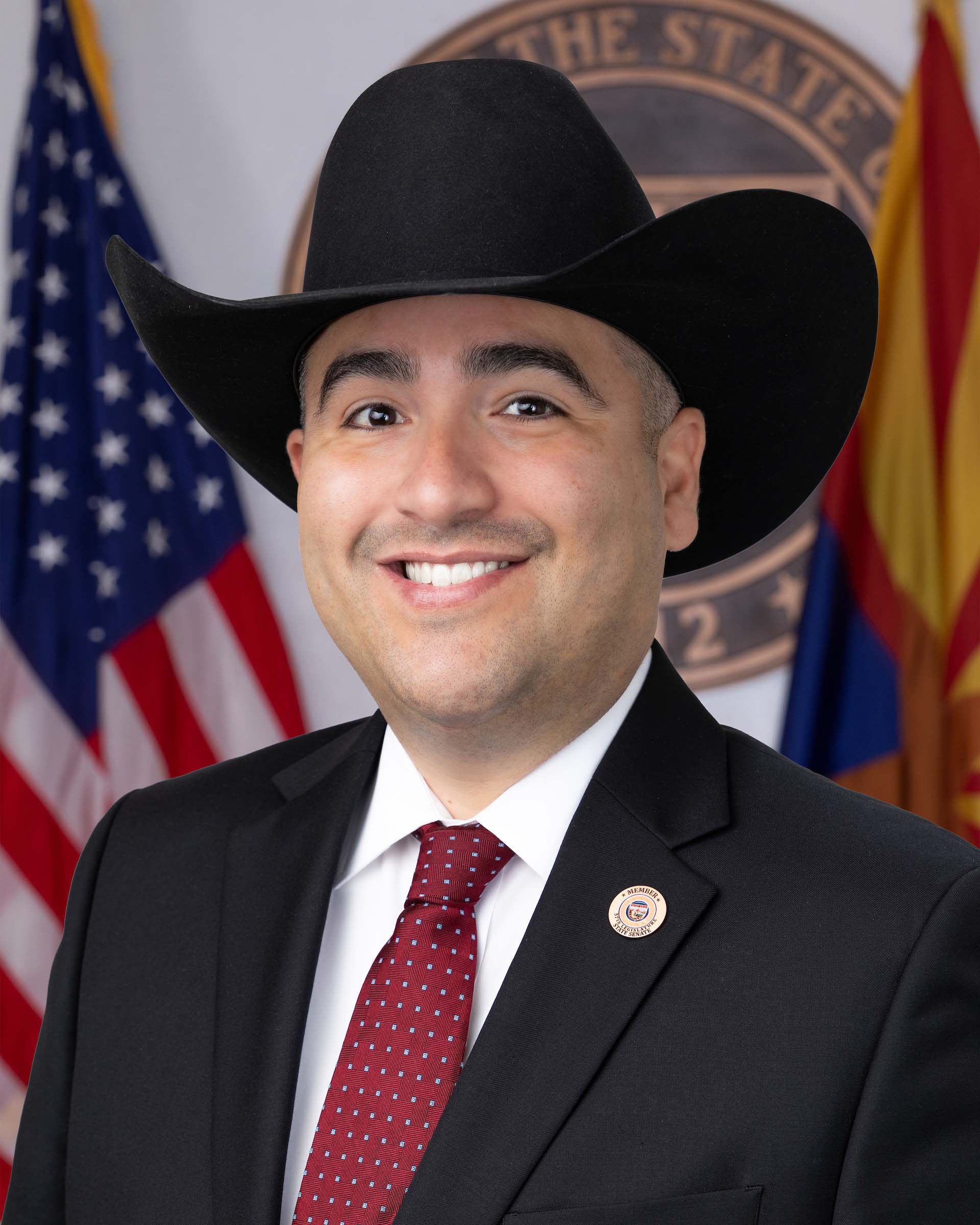
Kevin Payne
81% support rate
Top opponent
Michael Way
24% support rate
Ranked legislators
10
5 support · 5 oppose
Key legislators

Who's moving healthcare in Arizona

Legislators moving healthcare in Arizona
Legislator Party Stance Support rate Votes
Kevin Payne
Kevin Payne Senate · District 27
R
Strong +
81% 164
Hildy Angius
Hildy Angius Senate · District 30
R
Support
79% 178
T.J. Shope
T.J. Shope Senate · District 16
R
Support
79% 179
Vince Leach
Vince Leach Senate · District 17
R
Support
79% 179
Tim Dunn
Tim Dunn Senate · District 25
R
Support
79% 179
Michael Way
Michael Way House · District 15
R
Oppose
24% 223
Justin Olson
Justin Olson House · District 10
R
Oppose
27% 241
Khyl Powell
Khyl Powell House · District 14
R
Oppose
27% 241
Rachel Keshel
Rachel Keshel House · District 17
R
Oppose
28% 235
Alex Kolodin
Alex Kolodin House · District 3
R
Oppose
30% 238
Showing 281–290 of 298 bills

All healthcare bills

vetoed · Arizona · Senate Jun 19, 2026

SB 1015: gender transition procedures; provider liability

SB 1015 would make healthcare providers personally liable for costs related to detransition procedures (reversing gender transition) for minors within 25 years of the initial treatment. It allows minors to sue providers for injuries (including psychological harm) up to age 26, covering medical costs, pain and suffering, and attorney fees. The bill prohibits providers from using contracts to waive this liability, stating such waivers violate Arizona's public policy. This directly affects minors receiving gender transition care and the healthcare professionals providing it, imposing long-term financial and legal responsibility on providers.
signed · Arizona · Senate Mar 27, 2026

SB 1023: optometrists; eye exams; prescriptions

SB 1023 requires Arizona optometrists to conduct eye exams at least annually to assess both vision and eye health, following community medical standards. It allows optometrists to extend eyeglass prescription validity up to two years or shorten it based on individual patient factors like health risks or medical conditions. The bill directly affects optometrists by setting standardized exam frequency and prescription rules, while patients may experience changes in how often they need new prescriptions. This legislation standardizes eye care practices without mandating specific medical outcomes.
passed · Arizona · House Mar 24, 2026

HB 2051: AHCCCS; lactation care; breastfeeding

HB 2051 adds breastfeeding and lactation care services - including consultations, education, and counseling - as a covered benefit under Arizona's AHCCCS (Medicaid) program. This applies directly to AHCCCS enrollees, including new mothers, who need support in inpatient, outpatient, home-based, or group settings. The bill amends existing law to explicitly include these services under covered health and medical services without changing current coverage limits or funding. It does not alter other benefits or eligibility requirements for the program.
Sub-Topics Medicaid
introduced · Arizona · House Jan 13, 2026

HB 2061: health care services; patient rights

HB 2061 establishes core patient rights for individuals receiving healthcare in Arizona, directly affecting all patients, including unborn children as defined by existing law. The bill requires health professionals to act in the patient's best interest, avoid causing harm, and obtain informed consent for all medical treatments or procedures - except in emergencies. It defines key terms like "patient" (including unborn children) and "health professional" to clarify these rights within Arizona law. This legislation creates a legal framework for patient-centered care but does not alter existing medical practices or funding.
failed · Arizona · Senate Jun 11, 2026

SB 1009: high school students; AED training

SB 1009 requires Arizona high schools to provide all students with mandatory training in cardiopulmonary resuscitation (CPR) and automated external defibrillator (AED) use during high school. The training must be age-appropriate, based on current national guidelines, and include hands-on practice (except for online students). Schools may accept donations for materials and must allow exemptions for students with parental consent, prior certification, or individualized education program accommodations. This policy directly affects all Arizona public high school students and mandates training through certified providers like EMTs, Red Cross representatives, or school staff.
passed · Arizona · Senate Mar 24, 2026

SB 1065: appropriation; hyperbaric oxygen therapy; veterans

SB 1065 appropriates $3,640,000 from Arizona's general fund for fiscal year 2026-2027 to the "Hyperbaric Oxygen Therapy for Military Veterans Fund" established under Arizona Revised Statutes § 41-610.01. This funding directly supports military veterans who qualify for hyperbaric oxygen therapy under the existing program. The bill provides concrete financial resources for this specific healthcare service without altering eligibility rules or creating new policies. It is a straightforward funding measure for an established veterans' health benefit.
passed · Arizona · Senate Mar 24, 2026

SB 1017: informed consent; signatures

SB 1017 requires healthcare providers (physicians, nurse practitioners, or physician assistants) performing surgical procedures to obtain informed consent documents signed by three parties: the provider, the patient (or their legally authorized decision maker), and a witness, along with the date. The bill specifies that if a patient cannot physically sign, a witness must verify the patient's verbal consent directly to them. It defines "surgical procedure" as operations to correct deformities, repair injuries, or diagnose/treat disease. This bill directly affects healthcare facilities and providers in Arizona by standardizing consent documentation requirements for surgical care.
vetoed · Arizona · House Jun 19, 2026

HB 2086: vaccination mandates; masks; prohibition

HB 2086 prohibits Arizona state and local governments, as well as businesses, from requiring residents to wear masks or receive COVID-19 vaccinations (or variants) for entry or employment. The bill specifically bans mask mandates except for pre-existing workplace safety measures and prohibits vaccination requirements for COVID-19, with exceptions for government-owned healthcare facilities. It applies to all state/local government entities using tax revenues and businesses operating in Arizona, removing existing mandates without creating new requirements. The law directly affects residents, businesses, and government operations by eliminating these specific public health measures.
passed · Arizona · House Apr 13, 2026

HB 2060: educational facilities; abortion; prohibited activities

HB 2060 prohibits abortions at public educational facilities in Arizona except when necessary to save a woman's life. It applies to all public schools, colleges, universities (including those under the Arizona Board of Regents), and their employees acting in their official capacity. The bill explicitly bans institutions from performing abortions or encouraging/facilitating them, with exceptions only for life-saving medical emergencies as defined in existing law. This affects all public educational institutions and their staff, restricting abortion access on campus grounds. The legislation amends Arizona Revised Statutes sections 15-115.01 and 15-1630 to enforce these restrictions.
Sub-Topics Women's Health
passed · Arizona · Senate Mar 24, 2026

SB 1014: insurance; gender surgeries; documentation; reports

SB 1014 requires health insurers in Arizona to cover gender detransition procedures (if they cover gender transition procedures) starting January 1, 2027, and mandates healthcare providers performing transition procedures to agree to provide or pay for detransition care. Insurers must report monthly data on detransition claims (excluding personal identifiers) to the state department, which will compile an annual public report. State agencies must create expedited processes for changing gender markers on official documents during detransition, with implementation deadlines through 2028, though the requirement expires December 31, 2028. The bill directly affects insurers, healthcare providers, and individuals seeking gender-related medical care or documentation changes.
Showing 281 to 290 of 298 bills