

Maddy summaryThis bill (SF 47) allows cities, towns, counties, and school districts in Wyoming to establish a system of public recreation (like parks and community facilities) by either having their local government serve directly as the governing board or appointing a separate board of at least five members. It specifies that if the local government acts as the board, it is exempt from certain administrative rules, and outlines how vacancies on appointed boards must be filled. The bill also clarifies that jointly established recreation systems require at least one representative from each participating local government on the board. The changes take effect July 1, 2025.
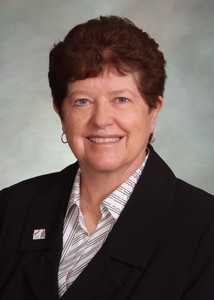
Sen. Wendy Schuler
Sponsored bills
Maddy summarySF 155, the "Expanding Physician Access Act," creates a pathway for international physicians to obtain provisional medical licenses in Wyoming. It directly affects physicians licensed outside the U.S. who have completed required training, passed USMLE steps 1-3, and hold a job offer from a Wyoming health care provider (like hospitals or clinics). Key provisions include requiring background checks, proof of English fluency, and federal work authorization before practicing, with provisional licenses automatically converting to full licenses after three years of active practice without disciplinary action. The bill also mandates annual continuing education compliance for provisional license holders.
Maddy summarySF 144 creates the Wyoming-Ireland Trade Commission to promote economic collaboration between Wyoming and Ireland. The commission, composed of nine appointed members (including representatives from Wyoming businesses, higher education, and the Irish-American community), will focus on expanding trade, investment, and business/academic exchanges. It requires quarterly meetings, annual reports to the governor and legislature, and reimburses non-legislative members for travel and per diem expenses. This bill directly establishes a formal structure to advance Wyoming-Ireland economic partnerships, affecting businesses, educational institutions, and the Irish-American community through their representation on the commission.
Maddy summaryThis Wyoming joint resolution (SJ 8) requests Congress to propose a constitutional amendment allowing states and Congress to establish reasonable limits on money spent to influence elections. It specifically seeks authority to distinguish between natural persons (individuals) and artificial entities like corporations, unions, or AI when setting these limits. The resolution argues that current Supreme Court interpretations equating unlimited spending with free speech undermine political equality, election integrity, and local representation. It does not create new laws but formally asks Congress to initiate a constitutional amendment process to address these concerns.
Maddy summaryThis is a ceremonial resolution (SJ 7) passed by the Wyoming Legislature to recognize the National Conference of State Legislatures (NCSL) on its 50th anniversary in 2025. It commends NCSL for its role in supporting state legislatures and fostering bipartisan cooperation, as detailed in the resolution's preamble. The resolution directs Wyoming's Secretary of State to send copies to Wyoming's Congressional delegation and NCSL's leadership. It does not create new laws or affect any specific groups or policies.
Maddy summaryThis bill creates the Wyoming Generational Investment Account (WGIA), a permanent trust fund for state investments. Starting July 1, 2025, it requires annual transfers of $100 million from the legislative stabilization reserve into the WGIA. Funds must be invested to mirror an 85% private equity/15% private credit portfolio, with earnings from each transfer locked in for 30 years. After 30 years, 37.5% of investment earnings from each transfer must be deposited into the state's general fund, while the remainder stays invested in the WGIA. (SF 197)
Maddy summarySF 126 establishes a K-8 public lab school on the University of Wyoming’s main campus to serve as a teacher training site and model classroom. It directly affects pre-service teachers (through UW’s education programs), students in the surrounding school district, and the University of Wyoming’s College of Education. Key provisions include creating a governing board with members from the local school district, UW, and community; requiring annual reports on student achievement and teacher placements; and mandating the school operate under state education standards while focusing on developing teaching practices. The bill specifies enrollment preferences for students in the resident school district and requires the school to report to the education committee starting in 2025.
Maddy summaryThis bill extends the sunset date for allowing Wyoming school districts to hold operating balances and cash reserves up to 30% of their state funding base (instead of the previous 15%), effective through the fiscal year ending June 30, 2028. It requires districts to separately track reserves exceeding 15% and prohibits using these funds for new capital construction (though major building repairs are permitted). The bill directly affects all public school districts in Wyoming by modifying their reserve limits and reporting requirements under state school finance rules. The change aims to provide districts with more flexibility in managing financial reserves while maintaining accountability through specific reporting mechanisms.
Maddy summaryThis bill exempts natural hair braiding from Wyoming's cosmetology licensing requirements. It defines "practice of natural hair braiding" to include hand-twisting, weaving, and extending hair with tools or accessories (but excludes dyeing, chemical treatments, or altering hair structure). Salon owners may still require private certification for braiders working at their locations. The exemption takes effect July 1, 2025, and applies to braiders not otherwise regulated under cosmetology law.
Maddy summaryThis bill (SF 110) modifies Wyoming's Governmental Claims Act to include crossing guard volunteers and school district employees acting as crossing guards under the definition of "public employee." It directly affects these volunteers and school staff by granting them the same legal right to file claims for injuries sustained while performing crossing guard duties as other public employees. The key change creates a new definition subsection (H) in the law, explicitly adding these individuals to the category covered by the Claims Act. The bill takes effect immediately upon becoming law, with no additional implementation mechanisms or financial provisions.